

Micron Biomedical Advances Two Microneedle Vaccines into Clinical Trials, Garnering Strong Support from Gates Foundation

Micron Biomedical
Clinical-stage biopharmaceutical company
As a novel transdermal drug delivery method, microneedle-based delivery combines the advantages of subcutaneous injection and traditional transdermal delivery. It is not only painless, minimally invasive, and highly safe, but also offers high drug absorption efficiency. Capable of achieving sustained and controlled release, it can be used for the transdermal delivery of small molecules, biologics, vaccines, and intracellular DNA/RNA.
Vaccines, diabetes, dermatological conditions, and certain ophthalmic diseases are the primary research focuses for microneedle drug delivery at the current stage.
Micron Biomedical, Inc. (hereinafter referred to as “Micron”), as a global leader in the field of dissolving microneedle drug delivery research, is an outstanding microneedle pharmaceutical research enterprise that warrants our close attention.

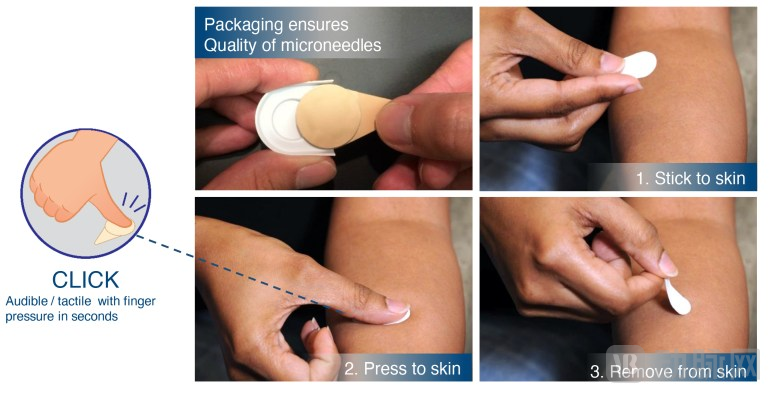
Simply apply, press, and remove to achieve painless drug delivery within minutes.
(Image source: Micron Biomedical, Inc. official website)
In 2014, Micron Biomedical was founded, with its headquarters located in Atlanta, United States. The company has three founders: Dr. Mark Prausnitz (who also serves as Chief Scientific Officer), Dr. Devin McAllister (Vice President of R&D), and Sebastien Henry (Vice President of Operations).
Among them, Dr. Mark Prausnitz is a renowned leading scientist in the global field of microneedle drug delivery research. He has provided consulting services on microneedles to dozens of companies; of the nearly 240 research papers he has published, approximately half are focused on microneedles. Currently, Dr. Prausnitz holds more than 30 U.S. patents that have been granted or are pending approval.
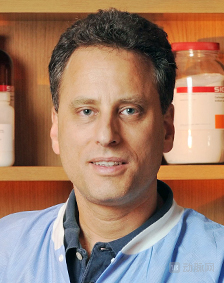
Dr. Mark Prausnitz, Co-founder & Chief Scientific Officer of Micron Biomedical
(Image source: Micron Biomedical, Inc. official website)
In 1994, Dr. Prausnitz earned his bachelor’s degree from Stanford University and received his Ph.D. in Chemical Engineering from the Massachusetts Institute of Technology (MIT). With over 25 years of research experience in the field of drug delivery, Dr. Prausnitz has co-founded four companies.
As a Regents’ Professor at the Georgia Institute of Technology (Georgia Tech), the J. Erskine Love Jr. Chair in Chemical and Biomolecular Engineering for Drug Design, and the Director of the Center for Drug Design, Development, and Delivery, Dr. Prausnitz has secured more than $30 million in funding for the university’s microneedle research.
The other two co-founders, Dr. Devin McAllister and Sebastien Henry, also bring over 20 years of extensive experience in research, product development, and project management within the pharmaceutical and medical device sectors, with a focus on microneedle research.
Steven Damon, the current CEO of Micron Biomedical, is also a seasoned and successful figure in the healthcare industry, with over 30 years of experience across various business roles in the medical device and pharmaceutical sectors.DamonHe previously served as President and Chief Executive Officer of 4P Therapeutics, a company he founded in 2011 and sold to Nutriband Inc. in 2018.DamonHe has also held positions in mergers and acquisitions, business development, and commercial development at companies including Femasys, Altea Therapeutics, DURECT, and Absorbable Polymers International.
Currently, in addition to his position at Micron, Damon serves as a board member of Temple Therapeutics and Nutriban, and is a long-standing member of Georgia Bio, where he also serves on its board of directors.
Overall, Micron’s core executive team exemplifies the typical combination of “top-tier scientists + seasoned business entrepreneurs” found in the U.S. corporate sector. Micron’s partners and funders mainly include public and private vaccine and pharmaceutical companies, the Centers for Disease Control and Prevention (CDC), the Bill & Melinda Gates Foundation, the United Nations Children’s Fund (UNICEF), and the Georgia Research Alliance, among others.

Micron Biomedical: Key Partners and Supporters
(Image source: Micron Biomedical, Inc. official website)
Currently, among the various product pipelines being developed by Micron Biomedical, research on the influenza microneedle vaccine and the measles-rubella (MR) microneedle vaccine is the most advanced, having already entered the clinical trial phase.
Influenza Microneedle Vaccine
Influenza, short for epidemic influenza, is an acute respiratory infectious disease caused by the influenza virus. Symptoms can range from mild to severe; in elderly individuals, children, or patients with compromised physical conditions, severe cases may lead to hospitalization or even death.
Due to the high mutability of influenza viruses, influenza is highly contagious, spreads rapidly, and has a high incidence rate. It has caused multiple explosive pandemics worldwide throughout history, making it a major public health concern of global attention. The "Spanish flu" outbreak in 1918 was the most severe influenza pandemic in world history, causing at least 50 million deaths globally, a toll that even exceeded the combined death tolls of World War I and World War II.
Influenza viruses are primarily transmitted through respiratory droplets and contact. Infected individuals can spread the virus to others via droplets when coughing or sneezing. Consequently, outbreaks frequently occur in congregate settings such as schools, childcare facilities, and nursing homes.
“Annual seasonal flu epidemics have created new barriers for patients who choose to receive injections at doctors’ offices or hospitals—receiving an injection increases the vaccine recipients’ exposure to crowded public spaces, thereby raising their risk of contracting the influenza virus,” said Steven Damon, CEO of Micron Biomedical. Since the onset of the flu epidemic, vaccination rates have declined significantly across all age groups, particularly among children, as parents weigh the risks and benefits of taking their children to doctors’ offices for vaccination during the outbreak.
“We increasingly need to change how and where vaccines and treatments are administered. Micron has developed a safe, simple, and easy-to-apply technology that can be mailed to patients for self-administration at home, or administered by other healthcare professionals, such as pharmacists, to limit patients’ exposure to crowded public healthcare settings,” said Damon.
Currently, Micron claimsIt has completed the Phase I clinical trial of its influenza microneedle vaccine developed for influenza and published the results in The Lancet, a renowned international weekly journal of general medicine.Studies have shown that the immune response generated in patients after receiving Micron’s influenza microneedle vaccine is comparable to, or even stronger than, that achieved with intramuscular influenza vaccination.
In addition, Micron has completed several studies on the tolerability, usability, and acceptability of its microneedle technology. A study published in the peer-reviewed journal Biomaterials indicated that the technology does not cause pain or swelling, with only mild erythema observed at the administration site.
Furthermore, a survey indicated that, given the comparable safety profiles of Micron microneedle vaccination and traditional intramuscular vaccination, patients generally prefer the painless, minimally invasive microneedle approach. Microneedle technology is clearly more favored than conventional needle-and-syringe injections.
Measles-Rubella Microneedle Vaccine
Measles is a highly contagious acute viral respiratory disease. According to data from the World Health Organization (WHO), measles outbreaks have increased significantly in recent years: global deaths rose by 50% between 2016 and 2019. The global ravages of the COVID-19 pandemic disrupted measles vaccination programs, exacerbating the measles crisis worldwide.
Rubella is a viral disease distinct from measles; although it is less contagious and less severe than measles, the two conditions share similar symptoms. Rubella infection in pregnant women can lead to serious birth defects in infants.
Micron believes that new approaches are urgently needed to increase measles and rubella vaccination coverage in order to achieve the goal of eliminating measles and rubella in WHO regions globally.
Micron Biomedical’s measles-rubella (MR) microneedle patch initiated Phase 1/2 clinical trials last July;This clinical trial is overseen by the Medical Research Council Unit The Gambia (MRCG) and led by Dr. Ed Clarke, Director of Infant Immunology at the London School of Hygiene & Tropical Medicine (LSHTM).
Micron Introduction: This trial will evaluate the safety and immunogenicity of Micron’s measles-rubella vaccine (MRV) microneedle patch (MRV-MNP) in adults, MRV-primed young children, and MRV-naïve infants, by comparing it with the traditional subcutaneous administration of measles-rubella vaccine in adults and children.
“This clinical trial marks the first evaluation of microneedle-based vaccine delivery technology in pediatric subjects, representing the leading advancement of Micron’s microneedle technology and further solidifying Micron’s position as a leader in microneedle-based vaccine and drug delivery technologies,” said Dr. Devin McAllister, Vice President of R&D at Micron.
Compared with traditional subcutaneous injection for administering measles-rubella vaccine to adults and children, the Micron Measles-Rubella Vaccine (MRV) microneedle patch is designed to be administered by personnel with minimal training, offering convenient delivery, generating no biohazardous sharps waste, requiring no vaccine reconstitution, and reducing cold chain requirements.“Regarded as one of the key measures for measles control in sub-Saharan Africa and other regions,” commented Dr. Clarke.
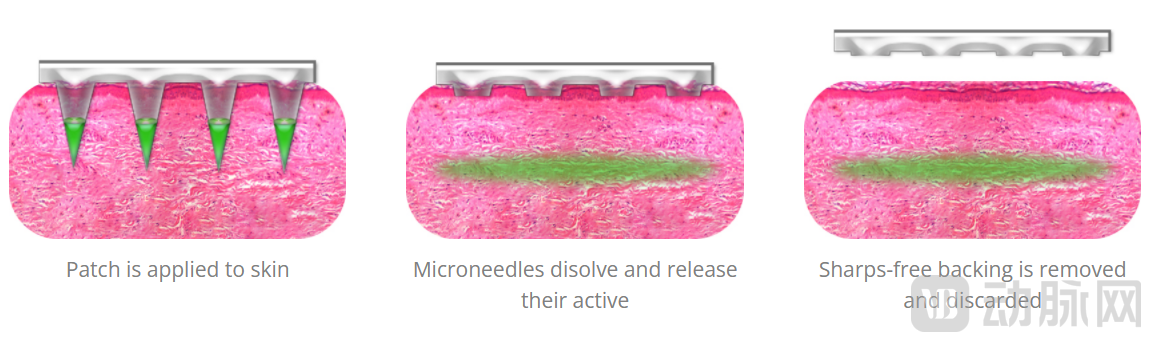
In the early stages of research on the measles-rubella vaccine microneedle patch project, Micron Biomedical received strong support from the Bill & Melinda Gates Foundation and UNICEF.
In addition to the influenza microneedle vaccine and the measles-rubella (MR) microneedle vaccine,Micron’s other microneedle vaccines under development also include a microneedle vaccine patch for the co-administration of IRV and IPV.(Funded by the Bill & Melinda Gates Foundation and the U.S. Centers for Disease Control and Prevention (CDC)), long-acting contraceptive microneedle patches, etc.
(Editor’s Note: Inactivated poliovirus vaccine (IPV) is used to prevent poliomyelitis; inactivated rotavirus vaccine (IRV) is used to prevent rotavirus gastroenteritis, with the primary target population being children aged 2 months to 3 years.)