Comprehensive Industry Insights into Radiopharmaceuticals: From Regulatory Barriers to Cutting-Edge Technologies

SmartNuclide
Radiopharmaceuticals Developer for Tumors
Radiopharmaceuticals, also known as nuclear medicines, refer to chemical and biological agents, as well as other radionuclide-labeled pharmaceutical preparations, that contain radioactive nuclides and are used for clinical diagnosis or treatment. Whether for diagnosis or therapy, the primary mechanism of nuclear medicines is related to their radioactivity; therefore, the presence of appropriate radionuclides is the most critical prerequisite for the efficacy of nuclear medicines.
Due to the unique nature of "nuclear" materials, acquiring nuclear raw materials requires advanced production and management capabilities, resulting in high entry barriers and a high degree of industry concentration. Currently, the upstream raw material supply in the radiopharmaceutical sector is heavily reliant on imports, while midstream production and distribution face significant construction barriers; the industry remains in its pre-explosive growth phase.
On the other hand, with policy support for the allocation of medical equipment in China, the rapid development of nuclear medicine departments, and the release of the first national guideline document targeting the application of nuclear technology in healthcare—the “Medium- and Long-Term Development Plan for Medical Radioisotopes (2021–2035)” in 2021—the macro-level foundation for industry growth has been progressively established.
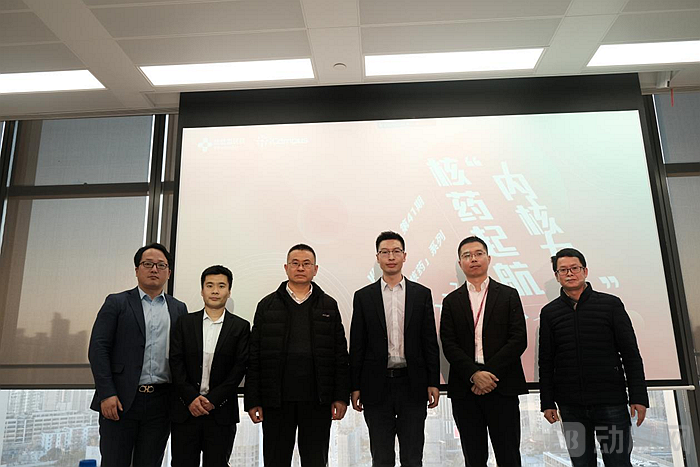
Recently,VCBeat New Medicine and iCampus,Invited toXu Tao, Founder and CEO of SmartNuclide; Ge Qiang, Deputy General Manager of Nurite; Yu Chenggang, Co-founder of Isotope; Xie Zhiqian, Business Director of Dongcheng Pharmaceutical; Huang Hao, Principal at AstraZeneca CICC Healthcare Industry Fund; Wang Hua, General Manager of Guangzhou Pinjingexperts from representative enterprises and investment institutions in the industry. These experts explored the theme “Nuclear Medicine Sets Sail: Core Power” from diverse perspectives, discussing the immense potential of nuclear medicine in fields such as medical isotopes, integrated diagnosis and therapy, and targeted tumor therapy.
Boundless Potential: Radiopharmaceuticals Are Not Limited to Precision Diagnosis,
Nanobody Radiopharmaceuticals Can Target Multiple Tumor Targets
In recent years, radiopharmaceuticals have become a hot investment sector. Multinational corporations such as Novartis, Bayer, and Johnson & Johnson have been actively engaged in transactions totaling over $10 billion, while domestic pharmaceutical companies are also strategically positioning themselves through overseas licensing and other means.
However, due to the scarcity of domestic reactors for medical isotope production, a heavy reliance on imports for isotope supply, stringent domestic regulation of “nuclear” materials, and the lack of a radiopharmaceutical management system aligned with current drug regulatory frameworks, China’s radiopharmaceutical industry remains in its early stages of development.
In 2012, the market size of radiopharmaceuticals in China was nearly RMB 2 billion; it reached RMB 4.34 billion in 2017 and is projected to exceed RMB 14 billion by 2025, with a compound annual growth rate (CAGR) of 20%, far surpassing the average growth levels of both the global market and the overall pharmaceutical industry.
So, what strategic layouts are Chinese pharmaceutical companies currently implementing based on the structure of radiopharmaceuticals? Xu Tao from SmartNuclide introduced that: “The molecular structure of radiopharmaceuticals is actually similar to that of antibody-drug conjugates (ADCs). Their structures mostly consist of a precursor, a linker, and an isotope. By using different medical isotopes, they can possess various functions such as imaging or therapy, with some isotopes offering both capabilities.
“Among these, precursors with different structures have a significant impact on subsequent drug development. Currently, the most commonly used precursors are small-molecule peptides. Due to their low molecular weight, short blood half-life, and renal metabolism, small-molecule peptides exhibit strong tumor penetration and low systemic toxicity, but they possess certain nephrotoxicity. Furthermore, it is challenging to screen for small-molecule peptides with high affinity and high specificity.”
In contrast, using nanobodies as precursors is different; nanobodies combine the advantages of both small-molecule peptides and antibodies, enabling strong tissue penetration while allowing for the selection of molecules with relatively high affinity and high specificity.However, due to the small molecular weight of nanobodies, their therapeutic use may cause certain nephrotoxic side effects. Therefore, pharmaceutical companies should prioritize addressing this issue during drug development.
“To address this issue, SmartNuclide has developed three major technology platforms: SmartSDBC (Site-Specific Surface Conjugation), SmartPaa (Pre-existing Antibody Resistance Technology), and SmartRel (Renal Brush Border Enzyme-Cleavable Linker). Among these, the SmartRel technology enables the cleavage of radioisotopes upon drug entry into the kidneys, allowing the isotopes to be metabolized in the bladder, thereby significantly reducing nephrotoxicity.”
“In addition, SmartNuclide has established a comprehensive R&D system for nanobody-based radiopharmaceuticals, encompassing platforms for antibody screening, antibody optimization, conjugation, radiolabeling, in vivo efficacy evaluation, and druggability assessment. The company is also constructing a GMP-compliant pilot-scale production facility for radiopharmaceuticals and has already initiated preclinical animal studies of nanobody-based radiopharmaceuticals targeting multiple antigens. Nanobody-based radiopharmaceuticals hold immense future potential in tumor suppression.”Xu Tao said.
"Asset-Heavy" Industries: Qualifications, Regulation,
Comprehensive Analysis of Technology, Regulatory Approval, R&D, and Manufacturing
First, it is widely recognized that radiopharmaceuticals are radioactive. Enterprises must obtain a Radiation Safety License of the appropriate level before engaging in their research and development and production. Companies can determine their production scale based on the clinical dosage of their products, and then apply for and construct facilities that meet the corresponding regulatory requirements.
Nurite Ge Qiang said:“A Radiation Safety License is merely a foundational permit for market entry, subject to stringent administration by the ecological environment authorities. Furthermore, all processes involving the distribution, transportation, importation, manufacturing, and use of radiopharmaceuticals are strictly regulated by relevant authorities, including the drug regulatory agencies, the Commission of Science, Technology and Industry for National Defense, transport departments, the National Health Commission, and Customs. In the course of using radiopharmaceuticals, hospitals are required to obtain a Radiation Safety License issued by the ecological environment authorities, a Medical Radiation Diagnosis and Treatment License issued by the health commission, and a Radiopharmaceutical Use License issued by the drug regulatory authorities.”
“After clearing the qualification hurdles, high barriers in talent and capital have also been erected.In China’s higher education system, few universities offer disciplines related to radiopharmaceuticals, such as nuclear physics, radiation protection, radiochemistry, pharmacy, and medicine, resulting in a shortage of talent for the research, development, and production of radiopharmaceuticals. The radiopharmaceutical industry is capital-intensive, requiring substantial investment in R&D for new projects. Moreover, the equipment required for the R&D and production of radiopharmaceuticals is genuinely “heavy” in terms of quality, with production lines often weighing dozens of tons.
“The third barrier pertains to radionuclide preparation technologies and industry resources."During the application process for new radiopharmaceuticals, regulatory authorities not only require technical documentation for the final formulation but also demand that enterprises provide technical information related to radionuclide production. However, due to industry confidentiality, radionuclide suppliers often do not disclose technical details regarding radionuclide production when selling their products, which has led to the failure of approval for some products. Therefore, if a company is committed to developing therapeutic radiopharmaceuticals, it is advisable to secure its own supply chain for radionuclide raw materials."
“This is why radiopharmaceuticals are so expensive, as the upfront costs for qualifications, management, and development are exceedingly high. During its early startup phase, Nuiret spent three years constructing relevant facilities and applying for the necessary qualifications. To date, we have obtained a Radiation Safety License covering one Class A facility, two Class B facilities, and one Class C facility. We maintain an open attitude toward the industry and welcome partners to leverage Nuiret’s platform for the research, development, and production of radiopharmaceuticals.”
“Because we believe that the rapid development of monoclonal antibody drugs and immunotherapy has brought new opportunities for the development of radiopharmaceuticals, and relevant documents such as the ‘Medium- and Long-Term Development Plan for Medical Isotopes’ issued by the state also provide guarantees for radionuclides in the future.”Ge Qiang introduced.
As the field of nuclear medicine continues to expand, with the ongoing increase in PET-CT and SPECT-CT installation capacity and the integration of nuclear medicine with interventional radiology, breakthroughs are expected in areas such as pretargeted drug delivery, local administration, combination therapy, and the accessibility of alpha-emitting radionuclides, leading to a thriving industry.
Upstream and Downstream Collaboration:
Traditional Advantages + Innovation Strategy: Jointly Driving the Development of Radiopharmaceuticals
Therapeutic radiopharmaceutical products in China are still in their nascent stage, and the core equipment for the production of medical radioisotopes in the upstream industry is likewise developing in tandem with the sector. In this regard, Yu Chenggang from Isotope expressed that“Accelerator-related technologies have become relatively mature both domestically and internationally. Building on this foundation, we can optimize nuclear target preparation techniques to shorten production time, improve target material utilization, reduce impurity elements, and decrease the demand for targets during nuclide irradiation cycles, thereby lowering isotope production costs. Secondly, high-energy, high-current accelerator bombardment generates significant heat; ensuring that targets remain intact during radioisotope production presents a substantial technical barrier. Thirdly, it is necessary to improve the efficiency of chemical separation and extraction of produced isotopes, as well as the recovery rate of target materials. Currently, many domestic enterprises each possess distinct advantages in overcoming these barriers, with their respective technologies exhibiting both commonalities and differences.”
Xie Wenming of CNNC Tongchuang discussed the expansion from core equipment for medical radioisotope production to the manufacturing and localization of medical isotopes.“Radionuclides are essential components of radiopharmaceuticals. Due to the highly specialized nature of ‘nuclear’ properties, the production and regulation of radionuclides are subject to extremely strict controls. Internationally, they are currently regulated as medical devices, whereas in China, oversight of ‘nuclear’ matters is primarily reflected at the regulatory level. The implementation and promotion of the Medium- and Long-Term Development Plan for Medical Isotopes (2021–2035), released last year, were made possible through the joint efforts of the China Atomic Energy Authority and seven other ministries. Even for medical isotopes alone, the underlying processes are remarkably complex. On another note, alongside the plan’s implementation, we have indeed observed industry transformations and positive signals from the state, such as encouraging private enterprises to participate in the nuclear sector and promote the development of radiopharmaceuticals.”
Amid the development of radiopharmaceuticals, financing and M&A activities in this sector have been relatively active in recent years. Overseas radiopharmaceutical projects have successively gained approval, while dedicated industry players are gradually emerging in China, such as Dongcheng Pharmaceutical. According to Xie Zhiqian of Dongcheng Pharmaceutical,“Whether through mergers and acquisitions or strategic introductions, these moves represent positive developments for the entire industry. As more enterprises and institutions join the field, there will be greater investment of industrial resources and expanded opportunities for collaboration. In the face of intensifying competition from an increasing number of players entering the sector, Dongcheng Pharmaceutical will leverage its first-mover advantage derived from its early layout in hardware-related barriers to entry. Meanwhile, competition has also instilled a sense of urgency in the development of therapeutic radiopharmaceuticals. We continue to maintain an open attitude, collaborating with the domestic industry to integrate our traditional strengths with our future development strategies, thereby jointly advancing the development of radiopharmaceuticals in China.”
As a representative of emerging enterprises in the domestic innovative radiopharmaceutical R&D sector, Ge Qiang of NewRay stated“As an innovative enterprise, to succeed in this sector, we must continuously develop new product varieties. Our core competitiveness is reflected in the new technologies and related patents currently held by the company. Furthermore, since our inception, we have maintained an open mindset, engaged in external collaborations, and actively introduced foreign technologies into China. Boston Scientific is one of our shareholders, bringing us external resources and helping to form an international management team. We also welcome domestic and international enterprises to conduct innovative R&D work on our platform.”
In response to the industry’s collaborative and open stance, Huang Hao, Principal of the AstraZeneca CICC Healthcare Industry Fund, stated“Radiopharmaceuticals will hold a pivotal position in the future landscape of anti-tumor therapies. Through the AstraZeneca CICC Healthcare Industry Fund, we look forward to establishing strong partnerships with domestic industry peers, thereby continuously empowering both R&D and commercialization efforts to jointly advance the innovation of locally developed radiopharmaceuticals. I also believe that within this sector, Radionuclide Drug Conjugates (RDCs) will emerge as a key focus area for radiopharmaceutical development, serving as targeted carrier-based agents and driving the iterative evolution of next-generation radiotherapies.”
In the face of development in emerging fields, upstream and downstream industries inevitably encounter various “growing pains” amid competition and cooperation.In response, Yu Chenggang stated, “On a personal level, I am more concerned about someTechnologyissues. Because in the process of isotope production, how to achieve microgram-level production and remove impurities at the microgram level is currently the main barrier.”
Ge Qiang said, "Collaboration within the industry remains relatively limited."The primary reason is that there are currently few radiopharmaceutical products, resulting in a small market size. The demand for isotopes from existing approved radioactive drugs is relatively low. The supporting industrial chain and services require continuous integration and improvement as the industry develops."
Xie Wenming added: “The nuclear medicine industry chain is driven in a cascading manner; I believe that while it is being pulled, it also needs to be pushed.“What is the approach to driving growth? It involves developing a wider variety of products by all R&D professionals present, as well as strengthening the construction of nuclear medicine departments in hospitals and other service providers. Only by pursuing both strategies simultaneously can the industry achieve faster development.”
Xie Zhiqian continued, “In terms of challenges, the supply of radionuclides is indeed a core issue in the industry chain.Enterprises within the industry chain should maintain a strategic relationship of mutual trust and cooperation to jointly promote the domestic supply of radionuclides. Meanwhile, during quality control processes, inter-sectoral collaboration is also required to enable nuclear industry professionals to understand pharmaceutical quality standards and provide medical isotopes that meet regulatory requirements.
Finally, regarding the future development of the radiopharmaceutical industry, Huang Hao stated“Currently, China’s radiopharmaceutical industry still lags behind its international counterparts at the foundational level. For instance, unlike Europe and the United States, China does not yet have a nationwide network of national laboratories open to the industry. In practice, large-scale accelerators are often required to efficiently synthesize specific radionuclides and achieve economies of scale. Nevertheless, we have reason to believe that as policies are gradually and systematically liberalized, the radiopharmaceutical sector will become as dynamic and innovative as other prominent fields such as tumor immunotherapy and small-molecule targeted drugs, ultimately benefiting cancer patients both in China and abroad.”
For more information on this issue's event, please scan the QR code below to access the video replay.

For more information on the radiopharmaceutical industry, please scan the QR code below to add our assistant and join the “Radiopharmaceuticals” Industry Exchange Group.