

PADN Emerges as a Promising Intervention in the $10B Pulmonary Hypertension Market: Multicenter Trials Show Strong Clinical Outcomes

Pulnovo Medical
Developer of Medical Devices in the Field of Pulmonary Hypertension Treatment
Pulmonary hypertension, with its high mortality rate and refractory nature, has become a grim reaper looming over patients.
According to the latest report in The Lancet, in 2021, the number of people with pulmonary hypertension accounted for 1% of the world's total population, with approximately 40 million patients worldwide. Apart from chronic thromboembolic pulmonary hypertension, which has the potential to be "cured," there are currently no curable subtypes within the broader spectrum of pulmonary hypertension.
Focusing on this refractory disease that plagues physicians worldwide, on February 26, 2022, at the inaugural academic conference of the year for the Pioneer Academy of the National Standardized Pulmonary Vascular Disease Center under the Cardiovascular Disease Quality Improvement (CDQI) Initiative, more than twenty domestic experts in the field of pulmonary hypertension convened online.Preliminary Results of the China Multicenter Clinical Study on PADN, the World’s Only Device-Based Therapy for Pulmonary Arterial Hypertension。
PADN, an original therapy developed in China, has garnered widespread global attention since its inception and previously received Breakthrough Therapy Designation from the FDA. Previously, experts worldwide were awaiting further clinical trial evidence to demonstrate its efficacy and effectiveness.
At the inaugural symposium of the Pioneer Academy series, the principal investigator of the PADN study presented six-month follow-up data for a subset of patients from the CFDA-regulated study. Leading Chinese experts in pulmonary hypertension also explored the latest clinical advances and shared their experience, focusing on the diagnosis and management of various subtypes of pulmonary hypertension.
Pulmonary Hypertension (PH) is a significant pulmonary vascular disease, characterized as a clinical and pathophysiological syndrome marked by elevated pulmonary vascular resistance and pulmonary arterial pressure. It can progress to right heart failure and even death, resulting in high rates of disability and mortality.
Among patients with Group 1 pulmonary arterial hypertension (PAH), PAH associated with congenital heart disease (CHD), heritable pulmonary arterial hypertension (HPAH), and drug- and toxin-induced PAH are common; among PAH associated with other risk factors, connective tissue disease (CTD) is the most prevalent.
Currently, the treatment of pulmonary hypertension still relies primarily on targeted therapies. In the pre-targeted therapy era, the median survival for patients with idiopathic pulmonary arterial hypertension (IPAH) was only 2.8 years; the advent of targeted drugs has significantly improved survival rates in IPAH patients.
However, the ceiling effect of targeted drugs may lead to diminished efficacy and other issues, resulting in suboptimal overall treatment outcomes.
In 2012, China's original PADN technology ushered in a new era of interventional therapy for pulmonary hypertension.The PADN procedure primarily targets the pathophysiological mechanism of pulmonary arterial hypertension (PAH), wherein abnormal sympathetic hyperinnervation of the pulmonary arteries induces vasoconstriction. By utilizing a uniquely designed radiofrequency ablation catheter to ablate the sympathetic nerves innervating the pulmonary arteries, the procedure aims to alleviate vasoconstriction.
Since its inception, PADN, a device-based therapy originally developed in China, has garnered widespread attention. What are the long-term prognostic outcomes for patients with pulmonary arterial hypertension (PAH) undergoing PADN treatment? Its efficacy still requires validation through long-term follow-up data.
The latest answers have been provided by the PADN-CFDA domestic multicenter clinical study, which enrolled 128 patients with pulmonary arterial hypertension (PAH).Preliminary results indicate that PADN can effectively improve hemodynamics, exercise tolerance, and clinical outcomes in patients with pulmonary hypertension.
Professor Chen Shaoliang from Nanjing Hospital Affiliated to Nanjing Medical University, drawing on his extensive clinical experience, provided a detailed interpretation of selected clinical study data for PADN under the China Food and Drug Administration (CFDA). Comparative analyses of key endpoints from these clinical studies, including six-minute walk distance and pulmonary vascular resistance, definitively demonstrated that PADN offers a novel and effective therapeutic option for the clinical management of pulmonary hypertension, with highly positive data outcomes.
At the conference, Professor Chen Shaoliang stated: “For patients with pulmonary hypertension, early detection and treatment, along with the timely initiation of PADN procedure, are more beneficial for disease management and increase the likelihood of comprehensive improvement in relevant clinical indicators.“Many clinical experts participating in the PADN-CFDA study expressed at the event that the clinical research data from the PADN-CFDA trial were highly impressive. They look forward to the public release of the final results, enabling this original technology to benefit more patients with pulmonary hypertension and enhance their health resilience.”
Currently, there are diverse treatment options for PAH, including pharmacological therapy, lung transplantation, and interventional procedures. The advent of targeted therapies has significantly improved the survival rate of patients with idiopathic pulmonary arterial hypertension. However,PAH Still Faces the Challenge of Being Difficult to Cure and Prone to RecurrenceThe term “Incurable” in the theme of this conference precisely reflects the clinical understanding of PAH.
For patients with secondary pulmonary arterial hypertension (PAH), timely initial diagnosis and standardized subsequent treatment can significantly improve prognosis. Moreover, in addition to controlling pulmonary artery pressure, it is essential to prioritize the management of the underlying disease. The progress in treating the underlying condition is crucial for improving and stabilizing PAH.
"In complex clinical cases, how can PADN play a role? Experts from multiple clinical trial centers conducted an analysis of clinical cases at the conference."
Connective tissue diseases are a group of autoimmune disorders involving multiple systems and organs, including systemic lupus erythematosus and rheumatoid arthritis, with pulmonary arterial hypertension (PAH) being one of the severe complications.CTD-PAH: Insidious Clinical Presentation, Challenging Early Diagnosis, and Suboptimal Treatment Efficacy—A Major Contributor to Mortality in Patients with Connective Tissue DiseasesCurrently, pharmacological therapy remains the primary option for CTD-PAH. When drug efficacy reaches a “ceiling” and fails to control pulmonary arterial pressure, can interventional therapy improve patient prognosis?
Professor Yang Zhenwen from Tianjin Medical University General Hospital shared his clinical experience in treating connective tissue disease-associated pulmonary arterial hypertension (CTD-PAH). A 40-year-old female patient with a more than 10-year history of mixed connective tissue disease, pulmonary valve and tricuspid regurgitation, and pulmonary arterial hypertension underwent pulmonary artery denervation (PADN) after clinical enrollment. No adverse events such as pulmonary artery perforation or acute thrombosis occurred postoperatively. At six months after the procedure, her pulmonary artery systolic pressure (PASP) decreased by 12 mmHg, and her mean pulmonary arterial pressure (MPAP) decreased by 5 mmHg.
Overall, PADN combined with pharmacological therapy can further improve hemodynamics and clinical status in patients with CTD-PAH.Treatment of CTD-PAH emphasizes “dual-target” therapy, giving equal weight to immunosuppressive treatment for connective tissue disease and PAH-specific therapy.。
Among cases of secondary pulmonary arterial hypertension (PAH), congenital heart disease-associated pulmonary arterial hypertension (CHD-PAH) is the most common cause in China. Many patients with congenital heart disease lose the opportunity for surgical intervention due to comorbid PAH.
Based on hemodynamic characteristics, CHD-PAH can be classified into flow-dependent and resistance-dependent types. In patients with flow-dependent PAH, although pulmonary arterial hypertension (PAH) is present, the pulmonary vascular disease has not yet progressed to severe pathological changes; pulmonary artery pressure can return to normal after closure of the defect. In contrast, in patients with resistance-dependent PAH, irreversible pathological changes have already occurred in the pulmonary vasculature; after defect closure, pulmonary artery pressure fails to normalize or may even increase, resulting in persistent postoperative PAH.
The "Chinese Guidelines for the Diagnosis and Treatment of Pulmonary Hypertension (2021 Edition)" proposes that treatment strategies for congenital heart disease-associated pulmonary arterial hypertension (CHD-PAH) should be determined based on PAH hemodynamics. For patients with dynamic PAH, surgical closure of the defect is the fundamental solution, and defect repair or interventional occlusion should be performed as early as possible. For patients with resistant PAH, long-term targeted drug therapy, combined heart-lung transplantation, or lung transplantation combined with cardiac defect repair may be adopted.
Therefore, early diagnosis is equally important for patients with CTD-PAH. Professor Zhang Caojin from Guangdong Provincial People's Hospital stated that, in clinical practice, physicians typically assess changes in heart murmurs through auscultation and observe changes in left ventricular size and transpulmonary valve blood flow velocity. When signs such as increased pulmonary blood flow and decreased pulmonary vascular resistance are observed, invasive catheterization is then performed based on these findings.
In the clinical management of patients with connective tissue disease-associated pulmonary arterial hypertension (CTD-PAH), Professor Zhang Caojin presented a case of a 63-year-old patient with an atrial septal defect. The patient had experienced bilateral lower extremity edema for six months, had previously undergone atrial septal repair, and was enrolled in the PADN-CFDA surgical group.Postoperative mean pulmonary arterial pressure (MPAP) decreased by more than 10 mmHg, and pulmonary artery systolic pressure (PASP) decreased by more than 13 mmHg; at the 6-month postoperative follow-up, both MPAP and PASP were within the normal range.
This case report provides empirical evidence that, for a subset of patients with connective tissue disease-associated pulmonary arterial hypertension (CTD-PAH), clinical outcomes can be significantly improved by combining surgical interventions such as pulmonary artery denervation (PADN) with targeted pharmacological therapy.
In summary, CTD-PAH poses a serious threat to human health, necessitating earlier and more aggressive clinical intervention, along with regular monitoring and management of patients. In the treatment of patients with CTD-PAH, adherence to individualized therapy is essential to hopefully achieve comprehensive improvement in patient prognosis.Currently, targeted therapies can create surgical opportunities for patients preoperatively and improve cardiac function postoperatively. As an innovative device-based therapy, PADN, when combined with targeted pharmacotherapy, will significantly enhance therapeutic efficacy.
When all other causes are excluded, patients are classified as having idiopathic pulmonary arterial hypertension (IPAH). The etiology of IPAH remains unclear, its clinical manifestations are complex, and it predominantly affects women. IPAH progresses rapidly and carries a poor prognosis, representing the final “major battleground” in cardiopulmonary medicine. For patients with IPAH, early diagnosis and standardized treatment and management are equally critical.
Professor Guo Xiaomei from Tongji Hospital stated, “Through familial relationship analysis, we can only rule out familial pulmonary arterial hypertension, but cannot exclude patients with genetic abnormalities or mutations associated with heredity. Among more than 50 patients with idiopathic pulmonary arterial hypertension (IPAH) at our hospital, approximately 30 had gene mutations. Therefore, genetic factors account for a significant proportion of IPAH cases. In particular, mutations at multiple sites in the bone morphogenetic protein type II (BMPR2) gene can lead to the development of pulmonary arterial hypertension (PAH). Genetic testing is recommended for these patients.”
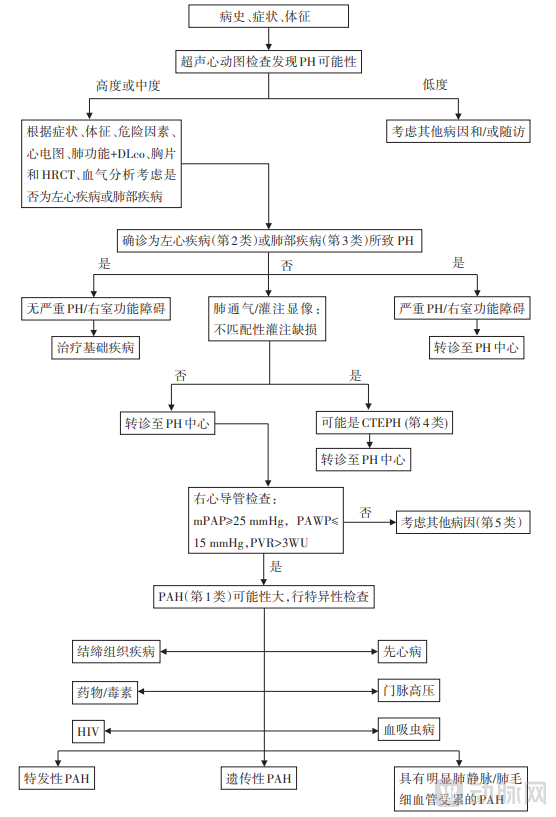
PH Diagnostic Flowchart. Source: Chinese Guidelines for the Diagnosis and Treatment of Pulmonary Hypertension (2021 Edition)
Patients with idiopathic pulmonary arterial hypertension (IPAH) often present with no obvious symptoms in the early stages, making early clinical diagnosis challenging. On average, it takes two years from symptom onset to a confirmed diagnosis of IPAH. Due to the absence of a clear etiology and a lack of specific clinical manifestations and diagnostic methods, the diagnosis of IPAH primarily relies on the stepwise exclusion of other diseases or causes associated with pulmonary arterial hypertension (PAH).
Professor Guo Xiaomei introduced that currently, treatment options for patients with idiopathic pulmonary arterial hypertension (IPAH) include targeted pharmacotherapy and surgical interventions, butMore than one-third of patients discontinue or reduce the dosage of targeted therapies due to intolerance of side effects; therefore, when pharmacological treatment reaches its efficacy ceiling, there is a clinical need for innovative interventional therapies.
Taking a 57-year-old patient with complex pulmonary arterial hypertension (PAH) as an example, she suffered from "pulmonary hypertension, right heart dysfunction, atrial fibrillation, and chronic erosive pneumonia" and was included in the PADN surgery group. Six months postoperatively, her pulmonary vascular resistance (PVR) decreased by 71.4%, and her 6-minute walk distance (6MWD) increased multifold.
In general, targeted drug therapy serves as the cornerstone of treatment for idiopathic pulmonary arterial hypertension (IPAH), tailored to the patient’s specific condition, disease stage, and economic status. Comprehensive treatment strategies incorporating novel technologies, such as pulmonary artery denervation (PADN), may be prioritized. Meanwhile, IPAH management should emphasize early diagnosis, comprehensive assessment, standardized treatment, and rigorous follow-up.
Professor Zhai Zhenguo from China-Japan Friendship Hospital added, “Absolute idiopathic pulmonary arterial hypertension (IPAH) does not exist; it is merely a reflection of the current limitations in diagnostic capabilities. Due to the diverse etiologies and clinical complexity of patients with specific forms of pulmonary arterial hypertension (PAH), multidisciplinary collaborative diagnosis and treatment are required in clinical practice. Physicians must clearly recognize the scope of their therapeutic capabilities, understanding which cases they can manage and which they cannot.”
The company supporting the R&D of PADN technology is Pulnovo Medical, a star enterprise in the industry.Leveraging Pulmonary Hypertension Technology to Build a Global OTM Innovative Technology Platform。
Previously, medical device innovation in China was largely imitative, lacking foundational innovative capabilities. Pulnovo Medical has been dedicated to R&D targeting pulmonary arterial hypertension—a condition with significant unmet clinical needs—for ten years. This year, the company will launch global multicenter clinical trials and gradually expand into the global market. Pulnovo Medical has now established multidimensional, composite capabilities for global innovation.
In 2019, global sales of the top eight originator drugs for pulmonary arterial hypertension (PAH) amounted to approximately USD 5 billion, representing a slight year-on-year decline. This figure excludes phosphodiesterase-5 (PDE-5) inhibitors and prostaglandin-series medications indicated for erectile dysfunction (ED). The overall global market for PAH drugs is estimated at around USD 10 billion. Meanwhile, since March 2021, ambrisentan, a targeted therapy for PAH, has been included in China’s National Reimbursement Drug List, further alleviating the medication cost burden for PAH patients.
Dr. Lakshmi Dharmarajan, Senior Analyst for Cardiovascular & Metabolic Diseases at GlobalData, stated that although the pulmonary arterial hypertension drug market has experienced rapid growth in recent years, the clinical needs of many patients remain poorly met, and there is still no curative treatment available.
Pulnovo Medical’s products feature globally novel, original technologies and possess strong international competitiveness. As product development advances, they are poised to become an important complementary therapy in the global market for pulmonary arterial hypertension.
Previously, Pulnovo Medical secured over RMB 100 million in financing.Garnered interest from top-tier funds such as OrbiMed, Cenova Capital, Lilly Asia Ventures (LAV), and GaoRong Capital.
Rooted in the exploration of proprietary technologies, and having undergone the arduous journey from scratch to establishment, Pulnovo Medical has consistently maintained a rigorous and scientific approach to innovative research. The company is committed to robust and efficient execution, staying true to its original mission of enhancing patients’ health resilience. With the upcoming release of PADN-CFDA clinical data, Pulnovo Medical aims to provide genuine hope for the future treatment of patients with pulmonary arterial hypertension.