

AlphaGen Therapeutics Secures Tens of Millions in Seed Funding Led by Eight Roads Ventures to Advance Next-Generation Radioligand Therapies

Eight Roads
Venture Capital Firms
Shanghai Hezhou Pharmaceutical Co., Ltd. (hereinafter referred to as “Hezhou Pharma”) announced today the completion of a seed funding round amounting to tens of millions of U.S. dollars, co-led by FIL Capital.As a company focused on innovative targeted radioligand therapies (RLT), Hezhou Pharmaceutical is dedicated to the research and development, innovation, and industrialization of next-generation radiopharmaceuticals.
Hezhou Pharmaceutical was co-incubated by a team of investors with extensive experience in startup incubation and Professor Cheng Zhen, a leading scientist in the field of radiopharmaceuticals. The company has established a product pipeline centered on the innovative radionuclide Pb-212, with its lead candidate having entered early-stage clinical development, positioning it to potentially become China’s first Pb-212-based radiopharmaceutical. Looking ahead, the company will continue to build a pipeline of next-generation innovative radiopharmaceutical therapies. This seed financing round will accelerate the clinical development of Hezhou Pharmaceutical’s Pb-212 pipeline and support the construction of a leading radiopharmaceutical R&D technology platform and future product pipelines.
The Global Radiopharmaceutical Market Reaches $7 Billion¹, and is currently in a phase of rapid growth. Among these, alpha-emitting radiopharmaceuticals, as an emerging therapeutic modality, are leading the next wave of innovation in the field of nuclear medicine. However, the alpha-emitting radionuclides that have been extensively studied and show more advanced clinical progress in Europe and the United States are predominantly based on Actinium-225 (Ac-225). The global supply of this radionuclide is extremely limited, posing significant challenges to clinical availability and commercial production. The dilemma of insufficient radionuclide supply is particularly pronounced in the Chinese market. Due to a severe lack of domestic production capacity, many other therapeutic radionuclides, such as Lutetium-177 (Lu-177), in addition to Ac-225, are facing a situation where demand exceeds supply. This will pose challenges to the production, clinical supply, and commercialization of radiopharmaceuticals in China. Lead-212 (Pb-212) is a novel alpha-emitting radionuclide. Shanghai Hezhou Pharmaceutical Co., Ltd. possesses highly innovative separation and purification technology for Pb-212, enabling stable, large-scale production and supply, thereby addressing the supply constraints faced by other alpha-emitting radionuclides.
In addition,Professor Cheng Zhen, a renowned scientist in the global field of radiopharmaceuticals and Director of the Center for Molecular Imaging at the Shanghai Institute of Materia Medica (SIMM), Chinese Academy of Sciences, has officially joined Hezhou Pharmaceutical as Co-Founder (Science) and Chair of the Scientific Advisory Board (SAB).Professor Cheng is a Fellow of the Royal Society of Chemistry (RSC) and the International Society for Optical Engineering (SPIE). His research focuses on the discovery and development of novel theranostic agents, non-invasive imaging technologies, and bionanotechnologies for the early detection and treatment of cancer. Prior to joining the Shanghai Institute of Materia Medica, Chinese Academy of Sciences, Professor Cheng held long-term positions at Stanford University’s Molecular Imaging Program at Stanford (MIPS), the Bio-X Center, the Canary Center at Stanford for Cancer Early Detection, and the Department of Radiology, where he served as Associate Professor of Radiology. He has also served as President of the Chinese Society of Nuclear Medicine and Molecular Imaging and as a Board Member of the Society of Nuclear Medicine and Molecular Imaging (SNMMI). As a co-founder of the company, Professor Cheng will be deeply involved in guiding the strategic planning and pipeline development of Shanghai Hezhou Pharmaceutical Co., Ltd.
Professor Cheng Zhen
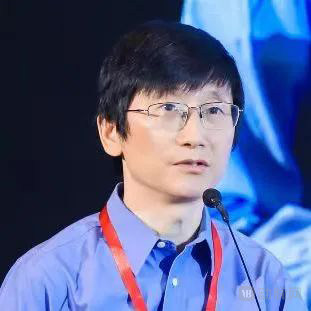
I am delighted to have co-founded Hezhou Pharmaceutical with FIL Capital, a globally leading venture capital firm. I firmly believe that the company’s breakthrough scientific achievements and its cutting-edge Pb-212 technology platform will drive the development of radiopharmaceuticals in China and around the world. I look forward to working closely with our team to fulfill Hezhou Pharmaceutical’s mission of developing more groundbreaking innovative therapies for patients.
Lin Rui | Senior Partner, FIL Capital
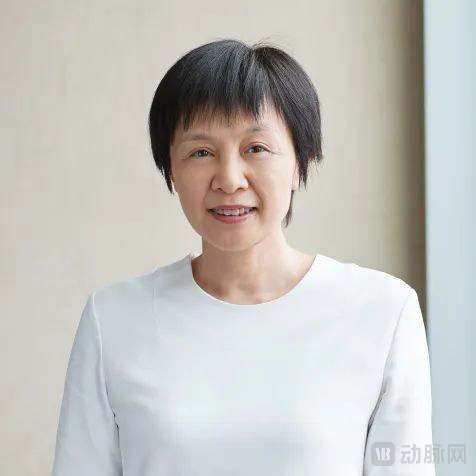
The nuclear medicine industry presents significant development opportunities in both China and the global market. Prior to establishing Shanghai Hezhou Pharmaceutical Co., Ltd., we had been actively monitoring this sector for many years. We are confident that by leveraging Hezhou Pharmaceutical’s leading technology platform and Professor Cheng’s extensive industry experience, combined with FIL Capital’s domestic and international industry network, we can accelerate the development and commercialization of differentiated, precision-targeted radiopharmaceuticals.
This round of financing was co-led by FIL Capital and its sister funds.
About Hezhou Pharmaceutical
AlphaGen Therapeutics, co-incubated and founded by FIL Capital in partnership with Professor Cheng Zhen, a pioneering scientist in radiopharmaceuticals, is a radiopharmaceutical company dedicated to the research, development, innovation, and commercialization of innovative targeted radioligand therapies. AlphaGen Therapeutics is committed to leveraging its leading technology platform to develop targeted radiopharmaceutical therapies for patients in China and worldwide.
About FIL Capital

FIL Capital is a global venture capital firm backed by Fidelity Investments, with investment teams across China, India, Japan, Europe, and the United States, managing over $11 billion in assets. With 50 years of venture capital experience, FIL Capital has invested in more than 300 companies worldwide in the healthcare and technology innovation sectors, including Alibaba, Beam Therapeutics, Pony.ai, Innovent Biologics, Insilico Medicine, Hibob, Simcere Pharmaceutical Group, Semma Therapeutics, and WuXi AppTec.
References:
1. MEDraysintell Nuclear Medicine Report Edition 2022