

Beta Bionics Secures $57M Series C Funding and Advances iLet Bionic Pancreas Toward Commercialization Following FDA Breakthrough Device Designation

Beta Bionics
Developer of Integrated Bionic Pancreas System
The pancreas is a vital secretory gland in the human body, performing both endocrine and exocrine functions. Within its endocrine function, two primary cell types are involved: alpha cells secrete glucagon, a hormone that raises blood glucose levels, while beta cells secrete insulin, a hormone that lowers blood glucose levels. Diabetes mellitus occurs when there is an absolute deficiency in insulin secretion. Currently, the mainstay of diabetes treatment involves long-term insulin injections, which often lead to side effects such as hypoglycemia and impose significant psychological stress on patients. Recently, a U.S.-based company dedicated to artificial pancreas research announced the completion of a new round of financing. In the near future, patients with diabetes may have access to a novel therapeutic option that frees them from the burden of manual administration.
On February 20, clinical-stage medical technology company Beta Bionics announced the completion of a $57 million Series C financing round. The funds will be used for product development, regulatory submissions, and the commercialization of the iLet Bionic Pancreas System following FDA approval.
Based in Massachusetts, USA, and founded in 2015, Beta Bionics was merely a startup just a few years ago. In a short span of time, however, the company has achieved remarkable growth, with its financing rounds escalating from $5 million in Series A to $57 million in Series C. The journey behind this significant leap warrants closer examination. It all begins with the story of Dr. Ed Damiano, the founder of Beta Bionics.
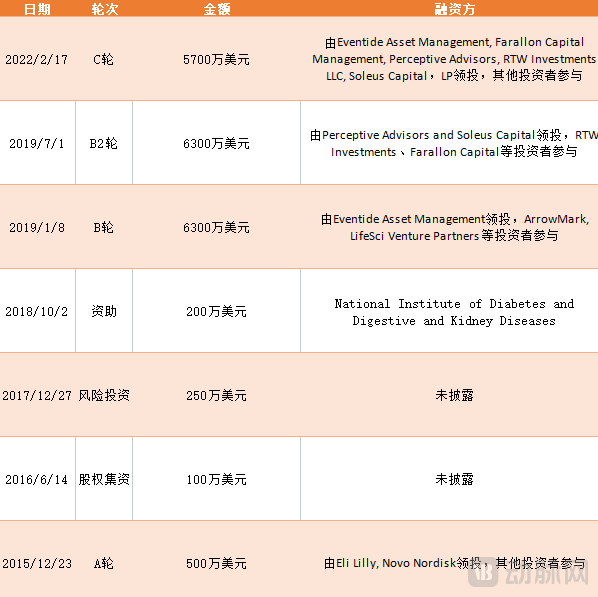
Beta Bionics’ Historical Financing Rounds (Data sourced from the Beta Bionics official website and Crunchbase)
As described on its official website, Beta Bionics is a company truly born out of customer needs. Dr. Ed Damiano, a Professor of Biomedical Engineering at Boston University, has a son named David who was diagnosed with type 1 diabetes at the age of 11 months. Type 1 diabetes is an incurable disease that accounts for approximately 5% of all diabetes cases and primarily affects children and adolescents. The condition poses significant health risks, with about 80% of patients suffering from unstable blood glucose levels and complications such as nephropathy and cardiovascular and cerebrovascular diseases. Although the condition can be managed through subcutaneous insulin injections, patients frequently experience syncope due to hypoglycemia, and missing an insulin dose can be life-threatening—a reality faced by Dr. Damiano’s son. Witnessing his child’s suffering, Dr. Damiano joined forces with other parents of children with diabetes to establish Beta Bionics, focusing on the design, development, and commercialization of the iLet Bionic Pancreas System.
The entrepreneurial venture was not undertaken without preparation; the team at Beta Bionics possesses extensive expertise in the use of bionic pancreas systems for diabetes treatment.
Dr. Ed Damiano is the co-founder of Beta Bionics and currently serves as its President and Chief Executive Officer. In 2004, Dr. Damiano became a Professor of Biomedical Engineering at Boston University, laying the groundwork for Boston University’s licensing of Beta Bionics’ iLet-related technologies. Since his son David was diagnosed with type 1 diabetes, he has been dedicated to developing a dual-hormone bionic pancreas, having focused on this area for over a decade.
Firas El-Khatib is a co-founder of Beta Bionics and currently serves as Vice President of Research and Innovation. Since his doctoral studies, he has been dedicated to the research of bionic pancreas systems. Firas developed the foundational control algorithms for autonomous drug delivery in bionic pancreas systems and holds multiple patents related to the underlying technology.
Mike Rosinko serves as Chief Technology Officer. Prior to joining Beta Bionics, Mike was Vice President of Research and Development at Tandem Diabetes Care, where he led the technical team in developing and launching the t:slim insulin pump, making significant contributions to diabetes treatment. It is precisely this professional team that gives Beta Bionics a competitive edge in technology research and development.
Currently, approximately 537 million people aged 20 to 79 worldwide are living with diabetes, a figure projected to rise to 643 million by 2030 and 783 million by 2045. In 2021 alone, around 6.7 million deaths were attributed to diabetes or its complications, equating to one death every five seconds. As the prevalence of diabetes continues to surge, there have been no fundamental breakthroughs in treatment modalities.
With the advancement of science and technology, novel diabetes treatment modalities such as insulin pumps and continuous glucose monitors have emerged.
Insulin pumps, formally known as continuous subcutaneous insulin infusion (CSII) systems, deliver insulin into the subcutaneous tissue 24 hours a day to lower blood glucose levels. However, in practice, their high cost makes them unaffordable for many families. Furthermore, the operation of insulin pumps requires specialized expertise and rigorous user training, which hinders their widespread adoption.
Since its emergence in the 1990s, continuous glucose monitoring (CGM) has become widely recognized. A diverse array of CGM devices is now available on the market, capable of transmitting patients’ dynamic glucose levels to them around the clock. However, these monitors can only track blood glucose levels and issue alerts; they cannot directly administer insulin. For individuals with diabetes, timely glucose control is critical. In this context, the iLet Bionic Pancreas has been introduced, offering new hope for the future of diabetes care.
The iLet Bionic Pancreas is a wearable medical device that mimics the human pancreas, consisting of a dual-chamber, autonomous infusion pump that simulates a biological pancreas. The iLet Bionic Pancreas not only offers the advantages of an insulin pump but also employs algorithms to control the delivery of insulin and glucagon, thereby maximizing the simulation of pancreatic function. When using the iLet Bionic Pancreas, users need only input the patient’s weight; the device then uses algorithms to automatically calculate and administer insulin to lower blood glucose or glucagon to raise blood glucose, based on monitoring data feedback from a continuous glucose monitor hundreds of times per day. It can also deliver both hormones simultaneously when needed.
As a result, patients no longer need to self-administer insulin, nor do they have to worry about calculating carbohydrate intake or setting insulin delivery rates. For individuals with type 1 diabetes and their families, this significantly saves time and energy while substantially alleviating psychological burden. Many parents, like Dr. Ed Damiano, no longer have to fear nighttime emergencies arising from an inability to monitor their children’s condition in a timely manner.
In 2015, Beta Bionics secured a $5 million investment from Eli Lilly and Novo Nordisk shortly after its inception. Eli Lilly, which first commercialized insulin—a life-saving hormone for diabetes patients—in 1923, chose to bet on Beta Bionics, an unconventional player in the medical industry. This decision fully attests to Beta Bionics’ potential. As it turned out, Eli Lilly made the right bet.
Nevertheless, the development of the iLet bionic pancreas was not achieved overnight. As an unconventional player in the medical industry, Beta Bionics has balanced its technological, commercial, and social welfare ambitions by leveraging technology to attract capital and reinvesting that capital back into technological advancement, thereby carving out a pragmatic entrepreneurial path. Let us examine a few key milestones in the company’s development to gain some insight.
In 2016, Beta Bionics announced a partnership with the New Zealand pharmaceutical company Zealand Pharma, aiming to leverage their respective core patented technologies to advance the clinical development of a novel dual-hormone bionic pancreas system. Dasiglucagon, a glucagon analog developed by Zealand Pharma, exhibits excellent stability in liquid formulations and is well-suited for use in dual-hormone bionic pancreas systems. Subsequent Phase 2a clinical trials and Phase 2 home-use clinical trials of Dasiglucagon yielded positive results, laying the foundation for further clinical development and attracting $2.5 million in investment within six months of the data release.
In 2018, Beta Bionics received FDA Investigational Device Exemption (IDE) approval to initiate home-based clinical trials for the iLet Bionic Pancreas System, specifically testing its insulin-only configuration. The trials utilized Novo Nordisk’s Fiasp, a rapid-acting insulin aspart formulation characterized by a faster onset and shorter time to peak effect, thereby offering greater flexibility and convenience for patients with diabetes. Furthermore, the study employed two high-precision continuous glucose monitoring (CGM) systems—Dexcom CGM and Senseonics Eversense CGM—aligning with Beta Bionics’ commitment to providing patient choice. Following these trials, Beta Bionics gained significant traction in the financing market, securing $50 million in Series B funding and a $2 million Small Business Innovation Research (SBIR) grant from the National Institutes of Health (NIH).
In July 2019, Beta Bionics announced the completion of a $63 million Series B2 financing round. The funds were allocated to support the final product development, regulatory submissions, and commercial launch of the iLet™ Bionic Pancreas System. Subsequently, Beta Bionics welcomed a new partner, entering into a collaboration with Unomedical, a subsidiary of ConvaTec, the world’s largest manufacturer of diabetes technology infusion sets. The companies announced that the iLet Bionic Pancreas System would utilize infusion sets developed by Unomedical, with clinical data demonstrating favorable outcomes.
In late 2019, Beta Bionics received the Breakthrough Device designation from the U.S. Food and Drug Administration (FDA) for its iLet Bionic Pancreas System, which helps expedite clinical review and regulatory approval of its product.
Currently, although the iLet has not yet been commercialized, Beta Bionics announced in late 2021 that it had completed the randomized controlled trial for the pivotal study of its insulin-only bionic pancreas. This trial evaluated the insulin-only configuration of the iLet bionic pancreas in approximately 440 adults and children aged 6 years and older with type 1 diabetes, with experimental data expected to be released in the first half of 2022. Screening for the pivotal trial of the dual-hormone bionic pancreas has also commenced at Massachusetts General Hospital.
The commercialization of iLet faces significant challenges, yet Beta Bionics holds immense potential in the development and commercialization of its bionic pancreas. With the support of this Series C financing round, we await with anticipation the future growth of this startup.
At the end of 2021, the International Diabetes Federation (IDF) released the 10th edition of the IDF Diabetes Atlas. The data shows that the number of people with diabetes in China has exceeded 140 million, accounting for approximately one-tenth of the total population. It is evident that there is still a substantial demand for novel therapeutic approaches to diabetes in China; however, no domestic enterprises have yet achieved technological breakthroughs in this area.