

Legend Biotech's BCMA CAR-T Therapy Carvykti Gains FDA Approval: What’s Next for BCMA Contenders?
Today, Legend Biotech’s BCMA CAR-T product ciltacabtagene autoleucel (cilta-cel) has received FDA approval for its Biologics License Application (BLA), indicated for the treatment of adult patients with relapsed/refractory multiple myeloma (r/r MM). This marks the first CAR-T product from China to gain FDA approval and the second globally approved BCMA-targeted CAR-T therapy.Legend Biotech’s cilta-cel, marketed under the brand name Carvykti, is reportedly priced at $465,000, slightly higher than BMS’s same-target CAR-T therapy, Abecma, which is priced at $419,500.
Not long ago, good news emerged in the BCMA CAR-T field.Innovent Biologics and Legend Biotech jointly announced that the U.S. FDA has officially granted Orphan Drug Designation to their co-developed fully human autologous B-cell maturation antigen (BCMA) chimeric antigen receptor T-cell (CAR-T) injection for the treatment of relapsed/refractory multiple myeloma.
cilta-celIts U.S. approval marks another successful global launch of a domestically developed novel drug, following the earlier success of PD-1 inhibitors, and has once again drawn attention to the BCMA target. Who are the other strong contenders in the BCMA arena? Which innovative companies, both domestic and international, are driving these efforts?Moving Forward? Let's take a closer look.
BCMA Target and Multiple Myeloma
BCMAIt is a transmembrane glycoprotein that belongs to the tumor necrosis factor (TNF) receptor superfamily, also known as TNFRSF17 or CD269. Studies have shown that BCMA plays a key role in the proliferation and survival of B cells, and is mainly expressed in plasma cells and mature B lymphocytes. Current scientific evidence indicates that BCMA is overexpressed in multiple myeloma, with its expression increasing as the disease progresses. Therefore, BCMA is considered an ideal target for the treatment of multiple myeloma.
Multiple myeloma (MM) is a malignant disorder characterized by the clonal abnormal proliferation of plasma cells and is the second most common hematologic malignancy after non-Hodgkin lymphoma. For newly diagnosed multiple myeloma patients, first-line therapeutic agents commonly include proteasome inhibitors, immunomodulatory drugs, and alkylating agents. However, such first-line therapies generally stabilize the disease in most patients for only 3–5 years. After this period of disease stability, the majority of initially treatment-responsive patients are highly likely to progress to relapsed or refractory stages. Consequently, multiple myeloma has been labeled as having a “high relapse rate” and being “incurable,” underscoring an urgent need for breakthroughs in drug development within this therapeutic area.
BCMAThe emergence of these targets has brought new hope for transforming therapies for relapsed/refractory multiple myeloma, with BCMA-targeted CAR-T therapy, antibody-drug conjugate (ADC) therapy, and bispecific antibody therapy emerging as breakthrough approaches for treating this disease.
BCMA CAR-TTherapies Garner the Most Attention, with Domestic Pharmaceutical Companies Demonstrating Excellent Clinical Data
CAR-TTherapies have long been sought after in the industry for their significant therapeutic efficacy, and BCMA, as an ideal target for treating multiple myeloma, has further heightened interest in BCMA CAR-T therapy.
2021In March 2021, Abecma, a BCMA-targeted CAR-T cell therapy co-developed by BMS and Bluebird Bio, received approval from the U.S. FDA for the treatment of relapsed or refractory multiple myeloma. It became the fifth CAR-T product to be marketed globally and the first CAR-T therapy targeting BCMA.
Although Abecma’s path to market was somewhat turbulent, this outcome has greatly encouraged pharmaceutical companies focused on novel BCMA-targeted therapies, while also intensifying competition in this therapeutic area.
Currently, this therapeutic approach is being pursued by companies both domestically and internationally. In China, pharmaceutical companies developing BCMA CAR-T therapies have made relatively smooth progress. Besides Legend Biotech’s approval, other companies such as CJ Bioscience, Innovent Biologics/Chimera Medical, Gracell Biotechnologies, and Hengrui Daxin are at the forefront in terms of clinical research advancements.
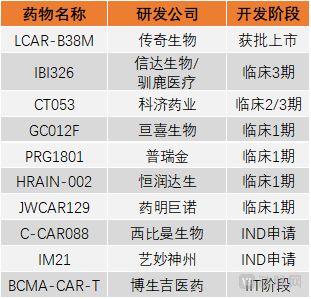
Domestic Companies Developing BCMA CAR-T Therapies
cilta-celIt is a BCMA-targeted CAR-T anti-cancer drug co-developed by Legend Biotech and Janssen, which previously stunned the industry with clinical data demonstrating a 100% objective response rate in the treatment of relapsed/refractory multiple myeloma. This is a structurally differentiated CAR-T cell therapy comprising a 4-1BB co-stimulatory domain and two BCMA-targeting single-domain antibodies designed to enhance affinity.
2021In December, Legend Biotech released the latest data on cilta-cel. Results from the phase 1b/2 CARTITUDE-1 study involving 97 patients with relapsed/refractory multiple myeloma showed an overall response rate (ORR) of 98%, with a stringent complete response (sCR) rate of 83% after a median follow-up of 21.7 months. Meanwhile, the 2-year progression-free survival (PFS) rate was 61%, and the 2-year overall survival (OS) rate was 74%.
The high response rate demonstrated in clinical trials also served as the cornerstone for Legend Biotech’s recent approval.
Following Legend Biotech’s cilta-cel is IBI326, jointly developed by Innovent Biologics and Gracell Biotechnologies, which is currently in Phase 2/3 clinical trials. According to the latest results from the pivotal Phase 1/2 clinical study presented at the 2021 ASH Annual Meeting, the trial enrolled a total of 79 subjects. Among these patients, IBI326 demonstrated an overall response rate (ORR) of 94.9%, with a complete response/strict complete response (CR/sCR) rate of 58.2%. Moreover, responses deepened over time with extended follow-up. The progression-free survival (PFS) rates at 6, 9, and 12 months post-infusion were 78.0%, 76.0%, and 71.0%, respectively. These overall data highlight the excellent durability of efficacy and favorable safety profile of IBI326.
CT053, the candidate product of CARsgen Therapeutics’ BCMA CAR-T therapy, has also advanced rapidly and received Orphan Drug Designation from the U.S. Food and Drug Administration (FDA) and Breakthrough Therapy Designation from the National Medical Products Administration (NMPA) due to its outstanding clinical data. At the 2021 American Society of Hematology (ASH) Annual Meeting, CARsgen Therapeutics presented the latest research progress on CT053, with data derived from LUMMICAR-1, a multicenter, open-label Phase I/II clinical trial conducted in China that enrolled a total of 14 subjects.
Data show that the overall response rate (ORR) for CT053 was 100% (14/14), with 78.6% (11/14) of patients achieving stringent complete response (sCR). Nine patients maintained a complete response or better (CR/sCR) for more than 12 months, and 92.9% (13/14) of patients achieved a very good partial response (VGPR). The 12-month progression-free survival rate was 85.7% (12/14).
In addition to the aforementioned companies, domestic pharmaceutical enterprises are driving a new wave of innovation in BCMA CAR-T therapies. For instance, Gracell Biotechnologies is developing a dual-target CAR-T therapy directed against BCMA and CD19, while Cytotherapeutics is innovating in CAR-T drug manufacturing processes; its investigational drug candidate, C-CAR088, received approval for its Investigational New Drug (IND) application in China earlier this year.
Approved Products Hit the Market, Intensifying BCMA CAR-T Competition Among Overseas Pharma Companies
Abroad, in addition to the already marketed Abecma, BCMA CAR-T therapies from companies such as Eureka, Poseida, and Allogene are worthy of attention. However, at present, most candidate products from these companies are in early-stage clinical trials, requiring more robust data to substantiate their therapeutic efficacy.
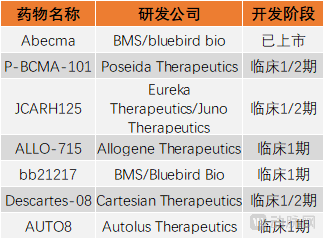
Selected Overseas Companies Developing BCMA CAR-T Therapies
P-BCMA-101, an allogeneic CAR-T candidate targeting BCMA, was designed and developed by Poseida Therapeutics. According to the interim results of the Phase 1/2 PRIME clinical trial presented by Poseida at the 2021 ASH Annual Meeting, a total of 98 patients received P-BCMA-101. The drug demonstrated robust anti-tumor activity and was well tolerated across all patients. Meanwhile, Poseida indicated that the combination of P-BCMA-101 with rituximab represents the optimal treatment regimen observed to date. This cohort included 14 patients, achieving an overall response rate (ORR) of 78% and a very good partial response or stringent complete response (VGPR/sCR) rate of 43%. The overall survival (OS) is 100%.
Eureka Therapeutics has partnered with Juno Therapeutics, a subsidiary of Celgene, to jointly develop JCARH125, a novel BCMA-targeted CAR-T therapy. The drug has currently entered Phase 1/2 clinical trials; however, the latest available data remain from the 60th American Society of Hematology (ASH) Annual Meeting in 2018. The trial enrolled 44 patients with multiple myeloma who had received at least three prior lines of therapy. The overall response rate (ORR) was 82%. In the lowest dose cohort, the ORR was 79%, and the complete response (CR) rate was 43%.
AllogeneStanding out among the numerous companies developing BCMA CAR-T therapies, Allogene Therapeutics focuses on allogeneic CAR-T, with its candidate product ALLO-715 currently in Phase 1 clinical trials. As is well known, in October 2021, the FDA halted all of Allogene’s CAR-T therapy trials due to chromosomal abnormalities observed in patients participating in clinical trials of its candidate drugs; this suspension was fully lifted only in January of this year. Consequently, the clinical data for ALLO-715 have attracted significant attention. According to the latest data presented at the 2021 ASH Annual Meeting, as of October 14, 2021, a total of 48 patients had been enrolled, achieving an overall response rate (ORR) of 71%, with 46% of patients attaining a very good partial response (VGPR) and a complete response/strict complete response (CR/sCR) rate of 25%.
In addition to the aforementioned companies, Cartesian and Autolus are also dedicated to the research and development of CAR-T therapies for newly diagnosed multiple myeloma.
The BCMA Landscape Is Flourishing, with ADCs and Bispecific Antibodies Rapidly Catching Up
Currently, innovative therapies targeting BCMA are not limited to the CAR-T field; ADC therapies and bispecific antibody therapies are also continuing to make significant strides in this arena.
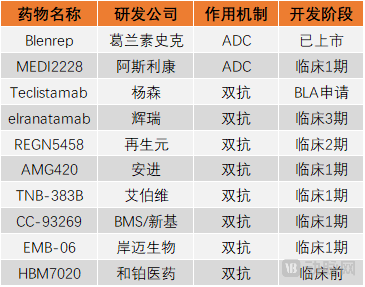
Selected Domestic and International Companies Developing BCMA-Targeted ADCs and Bispecific Antibodies
GlaxoSmithKline (GSK) is the most representative company in the field of BCMA-targeting antibody-drug conjugate (ADC) therapies, with its product Blenrep approved in August 2020 as the first anti-BCMA therapy globally.
BlenrepThe approval was based on clinical data from the pivotal DREAMM-2 study, which enrolled a total of 196 patients with relapsed/refractory multiple myeloma who had been heavily pretreated. The enrolled patients were randomized into two groups to receive Blenrep at a dose of 2.5 mg/kg or 3.4 mg/kg once every three weeks.
At the 2020 ASCO Virtual Meeting, GSK presented the 13-month follow-up data from this study. The trial results indicated that among patients receiving the median treatment duration (n=97), the overall response rate (ORR) was 31% (n=30/97) in the 2.5 mg/kg dose group and 34% (n=34/99) in the 3.4 mg/kg dose group. In the 2.5 mg/kg dose group, 58% (n=18) of patients achieved a very good partial response, including three patients who attained a stringent complete response.
Bispecific antibody therapy primarily targets BCMA and CD3, recruiting T cells to kill myeloma cells with high BCMA expression. Currently, no new bispecific antibodies targeting BCMA and CD3 have been approved for market launch.
The potential of bispecific antibody therapy for treating relapsed/refractory multiple myeloma was once highlighted by Amgen’s AMG 420. In 2018, Amgen released clinical data on AMG-420, showing that all five patients receiving the highest dose achieved stringent complete response (sCR), demonstrating the drug’s robust efficacy. However, due to its short half-life, clinical trials of this agent have been suspended. To address the short half-life issue, Amgen developed another candidate targeting BCMA and CD3, AMG 701. Nevertheless, the risk of cytokine release syndrome (CRS) hindered its clinical development, leading Amgen to ultimately discontinue the trial.
In addition to Amgen, pharmaceutical companies such as Janssen, Pfizer, AbbVie, and Regeneron have all established pipelines for BCMA/CD3 bispecific antibody therapies, with each achieving relatively promising progress.
Janssen’s teclistamab has advanced most rapidly, with a Biologics License Application (BLA) submitted to the U.S. FDA in late 2021, positioning it to potentially become the first approved BCMA/CD3 bispecific antibody worldwide. According to updated data presented by Janssen at the 2021 American Society of Hematology (ASH) Annual Meeting, with a median follow-up of nearly 8 months, the overall response rate (ORR) was 62% (93/150), with 58% of patients achieving a very good partial response (VGPR) and 29% achieving a complete response (CR).
Close behind is Pfizer’s elranatamab (PF-06863135), which has now entered Phase 3 clinical trials. According to previously released Phase 1 clinical data, among the 30 enrolled patients, the overall response rate (ORR) was 80% in the 20 patients who received effective weekly doses ranging from 215 to 1,000 μg/kg. Of these, six patients achieved a stringent complete response, three achieved a very good partial response, and another six achieved a partial response. The ORR in the highest dose group (1,000 μg/kg) reached 83% (5/6 patients).
Furthermore, AbbVie’s TNB-383B achieved an objective response rate (ORR) of 52% in its Phase I clinical trial. Meanwhile, Phase I clinical data for Regeneron’s candidate product REGN5458 demonstrated an ORR of 35.6% across all dose groups, with 81.3% of patients achieving a very good partial response.
In addition to foreign pharmaceutical companies, domestic innovative drug enterprises such as Harbour BioMed and EMBiologics have also made strategic moves in this field, indicating that the competition for BCMA/CD3 bispecific antibodies has reached a fever pitch.
Efficacy and Safety of BCMA Products: A Clinical Data Perspective
While BCMA is undoubtedly an ideal target for the treatment of multiple myeloma, the intense competition among numerous pharmaceutical companies in this field further affirms its therapeutic potential. However, current clinical data reveal that the BCMA pathway still exhibits certain undeniable limitations:
First, based on current clinical data for all therapies, although some have been approved for market launch or demonstrate significant efficacy, concerns regarding their safety remain.For example, GSK’s Blenrep has been mired in controversy due to ocular adverse events. In its pivotal DREAMM-2 study, Blenrep caused keratopathy/microcyst-like epithelial changes in 71% of patients, while clinical data from the China region of DREAMM-2 showed that nearly three-quarters of patients experienced keratopathy. As eye-related side effects were rare with prior therapies, this adverse event has raised concerns among physicians and researchers.
Similar ocular adverse events were also observed with MEDI2228, AstraZeneca’s BCMA-targeting antibody-drug conjugate (ADC) candidate. In its Phase 1 clinical trial, 58.5% of patients experienced photophobia, with 17.1% reporting Grade 3 or 4 adverse events. As the primary endpoint of the trial was to assess safety and tolerability, AstraZeneca cited “safety/efficacy” as the reason for discontinuation and has since removed MEDI2228 from its product pipeline, halting further clinical development.
Furthermore, cytokine release syndrome (CRS), as a relatively severe adverse event associated with CAR-T and bispecific antibody therapies, currently exhibits a high incidence rate. For instance, although Legend Biotech’s cilta-cel has demonstrated remarkable efficacy, 93% of patients experienced CRS in one of its Phase 1b studies, with the most severe case resulting in death due to CRS. Even Abecma, the BCMA-targeting CAR-T therapy jointly developed by Bristol Myers Squibb (BMS) and bluebird bio and already marketed, cannot overlook the risk of CRS. According to the latest data with a follow-up period exceeding two years, among 128 patients treated with Abecma, the incidence of CRS was as high as 84%. Although most cases were Grade 1 or 2, five patients experienced Grade 3 CRS, one patient experienced Grade 4 CRS, and one patient experienced Grade 5 CRS.
Furthermore, Amgen’s bispecific antibody therapy once garnered significant attention due to its remarkable efficacy. Although the development of AMG420 was terminated because of its short drug half-life, AMG701, which features an extended half-life, is currently on hold. According to reports, initial clinical data for AMG701 revealed a cytokine release syndrome (CRS) incidence rate of 65%, with 9% of patients experiencing Grade 3 CRS. Despite an overall response rate (ORR) as high as 83%, the progress of AMG701 has stalled due to the need for optimizing FDA-mandated safety monitoring and mitigation measures.
Although patients with relapsed/refractory multiple myeloma may accept certain safety risks in the absence of effective treatment options, safety concerns will remain a key focus for the industry in future product development efforts.
Second, apart from safety concerns, the efficacy of BCMA-targeted therapies remains inconsistent, with some candidates demonstrating suboptimal therapeutic potency in clinical trials.Currently, the most effective treatment remains BCMA CAR-T therapy. In China, leading enterprises in clinical trials have maintained overall response rates (ORR) between 90% and 100%, with complete response rates around 60%, reaching as high as 83%. The 12-month progression-free survival (PFS) rates for Innovent Biologics/Aurora Biopharma and CARsgen Therapeutics remain above 70%, while more detailed data from Legend Biotech indicate that the 2-year PFS for its candidate drug has reached 61%, with a 2-year overall survival rate as high as 74%.
When compared with domestic data, the efficacy of products from overseas pharmaceutical companies fails to reach such high levels, with their overall response rate (ORR) generally ranging between 70% and 80%, and complete response (CR) rates typically below 45%. Even Abecma, which has already been launched, does not have perfect data. The latest figures show that after a median follow-up of 24.8 months, its ORR remains at 73%, with only 33% of patients achieving complete response. However, its progression-free survival (PFS) data is excellent, with an 18-month PFS rate of 65% and a 24-month PFS rate of 51%.
In ADC and bispecific antibody therapies, apart from Pfizer’s bispecific antibody therapy elranatamab, which achieved an overall response rate (ORR) of 80%, the ORRs of other therapies were only around 50% to 60%. Blenrep’s ORR was even as low as 31%, significantly lower than the 60% ORR reported in the DREAMM-1 clinical study.
So, how is the safety profile of these candidate products with relatively modest efficacy? Currently, the safety of these drugs appears to be slightly improved. Taking Allogene’s product as an example, the incidence of cytokine release syndrome (CRS) with ALLO-715 was 53%, with all cases being Grade 1 or 2. Although the CRS incidence rate for Pfizer’s bispecific antibody therapy, elranatamab, was as high as 73%, all cases were below Grade 2. Janssen’s teclistamab showed a similar pattern to elranatamab; while the CRS incidence was 70%, all cases were Grade 1 or 2. However, neutropenia was more severe, with an incidence rate of 65%, including 40% of cases being Grade 3 or 4.
It is evident that to stand out in the BCMA therapeutic arena, pharmaceutical companies must not only focus on efficacy but also ensure a higher safety profile. This can be achieved by innovating drug design, developing novel therapies beyond CAR-T, ADCs, and bispecific antibodies, improving manufacturing processes, and exploring the therapeutic potential of BCMA in other disease areas. Furthermore, as many candidate products are still in early-stage clinical trials, their future therapeutic efficacy remains to be seen.
Data show that sales of multiple myeloma drugs reached nearly $14 billion in 2017 and are projected to approach $29 billion by 2027. BCMA-targeted therapies have a growing market opportunity. In the future, we anticipate the launch of more novel BCMA agents, offering therapeutic hope to numerous patients with multiple myeloma, and we also expect the BCMA target to continue demonstrating its potential in other disease areas.