

Singapore General Hospital: Driving Group-Based Innovation with S$1.2 Billion Annual R&D Investment
In 2015, Lee Kuan Yew, the “founding father of Singapore,” contracted severe pneumonia and was admitted to Singapore General Hospital (SGH) for treatment, where he spent the final days of his life. In fact, SGH is also the designated medical institution for former Prime Minister S.R. Nathan and current Prime Minister Lee Hsien Loong.
This is certainly not a “privilege” that ordinary medical institutions can enjoy. As the “designated hospital” for three consecutive generations of leaders, Singapore General Hospital must have its “distinctive strengths.”
First, in terms of seniority, Singapore General Hospital can absolutely be regarded as a “veteran” institution. Established in 1821, it predates the founding of Singapore itself by nearly a century.
Secondly, in terms of reputation, Singapore General Hospital is the top-ranked medical institution in Asia and consistently ranks among the top ten medical institutions globally.
In terms of scale, Singapore General Hospital is the largest medical institution in Singapore. It currently employs over 10,000 staff members and offers 29 medical specialties, including transplantation surgery, nephrology, and nuclear medicine. The hospital serves more than one million patients annually and fulfills over one-third of Singapore’s medication demand.
Finally, from a research perspective, Singapore General Hospital operates the largest, most comprehensive, and most integrated laboratory in Southeast Asia accredited by the College of American Pathologists (CAP). It is also the only medical institution in Southeast Asia with a multidisciplinary cancer research center. In terms of funding, statistical data show that its annual research expenditure has exceeded S$1.2 billion, equivalent to approximately RMB 5.6 billion.
In fact, Singapore General Hospital, which originated two centuries ago in a shed near the Singapore River, was initially established out of necessity due to the shortage of medical resources in wartime barracks. It even faced the threat of closure in the 20th century due to staff shortages and malaria outbreaks. Its ability to endure until today is largely attributable to its focus on medical innovation and translation, which has served as a continuous driving force, steadily guiding Singapore General Hospital toward greater excellence.
The Innovation Incubation System Embedded in the Hospital’s DNA
Over the course of two centuries, Singapore General Hospital has maintained steadfast control amidst the ever-changing landscape of Singapore, continuously seeking new directions to overcome challenges and gradually establishing a medical innovation and translation system driven by the core pillars of “Service, Research, and Education.”
First is service. In clinical practice, Singapore General Hospital has always adhered to a “people-centered” philosophy, committed to providing affordable and high-quality care services.
“Patients, At the Heart of All We Do.” is visible in every corner of Singapore General Hospital. It constantly reminds generations of healthcare professionals to be patient-centered, pay attention to details in diagnosis and treatment, and make every effort to reduce the number of patient visits, thereby saving patients’ time and costs.
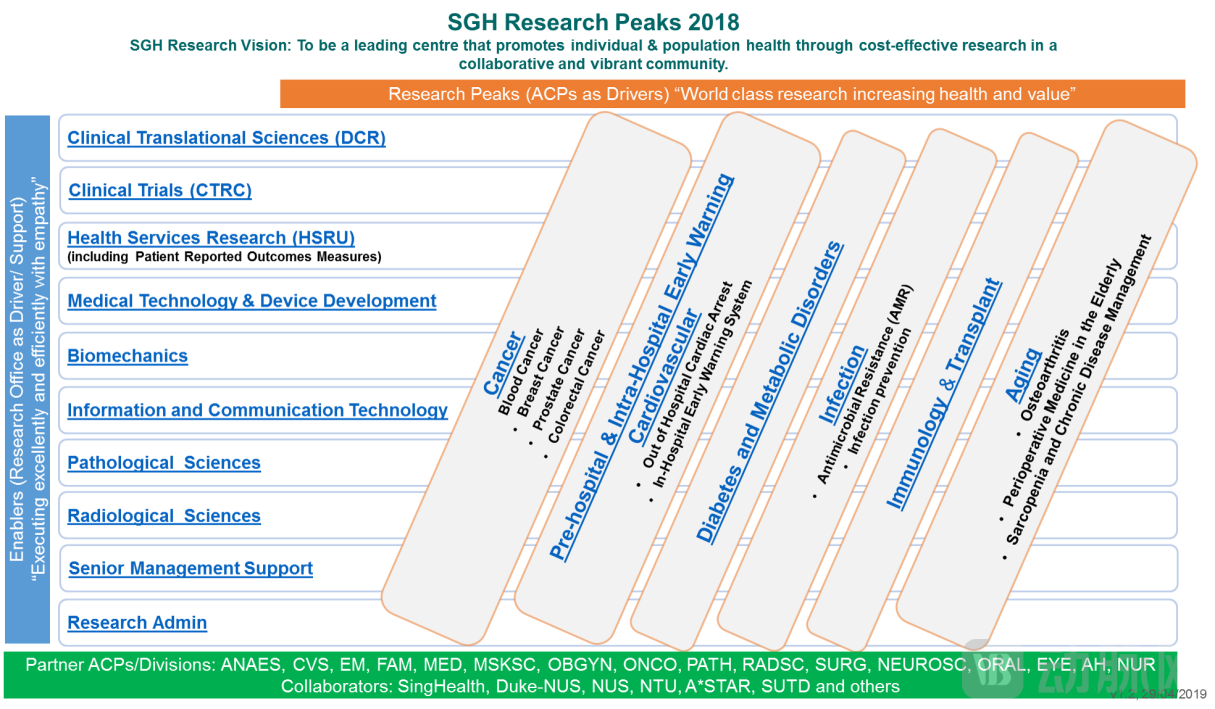
Next is scientific research. Singapore General Hospital aspires to become a global center for translational medicine and clinical research. “Enabling patients to live better lives” is the ultimate goal of Singapore General Hospital; however, achieving this requires not only excellence in clinical care but also greater investment in medical innovation and translation.
Therefore, leveraging its multidisciplinary capabilities, specialized expertise, and extensive patient base, Singapore General Hospital actively conducts clinical research through collaboration among clinicians and scientists from medical, nursing, and allied health disciplines. The hospital has established state-of-the-art medical facilities and one-stop resource service research laboratories within its campus to facilitate and coordinate new high-quality clinical trials.
It is precisely on this basis that Singapore General Hospital has achieved numerous breakthroughs in medical innovation, hosting historic milestones in global healthcare such as the first lung transplant, the first minimally invasive surgery for back pain relief, and the separation of craniopagus twins.
Finally, there is education. Singapore boasts world-class educational resources, home to two globally renowned universities: the National University of Singapore and Nanyang Technological University. Leveraging this advantage, Singapore General Hospital has gained significant momentum in medical education. In the 1960s, it established Singapore’s first specialist training center, cultivating nearly 10,000 medical students annually. This initiative has not only created a substantial “talent reservoir” for Singapore General Hospital but also injected greater medical expertise into the entire Asia-Pacific region.
“The Group Model” Makes Innovation Translation No Longer “Lonely” and “Confused”
Innovation and translation in the medical field are not solitary battles; they require the participation of every link in the innovation ecosystem. Therefore, for medical institutions, while focusing on the process of innovation and translation, it is essential not only to continuously strengthen their own capabilities but also to leverage external resources effectively.
This is how Singapore General Hospital has grown. In addition to the standard innovation and translation model of “service, research, and education,” Singapore General Hospital is backed by a powerful partner: SingHealth, one of the largest academic medical centers in the world, to which Singapore General Hospital belongs.
Singapore Health Services (SingHealth) was established in 2000. It comprises four public hospitals, three community hospitals, five national specialty centres, and eight polyclinics, with Singapore General Hospital being its largest facility. SingHealth is committed to leveraging its scientific research, technology, and growing expertise to advance basic science, medical, and biological research, thereby creating a sustainable and publicly accessible high-quality healthcare system.
Under this “group model,” Singapore General Hospital is no longer reliant on individual efforts; it has received greater support across multiple dimensions of innovation and translation.
First is “cross-boundary” collaboration; the establishment of multidisciplinary, cross-sectoral cooperative platforms is a crucial means of promoting the development of translational medicine. SingHealth has established partnerships with Duke University and the National University of Singapore through the Duke-NUS Medical School, leveraging this collaborative advantage to found an Academic Medical Centre (hereinafter referred to as AMC). The AMC encompasses research in oncology, ophthalmology, cardiology, neuroscience, and emerging areas such as infectious diseases, inflammation, and immunology, while also addressing interdisciplinary topics including population health, artificial intelligence (AI), and big data.
Through this platform, the Singapore Health Group has established a systematic and interdisciplinary cluster of disciplines for translational research at Singapore General Hospital, effectively fostering interdepartmental collaboration, communication, and resource sharing.
Next is “collective intelligence,” which involves pooling resources from multiple stakeholders to provide multi-dimensional services in scientific research and translational practice. Singapore Health Services has prioritized healthcare education as a strategic focus, establishing five colleges at the Academic Medical Center (AMC) to offer collaborative educational pathways for healthcare professionals, ranging from undergraduate and graduate studies to postgraduate education, continuing professional development, and faculty development.
In addition, AMC places great emphasis on the breadth of education and actively promotes interdisciplinary professional practice and education, which undoubtedly provides greater intellectual support for scientific innovation and translational research at Singapore General Hospital.
Finally, there is “effort-saving,” which provides specialized services for the commercialization of innovative projects. As is well known, translating research findings into commercial products is a time-consuming and costly process with significant challenges, often leaving scientists feeling overwhelmed.
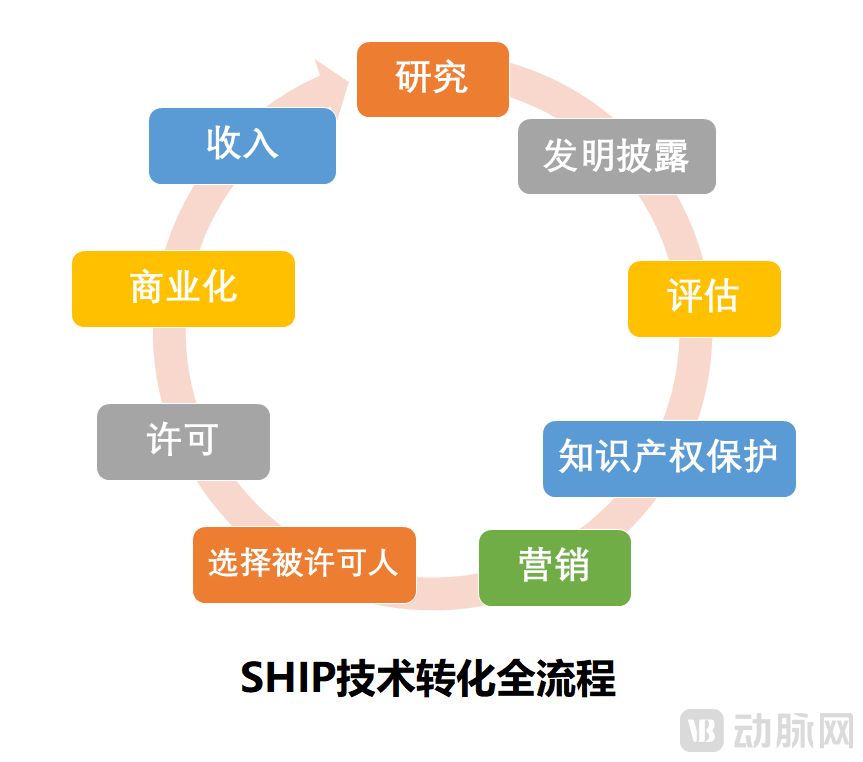
Based on this, Singapore Health Services (SingHealth) has established the SingHealth Intellectual Property Office (SHIP) to facilitate the smooth transition of Singapore General Hospital’s innovative projects from the laboratory to the market. Specifically, SHIP comprises experts in patent licensing, business development, and commercial affairs. Through SHIP’s specialized guidance and support, clinicians and researchers at Singapore General Hospital can more easily engage in the research and innovation process.
In addition, in terms of funding, the Intellectual Property Office established an early-stage incubation fund, thereby effectively alleviating the substantial financial burden on innovation projects during their initial phases.