

HLT Data Intelligence Solutions: Breaking Through the Bottlenecks of Traditional Quality Control Models in Clinical Trials
Recently, Innovent Biologics’ PD-1 inhibitor sintilimab underwent review by the FDA’s Oncologic Drugs Advisory Committee (ODAC), which deliberated whether the combination therapy of sintilimab for non-small cell lung cancer (NSCLC), based on Chinese clinical data, should be approved for marketing in the United States. During the advisory meeting, the independent panel voted 14–1 against recommending approval of sintilimab, citing the lack of international multicenter clinical trials and requesting additional clinical studies to demonstrate the drug’s efficacy in U.S. patients.
Expert Perspectives
COMMENTS
Professor Wu Yilong, Guangdong Lung Cancer InstituteAtIn an interview with PharmaCube, it was pointed out that “Innovent is great; it is a tragedy of the pioneer, and latecomers should reflect on this and pay tribute. Precisely because Innovent took the lead, it has revealed where our current strengths lie and where our weaknesses are. This time, the FDA did not raise any issues regarding the study data, but it challenged us on clinical trial diversity, the ethical principle of patient primacy, and how to ensure the reliability of research quality.”
A 2016 article in The BMJ pointed out that 80% of clinical trials conducted in China had data quality issues. The FDA’s China Office previously stated that 1,308 out of 1,622 applications should be withdrawn because they contained fabricated, flawed, or inadequate data from clinical trials.
“But that was five years ago, and various parties have since made efforts to address these issues. The FDA’s Office of Scientific Investigations audited two of the 48 clinical centers involved in the study. They found that investigators had underreported adverse events and concomitant medications. Corrective actions were subsequently implemented, including training on Good Documentation Practices.” Professor Wu Yilong emphasized that confidence in data quality stems from the clinical trial itself, reflecting the principle of “Quality by Design.”
Regulations on Trial Management Are Continuously Evolving
Data Quality Is Highly Valued
Data quality is influenced not only by the design of clinical trials themselves but also, more critically, by the architecture of data quality control systems. Particularly as the globalization of drug development accelerates, the quality of trial data has become a key factor in gaining international recognition for Chinese research. Clinical trial data not only affects drug review and approval outcomes but also bears directly on public medication safety, making it a crucial determinant in the market launch and application of pharmaceutical products.
To further enhance the quality of clinical research in China,2015, the former State Food and Drug Administration ((CFDA) ReleasedCompleted “Announcement on Conducting Self-Inspection and Verification of Drug Clinical Trial Data”, originalThe Center for Food and Drug Inspection (CFDI) of the China Food and Drug Administration (CFDA) has launched a special inspection of research data.。Following this special inspection, routine risk-based inspections of drug marketing authorization research have become the norm.
In June 2017, the former China Food and Drug Administration (CFDA) officially joined the International Council for Harmonisation of Technical Requirements for Pharmaceuticals for Human Use (ICH), becoming its eighth global regulatory member. This signifies that China’s drug regulatory authorities, pharmaceutical industry, and research and development institutions will gradually adopt and implement the highest international technical standards and guidelines for pharmaceutical R&D and production.
July 2020,New Version of "Good Clinical Practice for Drug Clinical Trials" (GCP)StartPerform,Investigators are required to ensure that all clinical trial data are derived from source documents and trial records of the clinical trial, and are accurate, complete, legible, and timely. Source data should possess attributability, legibility, contemporaneity, originality, accuracy, completeness, consistency, and durability.
In September 2021, the National Health Commission issued the Administrative Measures for Investigator-Initiated Clinical Research Conducted by Medical and Health Institutions (Trial).,It is stipulated that medical and health institutions shall establish a management system for source data in clinical research, implement centralized and unified storage, and ensure the authenticity, accuracy, integrity, standardization, and confidentiality of clinical research data during collection, recording, modification, processing, and preservation, thereby ensuring that the data is queryable and traceable.
The issuance of this series of policies and regulations has imposed higher requirements on the quality of clinical trial data in China. On one hand, the design and conduct of clinical trials should be further improved; on the other hand, data quality management must be continuously strengthened.Especially against the backdrop of an explosive growth in the number of clinical trials in China, hospitals and institutions, as key stakeholders in quality control of trial data, urgently need to optimize their data quality control systems.,Gradually improve the efficiency of quality control work.
Traditional Quality Control Methods Hit a Bottleneck
Digital Quality Control Solves Complex Challenges
At present, faced with the year-on-year increase in the number of clinical trials, medical institutions continue to widely adopt traditional quality control (QC) methods—sampling and verifying large volumes of data to assess overall trial quality—due to limited human resources and uneven QC experience. However, this traditional QC model is heavily reliant on manual labor, struggles to comprehensively identify data issues, and exhibits low efficiency in root-cause analysis. Overall, it is difficult to objectively quantify and evaluate data quality, making this approach a bottleneck that restricts institutions from improving their data QC efficiency.
To empower quality control of clinical trial data,Happy Life Technologies (HLT) Proposes Digital Quality Control Solution, with proper authorization, by conducting in-depth analysis of clinical trial source data and leveraging lightweight algorithmic services, AI technology is utilized to perform comprehensive verification, precise traceability, and quantitative assessment of trial data. This approach not only ensures ease of use and security but also significantly enhances the efficiency of clinical trial data management.
Drawing on quality control (QC) experience from leading hospitals, HLT’s digital QC solution has filled a gap in the industry. Within just over two years of its market launch, it has served numerous top-tier hospital institutions and conducted digital QC for more than 40 clinical trials, earning consistent recognition from both hospitals and sponsors. Moreover, it has helped sponsors successfully prepare for inspections by China’s National Medical Products Administration (NMPA) and the U.S. Food and Drug Administration (FDA). As hospital information systems continue to improve, an increasing number of hospitals and sponsors are actively leveraging digital QC as a strategic entry point to participate in and drive the gradual transition of clinical trials toward intelligent operations.
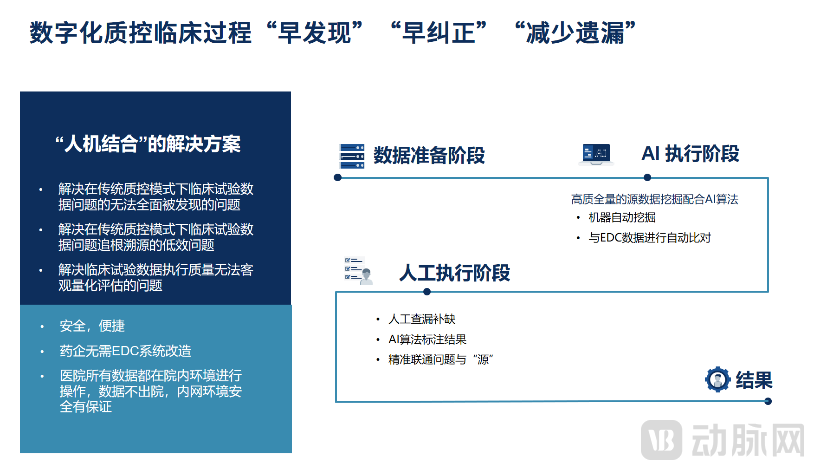
AI-Empowered Digital Quality Control
Improving Data Quality Management Standards
Empowered by AI technology, digital quality control can leverage its unique advantages—such as rapid verification, precise traceability, and quantitative assessment—to further enhance the level of data quality management in healthcare institutions. Taking a Phase III, randomized, double-blind, placebo-controlled, multicenter clinical trial for oncology as an example, 106 subjects were enrolled simultaneously in Departments A and B of a hospital from February 2018 to August 2021. Through a four-day digital quality control service, comprehensive digital quality checks were performed on 2,674 adverse event records and 894 concomitant medication records. The results revealed that among the concomitant medication records, 872 were correctly entered, 22 were incorrectly entered, and 183 were underreported; among the adverse reaction records, 2,515 were correctly entered, 159 were incorrectly entered, and 40 were underreported.
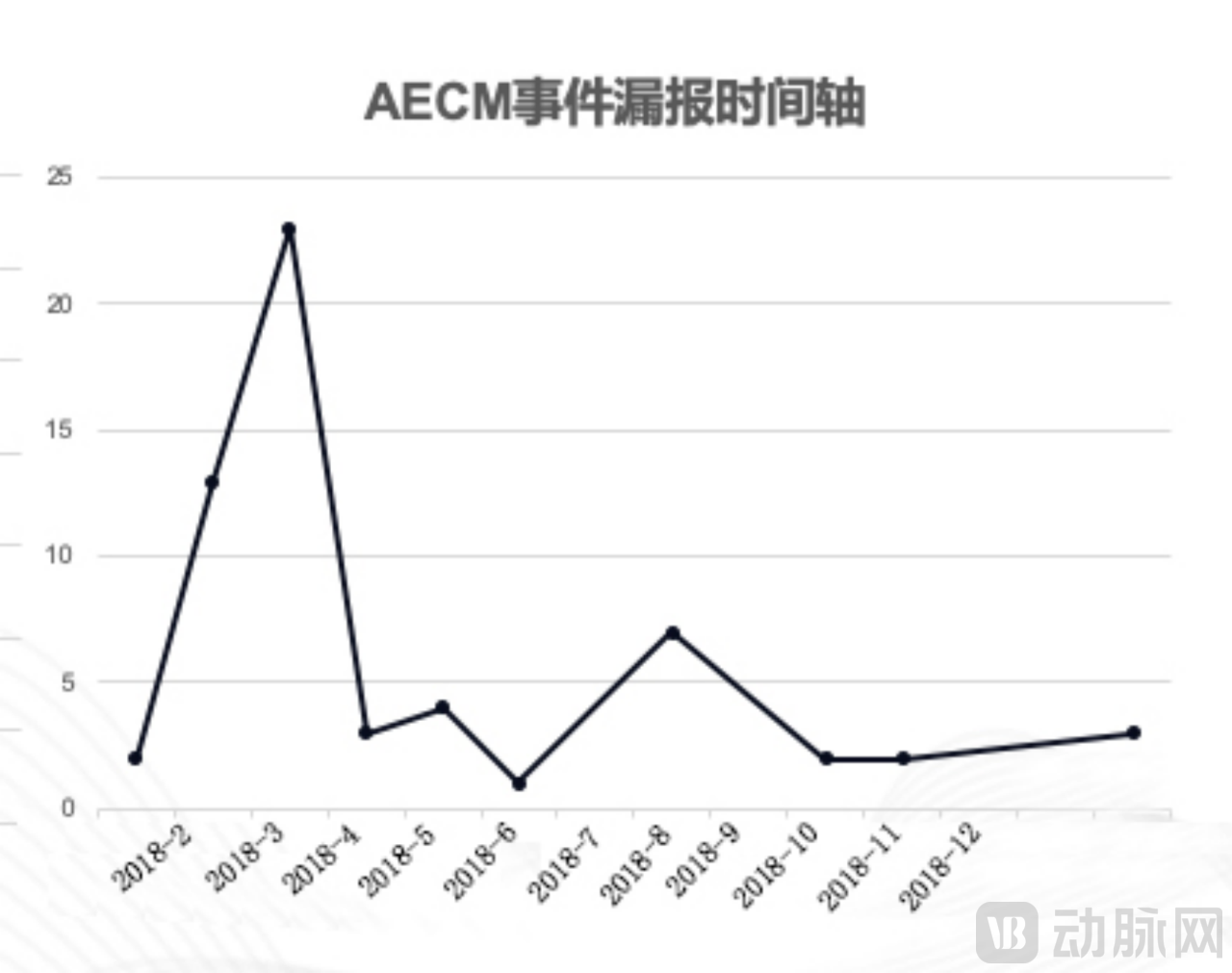
An analysis of the timeline for underreported AECM events reveals that problematic data identified through digital quality control peaked in March 2018. Correlated with trial progress, this peak coincided with both the period of highest patient enrollment and a transition point for Clinical Research Associate (CRA) staffing. This indicates that concentrated patient enrollment phases and personnel adjustments significantly impact the quality of trial execution.
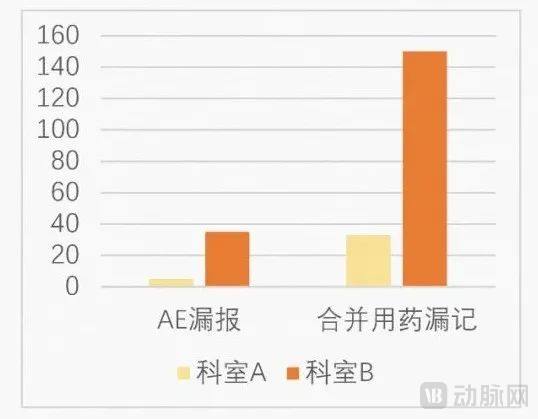
Furthermore, further analysis of the digital quality control results for subjects enrolled in different departments revealed that Department B had significantly more underreported data than Department A. With identical clinical trial designs and comparable numbers of enrolled subjects, verification of the quantitative digital quality control results against objective circumstances showed that subjects in Department B experienced more adverse events and had more complex medical visit records. This increased the difficulty of data entry for Clinical Research Coordinators (CRCs), thereby raising the likelihood of underreporting.
With the assistance of digital quality control, healthcare institutions were able to identify problematic data within an extremely short timeframe, while simultaneously conducting high-quality and rapid traceability analysis. This enabled timely refinement of entered data and optimization of subsequent management measures for the trial. By accurately and comprehensively identifying operational risks and objectively quantifying the quality of trial execution, healthcare institutions reduced execution risks at the source and successfully passed inspections by the National Medical Products Administration (NMPA) and the U.S. Food and Drug Administration (FDA).
As the level of informatization in medical institutions across China continues to improve, multi-center clinical trials have established a digital quality control foundation at multiple sites. Leveraging the standardization, consistency, and stability of algorithms, digital quality control services implement unified execution standards, enabling rapid issue detection and precise traceability, as well as comprehensive and objective assessment of key risks during trial conduct. Expanding from single to multiple sites, and from individual to multiple trials, this quantitative growth has led to qualitative transformation. Digital quality control is driving the industry to break through data quality bottlenecks, marking a solid step forward in empowering clinical trials with digital technology.
HLT iGCP provides informatized and intelligent solutions tailored for hospital-based clinical trial institutions. It not only includes integrated management tools that cover the entire clinical trial lifecycle—such as the G-CTMS (Good Clinical Practice Clinical Trial Management System), G-CTDMS (Clinical Trial Drug Management System), and G-Payment (Financial Management System)—to empower standardized project execution and enhance efficiency. Additionally, it offers a suite of AI- and big data-driven intelligent services, including digital quality control, remote monitoring, intelligent patient screening, Decentralized Clinical Trials (DCT), and automated electronic source data capture (EHR to EDC). By leveraging data intelligence, HLT iGCP focuses on advancing the development of research-oriented hospitals, improving the quality and operational efficiency of clinical trials, and strengthening institutional management capabilities and international competitiveness.