

Sinomdt Secures Hundreds of Millions in Strategic Investment from Philips Despite Overlapping PET/CT Product Lines

Philips Healthcare
Integrated service provider in healthcare, quality living, and lighting fields
Recently, a major event occurred in China’s PET/CT industry:SinoUnion Healthcare, a domestic PET/CT manufacturer, has completed a financing round worth hundreds of millions of yuan. More surprisingly, this round was exclusively strategically invested by Philips (China).

Publicly available information shows that SinoUnion Healthcare Inc., established in 2011, is a manufacturer of high-end medical equipment and an innovative service provider. The company focuses on the research and development of core technologies for integrated PET/CT systems and their key components. It has obtained registration approvals for multiple PET/CT products, which have been commercially installed and used clinically in top-tier tertiary hospitals, including Peking Union Medical College Hospital.
Philips is a globally renowned health technology company headquartered in the Netherlands. In 2021, it achieved sales of €17.2 billion, employed approximately 78,000 people worldwide, and provided sales and services in 100 countries, earning industry recognition as a “medical device giant.” In the field of medical imaging, Philips ranks among the global leaders alongside GE Healthcare and Siemens Healthineers; collectively known as “GPS,” these three companies account for approximately 70% of the global market share. Additionally, Philips has an established PET/CT product line, having entered the market early, and holds a notable share of the global PET/CT market.
As a multinational medical device company, Philips already has a PET/CT product line. Why did it still invest in SinoUnion Healthcare? What qualities of SinoUnion Healthcare did Philips value? And what are the unique advantages of SinoUnion Healthcare that made it attractive to Philips? VCBeat conducted an in-depth analysis of this investment event.
VCBeat’s analysis suggests that Philips’ investment in SinoUnion Healthcare is driven by three key factors.
First, a review of Philips’ initiatives in recent years shows that it is implementing a “localization” strategy.He Guowei, Member of the Philips Global Executive Committee and President of Greater China, once stated: “We are committed to becoming a truly ‘localized’ global enterprise. We are increasing our investment in the Chinese market, accelerating the localization process, and further establishing China as a key global hub for value creation...”
In a previous exclusive interview with Mao Weifang, Vice President of Philips Greater China, VCBeat learned that Philips’ localization strategy entails understanding the specific differences in China, identifying the true clinical needs, determining what is best for patients, and then leveraging localized technologies to address these clinical challenges.
On one hand, China is Philips’ second-largest global market and is experiencing stable, rapid growth. On the other hand, many multinational medical device companies, such as GE Healthcare and Siemens, have entered the Chinese market, while numerous domestic innovative enterprises have also joined the competition. To better serve the Chinese market and maintain strong competitiveness, Philips aims to build a complete “end-to-end” value chain in China—covering R&D, manufacturing, marketing, sales, and services—and gain competitive advantage through its “localization” strategy.
Building on this, Philips plans to collaborate with local innovative enterprises while strengthening its own local innovation capabilities, jointly developing superior solutions.Philips’ strategic investment in SinoUnion Healthcare Inc. represents a concrete implementation of its localization strategy in China.
In recent years, Philips has achieved localized R&D and manufacturing in the Chinese market for products such as ultrasound, CT, and MR. As one of the most advanced products in medical imaging, PET/CT has developed rapidly in China, with a growth rate far exceeding the global average. Therefore, in line with its localization strategy, Philips is committed to localizing the R&D and production of PET/CT equipment, thereby enriching its “localized” product portfolio in the Chinese market.
Second, as the field of molecular imaging gains increasing momentum, Philips is placing greater emphasis on this area.Data indicates that molecular imaging is a critical tool for the precise early screening and diagnosis of tumors, cardiac conditions, neurological disorders, and other diseases. It enables the detection of cellular and molecular abnormalities during pathogenesis, facilitates the exploration of disease onset, progression, and resolution, and allows for the evaluation of drug and therapeutic efficacy, thereby holding significant value for the healthcare industry.Internationally, molecular imaging technology has been recognized as one of the most promising frontier fields in medical science for the future.。
Currently, PET/CT is one of the most technologically mature and widely clinically applied products among molecular imaging devices. As a leading enterprise in China's PET/CT industry, it is only natural that SinoUnion Healthcare Inc. has attracted the attention and investment of Philips Healthcare.。
Third, SinoUnion Healthcare Inc. is a leading enterprise in China's PET/CT industry.. It is not only one of the few domestic enterprises to have obtained registration for PET/CT products and achieved mass production of complete systems, but also currently the only domestic manufacturer capable of localizing all core components of PET equipment. Meanwhile, SinoUnion Healthcare Inc. has undertaken key national R&D projects in the PET field, addressing the critical bottleneck of localizing core components. The company has independently developed various technologies, including free-breathing imaging, passive quality control, spatiotemporal cardiac imaging, and CT-free attenuation correction, which hold significant value in resolving major clinical pain points in China.
Analysts believe that SinoUnion Healthcare Inc. has gained recognition and favor from Philips Healthcare for two main reasons: first, the industry in which SinoUnion operates is experiencing rapid growth with broad market prospects; second, SinoUnion holds intellectual property rights and manufacturing expertise for both core components and complete PET/CT systems, demonstrating strong innovation capabilities and distinct core competitiveness.
According to data released by Huajing Industry Research Institute, the global PET/CT market size reached USD 3.1 billion in 2020, with a compound annual growth rate (CAGR) of approximately 5.2% from 2015 to 2020. In China, the PET/CT market size was approximately RMB 1.32 billion in 2020, with a CAGR of 18% from 2015 to 2020, significantly higher than the global average.It is evident that the domestic PET/CT market is in a period of rapid development.。
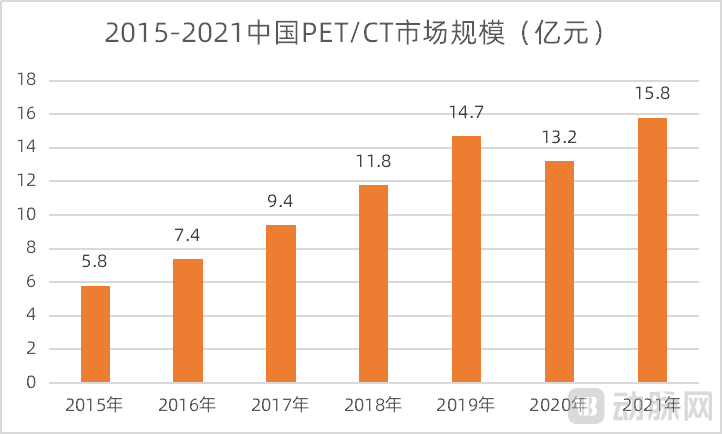
(Data Source: Huajing Industry Research Institute)
Meanwhile, as an emerging medical imaging modality, PET/CT has been widely adopted worldwide. The United States has 7.8 units per million people, Japan has 4.3, while China has only 0.31. This indicates substantial growth potential for the PET/CT market in China.At a rate of 2 units per million people, China requires 2,800 PET/CT scanners, representing a market size exceeding RMB 100 billion and immense potential.。
In addition, China is strongly supporting the development of large-scale medical equipment such as PET/CT through policy measures. In April 2018, the National Health Commission issued the “Catalogue for the Administration of Licensing for the Allocation of Large-Scale Medical Equipment (2018),” which reclassified PET/CT from the Class A management category to the Class B management category.This means that medical institutions only need approval from provincial-level authorities to procure PET/CT systems, which will not only accelerate the approval process but also drive rapid volume growth in PET/CT equipment deployments.。
In October 2018, the National Health Commission issued the "Plan for the Allocation of Large-Scale Medical Equipment (2018–2020)," which planned to configure a total of 710 PET/CT units nationwide by the end of 2020, with an additional 377 units. In 2020, the National Health Commission released the "Notice on Adjusting the Plan for the Allocation of Large-Scale Medical Equipment (2018–2020),"The national planned number of PET/CT units in China has been increased to 884, with the newly added quantity adjusted to 551 units. This represents a 46% year-on-year increase compared to the originally planned addition of 377 units.
Notably, in June 2021, the China Atomic Energy Authority, the Ministry of Science and Technology, the Ministry of Public Security, the Ministry of Ecology and Environment, the Ministry of Transport, the National Health Commission, the National Healthcare Security Administration, and the National Medical Products Administration jointly issued the Medium- and Long-Term Development Plan for Medical Isotopes (2021–2035). The plan aims to achieve full coverage of nuclear medicine departments in all tertiary general hospitals by 2025, and to establish one nuclear medicine department per county across China by 2035.This plan elevates nuclear medicine to the level of national strategy, and as a primary modality in nuclear medicine, PET/CT boasts broad market prospects.。
Publicly available information shows that SinoUnion Healthcare Inc., as a leading domestic enterprise in PET/CT, has independently developedFully domestically produced PET/CT equipment; its first PET/CT product, launched in 2016, was ranked first in terms of technical specifications in the tender procurement conducted by the National Health Commission, with other renowned companies such as Siemens and GE Healthcare also participating in the bidding.
Why Do SinoUnion’s PET/CT Products Lead the Market? First, the company prioritizes R&D, with its team primarily composed of talents from prestigious universities such as Tsinghua University, the University of Washington, the University of Illinois, and Beijing Institute of Technology, as well as multinational medical device companies including GE Healthcare, Philips Healthcare, and Siemens Healthineers.Not only possesses strong scientific research and innovation capabilities, but also hasProfound Industry Background and Deep Industry Insights。
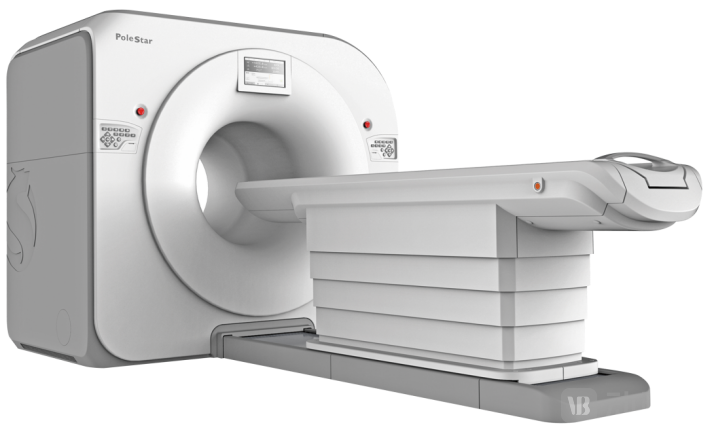
Secondly, SinoUnion Healthcare Inc. has beenFocused on the R&D of PET/CT and its core components, previously ledFour Major National and Provincial Scientific Research Projects. In addition, SinoUnion Healthcare has collaborated with medical institutions such as Peking Union Medical College Hospital to pioneer technologies including free-breathing imaging, passive quality control, spatiotemporal cardiac imaging, and CT attenuation correction-free imaging, addressing key clinical pain points. To date, leveraging its innovation capabilities, SinoUnion HealthcareAcquired over 100 independent intellectual property rights。
According to industry insiders, “The overseas market differs significantly from the domestic market. As an imaging device capable of providing quantitative results, PET/CT requires the use of radioactive sources for daily quality control and equipment parameter adjustments. In markets such as Europe and the United States, radioactive sources are relatively easy to procure, and hospital nuclear medicine departments typically employ physicists with doctoral degrees who can independently conduct quality control and perform complex parameter adjustments using radioactive sources. In contrast, in the Chinese market, radioactive sources must be imported, and their procurement and management are subject to strict regulations. Moreover, the vast majority of hospitals lack specialized nuclear medicine physicists. Therefore, traditional basic functions such as daily quality control are not well-suited to the Chinese market.”
“Therefore, SinoUnion Healthcare’s passive quality control technology has been widely welcomed and recognized after addressing the pain points of daily quality control, and this technology has been adopted by mainstream manufacturers, becoming one of the mainstream technologies.”
Finally, SinoUnion Healthcare Inc. prevails through technological excellence, achieving breakthrough innovations in both hardware and software by leveraging its proprietary technologies, such as spatiotemporal cardiac imaging and CT attenuation correction-free imaging.
It is worth mentioning that,Investment analysts believe that this strategic investment is merely a collaboration in terms of capital, technology, and innovative products between SinoUnion Healthcare Inc.The founding team still holds absolute controlling interest in the company, and SinoUnion Healthcare alsoPlaceContinueAs a domestic innovative enterprise, withDomestically ProducedBrand Independence。
According to sources close to SinoUnion Healthcare Inc., the company has benchmarked its PET/CT business line against those of medical device giants such as Siemens, GE HealthCare, and Philips Healthcare since its inception. It plans to leverage its innovative advantages to penetrate the global market and establish itself as an international manufacturer of domestically produced large-scale medical equipment.
Currently, SinoUnion Healthcare Inc. has achieved its Phase I objectives: its independently developed technologies, such as free-breathing imaging and passive quality control, have been adopted by most industry peers in their PET/CT products, and the performance of its own PET/CT systems has attained a leading position globally.
The completion of this financing round has propelled SinoUnion Healthcare Inc. into a new phase of domestic production and localization for large-scale medical equipment such as PET/CT scanners.Previously, large medical devices such as PET/CT scanners were monopolized by multinational corporations, with Chinese manufacturers holding a minimal market share and core PET/CT components controlled by foreign companies. Today, domestic enterprises represented by SinoUnion Healthcare Inc. have launched PET/CT products with independent intellectual property rights, which have been widely promoted in the Chinese market.
Perhaps it is precisely based on SinoUnion’s innovative, strategic, and localization advantages that Philips Healthcare has entered into a strategic partnership with SinoUnion. The two parties will jointly provide advanced molecular imaging systems and comprehensive smart nuclear medicine solutions tailored to local needs.
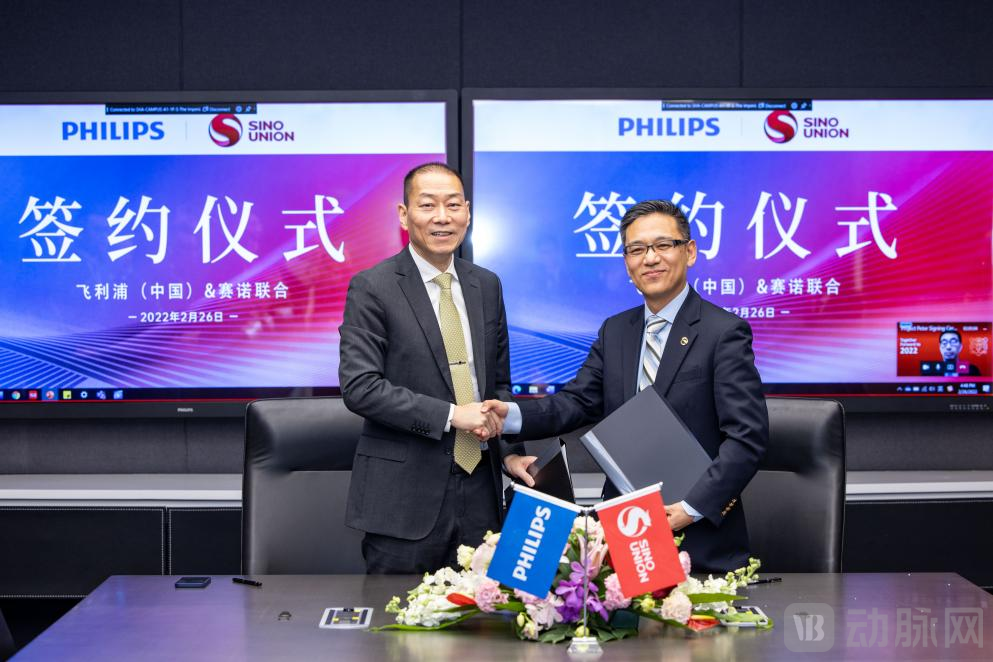
Philips is a globally renowned leader in health technology, holding leading positions in diagnostic imaging, image-guided therapy, patient monitoring, health informatics, consumer health, and home care; SinoUnion Healthcare Inc. is at the forefront of the industry in core technical areas such as PET/CT whole-system design, key component design, detector manufacturing processes, and time-of-flight (TOF) imaging.
Among them, Philips boasts an international forward-looking vision, a century of innovation heritage, and substantial financial strength; SinoUnion Healthcare Inc. possesses the capability for rapid breakthroughs in core technologies and product iteration.
Through this collaboration, the two parties will leverage their complementary strengths to rapidly launch advanced molecular imaging systems to the market and accelerate the global expansion of domestically produced PET/CT products.