

JANCS Intelligence Files for IPO: Empowering Affordable and Precise Radiotherapy with AI-Driven Navigation
As one of the most predominant cancer treatment modalities today, radiotherapy can cure approximately 40% of cancer cases. Through radiation therapy, patients with early-stage cancers, such as nasopharyngeal carcinoma, glottic cancer, and cervical cancer, can achieve higher survival rates and improved quality of life. However, the penetration rate of radiotherapy remains low in China.
According to the "Survey on the Basic Status of Radiotherapy Personnel and Equipment in Mainland China in 2019," there were only 1.5 radiotherapy units (linear accelerators plus Cobalt-60 machines) per million people in China in 2019, which remains below the World Health Organization's requirements and is approximately one-tenth of the figure in developed countries (14.4 units). Meanwhile, the domestic radiotherapy equipment market is predominantly comprised of conventional systems that lack advanced technologies such as intelligent control and adaptive radiotherapy. These limitations hinder precise targeting and real-time adjustment of the treatment volume, resulting in suboptimal therapeutic outcomes.
Yanqi Intelligence has provided an efficient and cost-effective solution: by integrating its self-developed AI-based precise positioning and navigation system into conventional radiotherapy equipment, and combining it with hardware such as radiation dose monitoring cameras and body surface positioning devices, the company enables real-time monitoring and management of radiotherapy dosage, precise positional control, and other multi-dimensional treatment optimizations for patients.
Compared with high-end adaptive radiotherapy equipment, which is costly and difficult to popularize, this solution requires only the addition of certain accessories to achieve equivalent or even superior outcomes.It is precisely for this reason that Yangqi Intelligence secured a million-dollar exclusive seed investment from Sequoia China’s Seed Fund in its first round of financing, just one month after its establishment.。
From Zhou Guanqun, Chief Technology Officer of Yangqi Intelligence, we can seemingly trace the genetic roots behind Yangqi Intelligence’s proposal of such a high-efficiency, low-cost solution.
VCBeat invited Yangqi Intelligence’s Chief Technology Officer, Zhou Guanqun, for an insightful dialogue to explore how Yangqi Intelligence empowers traditional radiotherapy equipment. Why did Zhou transition from a distinguished researcher to a tech entrepreneur? What transformations did he undergo in moving from academia to the role of CTO? And what advice does he offer to technical professionals considering entrepreneurship or joining startups?
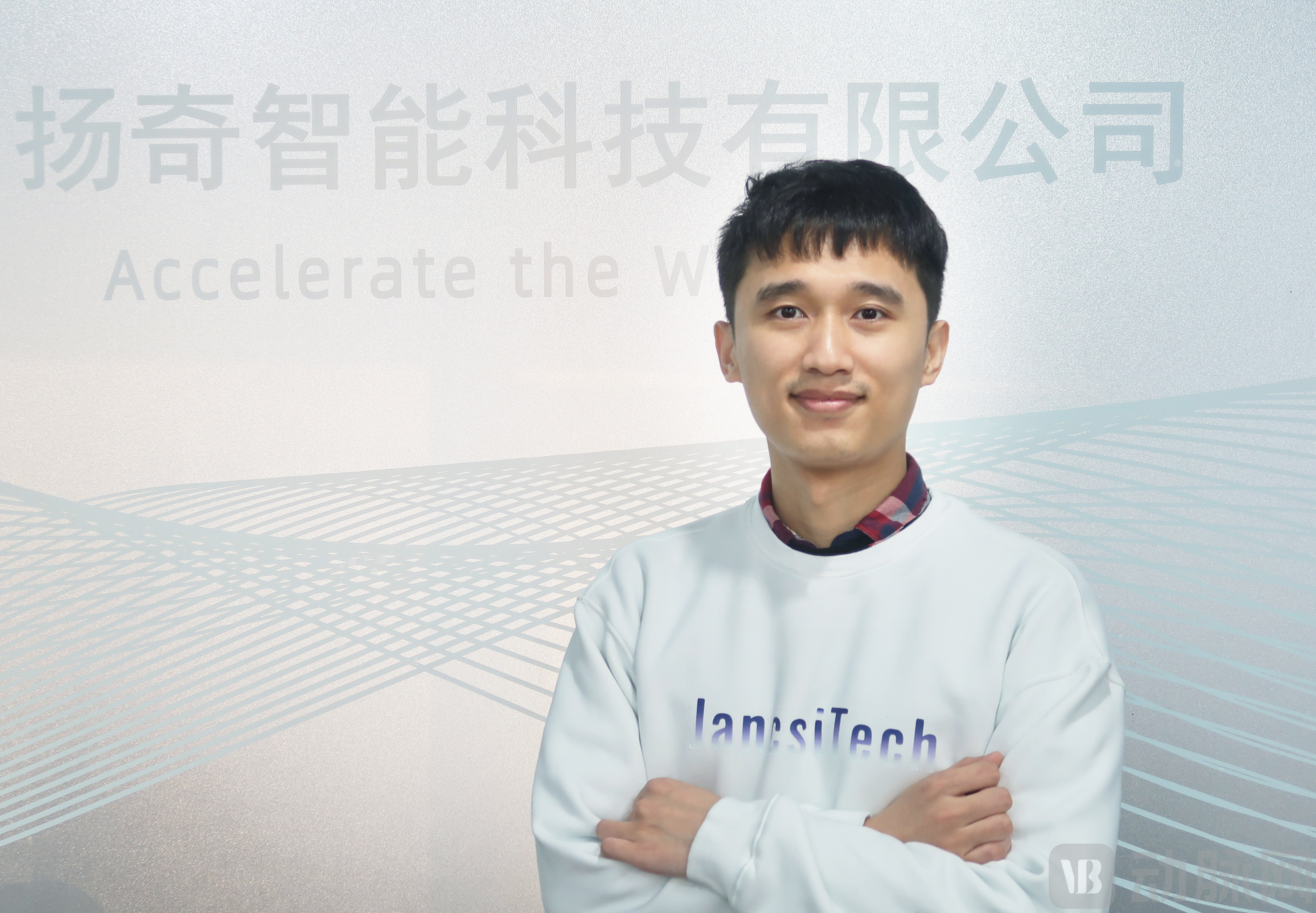
(Zhou Guanqun, Chief Technology Officer of Yangqi Intelligence)
Below are excerpts from the interview:
VCBeat: You have conducted scientific research at the University of Science and Technology of China, the Chinese Academy of Sciences, Stanford University, and the SLAC National Accelerator Laboratory in the United States. What significant achievements have you made during your long-term scientific research career?
Zhou Guanqun: In my previous scientific research, I have been engaged in the study of particle accelerators and X-ray physics, achieving significant scientific accomplishments. I consider the following to be my most representative contributions: proposing a method for measuring the coherence time of hard X-ray free-electron lasers and conducting the first experimental measurements thereof; optimizing the performance of X-ray facilities using artificial intelligence techniques; and performing transient analysis of ultrafast X-ray crystal diffraction. Of course, these research achievements would not have been possible without the help and support of my supervisor and colleagues.
VCBeat: Given your numerous outstanding achievements in scientific research, why did you leave the familiar field of research to become the Chief Technology Officer of Yangqi Intelligence?
Zhou Guanqun: I have always found basic science fascinating, and for the past decade or more, I have been engaged in scientific research in this field. However, most scientific research is focused on frontier areas and cannot solve practical problems or improve people’s quality of life in the short term. During my years in Silicon Valley, I was deeply influenced by the culture of entrepreneurship and innovation, and I hope to translate my scientific achievements into practical applications to benefit more people. Innovating in the healthcare sector is driven by the desire to benefit more patients.
Therefore, together with Zhou Haotian and Tian Yuan, whom I had known since our university days, I co-founded Yangqi Intelligence to focus on tackling the challenge of “high-precision navigation in cancer radiotherapy.” We aspire to be pioneers in autonomous driving technology within the medical equipment sector.
VCBeat: How did you transition from a researcher to Chief Technology Officer?
Zhou Guanqun: I believe that researchers and chief technology officers share a common trait: they devote their full energy to solving complex problems.
The primary distinction between scientific research and the role of a Chief Technology Officer (CTO) lies in their respective objectives: scientific research is dedicated to discovering fundamental principles, whereas a CTO focuses on applying these principles to solve practical problems. For instance, after scientists such as Wilhelm Röntgen elucidated the mechanisms underlying X-ray generation and the interactions between X-rays and human tissue, innovators leveraged these principles to invent the X-ray machine.
Therefore, based on a deep understanding of the underlying technologies, we conducted in-depth research and interviews with numerous medical experts, and subsequently proposed products and solutions aimed at “addressing unmet clinical needs.”
On the other hand, transitioning from a research scientist to a Chief Technology Officer (CTO) requires addressing challenges related to team dynamics and management. Scientific research typically involves small-scale collaborations with few participants, most of whom are scholars or scientists with similar backgrounds. In contrast, a CTO must manage larger, more diverse teams. This entails assigning responsibilities based on individual strengths, planning projects accordingly, and effectively driving R&D progress.
VCBeat: How do you quickly integrate your team and enhance its effectiveness?
Zhou Guanqun: Since assuming the role of Chief Technology Officer at Yangqi Intelligence, in addition to self-directed learning and reading management literature, I have proactively participated in various entrepreneurial activities and sought guidance from experienced mentors. Meanwhile, I have continuously refined team dynamics through practice, actively engaging with team members and encouraging them to propose their own technical solutions and work concepts. This approach has fully leveraged their initiative, enhanced their sense of value alignment and responsibility, clarified individual roles, and improved overall work efficiency.
VCBeat: Currently, the penetration rate of radiotherapy is relatively low. What do you think are the factors limiting its development?
Zhou GuanqunFirst, patients have an incomplete understanding of radiotherapy. Some patients believe that radiotherapy has significant side effects. In reality, however, radiotherapy is not only widely applicable to the treatment of various types of tumors but also demonstrates notable therapeutic efficacy. Meanwhile, the radiotherapy process is simple and painless, with fewer side effects, thereby avoiding anesthesia-related accidents, postoperative infections, and transfusion reactions associated with surgery, as well as adverse effects such as hair loss and vomiting caused by chemotherapy. Furthermore, as a non-invasive treatment, radiotherapy can preserve the physiological functions of the affected organs, offering distinct advantages.
Second, there is a scarcity of medical physicists. In developed countries, one medical physicist is assigned for every two physicians in radiology departments, enabling widespread use of radiation therapy techniques by clinicians. In contrast, China has approximately one medical physicist for every five physicians, reflecting relatively constrained medical resources and limiting physicians’ ability to utilize radiation therapy technologies flexibly and on demand.
Third, there is a scarcity of radiotherapy equipment in China. This is partly due to the limited number of qualified medical physicists capable of operating such equipment; even when hospitals procure these devices, they often lack personnel trained to use them. Furthermore, the high cost of advanced radiotherapy systems hinders the widespread adoption of radiotherapy technologies.
VCBeat: How will Yangqi Intelligence address this limitation?
Zhou Guanqun: To address patients’ cognitive concerns, Yangqi Intelligence aims to make radiotherapy more acceptable by improving precision, reducing side effects, and increasing cure rates. To tackle the challenges in training medical physicists, we leverage artificial intelligence to lower the operational threshold of radiotherapy equipment, thereby reducing learning costs and barriers for physicists; furthermore, we capture and consolidate expert clinical experience through knowledge graphs to empower the equipment. To address the high cost of high-end radiotherapy systems, we offer affordable, domestically produced alternatives that equip conventional radiotherapy devices with additional components and intelligent systems to achieve performance comparable to that of imported high-end equipment.
VCBeat: Why are particle accelerators considered the core intelligence genes of Yangqi?
Zhou GuanqunFirst, the core component of mainstream radiotherapy machines is the particle accelerator, which has been the focus of my research. As a large-scale scientific facility, particle accelerators serve as interdisciplinary research platforms that not only support scientific inquiry across multiple disciplines but also drive the development of related industries. Particle accelerator systems are complex engineering endeavors involving multidisciplinary integration, including vacuum technology, magnet systems, collimation, radiofrequency (RF) systems, physics, and computer science. Technologies such as radiation imaging, collimation and positioning, and artificial intelligence applications derived from these systems can be leveraged in radiotherapy to achieve precise and intelligent treatment delivery. Furthermore, the flawless operation of particle accelerators and other large-scale scientific facilities in my former laboratory relies on their core control system—EPICS. This same control system is currently employed by leading radiotherapy equipment manufacturers, including industry giant Varian.
Nevertheless, particle accelerators are highly complex systems that embody both scientific and engineering characteristics, and the field has long suffered from a shortage of talent. Yangchi Intelligence aims to leverage its efforts to translate cutting-edge scientific research achievements in particle accelerator technology into industrial applications that benefit patients. I also hope to apply my knowledge and expertise to broader areas within the medical field.
VCBeat: Did you encounter any difficulties during the R&D process, and how did you resolve them?
Zhou Guanqun: We provide an integrated solution, so there are still many technical challenges in every link and hardware R&D. For example, our structured-light imaging device, Qi Shi, has extremely high parameter requirements, such as a precision of 0.1 mm and an imaging speed of 30-50 FPS. In addition, the device needs to be 2 meters away from the patient, which makes product development have many difficulties to overcome.
To address this, we first independently developed structured light algorithms and optical path designs. Additionally, we collaborated with experts and professors from universities such as the University of Science and Technology of China, as well as structured light companies, to jointly participate in research and development. Through iterative improvements and experiments, the equipment has met the clinical requirements.
VCBeat: What are Yangqi Intelligence's plans for 2022?
Zhou Guanqun: Currently, our primary focus is on product development, which includes two hardware and two software products. We achieve real-time monitoring and control of position and dose during radiotherapy through an integrated hardware-software solution.
Although radiation therapy has a history spanning several decades, real-time dose monitoring has remained a persistent challenge. Last year, the first company globally developed a product for real-time dose monitoring and obtained FDA approval. If Yangqi’s dose monitoring product can be successfully developed rapidly, it will become the second device worldwide capable of real-time dose monitoring.
Furthermore, we have partnered with renowned domestic cancer hospitals to continuously optimize our products through clinical trials. By leveraging the "head effect," we have strengthened our corporate brand and laid a solid foundation for future market expansion.
VCBeat: What advice or words of wisdom do you have for technical professionals who are about to start their own ventures or join startups?
Zhou Guanqun: Whether joining a startup or founding one’s own venture, the first prerequisite is to be passionate about the endeavor. In the course of entrepreneurship or employment, one may encounter numerous challenges, such as capital constraints, market pressures, and technical hurdles; however, as long as there is genuine passion for the work, perseverance will surely follow.
Additionally, a shift in mindset is also required. In startups, the primary objective is not scientific exploration; rather, technology must be aligned with actual market demands to effectively address industry pain points. Only in this way can products achieve commercial viability and ensure the sustainable development of the startup.