

ZETA Technology by ZETag Developer Zhongxing Tech Files IPO Prospectus: A RFID Replacement for Pharmaceutical and Medical Equipment Tracking
In the healthcare sector, Internet of Things (IoT) technology has made mutual “communication” between humans and devices, as well as among devices themselves, a reality. Its profound influence and vitality have played a crucial supporting role in advancing the deepening of healthcare system reforms, accelerating the development of the “Healthy China” initiative, and promoting the growth of the medical and health industry.
As a branch of the Internet of Things (IoT), the Healthcare IoT adheres to the fundamental IoT architecture, with its network infrastructure divided into the perception layer, network layer, platform layer, and application layer.The ZETA technology discussed in this article belongs to the network layer.
The role of the network layer is to enable connectivity among all objects and allow devices to transmit and share information with other devices within the network. The network layer of the Internet of Medical Things (IoMT) is essentially a heterogeneous network, comprising an access network and a transport network, which respectively handle device access and information transmission between devices. Therefore, the IoT network layer basically integrates all existing network forms, achieving broader "Internet of Everything" through the combination of different networks.
Currently, various short-range wireless standards are available for the access network at the network layer of the Internet of Medical Things (IoMT), including Wi-Fi, ZigBee, Bluetooth, UWB, Z-Wave, RFID/NFC, and IrDA. In addition to well-known wired network technologies and cellular network technologies led by 5G, the transmission network also encompasses Low-Power Wide-Area Network (LPWAN) technologies such as NB-IoT, EC-GSM, LoRa, SigFox, and eMTC.
Recently, with theZongxing Technology Secures Hundreds of Millions in Series B+ Fundingthe announcement of its self-developedInnovative Low-Power Wide-Area Communication Standard: ZETA Technologyis also widely known.
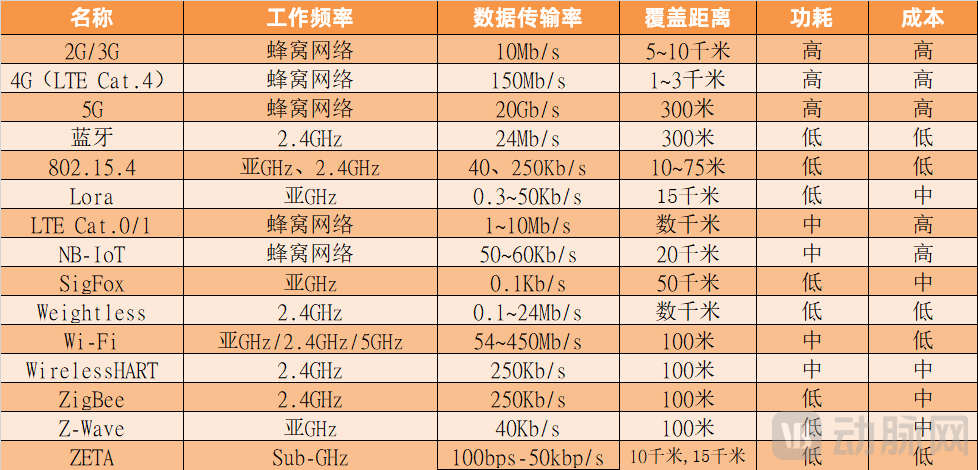
Comparison of ZETA Technology and Mainstream Healthcare IoT Access Network Technologies
So, how does this technology integrate with the healthcare sector? And what are its application scenarios?
The successful launch of ZETA, a low-power IoT technology, is attributed to the high-caliber R&D team at Zongxing Technology.
Li Zhuoqun, Founder and CEO of Zongxing Technology, holds a Ph.D. in Electronic Engineering from the University of Plymouth (UK) and completed postdoctoral research on low-power sensor networks at Imperial College London. He previously served in the IP Advisory Practice of Consulting (a professional consultancy firm specializing in the telecommunications industry) and in Motorola’s Wireless Systems Division, accumulating extensive theoretical knowledge and practical experience in the sector. As a technology-driven enterprise, Zongxing Technology has R&D personnel accounting for 60% of its workforce. Its core R&D team hails from renowned telecommunications equipment providers such as Huawei and ZTE, further elevating the company’s technological R&D capabilities.
To date, Zongxing Technology has completed four rounds of financing:
In May 2017, the company secured tens of millions of yuan in Pre-A round financing from Fortune Capital and PNP China.
In May 2018, the company secured tens of millions of yuan in Series A financing, led by CAS Capital.
March 2020, RMB 100 million Series B round; JD.com, Hechuang Capital, Guochuang Zhihui, and Dawu Venture Capital
In February 2022, the company secured hundreds of millions of yuan in Series B+ financing, led by Lenovo Capital and Guangyue Investment, with participation from Yin'an Capital, SCG, and others.
The reason it has attracted the favor of numerous investors lies not only in its technology but also in its ambitious vision.“We aim to develop narrowband communication chip IP with a cost of 10 cents, a coverage range of 10 kilometers (up to 15 kilometers in open areas), and power consumption as low as 10 mW or even passive operation, thereby building a more deeply penetrated ‘LPWAN 2.0 Ubiquitous IoT’ application ecosystem. By providing full-stack IoT communication infrastructure encompassing ‘chips, networks, and cloud platforms,’ we help industries across the board rapidly achieve low-cost digital and intelligent transformation and upgrading.”.” This is the vision of Zongxing Technology.
In fact, Zongheng Technology has collaborated closely with leading enterprises across various industries, deeply embedding ZETA into sectors such as electric power, industrial manufacturing, agriculture, and smart cities. Currently, the healthcare industry is ZETA’s next frontier.
According to Zhang Juyan, COO of Zongxing Technology, internet technology has optimized and refined the workflows of healthcare systems. The application of the Medical Internet of Things (MIoT) can further enhance the online capabilities of medical information management. For instance, in scenarios such as the management and monitoring of medical equipment, essential medicines, and public health safety, MIoT enables the acquisition of more timely, effective, and comprehensive data to support medical big data platforms, thereby truly realizing the feedback loop where data drives and improves healthcare operations.
The T-shaped strategy is the business model of Zongxing Technology., which is equally applicable to the medical field. Specifically,The horizontal stroke “—” of the T-shape helps ZETA technology expand into more medical application scenarios, empowering professional partners to implement their products; the vertical stroke “|” leverages industry advantages to extend ZETA technology’s network layout within the medical sector.For example, while leveraging ZETA technology for medical device asset management, we also provide partners with ZETA wireless infrastructure, further reducing the barriers to product deployment.
Based on the T-shaped strategy, Zongxing Technology enters the market with end-to-end visibility of medical logistics supply chains and industrial predictive maintenance.“Building industry-wide wireless IoT infrastructure to create greater IoT value with partners, helping end customers achieve ‘data generation’ and providing a dynamic big data foundation,” said Zhang Juyan.
End-to-end visibility of the logistics supply chain is a key vertical focus within Zongxing Technology’s “T-shaped Strategy.”Compared with conventional manufacturing supply chains, medical supply chains have a more pressing need for process monitoring. Zhang Juyan introduced that conventional systems mostly adopt barcode and RFID technical solutions, which can monitor static data of items but fail to capture the dynamic information flow during item circulation.
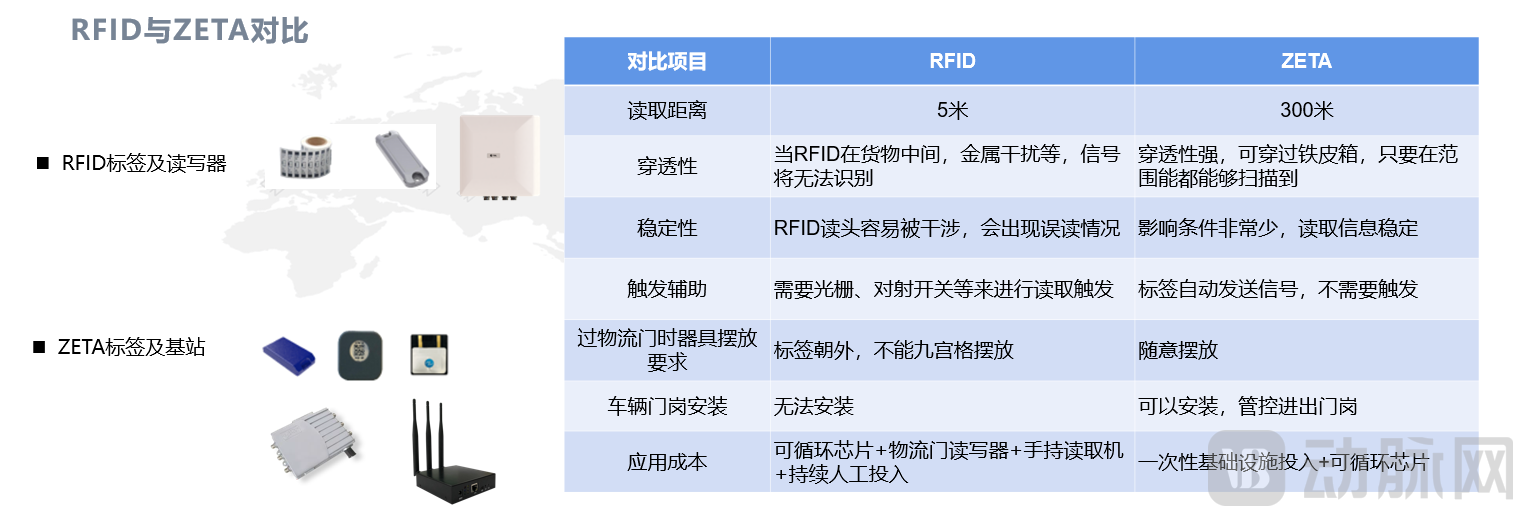
Taking cold chain management as an example, Guangzhou Jingrui Intelligent Technology Co., Ltd. has launched a specialized device for cold chain temperature and humidity measurement—the ZETA Temperature and Humidity Sensor—based on ZETA technology.
This sensor enables precise monitoring of temperature and humidity, remote surveillance, automatic alarms, and full-process data visualization for COVID-19 vaccines, effectively ensuring their safety and efficacy. The ZETA temperature and humidity sensor not only provides real-time monitoring but also efficiently collects, organizes, and analyzes statistical data, truly realizing the digitalization of vaccine temperature and humidity monitoring and management.
ZETA can also be applied to automated inspection and predictive maintenance in healthcare settings.Monitor and inspect the operational status and health of key equipment and facilities in hospitals, sanatoriums, and other settings, promptly or even proactively notifying equipment management personnel of faults to prevent medical accidents and losses caused by sudden failures. Meanwhile, this solution offers strong scalability and replicability, enabling unified access for multiple outpatient departments and enhancing hospital management standards.
Zhang Juyan introduced,ZETA is a low-power wide-area IoT communication technology that serves as an important complement to 5G.“ZETA features automatic networking without configuration, breakpoint self-healing, and enhanced stability. Its signal coverage can penetrate 7 to 10 floor slabs, effectively overcoming the impact of high-rise buildings, metal equipment, and artificial barriers in urban environments on network coverage, demonstrating exceptional penetration capability.”
Furthermore, ZETA adopts a wireless monitoring solution that utilizes a “sensor node–wireless gateway–server” architecture to establish dedicated networks or private clouds. This approach ensures data security and privacy while providing low-power wireless connectivity for various monitoring sensors. By collecting multi-dimensional data through the ZETA dedicated network and uploading it to the cloud, ZETA facilitates efficient and intelligent hospital management.
“The healthcare industry’s demand for IoT applications is extensive and fragmented, requiring the integration of various technologies to meet end-user needs.” In line with its development plans for the medical sector, Zongxing Technology will maintain its T-shaped strategy, leveraging its platform to connect with more technological systems to address diverse scenario-based requirements.
About the ZETA Alliance
ZETA Alliance, jointly established by Zongheng Technology and industry leaders such as China Mobile IoT Company, Toppan Group, Nokia, STMicroelectronics, and NTT Docomo, has attracted sensor manufacturers, platform providers, integrators, and application enterprises from the IoT industry chain to join. By collaborating closely with leading enterprises across various sectors, the alliance promotes the adoption of ZETA in industries including electric power, industrial manufacturing, agriculture, smart cities, smart buildings, and logistics. Currently, the ZETA Alliance boasts over 300 members, covering China, Japan, Southeast Asia, and Europe.