

Policy Document No. 2 Unleashes HMO Momentum: 2022 Marks the Dawn of China's HMO Era
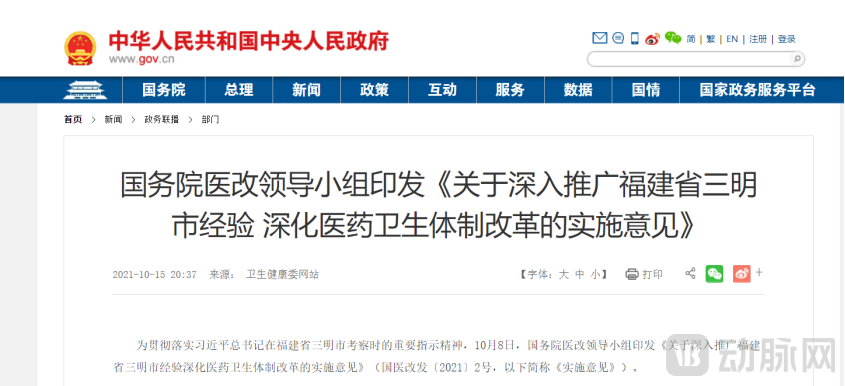
In October 2021, the State Council’s Leading Group for Medical Reform issued the “Implementation Opinions on Deepening the Promotion of Sanming City’s Experience in Fujian Province and Furthering Healthcare System Reform” (Guo Yi Gai Fa [2021] No. 2) (hereinafter referred to as “Document No. 2”). The document frequently emphasized “advancing the development of medical consortia,” and is regarded by the industry as a landmark signaling China’s deep restructuring of the healthcare supply system driven by payment reform, and its push to establish Chinese-style digital Health Maintenance Organizations (HMOs).
Currently, led by the healthcare security authorities as the “super payer,” China is comprehensively driving a shift from a disease-centered to a health-centered model, with digitalization serving as the engine for upgrading the country’s healthcare service system. Starting from Sanming in Fujian Province, regions such as Tianjin and Shandong are leveraging payment reform as an entry point and digitalization as a driver to implement tightly integrated medical consortia and establish health stewardship organizations for the new era.
As the world’s largest unified market and most populous country, China’s development of this new HMO model, driven by digitalization, will exhibit a trend of lighter investment and faster growth compared to UnitedHealth Group in the U.S., representing a significant opportunity for China to achieve a leapfrog advancement in its healthcare industry through the “dual circulation” strategy.
The emergence of Health Maintenance Organizations (HMOs) is closely tied to the United States’ efforts to control the rapidly escalating and unreasonable medical costs. In 1973, the U.S. Congress passed the Health Maintenance Organization Act, encouraging the rapid development of HMOs, which represent the most predominant form of managed care. The core transformation underlying HMOs lies in the collaboration between payers and healthcare providers, who jointly participate in balancing healthcare services through health risk management, utilization management, and quality management, thereby optimizing the cost-effectiveness of healthcare delivery.
The Health Maintenance Organization Act spurred the rapid rise of HMOs in the United States, giving birth to healthcare industry giants exemplified by UnitedHealth Group. By integrating healthcare providers with insurance entities, UnitedHealth’s business model aligns their interests into a shared community, jointly delivering services to policyholders and successfully implementing the “insurance + services” model.
On one hand, UnitedHealth Group leverages its health insurance business through managed care to consolidate medical resources, build an extensive healthcare network, and rapidly attract and retain members, thereby providing a stable customer base for its health services segment. On the other hand, the specialized capabilities developed by its health services business in health management, information technology services, and pharmacy benefit management further strengthen the competitive moat of its health insurance operations. These capabilities also assist insurers in enhancing monitoring of medical practices, effectively reducing costs, and achieving risk control. Through this complementarity, a closed-loop ecosystem integrating pharmaceuticals, healthcare, and insurance is ultimately formed.
Unlike the United States, where commercial insurance dominates healthcare payment, China has achieved universal health coverage. In this context, a Chinese-style HMO should be the result of the combined effects of policy, medical infrastructure, market demand, payment mechanisms, and technology—a systematic endeavor. Against this backdrop, how can the “insurance + services” model take root? Whether or when a “Chinese version of UnitedHealth” will emerge under China’s policy and market conditions has long been a topic of keen interest within the industry.
It is worth noting that “Document No. 2” mentions “the development of medical consortia” 16 times, and calls for strengthening performance evaluations of medical consortia with a focus on people’s health, exploring the implementation of global budgeting for healthcare insurance funds in closely integrated county-level medical communities, and encouraging province-led or inter-provincial alliance-based centralized volume-based procurement for drugs and consumables with high usage volumes and significant procurement expenditures that are not covered by national centralized volume-based procurement programs.
UnitedHealth Group achieved rapid growth within the U.S. environment that encouraged managed care. Similarly, as China promotes the development of health stewardship organizations centered on “health,” digital forces are also fostering the emergence of a Chinese counterpart to UnitedHealth. Zhan Jifu, the key architect of the Sanming healthcare reform, once stated, “Implementing health-centered management and establishing a system of health stewardship organizations is a critical task.”
In October 2021, Sanming issued the Action Plan for Implementing the “Six Major Projects” to Advance Further Healthcare Reform in Sanming City, calling for further implementation of the project to improve the universal health stewardship system and strengthen the health stewardship framework. Within the construction of this universal health stewardship system, digital infrastructure will play a pivotal role. It is reported that WeDoctor, a digital healthcare platform, is assisting Sanming in building an internet-based hospital platform characterized by “comprehensive horizontal coverage, thorough vertical integration, and full connectivity.” This platform connects, complements, serves, and empowers the 12 general hospital consortia in Sanming City, forming a digital health stewardship organization.
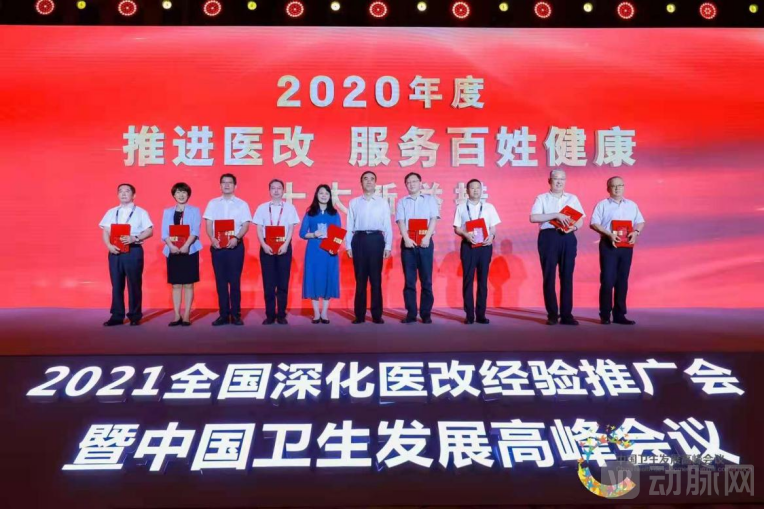
Tianjin’s exploration of digital health stewardship organizations has also drawn significant attention. In 2020, under the guidance of the Tianjin Municipal Health Commission, WeDoctor Internet Hospital took the lead in collaborating with 267 primary healthcare institutions to establish a closely integrated internet-based medical consortium—the Tianjin Primary Digital Health Community. With chronic disease management as its entry point, the community explored the implementation of payment methods such as “global bundled payments” and “disease-specific and capitation-based bundled payments” under the medical insurance system, thereby implementing a new model of health accountability. At the 2021 National Conference on Promoting Experience in Deepening Healthcare Reform, the Tianjin Primary Digital Health Community was ranked first among the “Top Ten New Initiatives for Advancing Healthcare Reform and Serving Public Health.”
As can be seen, the policy dividends brought by “Document No. 2” are being acceleratedly released. By promoting the reform of tiered diagnosis and treatment and constructing a health management system centered on people’s health, more effective and efficient universal health management will be achieved. The gradual clarification of top-level design and the maturation of preliminary exploratory practices will enable Chinese-style HMOs to achieve rapid development in 2022.