

World Glaucoma Day: Seeking the Ultimate Solution for the Leading Cause of Irreversible Blindness
As the leading cause of irreversible blindness worldwide, glaucoma is closer to us than we might think.
Currently, the spectrum of major blinding eye diseases in China has shifted from trachoma and cataracts in the past to age-related and metabolism-related eye diseases such as glaucoma and fundus diseases.
A more direct piece of data is provided by the “Chinese Glaucoma Guidelines (2020)” issued by the Ophthalmology Branch of the Chinese Medical Association, which shows that there are currently over 20 million glaucoma patients in China, with more than one-quarter progressing to blindness.
Despite the vast number of patients affected, humanity has yet to find a definitive cure for glaucoma. Although the road ahead remains long, researchers and entrepreneurs continue to rise to this challenge, gradually bringing new hope to patients.
On the occasion of World Glaucoma Day, VCBeat will examine the current status and characteristics of the glaucoma market from the perspectives of diagnosis, clinical treatment, and medication, while also outlining its future trends.
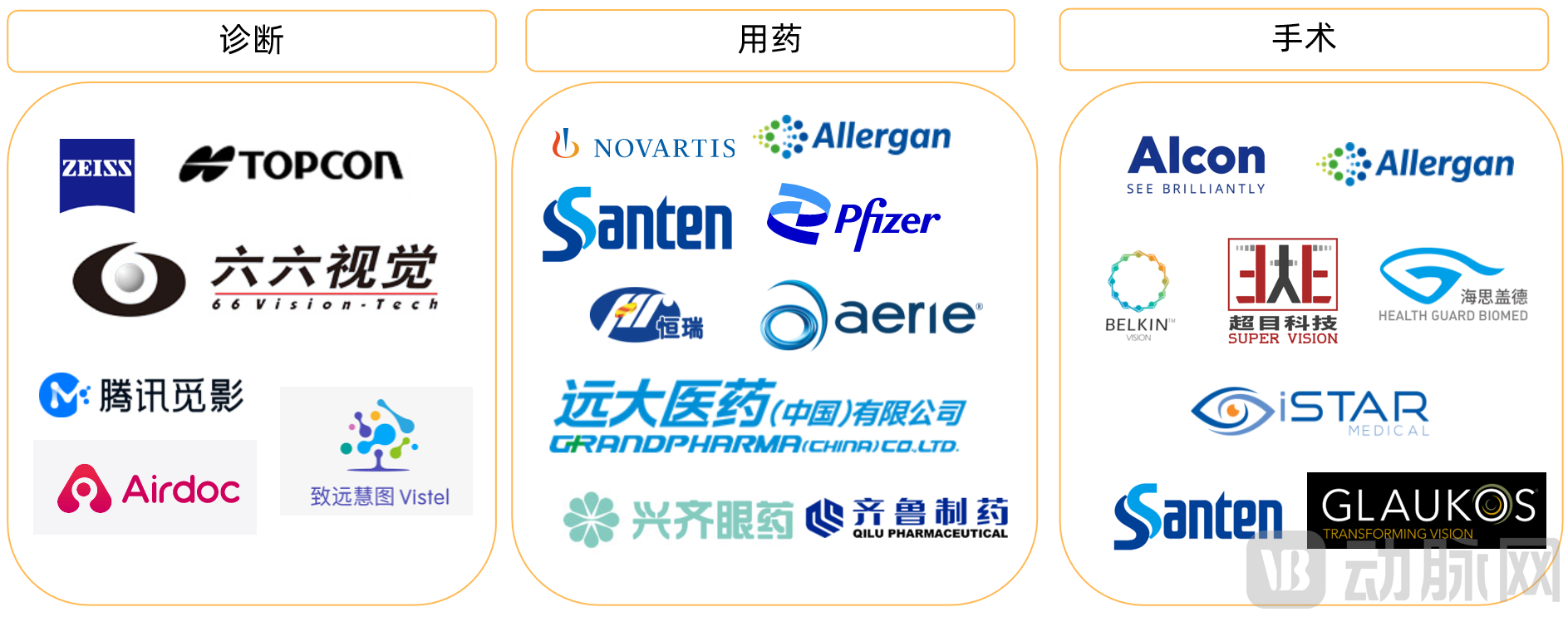 Atlas of Glaucoma Diagnosis and Treatment (Partial)
Diagnosis: Insufficient Resources, Cognitive Deficit
At present, the dilemma faced by glaucoma patients is not only the lack of a complete cure but also the challenges existing in the screening stage.
Since glaucoma causes irreversible optic nerve damage due to elevated intraocular pressure, vision loss once it occurs is irreversible. Therefore, consensus guidelines on the diagnosis and treatment of glaucoma have consistently emphasized early detection, early diagnosis, and early intervention.
However, the reality is that the diagnostic coverage rate for glaucoma in China remains at a relatively low level. Approximately 90%–95% of open-angle glaucoma cases and more than 60% of angle-closure glaucoma cases are not diagnosed in a timely manner, whereas the diagnostic coverage rate for glaucoma in developed countries is mostly between 30% and 50%.
This situation stems, on the one hand, from insufficient public awareness and attention to glaucoma, and on the other hand, from constraints imposed by scarce medical resources and limited settings for screening programs.
Similar to most chronic diseases, in the early stages of glaucoma, most patients do not directly perceive ocular discomfort. In cases of acute glaucoma attacks, symptoms such as headache and nausea often accompany ocular discomfort, making them easy for patients to overlook.
Looking further at the specific screening process, China currently has fewer than 50,000 ophthalmologists. Implementing population-wide screening would therefore incur substantial costs. Moreover, glaucoma screening procedures—such as fundus examination, intraocular pressure measurement, and gonioscopy—are primarily conducted in hospital settings, which further reduces the frequency of proactive screening by patients.
Therefore, how to popularize early screening and diagnosis of glaucoma through effective means, while reducing medical costs and improving service accessibility, has become a topic of discussion for many researchers and innovators.
In recent years, advancements in AI technology have ushered in transformative developments in the diagnosis and treatment of numerous diseases, with substantial progress achieved in AI-assisted medical image interpretation and diagnosis. Furthermore, the integration of AI technology has provided new opportunities for the widespread adoption of early glaucoma screening.
Theoretically, the diagnosis and treatment of glaucoma often involve procedures such as visual field monitoring and fundus examination of the optic nerve, which can also serve as entry points for AI integration.
Although the development of AI for early screening and diagnosis of glaucoma has been somewhat slower compared to other ophthalmic AI products (such as diabetic retinopathy screening systems), it is making steady progress.
In June 2020, the “Guidelines for the Standardized Design and Application of AI-Assisted Glaucoma Screening Systems Based on Fundus Photography,” led by the Glaucoma Group of the Ophthalmology Branch of the Chinese Medical Association, was officially released, effectively standardizing the design and clinical application of AI-assisted glaucoma screening systems.
It is reported that Tencent Miying’s “Artificial Intelligence Glaucoma Screening System” can assist in the early diagnosis of glaucoma, enabling identification before patients experience vision loss and facilitating more timely and effective treatment, with an accuracy rate exceeding 95%.
Furthermore, companies such as Airdoc and Zhiyuan Huitu have also developed AI products suitable for glaucoma screening. These innovations not only provide additional viable pathways for glaucoma screening and prevention in China but also effectively alleviate the screening challenges posed by insufficient medical resources.
In addition to insufficient medical resources, another challenge in glaucoma screening is the low efficiency of traditional detection methods. Typically, glaucoma screening requires a comprehensive assessment of multiple parameters, including intraocular pressure, anterior chamber angle, visual field, and optic disc. Most of these tests require specialized equipment and trained personnel, resulting in prolonged examination times.
Evidently, portable glaucoma screening devices that are lightweight, offer rapid detection times, and are not constrained by environmental conditions are clearly favored by the market. Furthermore, in addition to portability, intelligence is a key direction considered by many companies in the research and development of such products. The integration of intelligent diagnostic technologies enables these devices to be used not only for early screening but also for prognostic disease monitoring, thereby providing support for the formulation of disease management plans.
However, at the current stage, most portable glaucoma detection products primarily facilitate auxiliary screening by measuring a single parameter (such as intraocular pressure or visual field). Clinical diagnosis of glaucoma still requires the integration of multiple parameters. Nevertheless, from a disease management perspective, these products can provide significant value in the screening and prognosis of glaucoma patients.
Pharmacotherapy: Prostaglandin Agents Take Center Stage as New Therapies Continue to Emerge
Next, let us examine the treatment of glaucoma.
At present, the primary approach to managing glaucoma is lowering intraocular pressure (IOP), with common strategies including pharmacotherapy, surgery, and laser treatment. Generally, medications are predominantly used in the early stages of glaucoma, whereas surgical interventions are more commonly employed in advanced stages to control IOP. Therefore, pharmacological therapy remains the first-line treatment for glaucoma.
Data on drug utilization in urban public hospitals in 2020 showed that sales of anti-glaucoma agents and miotics reached RMB 569 million, maintaining a high level within the ophthalmic pharmaceutical sector over the past six years.
In terms of specific drug classes, targeting the production and outflow pathways of aqueous humor, the mechanisms of action for intraocular pressure-lowering medications primarily fall into three categories: reducing aqueous humor production, enhancing aqueous humor outflow via the trabecular meshwork pathway, and promoting aqueous humor outflow via the uveoscleral pathway.

In addition to the aforementioned medications, hyperosmotic dehydrating agents can also achieve intraocular pressure reduction by increasing plasma osmolality over a short period, thereby inducing dehydration of ocular tissues.
Ideally, medications for glaucoma should offer maximal intraocular pressure (IOP) reduction as monotherapy, have no significant side effects, exhibit no rapid development of tachyphylaxis, and provide long-term control of IOP fluctuations. Due to these advantages, prostaglandin analogs are consistently recommended by major clinical guidelines as first-line therapy for open-angle glaucoma. Data on medication usage in urban public hospitals further indicate that sales of this drug class account for nearly half of the total market share of anti-glaucoma medications.
However, it is important to note that prostaglandin analogs still cause side effects such as conjunctival hyperemia and eyelash growth in clinical practice, thereby affecting patient medication adherence. Consequently, the market for pharmacological treatment of glaucoma remains an area with significant unmet needs, although the industry has never ceased its exploration of superior therapeutic options.
For example, Rocklatan, developed by Aerie Pharmaceuticals and approved by the FDA in 2019, combines Rhopressa with the widely used latanoprost. Compared to monotherapy, this medication demonstrates a more significant effect in lowering intraocular pressure while causing fewer side effects.
Unlike most companies, Alnylam has chosen to develop RNAi therapies for the treatment of glaucoma. It is reported that Alnylam is currently collaborating with Regeneron to develop an RNAi therapy for glaucoma; in mouse models, a single intravitreal injection was shown to lower intraocular pressure for more than five months.
Furthermore, similar to most other fields, ocular drug administration also faces challenges in drug delivery. As a relatively isolated organ, the eye’s blood-ocular barrier significantly reduces the bioavailability of drugs.
Therefore, the development of novel sustained-release ocular drug delivery systems to prolong ocular drug retention time has become a key focus in current ophthalmic pharmaceutical research.
It is understood that as early as 2020, Allergan’s biodegradable bimatoprost sustained-release implant, Durysta, successfully received FDA approval, becoming the first intracameral, biodegradable, sustained-release implant.
In China, some innovative companies are also attempting to address the barriers to ocular drug delivery through a combination of pharmaceuticals and medical devices; with the support of implantable devices, this therapy can achieve superior efficacy compared to pharmacotherapy alone.
Surgical Treatment: The Gradual Rise of Minimally Invasive Techniques
Generally, when glaucoma progresses to the moderate-to-advanced stages, surgical intervention is required.
Currently, the glaucoma surgical procedures commonly used in clinical practice mainly include traditional filtering anti-glaucoma surgeries (such as trabeculectomy and non-penetrating trabecular surgery) and minimally invasive internal drainage surgeries or micro-incision anti-glaucoma surgeries based on the aqueous humor outflow pathway (such as trabeculotomy, canaloplasty, and reconstruction of the aqueous humor outflow pathway).
To gain insight into current innovation trends in surgical treatment for glaucoma, VCBeat has compiled selected capital market events in the field of glaucoma surgery over the past three years.
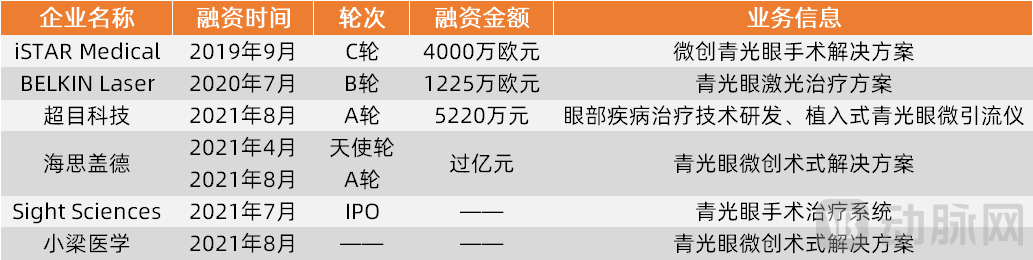
As shown in the figure above, the research and development of innovative solutions related to minimally invasive glaucoma surgery (MIGS) is currently a market entry point that has attracted considerable attention.
In fact, minimally invasive glaucoma surgery (MIGS) has garnered significant attention in clinical practice in recent years. Characterized by minimal internal incisions and a high safety profile, MIGS has been shown by existing research evidence to have significantly lower complication rates compared to traditional trabeculectomy.
However, although minimally invasive glaucoma surgery (MIGS) is gaining increasing clinical recognition at this stage, there remains a significant gap in domestically produced MIGS products in China, with no such products having yet received formal regulatory approval for market launch.
Regarding imported products, the XEN Glaucoma Drainage Device, developed by Allergan, was first used at the Hainan Boao Super Hospital in April 2019. Subsequently, in March of last year, the XEN officially received certification from the National Medical Products Administration (NMPA), marking it as the first medical device approved for market launch in China based on domestic real-world data.
Also in Boao Lecheng, Hainan, the PRESERFLO Micro-Shunt for glaucoma, developed by Santen Pharmaceutical, was successfully implanted in its first-ever case in China at the Boao Super Hospital in January last year. In fact, the product had already obtained CE certification in 2012 and has been marketed in Europe for many years, with its efficacy and safety thoroughly validated through clinical evidence.
In China, although no domestically produced minimally invasive glaucoma surgery (MIGS) products have been launched on the market, this does not mean that Chinese companies have made no breakthroughs in this area.
It is understood that HySight, which completed its angel and Pre-A financing rounds successively last year, is an innovative enterprise focused on minimally invasive surgical solutions for glaucoma. The peripheral diameter of its developed implantable stent, MicroCOGO, is smaller than that of most similar products. This demonstrates that domestic companies are by no means inferior in the manufacturing capability of ultra-micro precision instruments.
Founded in 2020, Wenzhou Xiaoliang Medical Technology Co., Ltd. also focuses on the research and development of minimally invasive treatment solutions and products for glaucoma. Its investigational glaucoma stent demonstrates superior performance in terms of indications, thereby significantly improving surgical success rates. Leveraging the innovativeness of its solutions, Xiaoliang Medical successfully completed its first round of financing last year.
In Conclusion
At present, in addition to surgical intervention, laser therapy is also a common strategy for treating glaucoma. This field has seen numerous innovators, such as BELKIN Laser with its one-second fully automated glaucoma laser treatment device, the BELKIN Laser DSLT (Direct SLT), which enables treatment with the simple press of a button.
However, to date, we still cannot speak of a “cure” for glaucoma; the various available approaches can only facilitate early detection and slow the progression of the disease.
However, with advancements in technology and medicine, many diseases once considered incurable are now curable. Moreover, the continuous emergence of innovative technologies and therapies is transforming the diagnosis and treatment of glaucoma, attracting a growing number of innovators to advance in this field.
We also look forward to a future where more effective treatments reach patients, glaucoma no longer steals our sight, and our vision truly remains in our own hands.