

Shunzhi Health Announces Breakthrough in Microfluidic MEMS Chip Pump Technology with Commercial Launch of AMP100 Wearable Infusion System for Preclinical Research
It has been four years since I first connected with Instant Knowledge.
This is an innovative cross-disciplinary startup dedicated to leveraging semiconductor technology to advance the biopharmaceutical industry.
Recently, we have received good news about it:Instant Knowledge’s wearable micro-pump for small animal experiments, the AMP100, has entered commercial use.This product is based on a microfluidic MEMS chip pump independently developed, processed, and manufactured by Instant Knowledge.Able toAchieves precise single-dose micro-infusion of 0.5 μL ±5%; a first-of-its-kind technological innovation in China.. According to reports, the product has completed its initial trial with the first batch of customers and received positive feedback.
Over the nearly five years since Instant Knowledge (Shanghai) Health Technology Co., Ltd. was founded in 2017 until its first product was launched to the market, China’s biopharmaceutical industry has demonstrated strong growth momentum, characterized by an influx of new enterprises, a rapid increase in new drug applications, and the emerging scale of industrial clusters. As a participant in this broad industrial ecosystem, Instant Knowledge has also undergone significant transformations: developing products from scratch, expanding the team from 2 to over 20 members, and extending the application of its technologies from internal use to external markets.
How does microfluidic MEMS chip pump technology achieve commercialization? What strategic transformations has the company undergone? And what are its future development plans? To address these questions, VCBeat conducted an exclusive interview with Mr. Xu Yibo, CEO of Instant Knowledge (Shanghai) Health Technology Co., Ltd.
The Birth of the World’s First Wearable Micro-Infusion Pump for Animal Experiments
Domestic innovative drug development is booming. Animal studies are an indispensable step in preclinical new drug applications, thus closely linking laboratory animals with biomedical research. Data indicate that among the 50 most significant breakthroughs in medical research over the past 50 years, 11 were achieved through the use of laboratory animals and related technologies.
It is reported that animal studies for drug development typically involve one rodent species and one non-rodent species. The former generally refers to mice, while the latter commonly includes monkeys, dogs, rabbits, or pigs. Among rodent experimental animal models, mouse models account for 85% of the total. In 2019, the market size for laboratory mouse-related products and services reached RMB 2.8 billion; it is projected to reach RMB 8.4 billion by 2024, with a compound annual growth rate (CAGR) of 24.4%. By 2030, the market size for laboratory mice is expected to exceed RMB 20 billion.
In animal experiments, drug administration is a critical procedure. Among various routes of administration, injection is one of the most common and mainstream methods. Xu Yibo stated that in murine experiments, approximately 10–20% of procedures involve injectable drug delivery. Due to the low body weight of laboratory mice, micro-infusion pumps are often required for a significant proportion of these administrations to ensure precise control over dosage and achieve accurate drug delivery.
In injectable drug administration, approximately half of the experimental mice require the use of infusion pumps, accounting for 5–10% of the total population. Therefore,Based on China's annual capacity of 20 million laboratory mice, at least approximately 1 million of these mice are used in experiments involving micro-infusion pumps.. Based on the traditional price range of RMB 500–1,000 for consumables, the annual market size for consumables used solely in micro-infusion pumps can reach at least RMB 500–1 billion.
Traditional animal micro-infusion pumps adopt a “implantable pre-set port + long catheter + large syringe pump” configuration, which imposes significant limitations in terms of device size, application flexibility, and cost. These constraints have, to some extent, restricted the scope of micro-infusion pump applications in small animal experiments.
The market potential for micro-infusion pumps in laboratory animals is undoubtedly vast, underscoring the need to focus on enhancing product performance to drive positive industry transformation. Addressing key pain points, Instant Knowledge (Shanghai) Health Technology Co., Ltd. has adopted entirely novel approaches in core technology and application methods, launching the world’s first wearable micro-infusion pump for small laboratory animals. This device is designed for use in animal model establishment, efficacy evaluation, DMPK, and toxicology studies in preclinical drug development.
In terms of product performance, First, this infusion pump canAchieve Infusion Precision at the Level of Insulin Pumps, with an infusion rate ranging from a minimum of 0.5 µL/h to a maximum of 40 mL/h, and a single-infusion accuracy maintained at 0.5 µL ±5%. The core technical specification of its microfluidic MEMS chip pump, "infusion accuracy at basal rate," has passed the commissioned testing conducted by the Shanghai Medical Device Testing Institute, a nationally authoritative third-party testing agency.
Secondly, this product offers flexible administration routes, supporting both subcutaneous and intravenous infusion, as well as water-soluble and lipid-soluble solutions. It also enables remote wireless intelligent configuration via terminals such as computers, allowing for the selection of various infusion modes—including immediate and scheduled infusion—and remote monitoring of drug delivery, thereby achieving automated dosing in animal experiments.
In terms of product form, this micro-infusion pump features a saddle-shaped split wearable design and weighs only 25g. In contrast to traditional large infusion pumps, which can only accommodate experimental animals in separate setups for single-cage, single-animal, single-pump infusion,Instant Knowledge's AMP100 is the world's first micro-infusion pump designed for comfortable wear, supporting one-pump-multiple-mice applications., thereby improving the utilization rate of experimental space and, to a certain extent, enhancing the efficiency of small animal drug experiments.
In terms of price, the product also achieves effective cost control. Traditional micro-infusion pumps typically entail equipment costs of tens of thousands of yuan and consumable costs in the thousands of yuan, along with cumbersome operation and high labor expenses. Instant Knowledge (Shanghai) Health Technology Co., Ltd. has kept the average price of its infusion pump system equipment to less than one-tenth that of traditional infusion pump products, while also offering more affordable consumables, thereby significantly lowering the barrier to entry and consumable costs for using micro-infusion pumps in animal experiments.
Furthermore,Instant Knowledge’s R&D and production of microfluidic MEMS chip pumps are backed by Southern University of Science and Technology.As one of China’s premier micro- and nanofabrication platforms, Southern University of Science and Technology has provided a robust foundation for Instant Knowledge (Shanghai) Health Technology Co., Ltd. to iterate on product R&D and scale up production, thereby enabling the company to overcome challenges in securing chip wafer supplies.
Landscape of Microfluidic MEMS Chip Pumps
With the right direction identified, the product’s development proceeded relatively smoothly. However, refining the technology was a process of relentless iteration and continuous improvement.
From a technical perspective, the microfluidic MEMS chip pump used in this small-animal experimental micro-infusion pump is a member of the microfluidic MEMS chip pump application family developed by Instant Knowledge (Shanghai) Health Technology Co., Ltd., with the “ID number” HT9207. It is the microfluidic MEMS chip pump that enables the product to achieve high-precision infusion, a wearable design, and low cost.
When explaining the principles of this technology, Xu Yibo used the following analogy: “Fluid flow requires a power source to drive it. Most systems rely on drive motors, commonly known as fluid pumps, while a small portion of fluid movement depends on the siphon effect, such as in IVD.”“Our microfluidic MEMS chip pump serves as the heart of microfluidic flow, functioning as an intelligently controllable power source to regulate the movement of minute liquid volumes.”
Instant Knowledge’s microfluidic MEMS chip pump is a MEMS device based on MEMS microcontrol technology, integrating precision mechanical engineering with semiconductor fabrication processes, with design and manufacturing tolerances at the micrometer scale.
MEMS (Micro-Electro-Mechanical Systems) technology is an industrial technology developed on the basis of semiconductor manufacturing techniques, integrating photolithography, etching, thin-film deposition, LIGA, silicon micromachining, non-silicon micromachining, and precision mechanical machining. MEMS devices offer advantages such as small size, light weight, low power consumption, high durability, low cost, and stable performance, and are widely used in various scenarios including consumer electronics, wireless communications, industrial control, the automotive industry, environmental monitoring, and biomedicine.
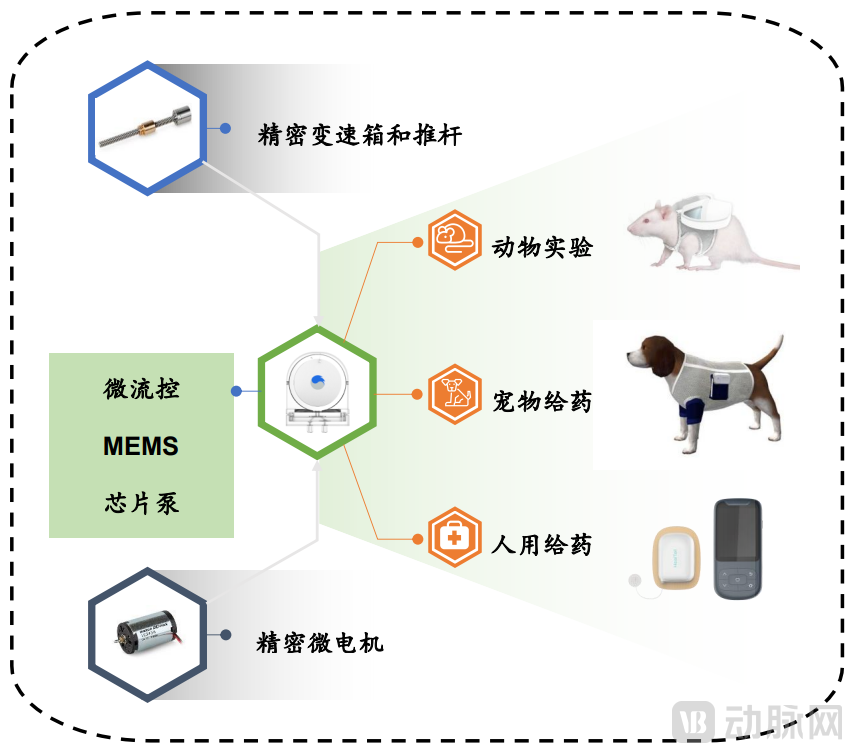
Specifically, compared with traditional imported core precision micro-motors, Instant Knowledge (Shanghai) Health Technology Co., Ltd. integrates the precision gearbox and push rod with the precision micro-motor to formA coin-sized chip pump; on the other hand, piezoelectric ceramic sheets, silicone rubber, and other materials are usedCost-Controllable Manufacturing Materials, establishing higher infusion precision, a smaller module volume, and lower entry costs (consumable-based model) for the product. This microfluidic MEMS chip pump also breaks the monopoly held by traditional precision micromotor manufacturers from Europe, the United States, and Japan over "micro-control technology" (precision micromotor technology that uses micro-power control to drive fluids or solids), achieving a breakthrough from zero in domestic substitution within the precision micromotor field.
As a disruptive innovation in the field of micro-infusion pumps, MEMS chip pumps can be widely applied in areas such as micro-infusion pumps for animal experiments, micro-infusion pumps for pets, human insulin pumps, and other precise drug delivery systems.
Source: Instant Knowledge Technology
Xu Yibo introduced,In the Field of Pet Infusion Pumps, Instant Knowledge is expected to launch a wearable micro-infusion pump this year to improve the veterinary care experience for pets and the consumer experience for pet owners. On one hand, the wearable design allows pets to move freely without requiring prolonged immobilization; on the other hand, after the infusion pump’s mode and parameters are set during the initial hospital visit, owners can take their pets home for companionship and home-based treatment.
From a market perspective, China's pet healthcare market is maintaining an annual growth rate of over 35%. There are approximately 23,000 pet hospitals in the country, with each clinic averaging 3–4 intravenous (IV) infusions per day. Based on these figures, the annual market potential for pet infusion pumps is estimated at 20–30 million IV infusions, corresponding to a consumables market size of RMB 1–1.5 billion.
In the field of human-use drug infusion pumps, Instant Knowledge Technology centers on its patch-style insulin pump. As a typical chronic disease requiring management, diabetes involves treatment products such as glucose meters, insulin pens, and insulin pumps, which exhibit strong consumer-oriented characteristics. However, compared with insulin pens, insulin pumps are adopted by only a small subset of diabetic patients due to their high cost. Within the hundred-billion-yuan glucose monitoring market, the prospects for insulin pumps are considerable.
Beyond the three major markets mentioned above, Instant Knowledge is also exploring additional opportunities, such as engaging in technical collaborations in the field of precise drug delivery.Currently, it has collaborated with multiple pharmaceutical manufacturers, including Dazhou Bio, on combination drug-device products for micro-infusion, such as transdermal pumps for Parkinson’s disease medications.
True Gold Emerges from a Thousand Hammer Blows: From “Two Individuals” to “Three Major Markets”
Although the infusion pumps for small-animal experiments that have already been marketed have successfully enabled the commercialization of microfluidic MEMS chip-based pumps, various challenges over the past five years have continued to weigh on Xu Yibo’s mind. He candidly remarked, “When transitioning from the semiconductor industry to healthcare, I had no idea there would be such a deep ‘pitfall,’ nor did I realize how ‘difficult’ it is to operate in the medical field.”
In 2016, an article on “microfluidic chips” shared by a close friend caught Xu Yibo’s attention and sparked his interest, prompting him to follow up. That friend was Dr. Cheng Xin, co-founder of Instant Knowledge (Shanghai) Health Technology Co., Ltd. and Xu’s college classmate. At the time, Xu had only recently entered the healthcare industry; previously, he had worked in the semiconductor sector, holding key marketing positions at foreign chip design companies Marvell and SMSC. Meanwhile, Cheng Xin was serving as the Department Chair of the Department of Materials Science and Engineering at Southern University of Science and Technology.
Leveraging his extensive experience in the semiconductor industry, Xu Yibo identified the opportunity presented by microfluidic chip pumps, which he regarded as core components for achieving the miniaturization and personalization of traditional medical devices. Xu, who excels in product development, and Cheng Xin, a technology expert, quickly found common ground and co-founded Instant Knowledge (Shanghai) Health Technology Co., Ltd. to initiate technology commercialization. Although they selected “microfluidic MEMS chip pumps” as their technological focus, the company’s initial product target was not infusion pumps for animal experiments, but rather insulin pumps for human use.
Insulin pumps are expensive, but leveraging microfluidic MEMS chip pumps can significantly control costs. Therefore, their application in insulin pumps would create a substantial price differential, indicating significant profit margins.
However, developing a medical-grade insulin pump for human use via an entirely new technological pathway is no easy task. Even2019The 2023 test report from the Shanghai Medical Device Testing Institute shows that Instant Knowledge’s insulin pump has reached an international leading level in terms of infusion accuracy and other aspects., but Instant Knowledge’s first commercialized product was still not an insulin pump.
The subsequent unexpected pandemic further exacerbated the difficulties in cash flow for the R&D of insulin pumps. “Frankly speaking, it was desperate.” Xu Yibo paused briefly while recalling the situation in his office, then continued, “In that dire strait, while preparing to apply for innovative medical device approval for our insulin pump, we discovered a new direction: micro-infusion pumps for animal experiments.”
It was only at this point that Instant Knowledge Technology made a significant strategic adjustment: prioritizing the development of infusion pumps for animal testing. Although this appeared to be a shift in direction, it actually marked the true refinement of the company’s development strategy, propelling its growth onto a fast track.
The R&D and market launch of animal infusion pumps are slightly less challenging than those of insulin pumps. Leveraging the company’s current technological accumulation, not only can the product be rapidly commercialized, but it can also generate robust cash flow support. Subsequently, Instant Knowledge (Shanghai) Health Technology Co., Ltd. identified a burgeoning market for pet infusion pumps, which promises to bring new applications, fresh cash flows, and renewed hope to the company.
Instant Knowledge thus establishes“Animal Testing → Pet Administration → Human Administration”: A Product Tiering Strategy Progressing from Easy to Difficult, targetingThe Three Major Markets: The Scientific Research Market, the Pet Healthcare Consumer Market, and the Human Healthcare Consumer Market。
Following the deployment of its infusion pumps for animal experiments, Instant Knowledge secured its Series B financing. Currently, this infusion pump has completed commercial validation and entered mass production. Xu Yibo revealed that the company’s immediate plans prioritize the mass production of infusion pumps for small and large animal studies, as well as for pets. Simultaneously, it aims to achieve small-batch production of medical-grade chip-based pumps and submit its flagship insulin pump for global type testing, thereby accelerating R&D and regulatory approval processes.
Therefore, Instant Knowledge is opening its Series B funding round to support the research and development and rapid commercialization of its product series, as well as to establish a chip mass production base.
Final Thoughts:At the end of the interview, we returned to the topic of entrepreneurship. Xu Yibo had previously co-founded a chip company, which was later acquired by a well-known domestic chip manufacturer. As a serial entrepreneur, how does he view the entrepreneurial journey? Perhaps his own words offer the most apt perspective.
“There is an old Chinese saying, ‘"True Gold Emerges from a Thousand Hammerings and Refinements"“Along the journey, many entrepreneurial partners around me could not withstand the torments of startup life; some fell behind, some rebelled, and others left—this is the norm in entrepreneurship. After enduring countless trials and tribulations, those who remain are either genuine gold or mere dross, with true gold being exceedingly rare.”
After the metaphor, he returned to a more mundane narrative. “My wife often asks me, ‘What if your startup fails?’ I tell her that if you constantly dwell on failure, you are likely to fail. It is like climbing Tiandu Peak of Mount Huangshan: if you keep looking sideways or downward, worrying about what might happen if you fall, your legs will tremble, and you will be too afraid to climb upward, possibly even causing you to fall. In such moments, you can only focus on each step beneath your feet, moving steadily upward and forward; only then can you reach the summit. For me, even if this entrepreneurial venture fails, my life experience, insights, and capabilities have already reached a significantly higher level. I do not fear failure in entrepreneurship. The fact that I have come this far is already proof enough of my abilities.”
Finally, Xu Yibo shared a poem he greatly admires:
"Having sung my fill by the great river, I turn my head eastward,"
“Delving deep into diverse disciplines to alleviate the world’s suffering.”
"Ten years of facing the wall, striving to break through."
“Even if one’s ambition to cross the sea remains unfulfilled, one is still a hero.”