

WeDoctor's Digital HMO Achieves Initial Success in Tianjin: Nearly 200,000 Chronic Disease Patients Enrolled in Management Program
From signing up with family doctors and health risk screening to chronic disease follow-ups, medication delivery to homes, and home-based medical services, residents can access the full spectrum of chronic disease management services offered by community health centers simply by following the WeChat official accounts “Tianjin Primary Care Digital Health Consortium” or “Tianjin WeDoctor Internet Hospital.” With the gradual improvement of the digital HMO system, nearly 200,000 chronic disease patients in Tianjin had been registered and managed under the Health Consortium’s Chronic Disease Management Center by the end of February 2022. Residents have tangibly experienced that effective chronic disease management is readily available at their local hospitals right in their neighborhoods!
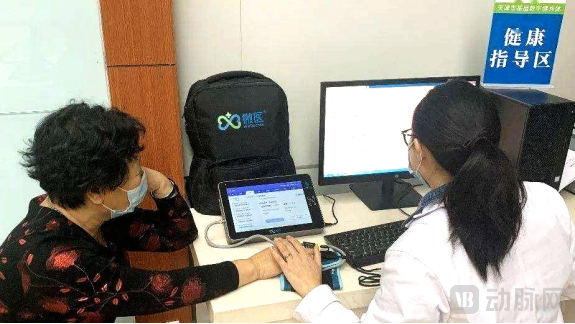
During an on-site visit, reporters observed that at the Chronic Disease Management Center of the Jian Gong Ti (Health Community Consortium) within the Jialingdao Street Community Health Service Center in Nankai District, medical staff were systematically conducting health screenings, registering data, and establishing electronic health records for community residents.
Among the registered patients, Mr. Liu, a man in his seventies, was particularly notable. He is a diabetic patient suffering from multiple comorbidities, including coronary heart disease, hypertension, and hyperlipidemia, and had previously been hospitalized for acute coronary syndrome. At the Chronic Disease Management Center of the Health Consortium, health managers conducted a thorough review of Mr. Liu’s medical records and post-discharge medication regimen. Mr. Liu explained that he had not been taking his medications as prescribed after discharge due to adverse drug reactions. By carefully reviewing his medical history and providing patient explanations for over 30 minutes, the health manager successfully addressed Mr. Liu’s concerns about his medication. “Effective chronic disease management can be achieved right at our doorstep!” Mr. Liu subsequently enrolled in the Health Consortium’s Chronic Disease Management Center, beginning to receive chronic disease management and health services provided by physicians and health managers locally.
Aiming to enable residents to access equitable, accessible, systematic, and continuous integrated health services encompassing “prevention, diagnosis, treatment, management, and wellness” close to their homes, Tianjin’s Primary Care Digital Health Consortium has played a significant role in improving the primary healthcare service system. Statistical data show that since its launch in May 2021, the Chronic Disease Management Center under the consortium has established health records and provided management for over 193,000 diabetes patients. Through digitalized and integrated management, patients are helped to develop habits such as daily monitoring and healthy eating, enabling physicians to observe changes in patients’ conditions and intervene promptly, thereby minimizing the occurrence of complications. For patients who have received health management for more than three months, key indicators—including blood pressure control rate, blood glucose control rate, HbA1c testing rate, complication screening rate, and standardized management rate—are showing continuous daily improvement.
This achievement is also attributable to the digital platform support and standardized process management provided by Tianjin’s Primary Care Digital Health Consortium. In April 2020, under the leadership of the Tianjin Municipal Health Commission, Tianjin Weiyi Internet Hospital spearheaded the establishment of the Tianjin Primary Care Digital Health Consortium in collaboration with 267 primary healthcare institutions. By implementing the “Four Clouds” platforms—Cloud Management, Cloud Services, Cloud Pharmacy, and Cloud Diagnostics—the consortium digitally empowered primary care facilities, delivering comprehensive medical and health maintenance services spanning pre-diagnosis, during-diagnosis, and post-diagnosis stages for the local population. It has progressively built an efficient, health-centered care and management system, implemented a health accountability framework, and pioneered the digital upgrading of primary healthcare at the provincial administrative level.
As a member unit of Tianjin’s Primary Care Digital Health Community, the Chronic Disease Management Center established by the Jialingdao Community Health Service Center serves as the “anchor point” for delivering standardized health management services—encompassing prevention, diagnosis, treatment, management, and wellness—to primary care patients with chronic diseases. Built on the foundation of the family physician responsibility system, it truly leverages digital and standardized approaches to effectively manage the health of chronic disease patients.
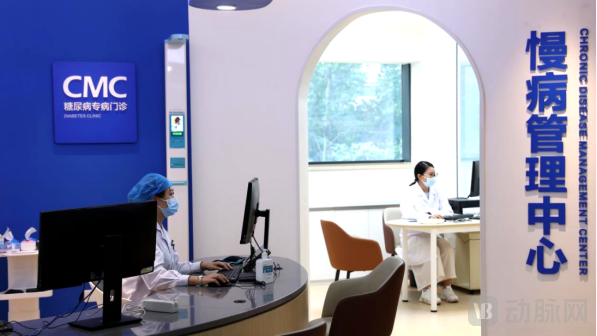
Taking the management of diabetic patients as an example, upon entering the center, patients are guided by in-hospital health managers to undergo four basic health assessments: height, weight, waist circumference, and blood pressure. The data are automatically synchronized to the physician’s consulting room to establish a lifelong electronic health record (EHR). The EHR displays patient stratification and grading, enabling physicians to quickly assess the patient’s current condition. Based on the patient’s vital signs and clinical indicators, physicians can order relevant diagnostic tests, such as retinal screening and neuropathy screening, thereby promoting prevention through screening and reducing the incidence of complications.
For patients with unstable conditions and a risk of complications, the system automatically prompts referral to higher-level regional chronic disease management centers for further treatment. After treatment at the regional center, patients whose conditions have stabilized are referred back to primary care institutions, ensuring timely access to medical services. Meanwhile, the regional center regularly dispatches specialists to provide on-the-job training and mentorship to primary care physicians, thereby enhancing their service capabilities. When physicians prescribe medications, the system conducts joint prescription reviews by integrating patient data from medical records, pharmaceutical supplies, and health insurance, further standardizing rational drug use. Finally, based on patients’ test results, medication history, and daily lifestyle habits, physicians develop health prescriptions and synchronize this information with health managers, achieving an integration of medical care and health management.
Health managers provide patients with health guidance based on the recommendations issued by physicians during consultations. Through the Medical Consortium mini-program and WeChat diabetes management groups, they assist patients in comprehensively managing their diet, exercise, monitoring, and psychological well-being. When patients require medical attention or experience adverse physical reactions, they can seek online consultations via the WeChat mini-program at any time and from anywhere, with health managers providing timely answers and clarifications. In addition, regular free blood glucose monitoring is provided; all relevant data are promptly updated in the electronic health records and shared with physicians to facilitate the recommendation of more specialized treatment plans.
Leveraging the advantages of its digital platform, the Chronic Disease Management Center of the Healthcare Community has extended its care and management system from within hospitals to community settings, establishing continuous care and enhancing management effectiveness. It has gradually become a “powerful tool” empowering primary healthcare institutions to help community residents improve their health.