

WeDoctor's Tianjin Health Community Achieves Remarkable Results, Accelerating the Formation of a China-Style HMO
“In the future, it will not be single medical institutions alone that safeguard residents’ health; rather, it will certainly be a ‘consortium’ capable of providing comprehensive, end-to-end health management. China’s ‘United Health’ model is taking shape.” At the inaugural Asia Healthcare Summit held in Hong Kong, Liao Jieyuan, founder of WeDoctor, predicted that as payment and service models undergo fundamental transformations, healthcare services are shifting from a “treatment-centric” to a “health-centric” approach, giving rise to a vast new market that is rapidly emerging.
As a global leader in health and well-being management, UnitedHealth Group has built the UnitedHealthcare platform, centered on health insurance (the payment system), and the Optum platform, focused on health services (the supply system). By integrating four core capabilities—medical care, pharmaceuticals, insurance, and digitalization—it connects the two most critical elements of the healthcare delivery system: payers and providers, thereby establishing a closed-loop service model that covers the entire lifecycle.
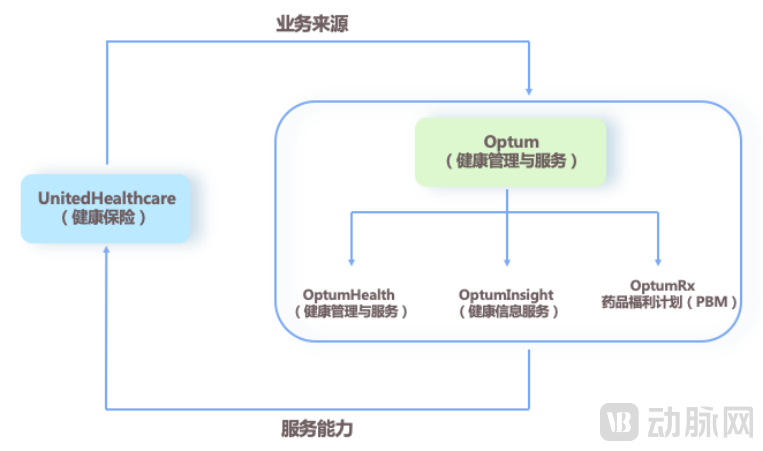
Commercial health insurance in the United States is highly developed, with state governments entrusting the operation of public health insurance programs to insurance carriers. As a result, UnitedHealth’s clientele primarily consists of group customers from government agencies and enterprises. In contrast, China has established a universal health coverage system, where the healthcare security administration undoubtedly holds the greatest influence as the primary payer. How to leverage the basic medical insurance fund to“Paying for medical services” shifting to “paying for public health” is the key.
As demonstrated by UnitedHealth Group’s model, building an HMO requires simultaneous efforts on both the payment and supply sides of healthcare services to form a closed loop. In light of China’s national conditions, the Sanming healthcare reform stands out as a reference case among existing HMO explorations. After undergoing Phase 1.0, characterized by “rectifying chaos and curbing waste,” and Phase 2.0, focused on “establishing regulations and institutional frameworks,” the reform has now entered Phase 3.0: creating “Health Care Organizations” to shift the focus from “disease treatment” to “health management.”
In September last year, Sanming issued the Action Plan for Implementing the “Six Major Projects” to Relaunch Healthcare Reform in Sanming City, with the “Project to Improve the Universal Health Stewardship System” ranked as the top priority among the six major projects. The plan proposes establishing a rational tiered diagnosis and treatment order, strengthening the health stewardship system, and improving health stewardship mechanisms. It also specifies that surplus funds from the bundled payment of medical insurance funds may be included in medical service revenue, to be used for health stewardship, chronic disease management, health promotion, and other related activities. With the support of digital healthcare platforms, Sanming is accelerating its transition toward a “health-centered” model, and digital health stewardship organizations are taking shape.
While the “Sanming Model” is government-led, WeDoctor, a digital healthcare platform, has forged a mature path toward building a Chinese version of “UnitedHealth.” In January 2020, the Tianjin Municipal Government and WeDoctor signed the Strategic Cooperation Agreement on Digital Health, agreeing to jointly establish a Digital Health Community, among other initiatives. This made Tianjin the first provincial-level administrative region in China to comprehensively launch digital health development. By enhancing the coordination and operational efficiency of medical care, pharmaceuticals, and health insurance (the “Three Medicals”), it aims to create a health maintenance system that covers residents’ entire life cycle and all aspects of their health journey, thereby effectively improving population health indicators and curbing the growth rate of health insurance expenditures.
Led by Tianjin WeDoctor Internet Hospital and in collaboration with 267 primary healthcare institutions, the Tianjin Primary-Level Digital Health Community has established a tightly integrated internet-based medical consortium. While providing residents with end-to-end medical and health maintenance services, it has begun exploring payment method reforms such as “global bundled payment” and “disease-based/per-capita bundled payment” under medical insurance. Furthermore, based on assessments of health management quality, it implements an incentive and constraint mechanism of “retaining surpluses and covering no deficits,” thereby establishing a new health accountability framework and forming a digital urban Health Maintenance Organization (HMO).
From the perspective of health insurance payment reform, the “Tianjin Model” has, for the first time at the provincial level, enabled health insurance payers to cover predetermined costs in exchange for population health outcomes, while implementing four digital platforms—“Cloud Management,” “Cloud Services,” “Cloud Pharmacy,” and “Cloud Diagnostics”—to empower primary care through digitalization.
Statistical data show that after more than a year of development, the rate of standardized management for diabetes patients in primary healthcare institutions participating in the Medical Community pilot reached 76.68%. Analysis of patient samples managed for over three months revealed a 21.58% increase in the blood glucose control rate. Furthermore, primary healthcare institutions that have implemented capitation-based payment achieved medical insurance surplus rates ranging from 16% to 31%. With the dual improvement of primary healthcare service capacity and convenience for patients seeking medical care, outpatient visits at pilot primary hospitals within the Medical Community increased by 120%.
Zhan Jifu, the “architect” of the Sanming healthcare reform, affirmed Tianjin’s practices. In an interview with the media, he stated, “The Digital Health Community currently under construction in Tianjin is led by internet hospitals to establish a close-knit medical consortium. It has implemented a ‘health responsibility system’ centered on family doctor contracts and focused on chronic disease management. This aligns precisely with the objectives of Sanming Healthcare Reform 3.0. The related practical experience demonstrates strong exemplary value, and its outcomes are worthy of attention.”
By comparing the healthcare reform explorations in Sanming and Tianjin with UnitedHealth’s business model, it becomes evident that the integration of “medical care + pharmaceuticals + insurance + digitalization” is key to building an HMO. Against the distinct policy and market backgrounds of China and the United States, China’s practice in promoting HMO development has already given rise to Chinese-specific pathways and cases that differ from those of UnitedHealth. Driven by digitalization, this new type of HMO is poised to follow a trend characterized by lighter asset investment and faster growth compared to UnitedHealth in the U.S., which may well represent a significant opportunity for China to achieve leapfrog development in the healthcare industry through its “dual circulation” strategy.