

Tuolan Medical Breaks Through Micro-Encapsulation Technology, Filling Domestic Gap in Intracranial Pressure Monitoring
On April 16, 2020, the first clinical trial of intracranial pressure monitors and intracranial pressure sensors conducted by Chengdu Tuolan Medical Technology Co., Ltd. (hereinafter referred to as “Tuolan Medical”) was successfully completed at Tianjin Medical University General Hospital.This is the first clinical trial in China for a domestically produced intracranial pressure monitoring product.
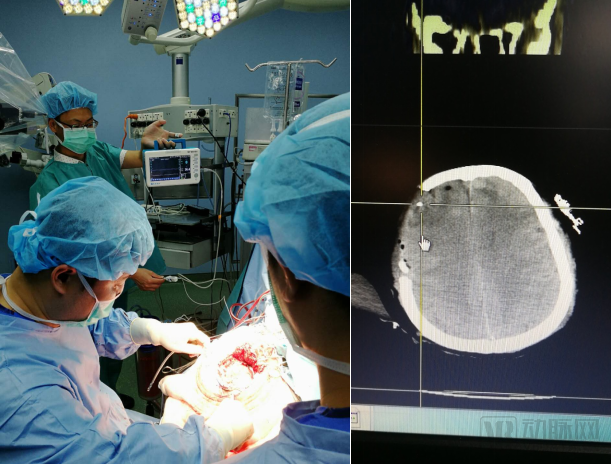
Doctors Use Tuolan Medical Products in Clinical Trials
Postoperatively, Professor Jiang Rongcai from the Department of Neurosurgery at Tianjin Medical University General Hospital, who led this trial, commented: “Intracranial pressure monitoring holds significant clinical value in neurosurgery... We believe that this product (Chengdu Tuolan Medical Technology Co., Ltd.'sIntracranial Pressure Monitor and Intracranial Pressure Sensor) Following localization, it can reshape the current market landscape for invasive intracranial pressure monitoring in China. Meanwhile, its technological breakthroughs enable physicians to further monitor patients’ intracranial temperature and indirectly assess cerebral metabolism, providing robust data to optimize clinical treatment plans for neurosurgical emergencies and critically ill patients. This contributes positively to improving treatment outcomes and advancing the level of clinical diagnosis and care in neurosurgery across China.”
Intracranial pressure monitoring is strongly recommended in both international and domestic guidelines. InTraumatic Brain Injury, Intracranial Hemorrhage, and Other Neurocritical Care Conditionsapplications. In recent years, relevant consensus guidelines have been continuously issued both domestically and internationally—
2011 Chinese Expert Consensus on Intracranial Pressure Monitoring in Traumatic Brain Injury
2016 Guidelines for the Management of Severe Traumatic Brain Injury (Fourth Edition)
2019 Chinese Guidelines for the Diagnosis and Treatment of Intracerebral Hemorrhage
……
Minimally invasive intracranial pressure monitoring has become the mainstream approach in global neurosurgery in recent years. It offers direct, accurate, and reliable measurements, effectively reduces tissue injury and post-implantation infections, and enables long-term continuous monitoring.
The clinical value of intracranial pressure monitoring is mainly reflected in the following three aspects:
Early detection of changes in intracranial injuries and early intervention. In the early stages of mild to moderate intracranial pressure (ICP) elevation, when vital signs (pulse, blood pressure, respiration, etc.), level of consciousness, and pupillary responses show no significant changes, ICP monitoring can clearly demonstrate the presence and severity of elevated ICP. Therefore, monitoring enables early detection of increased ICP before the onset of symptoms and signs associated with intracranial hypertension, prompting timely CT scanning to promptly identify delayed hematomas and postoperative recurrent hematomas, thereby assisting physicians in initiating early management.
Assess cerebral perfusion pressure and cerebral blood flow to prevent irreversible cerebral ischemia and hypoxia;
Guide clinical treatment.ICP monitoring is of significant importance in guiding the treatment of intracranial hypertension, allowing physicians to adjust treatment plans at any time based on objective ICP data. It is particularly valuable for determining the indications and dosage of mannitol, the indications and duration of mild hypothermia therapy, and the decision to perform decompressive craniectomy.
Intracranial pressure monitoring products mainly consist ofIntracranial Pressure Monitor and Intracranial Pressure SensorComposition.The former is the main unit, and the latter is a disposable consumable., the two are used in combination during surgery.
Different manufacturers design compatible intracranial pressure sensors for their own intracranial pressure monitors, so on the marketIntracranial pressure sensors are not universal.
Currently, all intracranial pressure monitoring devices used in China are imported.
According to Tan Pingchuan, an imported intracranial pressure (ICP) monitor on the market costs over 100,000 yuan, and an ICP sensor is priced at nearly 10,000 yuan. Furthermore, as ICP sensors are single-use disposables that cannot be reused, they represent a significant financial burden for patients. The high cost has deterred many primary-care hospitals and patients, with such equipment currently available only in select Grade A tertiary hospitals.
Professor Jiang Rongcai of Tianjin Medical University General Hospital stated, “Currently, all invasive intracranial pressure monitoring systems used in China are imported from abroad. They often have limited functionality or are prone to damage, and their prices are excessively high. Due to these factors, the use of intracranial pressure monitoring is not yet widespread in many regions of China, with actual utilization amounting to less than one-fifth of the clinical need.”
The products of Tuolan Medical undoubtedly bring new treatment options for relevant patients in China.
Established in January 2016, Tuolan Medical is located in Chengdu, the capital of Sichuan Province, known as the "Land of Abundance."Guided by independent innovation and import substitution in scientific research and industrialization, we are dedicated to the R&D and commercialization of miniature medical sensors, as well as the localization of neurosurgical medical devices.. It possessesTotal area: 1,800 m²2Factory Premises, and is equipped with supporting facilities such as a Class 10,000 GMP cleanroom workshop and an equipment assembly workshop.

Tuolan Medical Team
Founder Tan Pingchuan,A graduate of the School of Mechanical Engineering at Chongqing University, he founded a medical device distribution company and has decades of experience in the agency sales of high-value neurosurgical consumables. Leveraging years of dedicated industry engagement, Tan Pingchuan has established business partnerships with hundreds of hospitals across China. He is currently responsible for the company’s external affairs, sales, and marketing management.
Meanwhile, to better align with real-world clinical needs, compete on par with international giants, and break through technical barriers, Chengdu Tuolan Medical Technology Co., Ltd. has also establishedExpert Advisory Team.It includes both fromExpert in the field of traumatic brain injury, Department of Neurosurgery, West China Hospital of Sichuan University,There is alsoPhysician at Tianjin Medical University General Hospital, and graduated fromPh.D. in Biomedical Engineering, Johns Hopkins University.Experts in related fields have pooled their wisdom and efforts to help Chengdu Tuolan Medical Technology Co., Ltd. achieve steady and long-term development.
According to relevant data, the national sales revenue of minimally invasive intracranial pressure monitoring products in China was approximately RMB 500 million in 2019, all from imported brands. The intracranial pressure monitoring market is projected to grow at a rate of over 20% in the next five years, with the market size expected to reach around RMB 1.5 billion by 2025.
With such a large “cake,” are domestic manufacturers really turning a blind eye?
“It’s not that we don’t want to do it; it’s that we can’t,” Tan Pingchuan said with a wry smile. “Several years ago, some manufacturers began working on this, but they all encountered problems during clinical trials. The main challenge lies in overcoming the difficulties of sensor manufacturing. Some companies worked on it for several years, but eventually gave up after failing to make headway.”
Tan Pingchuan further explained to VCBeat that while intracranial pressure monitoring sensors may appear simple, their development requires collaboration among cross-disciplinary technical experts, with micro-packaging technology posing the greatest challenge. Because Tuolan Medical’s sensors have a diameter of only 1 millimeter, they cannot be produced through automated processes and must instead be entirely hand-assembled by skilled technicians under microscopes, imposing extremely stringent requirements on manufacturing craftsmanship. Leveraging local talent advantages, Chengdu Tuolan Medical Technology Co., Ltd. has developed a complete high-yield packaging process, achieving a product yield rate exceeding 95% and meeting the demands of commercial-scale production.
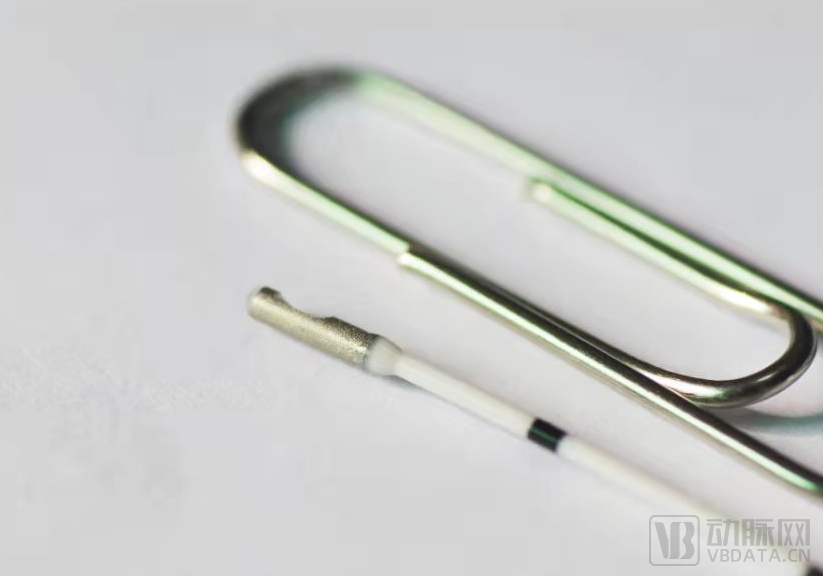
The micro intracranial pressure sensor (probe diameter: 1 mm) independently developed by Tuolan Medical has performance indicators reaching international advanced levels. When used in conjunction with an intracranial pressure monitor, the sensor provides simultaneous functions of intracranial pressure monitoring, waveform analysis, and brain temperature monitoring, all without increasing the size of the sensor probe.
In addition to the above features, Tuolan Medical's productsCompared with imported products on the market, it also has the following advantages:
The main unit comes with a built-in screen, eliminating the need for an external monitor. This enhances ease of use for physicians while reducing product costs and lowering the selling price.
The sensor probe features a smaller diameter, enabling access to certain delicate areas, and can be bent at 90° to enhance maneuverability;
Minimal temperature measurement error, with stable and reliable performance.
It is worth noting that Chengdu Tuolan Medical Technology Co., Ltd. has completed its clinical trials, using imported products as controls. The experimental and control groups were assessed on the same patients, with nearly 10,000 data sets collected throughout the trial. The longest monitoring duration reached 336 hours (14 days). The results showed that the pressure measurement concordance rate between Tuolan Medical’s product and the imported product exceeded 98%, and the temperature measurement concordance rate exceeded 96%. The monitoring performance of Tuolan Medical’s product fully matches that of the imported product.
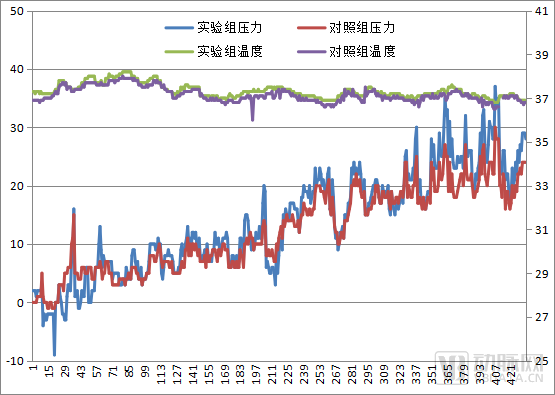
Control Data
Regarding the future of Tuolan Medical, Tan Pingchuan has boundless visions: “Currently, our second-generation product has completed the development of brain tissue partial pressure of oxygen (PbtO2) monitoring capabilities, better meeting clinicians’ needs for patient condition monitoring. Meanwhile, we have upgraded the device to a wireless system, thereby reducing the risk of patients accidentally disconnecting the sensors during use. Furthermore, to help hospitals further control costs effectively, we are preparing to upgrade our intracranial pressure (ICP) monitors, enabling a single host unit to simultaneously monitor patients across multiple beds…”
In terms of financing, Chengdu Tuolan Medical Technology Co., Ltd. secured funding in April 2018Honghui Capitalangel round of financing.The company is currently seeking tens of millions of yuan in its next round of financing to accelerate product research, development, and iteration.