

NeuroMotion Medical Secures China's First Independent Software Medical Device Approval for VR-Based Digital Therapeutic Targeting Acrophobia
VCBeat has learned that Ningdong Medical, a digital therapeutics practitioner, recently announced that its “Specific Phobia Psychological Rehabilitation Training Software,” developed in collaboration with the Shanghai Engineering Technology Research Center for Intelligent Psychological Assessment and Intervention and translated from the Shanghai Mental Health Center, was officially approved as a standalone medical device software in Wuhan, Hubei Province in 2022. It has become China’s first specific phobia psychological rehabilitation training software based on virtual reality equipment approved for use in professional psychotherapy institutions and medical facilities. Meanwhile, this product is also the world’s first Class II medical device indicated for specific phobia (acrophobia).
“Since its inception, Ningdong Medical has been committed to providing high-quality, safe, and personalized diagnosis and treatment for patients with neurological and psychiatric disorders, while offering clinicians and professional therapists more convenient, standardized, reliable, and objective medical equipment and technical tools.” stated Dong Boya, Founder and CEO of Ningdong Medical. “The approval of the ‘Specific Phobia Psychological Rehabilitation Training Software’ in Hubei Province marks the first true integration of virtual reality technology with clinical medicine. This achievement not only establishes standardized service capabilities for psychiatrists and other professional psychotherapists in delivering exposure therapy for acrophobia, but also further promotes the coverage of professional psychotherapy within the healthcare system. We believe this innovative product will significantly enhance the efficacy of psychotherapeutic interventions, particularly those represented by exposure therapy, thereby extending the benefits of high-quality medical services to a broader range of patients and healthcare providers.”
Ningdong Medical is an innovative technology company focused on digital therapeutics for brain science-related diseases, with extensive experience in R&D and product commercialization at the intersection of healthcare and technologies such as artificial intelligence, virtual reality, and digital interaction.
To Provide Effective Support for Psychotherapeutic Interventions in Acrophobia
“Almost everyone experiences difficulty in postural balance control in high-altitude scenarios, which is a normal physiological response. However, approximately one-third of individuals exhibit anxiety and stress responses, potentially necessitating relevant interventions. Meanwhile, 3–6% of people suffer from acrophobia characterized by severe irrational fear of heights, leading to restricted daily activities and diminished quality of life; this condition presents clear clinical indications.” Dr. Zhou Dong, Co-founder and Chief Medical Officer of Ningdong Medical, pointed out, “Acrophobic tendencies or the development of acrophobia can emerge at any stage of life. Acrophobia manifesting in childhood typically resolves spontaneously within a few years, whereas adult-onset acrophobia often persists throughout life. In addition to long-term adverse experiences associated with height-related scenarios, individuals with acrophobia frequently present with comorbid psychiatric disorders, such as anxiety disorders and depressive syndromes, along with reduced self-efficacy.”
Dr. Zhou Dong stated that the decision to launch acrophobia as Ningdong Medical’s inaugural product was driven not only by the fact that acrophobia is the most common specific phobia, but also because pharmacological interventions currently demonstrate limited efficacy in the clinical treatment of specific phobias, with acrophobia being a representative example. While psychotherapy serves as the primary intervention, traditional imagination-based exposure therapy yields inconsistent outcomes. Conversely, real-life exposure therapy imposes stringent requirements on the control of therapeutic environment, duration, and exposure intensity, and carries certain safety risks. These challenges have hindered the systematic delivery of effective clinical services for acrophobia.

In recent years, with the widespread adoption of virtual reality (VR) technology, VR-based systematic desensitization and exposure therapies have begun to be explored and applied in the field of specific phobias. Early foreign studies have suggested that VR exposure therapy for acrophobia is as effective as real-life exposure therapy, but consumes fewer therapeutic resources. It can significantly improve symptoms of acrophobic anxiety, avoidance, heightened cognitive judgment, and clinical anxiety in patients with acrophobia and specific phobic tendencies. The National Health Commission of China has also listed VR-based desensitization and exposure therapy as one of the psychological treatment modalities for specific phobias, including acrophobia, in the "Diagnostic and Treatment Guidelines for Mental Disorders (2020 Edition)."
Significant Clinical Efficacy, Filling the Gap in Related Therapeutic Areas
The newly approved “Specific Phobia Psychological Rehabilitation Training Software” is a VR exposure therapy aid for acrophobia, jointly developed by Ningdong Medical and the Shanghai Mental Health Center. Featuring rich details, clear tasks, and controllable intensity, it not only serves as a model for industry-academia-research translation collaborations but also marks the first Class II medical device product successfully approved from the Shanghai Engineering Technology Research Center for Intelligent Psychological Assessment and Intervention.
This product creates an immersive exposure scenario for individuals with acrophobia wearing VR headsets, enabling mental health professionals to select appropriate exposure intensities and tasks based on the patient’s specific condition during exposure therapy. It helps patients identify and correct irrational fears, counter avoidance responses, and undergo corresponding relaxation training, ultimately achieving the therapeutic goals of alleviating acrophobia symptoms and improving quality of life. The product must be used under the guidance of qualified psychotherapists in professional psychological treatment institutions or medical facilities. Clinical results demonstrate that patients with acrophobia who received VR exposure therapy experienced a nearly 50% reduction in height-related anxiety and avoidance behaviors (as measured by the Acrophobia Questionnaire, AQ). Significant improvements were also observed in their cognitive perceptions of height (as measured by the Heights Interpretation Questionnaire, HIQ) and clinical manifestations of anxiety (as measured by the Beck Anxiety Inventory, BAI). Furthermore, aside from mild dizziness induced by the VR equipment (as measured by the Simulator Sickness Questionnaire, SSQ), no participants reported an inability to adapt or requested termination of the trial during treatment. During the follow-up period after study completion, no participants spontaneously reported or mentioned any adverse events.
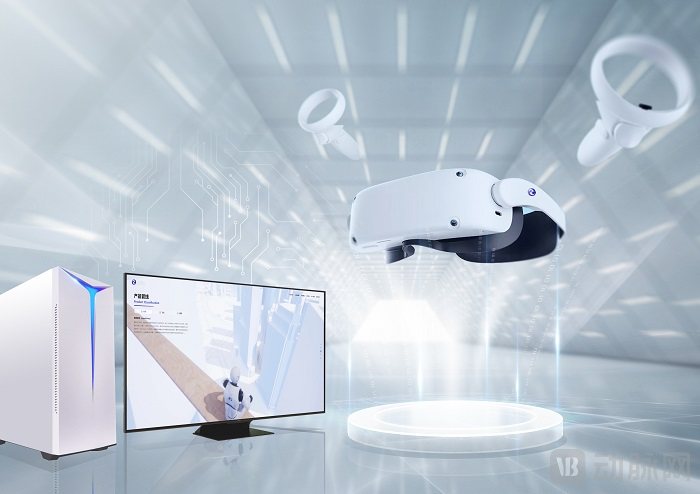
The approval of the “Specific Phobia Psychological Rehabilitation Training Software” not only fills a gap in related therapeutic fields, providing clinical psychiatry professionals with an environment- and patient-friendly, controllable adjunctive tool, but also offers a stable and reliable solution for patients suffering from acrophobia.
Ningdong Medical’s Prospects Are Promising, with Digital Therapeutics Gaining Favor
Ningdong Medical was founded in 2018, with a core technical team composed of algorithm scientists, digital product experts, and clinical research and pharmaceutical researchers. Its core business includes the research and development of digital therapeutics products and the provision of academic technical support to large pharmaceutical companies.
In 2021, buoyed by optimistic prospects for digital therapeutics and full recognition of the professionalism and pioneering spirit of the Ningdong Medical team, Yuan Sheng Capital and Wushe Capital swiftly completed their Series A investment in Ningdong Medical. Commenting on the regulatory approval of Ningdong Medical’s product for acrophobia intervention, Liu Xiao, Executive Director at Yuan Sheng Capital, stated, “This marks the first time that digital therapeutics have truly entered psychiatric clinical practice with clearly defined indications. We believe that Ningdong Medical’s pipeline of digital therapeutic products, backed by evidence-based medicine and regulatory endorsement, will continue to deliver substantial value to healthcare institutions, payers, and patients. The core management team at Ningdong Medical takes a long-term view, having crafted a new blueprint for sustainable growth by addressing multiple dimensions, including academia, scientific research, commercialization, operations, and efficiency.”
Currently, Ningdong Medical has initially formed a core product cluster anchored by AI-assisted decision-making for movement disorders and virtual reality-based cognitive behavioral intervention for mood disorders, while also expanding into multi-category product development spanning medical device hardware, innovative drug-device combinations, and AI-enabled medical support.
“We firmly believe that over the next 20 to 30 years, China’s healthcare industry will undergo profound transformations, with significant growth potential in innovative therapies and medical devices grounded in digital technologies.” Liu Xiao expressed strong confidence in the future of Ningdong Medical: “We will move forward steadfastly alongside Ningdong Medical, supporting the team as it continues to advance along the path of evidence-based medicine through a scientifically rigorous, healthy, and efficient model. We look forward to Ningdong Medical becoming a pioneer and leader in innovative digital therapeutics for neurodegenerative diseases and mental disorders in China.”
To date, Ningdong Medical has collaborated with the neurology and psychiatry departments of more than 20 top-tier Grade A tertiary hospitals across China, and is currently exploring overseas partnerships with multinational hospital groups. In 2022, Ningdong Medical will have multiple medical devices undergo regulatory review for registration approval, while several products targeting diseases in the fields of movement disorders, cognitive impairments, and mood disorders are scheduled to enter clinical trials by 2025.