

Stryker Acquires Amplitude Vascular Systems to Enter the Intravascular Lithotripsy Market

Stryker
Medical Device R&D, Production, and Sales Company
AVS
Developer of Calcified Artery Disease Treatment Devices

Johnson & Johnson
Medical Device R&D and Manufacturer

Bolt Medical
Laser Intravascular Lithotripsy Catheter Developer
Abbott
Provider of Health Diagnostic Products and Health Diagnostic Management Solutions
'%20fill='%23FFFFFF'%3E%3Crect%20x='249'%20y='126'%20width='1'%20height='1'%3E%3C/rect%3E%3C/g%3E%3C/g%3E%3C/svg%3E)
April 13, 2026Stryker Announces Signing of Definitive Agreement to Acquire Amplitude Vascular Systems (AVS)This giant, known for its orthopedics and surgical robots, has officially entered the Intravascular Lithotripsy (IVL) market.
Shockwave As a trailblazer in the field, it has established a near-monopolistic position in the treatment of calcified lesions, beingJohnson & Johnson's $13.1 Billion Epic Acquisition in 2024Later, officially became IVL Track"Big Brother." Nowadays, withBoston Scientific to Acquire Bolt Medical for Approximately $644 Million in 2025; Abbott to Launch Pivotal IDE Study in 2025"The era of 'one standout' has officially entered the 'four-power rivalry'."。
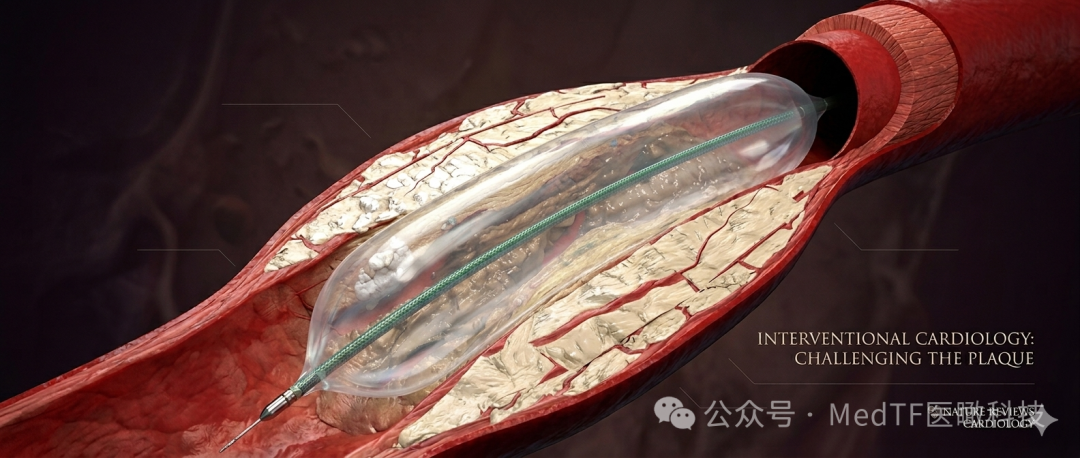
Figure 1. AVSSchematic Diagram of the Pulse IVL System in Blood Vessels
I. Patent Barrier Loosens: Stryker Seizes "Entry Window" Accurately
The IVL track was once seen as the "patent moat" built by Shockwave, but this pattern was rewritten on July 14, 2025, when the U.S. Court of Appeals for the Federal Circuit made a landmark ruling.Completely Invalidated Shockwave's Core Patent US 8,956,371, which covers its basic balloon catheter IVL technology.
This ruling means that Shockwave can no longer use this patent to prevent competitors from developing similar IVL products, clearing the biggest legal hurdle for newcomers. Seizing this critical window, Stryker moved swiftly after the weakening of the patent barrier and announced on April 13, 2026, the acquisition of AVS, officially entering the IVL market.
Nowadays, the core competition in the IVL track has shifted from "patent avoidance" to "technological route innovation": Shockwave still holds the first-mover advantage, but next-generation technologies such as AVS (pneumatic-hydraulic), Bolt Medical (laser-based), and CSI Abbott (rolling mechanism) are quickly catching up.StrykerThe entry was precisely timed to coincide with the dual junctures of loosening patent barriers and the completion of next-generation technology validation.
2. IVL Technology Principle: The "Gold Standard" for Solving Calcified Lesions
Intravascular Lithotripsy (IVL) utilizes an ultrasonic transducer embedded within a balloon catheter to generate pulse shock waves inside the vascular lumen, precisely shattering deep and superficial calcified rings. This improves vascular compliance and paves the way for stent implantation.
Compared with traditional technologies such as rotational atherectomy and cutting balloons, IVL hasEasy to operate, low risk of vascular perforation, equally effective for deep calcificationWith significant advantages, it is especially suitable for the treatment of severe calcified lesions. This technology was first commercialized by Shockwave Medical and has quickly become an indispensable tool in complex PCI procedures, creating a huge market space.
3. Stryker Acquires AVS: The Final Piece of the Peripheral IVL Puzzle
On April 13, 2026, Stryker announced the signing of a definitive agreement to acquire AVS, a private medical technology company focused on developing a next-generation IVL platform. Its Pulse IVL System uniformly delivers pressure waves generated by pulsed carbon dioxide through a balloon catheter to crack calcification and optimize lumen expansion.
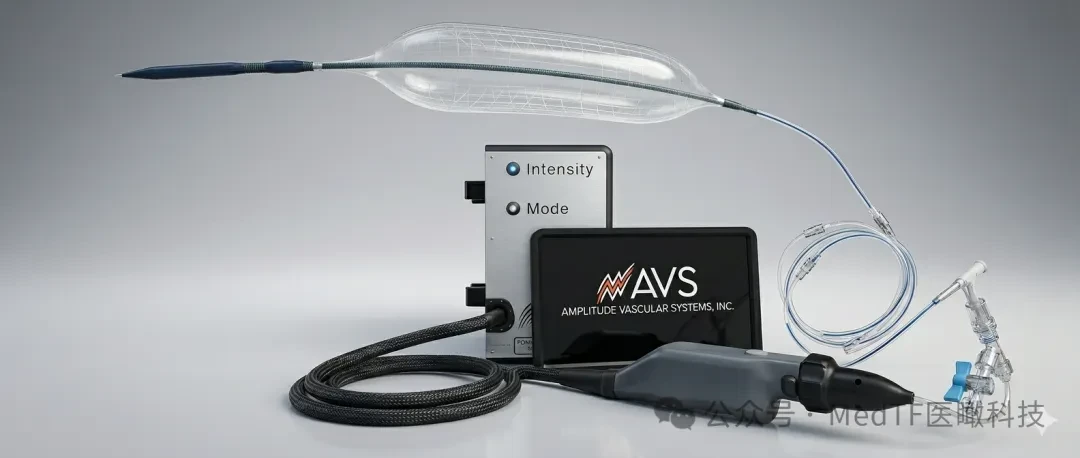
Figure 2.AVS Pulse IVL System
The Pulse IVL System features a transmitter-free design, delivering pulsatile pressure waves at a frequency of approximately 15 times per second, with the pressure waves spanning the entire length of the balloon. In June 2024, the FDA granted AVS an Investigational Device Exemption (IDE), allowing it to conduct pivotal trials.
POWER PAD 2 Critical Trial(NCT06457685) is evaluating the Pulse IVL System in 115 patients with moderate to severe calcification of the superficial femoral and popliteal arteries affected by PAD. In November 2025, AVS presented the 30-day data from the first 95 patients at the VIVA conference:
The study results showed that the only Major Adverse Event (MAE) was one case of unplanned major amputation of the target limb, which was unrelated to the study device. Chief investigator Dr. Chris Metzger stated, "The POWER PAD II study provided excellent safety and efficacy data in 95 patients. Considering that all treated patients had 100% severely calcified lesions, we are particularly pleased with these results."
POWER PAD II Study Results to Support AVS's Planned 510(k) Pre-Market Submission to FDA in 2026.
Strategic Significance of the Acquisition:Stryker CEO Kevin Lobo stated, "This acquisition is an important step in our vision to build a comprehensive peripheral vascular platform and address significant unmet clinical needs. By combining this innovation with Stryker's scale and clinical expertise, we believe we can help physicians expand treatment options and improve care for patients with calcified peripheral artery disease."
Before the acquisition, AVS had already shown strong momentum. In January 2025, the company completed a $36 million financing round to support further research on the Pulse IVL platform.
4.Giant IVL Layout TimelineComparison with Layout Panorama
Giant IVL Timeline
2015:Shockwave Medical Launches IVL Technology, Opening the Track.
June 2024:Johnson & Johnson Acquires Shockwave for $13.1 Billion, Establishing Leadership Position.
June 2024:FDA Grants IDE Approval to AVS Pulse IVL System.
September 2024:Philips Launches IVL Pivotal Clinical Trial.
January 2025:Boston Scientific Acquires Bolt Medical; AVS Completes $36 Million Financing on the Same Day
March 2025:Abbott Receives FDA IDE Approval to Initiate TECTONIC CAD IVL Trial.
March 2025:Bolt Medical's Bolt IVL System Receives FDA 510(k) Clearance (Peripheral ATK).
November 2025:AVS Announces 30-Day Data for First 95 Patients in POWER PAD 2 Study.
April 2026:Stryker Signs Definitive Agreement to Acquire AVS, All Four Giants Enter the Market.
The global IVL market has now formed a clear competitive landscape:
| Johnson & Johnson J&J | ||
| Boston Scientific | ||
| Abbott | ||
| Stryker | ||
| Philips | ||
| Elixir Medical |
From the perspective of the competitive landscape, Johnson & Johnson has established an overwhelming first-mover advantage in the IVL track through the acquisition of Shockwave.According to predictions from GlobalData's Device Approval Analyzer, competing products from Abbott and Boston Scientific may not receive market approval until 2028, placing Johnson & Johnson in an absolute leading position in both overall sales and R&D time.Abbott received FDA Investigational Device Exemption in March 2025 to initiate the TECTONIC CAD Coronary IVL Study, with an expected completion date of 2028. Philips' pivotal IVL clinical trial commenced in the fall of 2024 and is anticipated to conclude by the end of 2027. Notably, Boston Scientific, through its acquisition of Bolt Medical, obtained FDA approval in 2025 for its first IVL product, Seismiq, for the treatment of above-the-knee peripheral artery disease, and has already completed the initial commercial case deployments in the U.S., becoming the second major company after Shockwave to achieve commercial implementation.
5. Horizontal Comparison of Clinical Evidence
| AVS POWER PAD 2 | |
| Shockwave | |
| Bolt Medical | |
| Abbott TECTONIC CAD | |
| Philips | |
| Elixir Medical |
In addition,ROLLER COASTER-EPIC22 Trial——The first prospective, multicenter, randomized trial——directly comparing the effects of three plaque modification techniques, rotational atherectomy (RA), intravascular lithotripsy (IVL), and excimer laser coronary angioplasty (ELCA), in calcified coronary lesions.。ShortCUT TrialIt is the first randomized multicenter study comparing cutting balloons with IVL.。2025 PCI GuidelinesIt has been emphasized that calcified lesions require intracavitary imaging assessment, with severe cases relying on techniques such as rotational atherectomy and IVL. Combined strategies and complication prevention are key.。
6. Market Prospects andAcceleration of Domestic Substitution
1. Market Growth Drivers
IVL is one of the fastest-growing segments in the field of cardiovascular interventions. Shockwave's total revenue for 2023 reached $730 million, representing a year-over-year increase of 49%, with a gross margin maintained at a high level of 87%.QYResearch made a forecast,2025Global IVL Sales to Reach $891 MillionWith the continuous accumulation of clinical evidence and the gradual upgrading of guideline recommendations, the application scope of IVL is expanding from coronary and peripheral vessels to broader areas such as carotid and renal arteries, providing structural support for the sustained growth of the market scale. Notably,Since Johnson & Johnson acquired Shockwave in 2024, it has never separately listed Shockwave's financial data.There is currently no reliable data source for IVL's sales performance in 2024-2025.
2. Acceleration of Domestic Substitution
The IVL market in China is also rapidly emerging.As of now,Nine IVL products have been successfully launched in China, and multiple companies have initiated or are about to embark on their overseas journeys.Huihe (Zhonghui) Medical, Saihe Medical, Lepu Medical, Puchuang Medical, and Blue Sail Medical's IVL products have all been approved. Among them, Jian Shi Medical conducts localized production by representing Shockwave products. Overall, China-produced IVL...The product has approached the international level in terms of basic performance, and the core of future competitionWill focus on innovation in technical routes, breaking through patent barriers, and the ability to access overseas markets.The patent barriers in the IVL track have significantly loosened, and the overseas threshold for Chinese-produced enterprises has somewhat decreased.
7. Future Challenges and Risks
1. Gap Between Clinical Evidence and Regulatory Approval
AVS and other new entrants' IVL products have not yet received FDA approval, and long-term efficacy and safety data still need to be accumulated through large-scale clinical studies. Compared with Shockwave, which already has over a million real-world applications, the latecomers have an evident gap in the level of evidence and need to accelerate the completion of pre-market clinical validation.
2. Market Education and Doctor Acceptance
As the monopoly of Shockwave has been broken, the four giants (Johnson & Johnson, Abbott, Boston Scientific, and Stryker) are now competing on the same stage, and doctors are faced with multiple technology route options (electric drive, pneumatic hydraulic, laser, etc.). The operation habits of new products, learning curves, and consistency of clinical outcomes take time to develop, and the cost of market education cannot be ignored.
3. Indication Expansion and Differentiated Competition
The coronary IVL is a larger core market, where Abbott and Boston Scientific have both initiated clinical research for coronary indications. Stryker is currently focusing on peripheral artery disease (PAD) primarily through AVS; if it cannot successfully expand its indications to the coronary field in the future, its overall competitiveness in the IVL market will be limited.
Conclusion
Stryker’s Acquisition of AVS Marks the Formal Formation of a "Four-Power Competition" in the IVL Field. From Shockwave's dominance to Johnson & Johnson establishing its leadership position through a multi-billion-dollar acquisition, and then to Boston Scientific, Abbott, and Stryker quickly following up through acquisitions or self-research, the competition in the IVL field has moved from "who can do it" to a new phase of "who can do it better."
For Stryker, the acquisition of AVS is not only a strategic complement to its peripheral vascular product portfolio but also a crucial step in securing a position in the rapidly growing IVL market.
In the next few years, the competition in the IVL sector will focus on clinical data, indication expansion, patent layout, and global channels. The full entry of the four giants will push calcified lesion treatment into a new era of greater precision and efficiency.
AboutStryker
Stryker is a global leading multinational medical technology enterprise, founded in the United States in 1941. It ranks among the top tier of the global medical device industry, with business spanning over 100 countries and regions worldwide. The company has traditionally excelled in orthopedics and also holds strong competitiveness in minimally invasive surgery, neuroscience, patient safety systems, and medical robotics. Its Mako orthopedic surgical robot is an industry benchmark product. With continuous technological innovation, comprehensive product offerings, and global operational capabilities, Stryker has long maintained its position as a leader in the global medical technology field, providing hospitals, surgeons, and patients with full-process medical services ranging from equipment and consumables to digital solutions.


? Click to view more exciting content
InVera Helical Varicose Vein Intervention Catheter Launch: Non-Thermal, Leak-Free, No Implant