

Leading Oncolytic Virus Players Enter Series C/D Funding Rounds as Third-Generation Therapies Approach Commercialization
“Fighting poison with poison” is the most straightforward understanding people have of oncolytic viruses. In the early 20th century, a patient with cervical cancer experienced unexpected and extensive tumor necrosis after receiving an injection of an active attenuated rabies vaccine. Coincidentally, numerous case reports of patients with primary cancers have documented that some cancer patients experienced remission of their disease following viral infections. This intriguing phenomenon reveals a novel anticancer strategy—oncolytic virus therapy.
A Century of Refinement in an Instant. Oncolytic viruses have evolved step by step from the initial, unmodified first-generation products to the third-generation, newly enhanced "boosted" oncolytic viruses. During this century-long journey, oncolytic viruses once fell into obscurity, with their therapeutic efficacy called into question. Although several drugs have been marketed, the efficacy of monotherapy failed to meet clinical expectations; indeed, the clinical response rate of first-generation oncolytic viruses was less than 20%, becoming a key target for improvement in next-generation oncolytic viruses.
From the perspective of the capital market, interest in oncolytic viruses rebounded in 2021; among the five disclosed investments, the financing amounts were publicly availableThree pharmaceutical companies have raised a total of over RMB 1.8 billion in financing, the head effect is beginning to emerge, and clinical progress is encouraging. VCBeat has compiled public information and conducted industry interviews to provide readers with an overview of the century-long transformation in oncolytic virus therapy, as well as the latest advances in next-generation oncolytic viruses.
A Century of Oncolytic History: Three Generations of Upgrades, Five Marketed Drugs Lead the Way
Oncolytic viruses (OVs) refer to a class of viruses that can selectively replicate, induce apoptosis in cancer cells, and spare normal tissues from damage. Research on oncolytic viruses dates back to the early 20th century; in 1904, it was first discovered that wild-type viral strains or naturally attenuated viral strains could facilitate cancer treatment, predating the emergence of most cutting-edge anticancer strategies such as cell therapy and immunotherapy.
Historically, the century-long development of oncolytic viruses has mainly gone through three stages:Discovery and Application Phase of Wild-Type Viral Strains (First Generation), Research and Development Phase of Genetically Modified Viral Strains (Second Generation), Gene Insertion and Combination Therapy Enhancement Phase (Third Generation). Over the course of more than a century of development, a total of five oncolytic viruses have been approved for marketing worldwide, listed in chronological order of approval as follows:Jinyousheng, Rigvir, Ankerui, Imlygic, and Delytact。
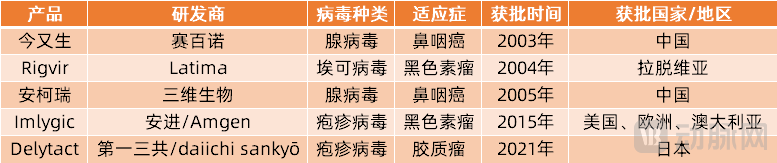
The first generation of products is represented by Rigvir, an oncolytic virus product from Latvia that was launched in 2004., which is a non-genetically modified ECHO-7 strain of enterovirus. The naturally attenuated virus exhibits certain oncolytic effects against specific tumor tissues; however, due to insufficient data, the clinical value of Rigvir has not gained widespread global recognition.Notably, Rigvir was later removed from the regulatory list due to product quality issues.. This nature-derived approach to research and development is rarely mentioned nowadays.
Second-generation products underwent simple genetic engineering modifications based on the first generation, with Oncorine (approved in China in 2005) being a typical example.. However, due to suboptimal clinical efficacy, Oncorine failed to gain international recognition and achieved only modest sales domestically. In 2019, Shanghai Pharma, the holding company for Oncorine’s development, announced the relaunch of its marketing authorization application, aiming to further explore Oncorine’s anticancer potential. ButSecond-generation products are also gradually fading from the scene amidst innovation-driven development., merging into the long river of history.
The innate anticancer properties of oncolytic viruses suggest that overcoming tumors would be a straightforward task, provided one identifies highly sensitive oncolytic strains and potentially enhances them with targeted genetic modifications. However, the market performance of first- and second-generation oncolytic viruses demonstrates that this is not the case. The challenges in developing oncolytic virus products lie not only inA single anticancer mechanism is insufficient to address the diverse pathogenesis of tumors. Moreover, the inherent “viral nature” of oncolytic viruses poses significant technical challenges: How can we prevent the host immune system from clearing oncolytic viruses? And how can we ensure that oncolytic viruses retain high cytotoxic potency after multiple administrations in patients?
To address these challenges, oncolytic viruses have entered the third phase of innovation—the “Phase of Genetic Insertion and Synergistic Enhancement through Combination Therapy.”This is also the primary focus of oncolytic viruses in current clinical research stages:
First, throughStacking Multiple “Buffs” onto Genetically Engineered Oncolytic Viruses, such as those expressing "co-stimulatory molecules," to specifically activate the immune system for targeted tumor killing;
Secondly,Combining oncolytic viruses with immune checkpoint inhibitors such as PD-1 and CTLA-4 inhibitors, by leveraging the ability of oncolytic viruses to destroy tumor cells and release tumor antigens, thereby “heating up” the microenvironment of cold tumors to enhance the efficacy of immune checkpoint inhibitors such as PD-1 inhibitors.
Imlygic
In 2015, the launch of “Imlygic,” the first internationally approved oncolytic virus, marked the official entry of third-generation oncolytic virus technology into clinical application.
Imlygic is an attenuated herpes simplex virus type 1 developed by the global biopharmaceutical giant Amgen. By knocking out the gene encoding ICP34.5, the virus replicates selectively in tumor cells, causing their lysis and death, while sparing normal cells. Meanwhile, the GM-CSF released by Imlygic recruits dendritic cells and macrophages to attack the tumor, thereby exerting a dual mechanism of action.
Imlygic has been approved by the U.S. FDA and the European EMA for the treatment of melanoma, with a price tag of $65,000 in the United States.
From a clinical efficacy perspective, the performance of Imlygic monotherapy is evident: 16.3% of patients treated with Imlygic experienced sustained tumor shrinkage within six months, compared to only 2.1% in the control group.Combination therapy is a key focus area for Imlygic., in a multicenter Phase 1b clinical trial involving 21 patients with metastatic melanoma, the combination of the PD-1 monoclonal antibody Keytruda and the oncolytic virus Imlygic increased the patient response rate to 62%. In another set of latest clinical data released by Amgen on Imlygic combined with the immune checkpoint inhibitor CTLA-4 antibody Yervoy for the treatment of melanoma, the overall response rate in patients receiving the combination therapy doubled compared to those receiving CTLA-4 antibody monotherapy.
To date, Imlygic has become a favored agent in combination therapies with immune checkpoint inhibitors. According to incomplete statistics, there are nearly 30 clinical trials investigating Imlygic-based combination regimens, among which combinations with the immune checkpoint inhibitors Keytruda and Yervoy have demonstrated favorable clinical outcomes.
Delytact
In November 2021, the Japanese pharmaceutical company Daiichi Sankyo announced that its oncolytic virus product, Delytact, had been officially approved for marketing in Japan for the treatment of malignant glioma. This marks the fourth oncolytic virus product approved globally and the first one authorized specifically for treating malignant glioma, with a price tag of 1.43 million yen per dose (approximately RMB 80,000).
Delytact is a recombinant herpes simplex virus type 1 (HSV-1) in which researchers have used genetic engineering techniques to specifically knock out the y34.5, ICP6, and a47 genes from the HSV genome. This modification reduces the toxicity of Delytact, enhances its ability to selectively replicate within tumor cells, and stimulates anti-tumor immune responses while lysing tumor cells, thereby augmenting the oncolytic activity of the virus.
According to clinical data from Daiichi Sankyo,Oncolytic Virus Therapy Delytact Achieves a 1-Year Survival Rate of 92.3% in Malignant Glioma, Approximately Six Times Higher Than Conventional Treatment, significantly improving the survival rate of patients with malignant glioma. However, the real-world efficacy of this product after its clinical implementation still requires validation over time, and the drug has not yet entered the Chinese market.
Progress of Oncolytic Viruses Under Development in China: Early Signs of a Leading-Player Effect and Promising Clinical Advances
According to publicly available data from VCBeat, there are approximately 22 biopharmaceutical companies in China involved in the development of oncolytic virus drugs (Note: The data is compiled from public sources. Companies with inaccurate information or those not included are welcome to contact VCBeat for further discussion).
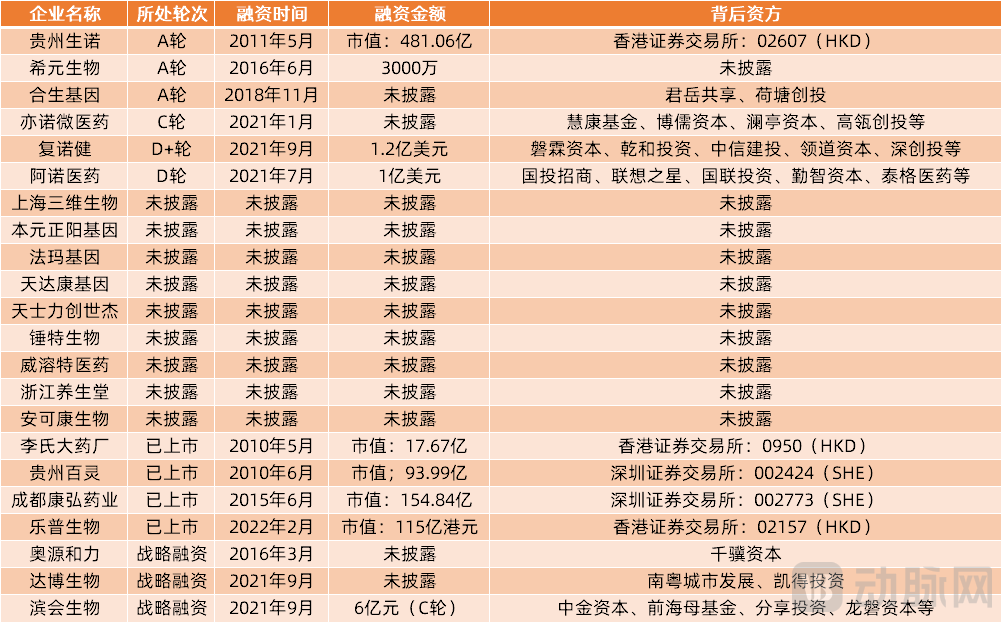
As can be seen from the disclosed information in the table above, both listed pharmaceutical companies and startups have entered the field of oncolytic viruses. Although the number of financing deals in China’s oncolytic virus sector was relatively low in 2021, the total funding amount was substantial, with investment rounds concentrated primarily at Series C and D. Prior to this period, investment interest in the oncolytic virus field was not particularly high.
From the perspective of the clinical progress of oncolytic virus pipelines advanced by domestic biopharmaceutical companies, excluding undisclosed pipeline developments, 16 Chinese companies have already entered the clinical research stage with their oncolytic virus pipelines. Shanghai Sunway Biotech, as a leader in this field, was the first to obtain China’s inaugural approval for an oncolytic virus. In addition to advancing H101 to market approval, the company has completed Phase I clinical trials for H103, while H102 remains in the preclinical research stage.
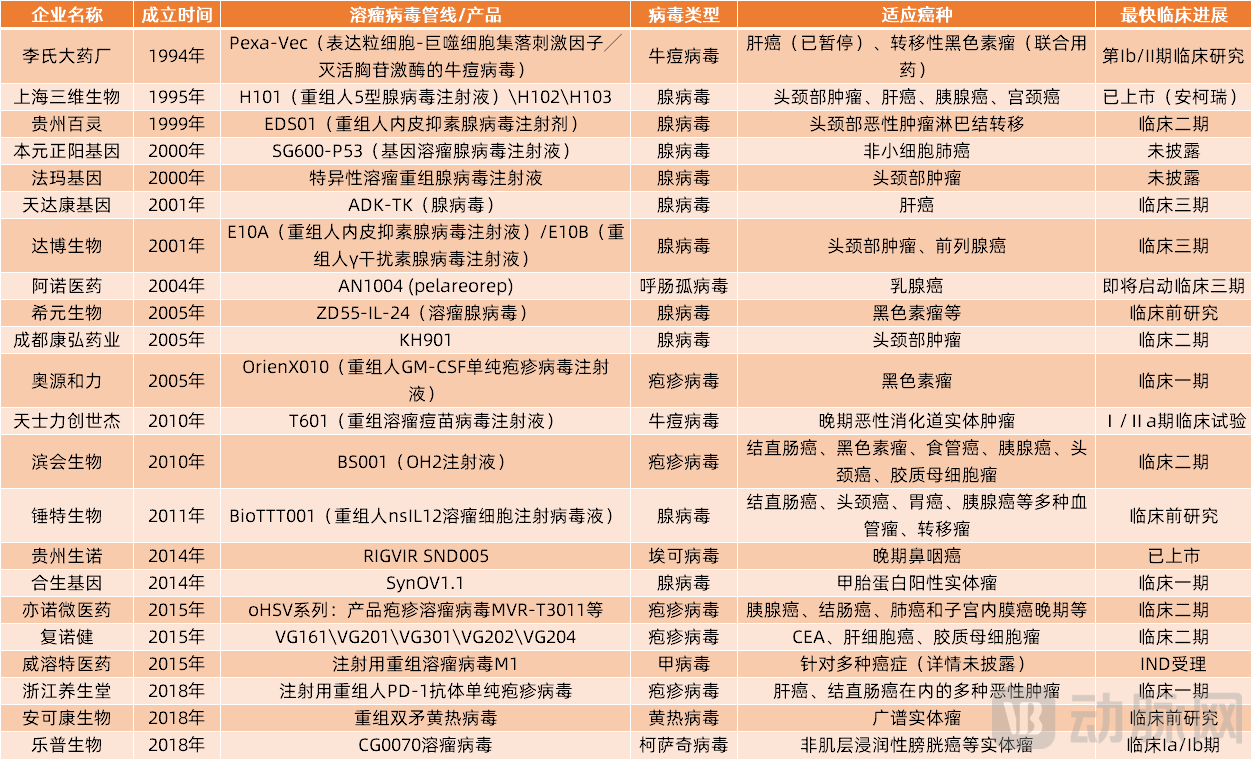
Other oncolytic virus developers making rapid progress include BinHui Bio, Funuo Health, ImmuneOnco, Dabo Biosciences, Tiandakang Biotech, Anu Pharmaceuticals, and Chengdu Kanghong Pharmaceutical. The sector is highly competitive; even pharmaceutical companies that do not prioritize oncolytic virus development as a core R&D focus are entering the field by in-licensing pipelines, reflecting strong confidence in its growth potential.
For example,AnorMedIn November 2017, it entered into a regional licensing agreement with Canada’s Oncolytics Biotech Inc., investing US$8.66 million to secure exclusive development and commercialization rights for Oncolytics Biotech’s oncolytic virus product “Pelareorep” in Greater China, Singapore, and South Korea.
Pelareorep has received FDA Fast Track designation and has the potential to become a first-in-class, intravenously administered oncolytic virus for the treatment of metastatic breast cancer. Data from completed Phase II clinical trials have confirmed its safety in more than 1,000 patients, and overall survival (OS) was approximately doubled in patients with HR+/HER2- metastatic breast cancer (mBC) treated with Pelareorep.
In February 2019, Arno Therapeutics also received approval from the National Medical Products Administration (NMPA) to initiate an open-label, randomized, multicenter Phase III clinical trial evaluating pelareorep in combination with paclitaxel for patients with HR+/HER2- metastatic breast cancer (mBC). In March 2021, the company launched a bridging study in China to assess the safety and tolerability of pelareorep combined with paclitaxel in Chinese patients with HR+/HER2- mBC, and planned to commence the Phase III clinical trial in China in the first half of 2022.
Binhui BiologicsBS001 injection is the first oncolytic virus candidate to select herpes simplex virus type 2 (HSV-2) as its vector and enter clinical studies. After a decade of dedicated research, BinHui Bio selected this viral vector, which systematically enhances oncolytic activity by more than an order of magnitude compared with traditionally genetically modified oncolytic strains.
According to the Phase Ib/II clinical trial data disclosed by the company, the objective response rate (ORR) of BS001 as a monotherapy for melanoma reached 30%, the disease control rate (DCR) reached 50%, and the one-year overall survival (OS) rate was as high as 93%. The latest clinical data on BinHui Bio’s BS001 injection for the treatment of colorectal cancer show that the ORR of BS001 injection as a monotherapy in patients with colorectal cancer has exceeded 10%; the ORR of BS001 injection in combination with PD-1 monoclonal antibody therapy reached 18.2%.
FunoGeneVG161, the Company’s oncolytic virus product, was the first project to enter clinical trials since the Company’s inception. It is a novel type I herpes simplex oncolytic virus engineered for enhanced anti-tumor immunity, carrying genes encoding IL-12, IL-15/IL-15Rα (the alpha subunit of the IL-15 receptor), and a PD-L1 blocking peptide (PDL1B). It is the world’s first oncolytic virus capable of expressing four genes with synergistic anti-tumor immune-stimulating effects.
VG161 has demonstrated significant antitumor efficacy in multiple tumor models, particularly in those representing diseases with limited effective clinical treatment options, such as hepatocellular carcinoma, soft tissue sarcoma, and pancreatic cancer. Preclinical safety assessments and biodistribution studies have shown that VG161 exhibits a favorable safety profile and tumor-specific distribution. Clinical trials for this project are being conducted at multiple clinical research institutions, including Shanghai East Hospital affiliated with Tongji University.
InnoMicro PharmaceuticalsThe T3 series of oncolytic HSV (oHSV) products is represented by MVR-T3011 IV, a genetically engineered, attenuated HSV-1 oncolytic virus that replicates in tumor cells while being highly restricted in normal cells, thereby achieving a breakthrough in intravenous administration of oHSV. MVR-T3011 IV carries two state-of-the-art and well-validated exogenous immunomodulatory genes encoding an anti-PD-1 antibody and IL-12. These exogenous payloads are expressed only when the virus selectively replicates in tumor cells following intravenous injection, thereby delivering synergistic antitumor effects.
The company’s MVR-T3011-IT (intratumoral injection), a product in the same series, has made the most rapid progress. Clinical trial approvals were already granted in China, the United States, and Australia as early as June 2020, and Phase II clinical trials have been launched in both China and the United States; specific clinical data have not yet been disclosed.
Global Oncolytic Virus Clinical Trials: Success Rates Face Challenges, Adenoviruses and Herpesviruses Emerge as Prime Candidates for Engineering
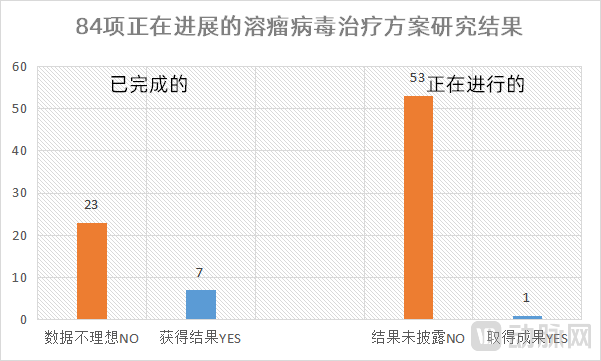
According to data from clinicaltrials.gov, as of March 2022, there were at least 97 clinical trials on oncolytic viruses worldwide, with 30 completed and 33 currently recruiting.
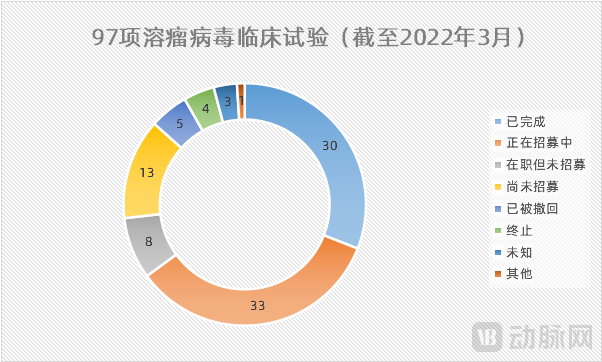
Among the 84 valid projects (completed, currently recruiting, active but not recruiting, and not yet recruiting), unfortunately, only 7 of the 30 completed projects yielded positive test results (YES), while the rest produced unfavorable data (NO). Of the 54 ongoing projects, only one has achieved positive outcomes (YES), with the remaining projects yet to disclose their results (NO). Clinical data indicate thatClinical Applications of Oncolytic Viruses: Significant Challenges and Opportunities。
Among the 97 identifiable oncolytic virus clinical trials, 22 were conducted in China. Furthermore, an examination of the types of oncolytic viruses currently under clinical development reveals a diverse array, including adenoviruses, vaccinia viruses, herpesviruses, reoviruses, yellow fever virus, alphaviruses, and coxsackieviruses, among whichAdenoviruses and herpesviruses are popular viral vectors for engineering, why are pharmaceutical companies flocking to choose these types of viruses? The underlying reasons can be attributed to the inherent characteristics of these viruses.
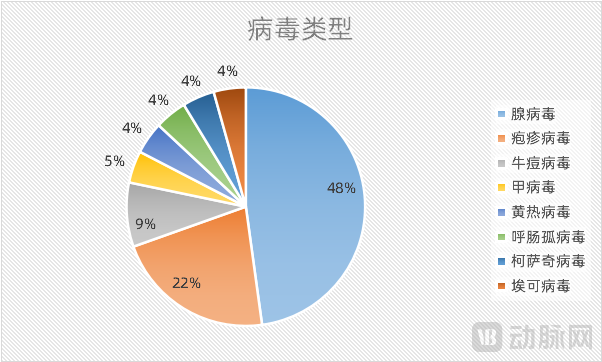
The mechanism of action of oncolytic viruses relies on the inherent ability of viruses to infect human organs and tissues. Different viruses exhibit varying tropisms for specific human organs and tissues. Adenovirus-based oncolytic viruses primarily refer to those derived from adenovirus type 5, which mainly infects the human respiratory tract and causes respiratory diseases such as the common cold. Therefore, oncolytic viruses based on adenovirus are primarily targeted at respiratory-related tumors.
“Histologically, 80–90% of solid tumors arise from epithelial cell lesions, with approximately 7% being hematologic malignancies and about 1% sarcomas. Therefore, in theory, viruses capable of infecting epithelial cells can serve as the oncolytic virus candidates for treating the vast majority of cancers.”Dr. Yu Li, VirologistHe explained, “However, the reality is different. Because viruses exhibit varying degrees of tropism for body tissues, not all infections lead to tissue pathology. Therefore, it is essential to target tissues and organs with high susceptibility and select appropriate indications.”
Next is the herpesvirus, which typically remains latent in the nervous system without causing disease. Once activated, it infects dermal epithelial cells, leading to oral ulcers associated with "shanghuo" (internal heat). Given its ability to infect the nervous system, Daiichi Sankyo of Japan has designed oncolytic viruses based on herpesviruses for the treatment of gliomas.
Thus, it is evident that oncolytic viruses target different types of cancer depending on the tissue and organ tropism of the viral infection; however, their primary application remains in the treatment of solid tumors. Furthermore, to maintain high viral concentration and activity, the industry predominantly adoptsIntratumoral Injectiontreatment.
The Future Ahead: Challenges and Pathways in Oncolytic Virus Development
From wild-type oncolytic viruses to genetically modified recombinant oncolytic viruses, and further to the new generation of multi-functional enhanced oncolytic viruses, the challenges in oncolytic virus R&D lie not only in identifying highly sensitive viral strains that match specific indications, but also, and more significantly, in overcoming the technical barriers inherent to the viruses themselves.
Oncolytic viruses require multiple injections to achieve tumor clearance. For instance, the clinical administration guidelines for Ankerui (H101) clearly specify that the injection is administered once daily for five consecutive days, with 21 days constituting one treatment cycle. The injection dosage is determined based on the patient’s tumor volume and the number of lesions.
As a xenogeneic substance, the virus inevitably triggers an immune response in the host (potentially before symptom onset), regardless of the degree of attenuation. Does frequent administration imply that the anticancer efficacy of oncolytic viruses diminishes with each subsequent injection? This is indeed the case and unavoidable. After the initial injection of an oncolytic virus, the patient’s memory cells “remember” the virus, acting similarly to a vaccine; consequently, upon future exposure to the same virus, the host’s immune response is significantly blunted.
For example, in China, most people received smallpox vaccination during childhood to prevent smallpox. The smallpox vaccine is based on the vaccinia virus. In individuals who have been vaccinated with the smallpox vaccine, subsequent understanding and application of oncolytic viruses modeled after the vaccinia virus will be greatly reduced due to a diminished immune response. Consequently, there are fewer institutions in China conducting research on vaccinia-based oncolytic viruses. However, since the vaccinia virus can infect skin tissues and exhibits sensitivity across multiple organs throughout the body, it remains an excellent candidate for oncolytic virus development. Oncolytic virus products based on the vaccinia virus may find future market opportunities among patients who did not receive smallpox vaccination during childhood.
How to Overcome the Technical Challenge of “Innate Resistance” in Oncolytic Viruses? Dr. Yu Li, Former Director of Vaccine Review at the U.S. FDA, Returns to China with a Novel Oncolytic Virus Solution.Dr. Yu Li independently developed an oncolytic virus named “Double Spear.” Similar to the currently popular next-generation oncolytic viruses, it exerts a dual effect of “oncolytic viral cytotoxicity” and “immune system activation.” However, the most significant distinction lies in Dr. Yu Li’s choice of viral platform: rather than selecting a single specific virus, he utilized the entire Yellow Fever Virus genus.。
“We employ genetic engineering to modify the viral envelope, thereby creating chimeric viruses that incorporate envelope proteins derived from different serotypes. This approach mitigates the issues of drug resistance and immunogenicity associated with monotherapy.”Dr. Yu LiHe explained, “The immunogenicity of a virus depends on the extent to which its outer shell (envelope proteins) is recognized by corresponding memory cells. If we change the virus’s ‘shell’ each time, we can evade its immunogenicity.”
“Dual Spear” contains multiple serotypes of the yellow fever virus. The cross-utilization of vaccine strains from different serotypes can help prevent the development of resistance. Yellow fever virus is also capable of infecting epithelial cells, exhibiting a broad tropism and demonstrating therapeutic potential against most solid tumors. Nevertheless, Dr. Yu Li has prioritized advancing its application in the treatment of neuromas, as several yellow fever virus strains have shown superior efficacy against these tumors.
In summary, the development of oncolytic viruses involves not only identifying suitable viral vectors and indications but also addressing the inherent “bugs” of the viruses while enhancing their capabilities with strategic “buffs.” Given the suboptimal clinical performance of oncolytic virus monotherapy, there is a growing trend toward combining oncolytic viruses with other immunotherapies. Such combination regimens are currently being vigorously explored and will constitute the primary direction for future development, leveraging multifaceted approaches to conquer cancer.