

Hua AiboYue Files IPO Prospectus: Pioneering Full-Cycle Intelligent Management Platform for Assisted Reproductive Technology through AI and Medical Device Innovation
Recently, Beijing’s inclusion of 16 assisted reproductive technology (ART) procedures in the medical insurance reimbursement list has sparked significant attention within the industry. The new policy took effect on March 26, 2022, applying to 15 public ART institutions designated as basic medical insurance providers in Beijing, with non-public institutions following suit. This move has elevated the assisted reproduction industry to new historical heights, and against the backdrop of a year-on-year rise in infertility rates in China, the sector has emerged as a new growth hotspot.
Based on information released by the official website of China’s National Medical Products Administration (NMPA) in late 2020, it is projected that the infertility rate in China will rise to 18.2% by 2023. Extrapolating from this figure, the number of individuals affected by infertility in China has exceeded 50 million. Assisted reproductive technology (ART) is one of the core approaches to addressing infertility; however, as ART involves multiple steps and prolonged treatment cycles, patients often require personalized treatment plans and intelligent management solutions.
This is precisely the track targeted by Hua Aiboyue, and the company has establishedIntelligent Full-Cycle Management Platform for Assisted Reproductive Technology, leveraging its digital product development capabilities and extensive experience in the R&D and manufacturing of medical devices, it integrates China’s latest clinical protocols for assisted reproduction with AI and medical devices through the “Reproductive Medicine + Artificial Intelligence + Medical Devices” technological framework. In response to the current state of healthcare and demographic conditions in China, it has pioneered an intelligent management platform covering the entire cycle of assisted reproduction.
Hua Ai Boyue has established a framework for intelligent management across the entire assisted reproductive technology cycle.Assisted Reproductive Technology Clinical Diagnosis, Treatment, and Service Platform, Based on Artificial Intelligence Algorithms for Assisted ReproductionSoftware Product Platform, Full Series of Assisted Reproductive Technology CentersMedical Device R&D and Manufacturing Platform. Leveraging its three major technology platforms, Hua Ai Boyue has established a core product and service portfolio encompassing IVF-SOP AI, digital therapeutics, disease progression management, medical devices, fertility assessment, and content operations.
Among them,IVF-SOP AIComprehensively assist reproductive medicine specialists in achieving intelligent and standardized down-regulation and controlled ovarian stimulation protocols;Digital TherapeuticsImplement comprehensive out-of-hospital patient management through an intelligent case management platform;Disease Course ManagementIt can assist physicians in remotely managing and providing follow-up guidance to out-of-hospital patients within the hospital setting;Fertility AssessmentIt can assess patients' fertility and provide professional diagnosis and treatment recommendations;Content OperationsIt is built as a comprehensive content platform dedicated to serving precision-focused communities;Medical DevicesThe sector achieves a strategic R&D layout for core medical devices in reproductive center laboratories.
Tiered diagnosis and treatment has long been an effective means of balancing the allocation of medical resources, and the state is vigorously promoting its implementation. In the field of assisted reproduction, similar issues exist, such as uneven distribution of medical resources and unclear coordination between different stages. The founding team of Hua Ai Bo Yue keenly identified these pain points in clinical assisted reproductive diagnosis, treatment, and operations at an early stage.
“In vitro fertilization (IVF) technology is mature, but there are issues with its ‘protocol design’ and ‘implementation coordination.’”Dr. Yang, Clinical Expert at Hua Ai Bo Yue“Simplification and standardization of next-generation IVF-ET technologies have long been our primary research focus,” explained Dr. Yang. “Throughout the entire IVF service chain, clinical procedures, embryology laboratory protocols, and follow-up processes operate independently and in a fragmented manner at the current levels of diagnosis, treatment, and operations, which significantly undermines the ultimate clinical success rates of assisted reproductive technology (ART). The mainstream approach to ART in the future should involve doctors and technicians of varying seniority supporting the attending physician in implementing all steps of the IVF process. However, the industry currently lacks standardized diagnostic and treatment protocols as well as structured training programs.”
Huai Boyue’s solution is user-centric, providing a one-stop intelligent management service that covers the entire cycle of assisted reproduction—including conditioning, ovulation induction, fertilization, embryo culture, and transfer. This delivers an irreplaceable, comprehensive solution for full-cycle management in assisted reproduction, enabling clinicians and patients to achieve greater clinical benefits with minimal effort.
By leveraging a clinical diagnosis and treatment knowledge graph and a comprehensive knowledge system, Hua Ai Boyue has built an AI-based intelligent management platform covering the full lifecycle of assisted reproduction users. This platform enables intelligent out-of-hospital clinical management for users and smart monitoring of key in-clinic procedures—including embryo fertilization, culture, and transfer—thereby improving diagnostic and treatment efficiency and success rates while reducing costs and saving time for patients. Furthermore, it empowers healthcare institutions at all levels and industry chain enterprises to enhance their support capabilities for assisted reproduction users through the integration of data-driven insights and digital platforms.
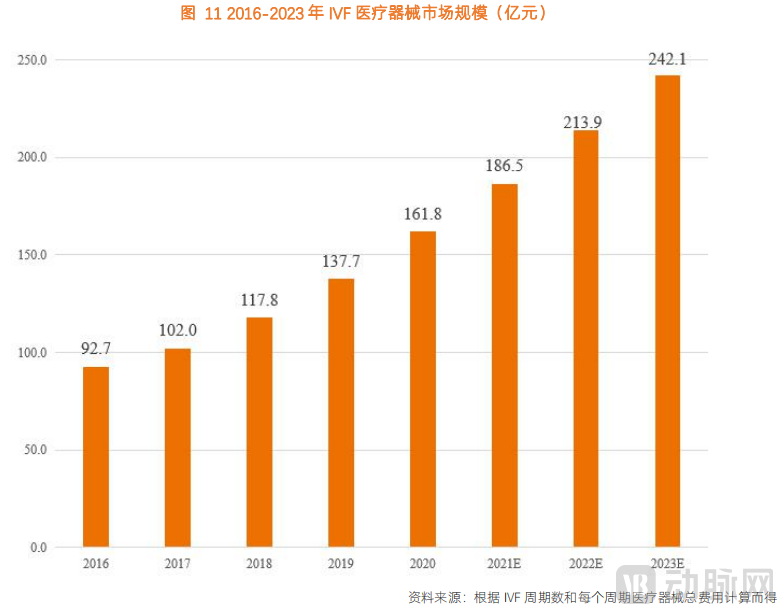
From an industry perspective, the landscape of the assisted reproductive technology (ART) sector has taken shape after years of development. Upstream companies primarily provide the medical devices, pharmaceuticals, and technologies required for ART services; midstream companies focus on the supply of ART products and patient acquisition; while downstream companies mainly deliver ART medical services to help infertile patients achieve successful pregnancies. In the upstream medical device market, demand has been expanding year by year. The market size for IVF medical devices is projected to exceed RMB 24 billion in 2023, representing 1.5 times the market size in 2020.
However, foreign brands still monopolize 95% of the market share for medical devices specifically used in assisted reproductive technology (ART). The localization rate remains relatively low, with core equipment, reagents, and consumables still heavily reliant on imports. There is a significant gap between domestic manufacturers and leading international companies, particularly those headquartered in Europe and the United States. These industry leaders benefit from decades of specialized expertise, meaning that surpassing them will not be achieved overnight.
Guo Rong, Co-founder and CTO of Hua AiboyueHe stated, “With the rise of domestic medical device enterprises, China has made significant progress in the research and development, design, manufacturing, and supply chain capabilities for high-end medical devices. This lays a solid foundation for domestic manufacturers to achieve breakthroughs in the niche field of assisted reproductive technology (ART). We still need to accumulate core resources such as capital, technology, talent, and users, and drive the development of domestically produced ART medical devices through scientific research and innovation, thereby addressing the shortcomings of Chinese companies in medical devices for reproductive laboratories.”
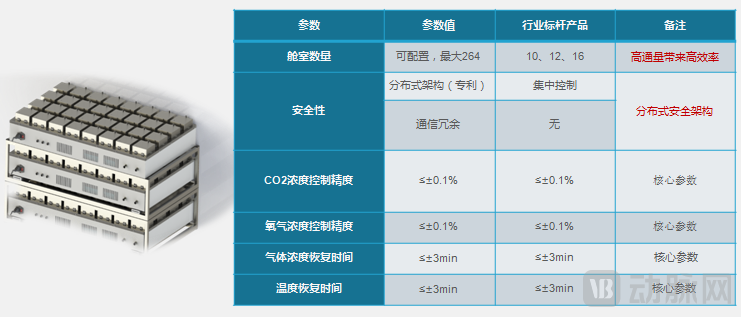
The company has strategically deployed R&D efforts for multiple core medical devices used in reproductive center laboratories, including embryo culture systems, time-lapse incubator systems, vitrification freezers, and micromanipulators. Among these, the high-throughput distributed embryo culture system pioneers a global first-in-class concept of high-throughput, safe embryo culture tailored to the needs of reproductive centers. By integrating distributed control, edge computing, and fail-safe technologies, it achieves a technological upgrade over traditional dry-type embryo incubators, with all core technologies having been filed for invention patents. The device adopts a modular design, facilitating future functional upgrades and expansions to meet the dynamic development requirements of reproductive center laboratories.
IVF-SOP AI Intelligent Decision Support System
On the other hand, the IVF-SOP AI Intelligent Decision Support System, jointly developed by Hua Ai Boyue and clinical experts in assisted reproduction, serves as an optimal tool to help physicians achieve intelligent and standardized management of the patient down-regulation and controlled ovarian stimulation process.
IVF-SOP AI features a comprehensive intelligent decision-support system: after users upload various physiological data via a mobile app, the AI automatically generates clinical recommendations for assisted reproduction and submits them to specialists in assisted reproductive medicine for review and feedback; the AI model then undergoes continuous closed-loop training based on the experts’ review outcomes.
Currently, data show that the single-cycle pregnancy rate and cumulative success rate have increased from the industry average of approximately 40% to over 60%. Through IVF-SOP AI, standardized risk control can be achieved. ItsSevere and moderate OHSS <2%. For patients, a shorter duration of stimulation and a lower dosage of gonadotropins (Gn) resulted in more viable embryos, thereby providing more opportunities for successful transplantation and reducing the risks and costs associated with repeated procedures.
IVF-SOP AI not only benefits users of assisted reproductive technologies (ART) but also establishes a real-world data (RWD) service system for ART, grounded in compliant clinical data and precise matching, thereby providing physicians with comprehensive support spanning from treatment to research. It has played a positive and effective role in facilitating physician professional development, accelerating the implementation of tiered diagnosis and treatment in ART, and enhancing the capacity-building of specialized ART diagnostic and therapeutic services.
Zhong Wen, Head of the Huai Boyue AI PlatformIt is believed that “the introduction of AI technology into assisted reproductive technology (ART) will drive the intelligent transformation of clinical workflows, streamline complex medical processes, reduce diagnostic and therapeutic complexity, lower healthcare costs, and improve efficiency. It provides reliable data and tool support for clinicians’ decision-making, thereby better assisting physicians in their work; delivers more patient-centered and intelligent services to enhance the patient experience and care efficiency, while also helping to address the challenge of uneven distribution of medical resources.”
Zhong Wen added that the era of intelligence has arrived. By leveraging artificial intelligence technologies such as machine learning and deep learning, the efficiency of data analysis can be significantly enhanced. The extensive and in-depth application of AI technology will undoubtedly drive the rapid development of assisted reproductive technology.
The long-term trend of population policy is gradually moving towards liberalization, but the demographic situation remains grim given current social development conditions. Although assisted reproductive technology (ART) is a crucial technical approach for addressing fertility issues in the future, it still faces pressures such as slowing growth in the total domestic population, a declining population of childbearing age, and weakening overall demand. Therefore, entrepreneurship in the field of assisted reproduction continues to face significant uncertainties.
Nevertheless, the Hua Ai Boyue team remains confident in this field, believing that the prospects for reproductive health will undoubtedly encompass the full lifecycle chain of infertility treatment and eugenics.Dr. YangHe stated, “We aim to empower the manufacturing of assisted reproductive technology (ART) medical devices with artificial intelligence algorithms through an ‘algorithm + device’ model. Within the broader context of domestic substitution and high-end intelligent manufacturing of medical devices in China, this approach will create greater opportunities for us and help build a robust talent pipeline. We will seize these opportunities to deliver intelligent and standardized services for infertility treatment and eugenics, thereby bringing hope and confidence to patients struggling with infertility.”
To achieve shorter, more efficient, and safer diagnosis and treatment for infertility and eugenics, Dr. Yang has long been committed to promoting and implementing the standardization and simplification of next-generation assisted reproductive technology (ART) protocols. In 2011, while pursuing his doctoral degree abroad, he collaborated with the Center for Environment and Health Research team to develop standardized ART diagnostic and therapeutic protocols and algorithmic systems. After returning to China in 2015, he further developed an Artificial Intelligence Standardized Algorithm system (IVF-SOP AI) based on these earlier achievements.
Entrepreneurship has always been fraught with thorns; this holds true for industry leaders as well as for early-stage startup teams.Guo Rong, CTO of Hua AiboyueHe candidly remarked, “The entrepreneurial journey is indeed fraught with uncertainty. However, it is precisely the immense challenge posed by such high levels of uncertainty that fills our team with passion and drive. We firmly believe that if an excellent team engages in meaningful work at the right time and with the right methods, and persists with unwavering effort, entrepreneurial success will gradually evolve from a state of high uncertainty into an inevitability.” Notably, Mr. Guo has led his team in the development of information systems and medical devices for 20 years. Since 2016, his team has successfully developed and obtained registration certificates for multiple assisted reproductive technology (ART) medical devices, including embryo incubators, laser zona pellucida drilling systems, and IVF workstations. These products have been deployed in more than 20 reproductive centers, including Zhejiang Provincial People’s Hospital and Nanjing Drum Tower Hospital.
When it comes to the original intention of starting a business,Wang Zhiqiang, Head of Operations at Hua AiboyueHe stated, “As a serial entrepreneur, I have always been driven to pursue projects that resonate deeply with my inner convictions. The field of assisted reproductive technology (ART) not only holds significant commercial value but also reveals profound social implications. We have encountered numerous real-life cases where fertility issues have led to familial and societal challenges. Therefore, we are committed to leveraging scientific approaches to help patients overcome infertility. Through our efforts, we aim to enable healthcare resources at all levels to serve patients requiring ART more precisely. By integrating multidimensional perspectives and consolidating superior expertise, we strive to better serve the broader patient population and support the nation’s demographic strategy. This is the core mission and significance of our project.”
It is reported that Hua Ai Boyue is currently undergoing a new round of financing. The funds raised will be used to further accelerate the development of its talent pipeline, intensify efforts to recruit more senior industry professionals, continuously improve its full-cycle product system for assisted reproductive technology (ART), and expand commercialization pathways.