

Aikai Medical Files IPO Prospectus: Pioneering Full-Guideline Digital Therapeutics Platform Covering Over 200 Indications
“We have established a comprehensive knowledge system for cognitive therapy, covering more than 200 indications.” Seated in the office building at Wanggu Technology Park in Yangpu District, Zhu Wei, Co-founder and CEO of iCare Medical, cited this surprising figure while introducing the company’s business. Few digital therapeutics platforms can boast such extensive coverage.
What is even more unbelievable is the company’s profile: a professional firm engaged in digital therapeutics, healthcare informatization, big data applications, and AI solutions. As an R&D-focused technology company specializing in digital therapeutics and AI-driven disease diagnosis and treatment, it also offers comprehensive hospital-wide integrated information systems, tightly-knit medical consortium solutions, and internet hospital products.
In an industry landscape where digital therapeutics mostly see breakthroughs in single diseases and business models remain unclear, iCare Medical is pursuing the “difficult yet right” path.
Judging from the background of Aikai Medical’s founding team, Zhu Wei’s statement is not an exaggeration in the slightest.
Mr. Zhu Wei has 14 years of work experience at GE Healthcare in the United States, where he was responsible for global product R&D, technological innovation, the launch of GE’s Industrial Internet strategy and the establishment of its Digital Response Center, as well as the development of Mayo Clinic’s telemedicine and clinical knowledge decision-support systems. From 2006 to 2008, Mr. Zhu also served as a core member and lead for the U.S. Department of Health and Human Services–GE digital therapeutics project.

Zhu Wei, Co-Founder and CEO of iCare Medical
Zhang Jian, another co-founder of Aikai Medical, is a Distinguished Researcher at the Institute of Public Administration of the Development Research Center of the State Council, Executive President of the Hunan Provincial Medical Device Industry Association, Master’s Supervisor at the First Affiliated Hospital of Nanchang University, Director of the National-Local Joint Engineering Laboratory for Oral Regenerative Medicine, and Director of the Jiangxi Provincial Society for Integrative Medicine. He possesses extensive experience in clinical trial design accumulated over many years.
“A core consideration is whether founders entering this sector (digital therapeutics) are driven by passion and long-term medical practice or by business opportunities. Disease treatment is a matter of life and death, carrying extremely high risks. Without”Ample knowledge reserves and extensive practical experience, which may result in the loss of a life. Although digital therapeutics hold great promise, there is an urgent need forLong-term, Profound Foundational Support"This is also why it took more than 20 years for digital therapeutics in the United States to reach a phase of explosive growth."
Zhu Wei has been deeply engaged in the healthcare sector for over two decades, with business operations spanning the Americas, Europe, the Middle East, and the Asia-Pacific region, while consistently focusing on providing informatics solutions for disease diagnosis and treatment.Driven by patriotism, upon returning to China to start a business, he assembled a team of like-minded overseas-returning technical talents and frontline clinical physicians from within China. The team possesses extensive experience in digital therapeutics practices in the United States and healthcare service delivery in China.
Under the leadership of Zhu Wei, iCare Medical’s digital therapeutics products feature a foundational algorithm built upon a comprehensive guideline system that integrates clinical practice guidelines, extended knowledge guidelines, social guidelines, and financial guidelines. With extensive experience in designing clinical trial protocols—particularly in identifying factors strongly correlated with the disease and filtering out non-critical variables that could affect final data outcomes—iCare Medical can significantly reduce both the cost and duration of clinical trials.
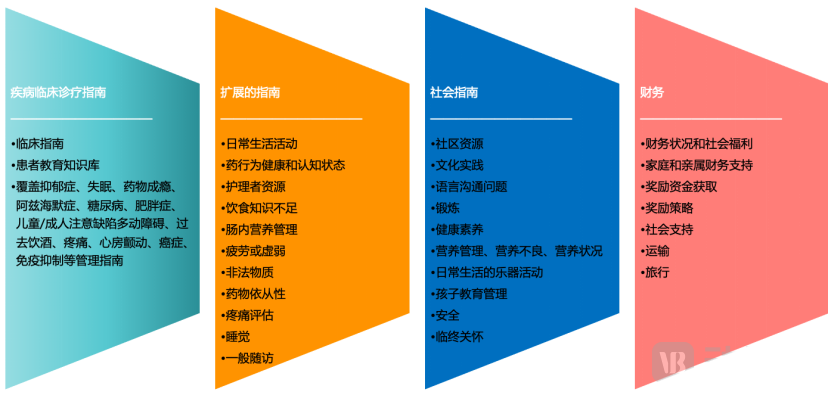 Aikay Medical Complete Guide Knowledge System Image provided by the company
Zhu Wei stated that while most digital therapeutics companies currently build their products based on clinical guidelines, this is far from sufficient.iKai’s core advantage lies in its comprehensive knowledge system covering all clinical guidelines.
Zhu Wei cited the financial guide as an example, stating, “The most typical cases are those of patients with substance use disorders, who often lose the support of their families and society and lack financial resources. The ability to be self-reliant is the strongest foundation for individuals to regain confidence and reintegrate into society. Therefore, a financial guide is not merely about designing incentive mechanisms; it is more about empowering patients to achieve financial independence through their own efforts.”
Unlike typical digital therapeutics companies that enter fields such as diabetes management,Aikai Medical selects high-barrier disease areas in oncology and cardiovascular careas the primary direction for product research and development.
Zhu Wei explained, “Firstly, cancer patients in China lack access to a variety of effective combination therapies, particularly digital therapeutics. Although physicians have multiple modalities at their disposal for treating cancer, they often struggle to alleviate patients’ fear. Patients endure both the physical suffering of the disease and the psychological burden of fearing death, resulting in significant physical and mental stress that compromises immune function. Driven by the will to survive, patients are more willing to try various novel treatment approaches. Multiple medical theoretical studies have demonstrated that digital therapeutics can help enhance immune function in cancer patients.”
“Cancer patients in some developed Western countries have long surpassed the 10-year average survival milestone, whereas cancer patients in China have only just achieved a breakthrough in the 5-year average survival rate. In fact, in the field of cancer treatment, the gap between China and Western countries does not lie in pharmaceuticals, chemotherapy, genetics, immunotherapy, or surgical techniques; rather, it stems from the United States’ adoption of a comprehensive diagnosis and treatment service model that integrates traditional methods with multidisciplinary care teams and psychological stress management,” added Zhu Wei.
Aikai Medical’s digital therapeutic product for cancer collects multidimensional patient data—including emotional state, lifestyle habits, and gait—via mobile phones to monitor and manage lifestyle behaviors, thereby enhancing immune system function.
iCare Medical believes that digital therapeutics will have a revolutionary impact on future proactive health, and should always revolve around cognitive therapy content generated through continuous assessment and continuous adjustment. There are three core aspects: first,Generate validated content that effectively influences cognition; secondly,AI calculates and generates content in a patient-friendly format; third,AI calculates the time periods when patients are most receptive to content and pushes information and interactions accordingly.。
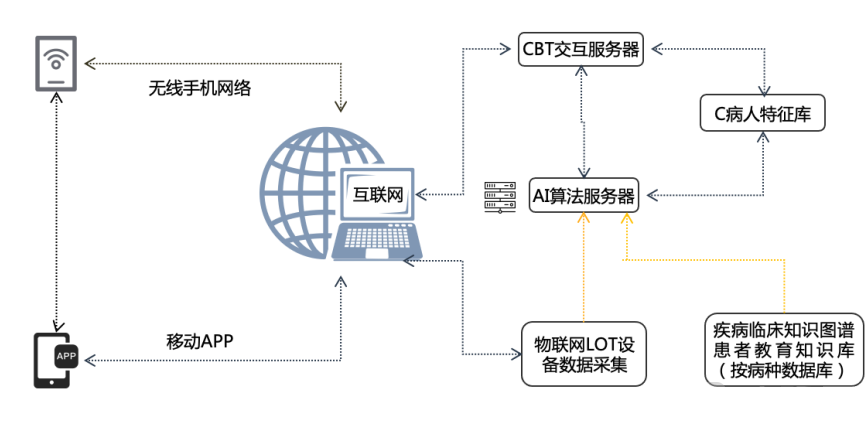 iCare Medical Digital Therapeutics Physical Implementation Logic Diagram (Image provided by the company)
“This means that content production must be approached with great caution. For instance, women over 50 and those under 30 diagnosed with cervical cancer may have vastly different perceptions regarding educational materials provided during treatment. Older patients typically prioritize life extension, whereas younger women may primarily aim to preserve their fertility. If therapeutic intervention content is not sufficiently precise, it could lead to adverse outcomes,” explained Zhu Wei.
Aikai Medical firmly believes that since the accuracy of content in cognitive assessment and modification serves as the cornerstone, substantial time must be invested in expert annotation and practical validation to develop genuine digital therapeutics products. Furthermore, the application of AI requires careful calibration; excessive computational complexity can hinder the achievement of precise results.
When discussing product R&D planning and clinical trials, Zhu Wei stated, “We will focus primarily on cancer and cardiovascular diseases, while also expanding into drug addiction, depression, and insomnia. As wePossessing a Complete Knowledge System, and will also expand into areas such as diabetes, hypertension, obesity, pediatric attention deficits, postpartum depression, gastrointestinal disorders, Alzheimer’s disease, and immune-mediated diseases. Meanwhile, we believe that obtaining registration certificates from the National Medical Products Administration (NMPA) requires rigor and responsibility, as well as robust clinical trial design capabilities. Currently, most IT companies face significant challenges in conducting clinical trials for digital therapeutics, whileAikay possesses extensive experience and distinct advantages in the design of clinical trial protocols.。”
It is understood that iCare Medical has established extensive collaborations with hospitals such as Shanghai Tenth People’s Hospital and Xiangya Hospital, as well as with Jiangxi Unicom’s big data company in Yichun. Over the past few years, iCare Medical has invested substantial funds in product research and development, completing its angel financing round at the end of last year. Currently, the company is seeking Pre-A series financing to support the systematic development of cognitive content and the conduct of clinical trials for digital therapeutics.
Regarding the establishment of business models for digital therapeutics, Zhu Wei believes that healthcare must first address the issue of precise disease treatment before profitability can be considered. In past practices across Europe, the United States, and China, it is rare to see successful cases where business or revenue models were designed prior to product development. Such an approach is akin to building a castle in the air without a foundation, making long-term sustainable growth difficult to achieve.
“Since 1995, a large number of U.S. companies have entered the digital therapeutics sector. It took nearly two decades for the United States to validate and address the translation of clinical guidelines into precise digital therapeutic modalities. Now that the scope has expanded to encompass broader knowledge systems such as social and financial guidelines, relying solely on the efforts of a few companies is far from sufficient to achieve leapfrog development. We also call for more supportive policies and greater participation from industry partners to jointly advance the construction of comprehensive guideline frameworks,” said Zhu Wei.