

Addressing the Global Demand for 10 Billion Vaccine Vials: Stevanato Group's Zhangjiagang Cluster Project Emerges as a Strategic Solution

Stevanato Group
Medical Hollow Glass Manufacturer
As a powerful weapon against the SARS-CoV-2 virus, vaccines have undoubtedly played a crucial role in humanity’s fight against COVID-19, thereby ushering in a period of remarkable development opportunities. The emergence of a normalized pandemic trend has further propelled the research and development of COVID-19 vaccines forward at an unprecedented scale and speed.
The international academic journal Nature stated in a recent report that COVID-19 vaccination has become the largest vaccination campaign in history.According to a white paper jointly released by global logistics giant DHL and McKinsey & Company, global demand for COVID-19 vaccines is projected to exceed 10 billion doses after their introduction.
However, beneath the surge of growth in the vaccine industry, another crisis has emerged:Supply Shortage of Glass Vials for Vaccine Injections Draws Industry Attention——The global mass vaccination campaign against COVID-19 has necessitated an equally massive supply of vaccine vials. However, the sudden outbreak has severely disrupted the global supply chain for vaccine vials. This issue is particularly pronounced in China, where the supply chain industry remains underdeveloped.
In early July 2020, Zhang Wenhong, Director of the Department of Infectious Diseases at Huashan Hospital Affiliated to Fudan University, stated in an interview that the production capacity of glass vials for vaccines was even more constrained than that of the vaccines themselves.
Why is this the case? It turns out that vaccine vials are not made of ordinary glass, but of neutral borosilicate glass. The manufacturing of neutral borosilicate glass tubes presents numerous technical challenges. For instance, the high quenching temperature and limited use of fluxes make it difficult to melt the raw materials. Additionally, inadequate production processes or the absence of platinum during melting can lead to defects in the glass tubes, such as striations and nodules.
Due to these technical barriers, very few domestic enterprises are capable of independently developing and manufacturing neutral borosilicate glass, resulting in a heavy reliance on imports. Furthermore, the production of vaccine glass vials requires various raw and auxiliary materials, with neutral borosilicate glass being just one component. Sourcing other raw and auxiliary materials is equally challenging, as the corresponding suppliers are dispersed across the globe.
Therefore, for vaccine vial suppliers, the biggest problem with the phenomenon of difficult vaccine vial supply lies in,How to identify reliable raw material suppliers from around the world, ensuring access to high-quality materials with sufficient production capacity, while safeguarding logistics and distribution against external disruptions; and how to consolidate these globally sourced materials at a single location for assembly and manufacturing, maintaining product quality that meets stringent customer requirements...
The presence of numerous challenges undoubtedly imposes exceptionally high demands on the comprehensive operational capabilities of vaccine vial suppliers. Furthermore, while providing efficient, integrated support solutions, vaccine vial suppliers must also meet the dual demands for both “quantity” and “quality” from a large base of downstream customers in countries with substantial market demand. In this context, it becomes essential for vaccine vial suppliers to expand local production capacity and deploy corresponding production lines in these high-demand markets.
Therefore, given the substantial market demand within China’s biopharmaceutical sector and the current limitations in domestic manufacturing capabilities, the pressing shortage of vaccine vials in the Chinese market can only be alleviated by inviting advanced international vaccine vial suppliers to enter the market. Their participation will drive industrial development and provide efficient, direct solutions to address immediate needs, while also meeting the surging future demand spurred by the rapid growth of China’s biopharmaceutical industry.
Local governments, including that of Zhangjiagang, have made commendable contributions to advancing the resolution of supply chain challenges for vaccine glass vials.By actively attracting a large number of outstanding overseas enterprises, Zhangjiagang has successfully contributed to the development of China’s vaccine packaging material supply industry, and even the broader biopharmaceutical sector.
As a key component of Suzhou’s “1+N” biopharmaceutical layout, Zhangjiagang City has actively aligned with Suzhou’s long-term vision of building the “China Pharma Valley.” By listing the biopharmaceutical industry among the city’s “eight major industrial chains,” Zhangjiagang has worked to improve its innovation ecosystem through talent acquisition, policy support, and infrastructure development. These efforts have accelerated the “fission” growth of the biopharmaceutical sector, and the city has taken the lead in collaborating with Suzhou Industrial Park to establish a biopharmaceutical industrial base.Developing supporting supply chains for the biopharmaceutical industry has been a key focus of Zhangjiagang City in recent years.
Zhangjiagang enjoys significant locational advantages, with a concentration of large-scale enterprises and a well-developed port-based industry, as it is situated at the convergence of three major national strategies: the Belt and Road Initiative, the Yangtze River Economic Belt, and the Integrated Development of the Yangtze River Delta.Attracted over 1,300 foreign-funded enterprises to invest and establish operations here, including 40 Fortune Global 500 companies that have set up local presence to provide industrial support, thereby offering pharmaceutical manufacturing and production access to supply chain resources with significantly low operational costs.
It is precisely due to Zhangjiagang’s efforts in recent years to promote the development of a local biopharmaceutical industry cluster that a number of biopharmaceutical projects, including Stevanato Group (NYSE: STVN), were able to play a key role during the pandemic by supplying large quantities of vaccine vials, thereby making a significant contribution to the domestic supply of vaccine vials.
Founded in 1949, Stevanato Group is a global leader in providing primary packaging, drug transport, and diagnostic solutions for the pharmaceutical, biotechnology, and life sciences sectors. According to the company’s recently released quarterly financial report,During this epidemic, the Group rapidly scaled up its global production capacity and collaborated closely with over 90% of companies worldwide engaged in COVID-19 vaccine R&D, providing substantial product output and technical support to the world. Meanwhile, the Group actively responded to demand in the Chinese market by supplying relevant products, significantly alleviating the current shortage of vaccine glass vials in China.
However, merely achieving “partial relief of the vaccine vial supply shortage” is clearly not a proactive solution. The local government of Zhangjiagang and Stevanato Group have now initiated a new phase of collaboration.
Recently, Stevanato Group announced the acquisition of a new factory located in Zhangjiagang as part of the latest phase of its expansion in China, with renovation plans scheduled to commence in spring 2022.The new factory has a gross floor area of approximately 32,000 square meters (including the engineering equipment manufacturing area),and it is expected to recruit approximately 270 new employees to serve the China Center.
On March 10, Stevanato Group held an online launch ceremony for its China Center project. Representatives from the Zhangjiagang Municipal Government and the Zhangjiagang Economic and Technological Development Zone Administrative Committee, along with the Italian Consul General in Shanghai, attended the event and delivered remarks.
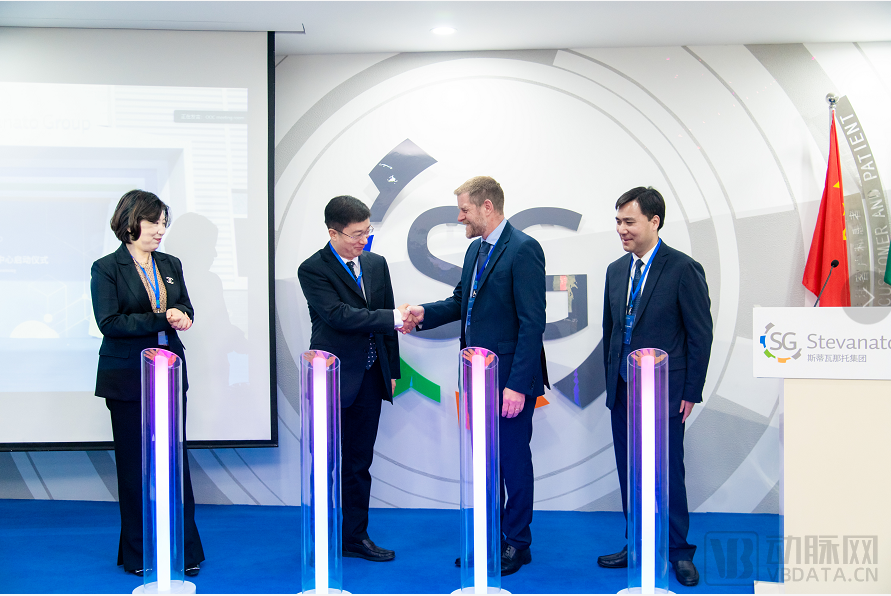
Stevanato Group China Center Project Launch Ceremony
VCBeat has learned that the construction of Stevanato Group’s new production hub marks a significant departure from its previous projects.
In the past, the products mainly produced by Stevanato Group in its Chinese factories included vials and cartridges; currently,In addition to expanding production capacity and continuing to offer products including vials and cartridges, Stevanato Group also plans to commence manufacturing of high-value solutions such as EZ-fill® prefillable syringes and vials at its new facility. Meanwhile, advanced visual inspection equipment will be introduced to control the intrinsic quality of bottled vaccines and biopharmaceuticals, and glass forming production lines will be established.
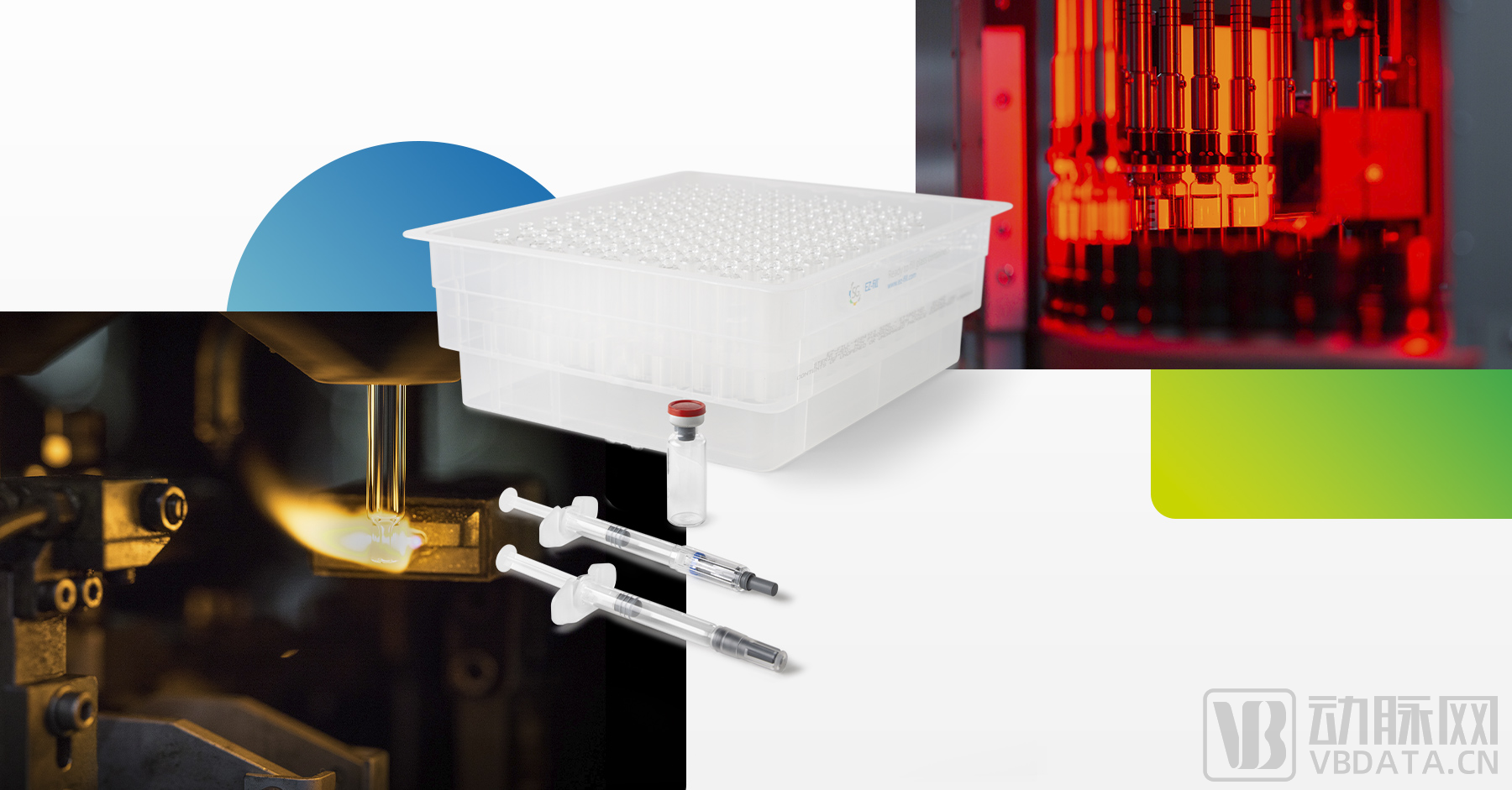
Stevanato Group Integrated Solutions
Andrea Zambon, Global Business Development Director of Stevanato Group, emphasized that this is the first engineering factory (glass forming and visual inspection machines) built by Stevanato Group in China.“We also plan to establish a laboratory in China to collaborate with biotechnology companies on research, exploring how products such as vials or syringes can be optimized or improved to better align with drug administration methods.”
Andrea told VCBeat that Stevanato Group will fully “unlock” its comprehensive capabilities in the future, providing integrated, end-to-end portfolio products, processes, and services to the Chinese market. This aims to meet the needs of Chinese customers across the entire drug lifecycle, including R&D, clinical trials, and commercialization. “The new production hub we are breaking ground on in China is no longer limited to supplying sufficient product volumes to the market; it also represents a new leap forward in quality.”
In response to the pandemic and the rapidly evolving Chinese market, Stevanato Group has adopted a forward-looking strategy, aiming to achieve a strategic shift from product supply to comprehensive pharmaceutical development and supply chain services in China through the establishment of its China Center. “It is not only the demand for vaccine glass vials driven by the R&D of COVID-19 vaccines; the entire Chinese pharmaceutical industry has demonstrated strong demand for vaccine storage and other drug containment solutions for biopharmaceuticals,” Andrea told VCBeat. Since establishing its branded manufacturing facility in China in 2012 to enter the Chinese market, investment in China has remained a key component of the Group’s strategic priorities.
“Stevanato Group has witnessed the development and transformation of China’s biopharmaceutical industry over the past decade, and has also felt its current vibrant momentum. The Chinese market is now one of the most advanced pharmaceutical sectors globally, and Stevanato Group is strategically positioning itself for the future of this market.”Andrea stated that a large number of companies in China have emerged, focusing on emerging technological therapies such as gene therapy and cell therapy, and are developing very rapidly.Stevanato Group’s current strategic layout is designed to meet the future potential demands of China’s biopharmaceutical industry.
The successful establishment of Stevanato Group’s new production hub would not have been possible without the strong support from the Zhangjiagang local government. “The support provided by the Zhangjiagang local government has been exceptional, with both the scope and speed of its services being highly commendable and demonstrating remarkable flexibility,” Andrea told VCBeat, adding that the supporting services in Zhangjiagang gave him a sense of being at home.
“This new investment in Zhangjiagang marks a new milestone in our decade-long partnership with the Jiangsu Zhangjiagang Economic and Technological Development Zone. We are delighted to collaborate once again with the Zhangjiagang local government. I would like to express my special gratitude for two things,” said Andrea. “First, when the Zhangjiagang government learned that our existing facility lacked sufficient space to support the construction of our new center, they swiftly coordinated a new site nearby within a very short timeframe to facilitate the project. Second, we appreciate the support provided by the local government in terms of human resources.”
“Therefore, we strongly hope that the establishment of our new center will have a positive impact on China’s supply chain industry and the Jiangsu region, where Zhangjiagang is located. In addition to driving local economic development, more importantly, we aim to collaborate with enterprises across the upstream and downstream value chains to jointly build a robust industry ecosystem. By establishing a production line for glass forming equipment in China, we seek not only to raise product quality standards across the entire market but also to cooperate with other market participants and partners throughout the industrial chain, working together to address China’s supply chain challenges.”