

Owlet Baby Care Files IPO Prospectus: Four Dads, One Smart Sock, and a Vision to Transform Infant Sleep Monitoring
Owlet
Developer of Infant Monitoring Devices
“The moment my wife and I decided to have a child, I was deeply concerned that hereditary heart disease might affect our baby.”
The man who made this statement is Kurt Workman, Founder and CEO of Owlet, a U.S.-based maternal and infant health company. Fortunately, Kurt is now a father of two.
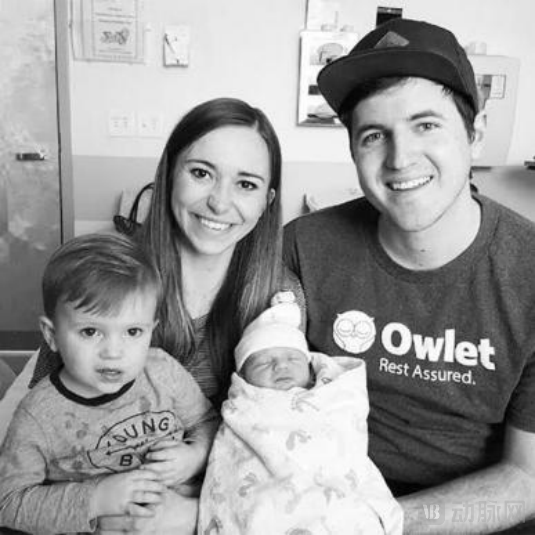
Photo of Kurt with His Wife and Child
Yet at the time, Kurt’s concerns were not unfounded. “When my wife was an infant, her heart condition was not taken seriously. Ten days after she was discharged from the hospital, her mother had an inexplicable sense that something was wrong. Upon entering the nursery, she found the baby had stopped breathing. The family rushed her to the hospital, where she underwent open-heart surgery, which ultimately saved her life.”
Although a mother’s intuition saved his wife’s life, such fortunate instincts are not always reliable. Kurt knew that their child was also at risk of developing this condition. Therefore, when their first baby was born, Kurt and Shea were deeply concerned that the infant might have inherited congenital heart disease. However, standard video monitors could not inform them whether the baby’s heartbeat was regular, nor would they provide timely alerts in case of danger. Consequently, Kurt began to delve into the working principles of pulse oximeters, envisioning: “If this technology could be miniaturized and made more affordable for home use, it would save the lives of more infants.”
When Kurt started his first venture, he was only 23 years old, yet he was already a seasoned serial entrepreneur: at the age of 12, he ran a balloon business in his family’s backyard, and during high school, he shifted to selling flooring and tiles.
After becoming a first-time father, the concept of “smart socks” repeatedly crossed his mind. Although he lacked the technical or medical expertise required to design such a product, his classmates at Brigham Young University, a renowned private university in the United States—Zack Bomsta, Jordan Monroe, and Jake Colvin—possessed these skills. Coincidentally, all three classmates were also new fathers.
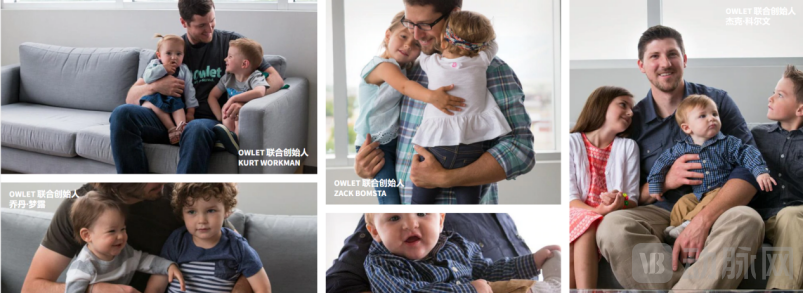
Four Passionate Young Dads
Driven by their love for children, the four founders quickly reached an agreement and established Owlet Baby Care, a maternal and infant health company, in Utah, United States, in 2013. Kurt also hopes that “parents can remain highly vigilant throughout the parenting journey, just like owlets.”
The flagship product at that time wasSmart Baby SocksThis product is approved byPulse Oximeter,Monitoring the Heart of Infants During SleepRate, Blood Oxygen Level, Sleep Quality, Skin TemperatureandSleep Positionand other information. In the event of any anomalies, guardians will receive alerts via the app and the accompanying monitor. This device set is priced at $299, including three pairs of socks in different sizes, related accessories, and the app.
In 2019, Owlet launched Dream Lab. This service provided customers with a comprehensive assessment of their child’s needs, along with specific feedback identifying the factors disrupting their child’s sleep, and offered practical, actionable training methods. Guided by a series of courses, parents could even determine the optimal timing for their child’s next nap. At the time, this course was priced at a premium, costing as much as $99.
The launch of Dream Lab signals the company’s strategic direction. In an interview with foreign media, founder Kurt stated that, leveraging data collected from connected baby-care devices, “we aim to expand into areas such as fertility guidance, labor and delivery support, and lactation consulting and coaching.” Indeed, Owlet has since been pursuing this path.
It is worth noting that, according to Owlet’s disclosures, its net revenue in 2019 was $49.8 million, with a gross margin of 46%, indicating that the company had long since achieved self-sustaining operations. This robust cash flow has laid a solid foundation for its subsequent initial public offering.
In February 2021, the company went public on the New York Stock Exchange under the ticker symbol “OWLT” following its merger with Sandbridge Acquisition Corp. The latter was a special purpose acquisition company (SPAC) backed by Sandbridge Capital and PIMCO’s private funds. At that time, Owlet was valued at approximately $1.07 billion, garnering significant attention.
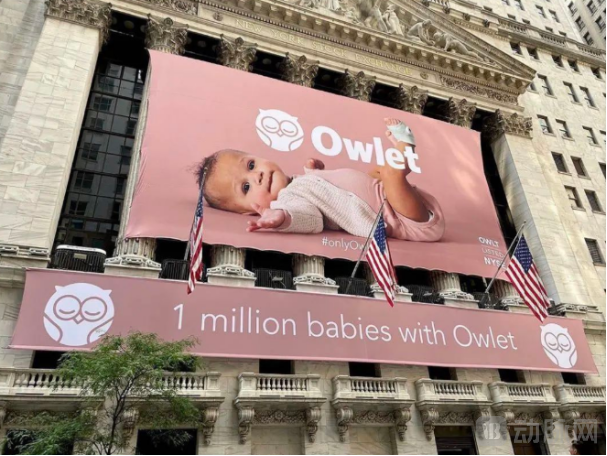
Owlet’s IPO Celebration Poster Announces It Has Served 1 Million Babies
However, challenges came one after another. Eight months later, Owlet received a warning letter from the FDA, stating thatSmart Sock is classified as a medical device but has not obtained regulatory approval, failing to meet compliance requirements. It is required to be delisted and its sales discontinued.
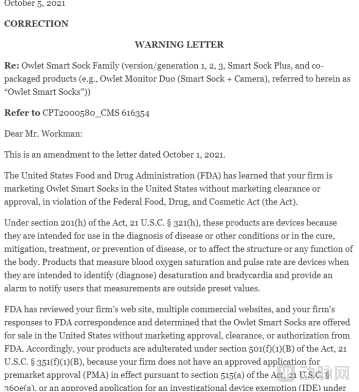
FDA Warning Letter: Smart Sock Classified as a Medical Device Without Approval
Owlet, which had been gaining strong momentum, suffered a severe setback as its stock price plummeted repeatedly. In November, disgruntled investors filed a class-action lawsuit against Owlet, alleging that the company sold its products without FDA approval, thereby harming investors’ interests.
As of press time, the stock is trading at approximately $2.20, well below its all-time high of $10.77 reached in February 2021.
Meanwhile, Owlet did not sit idly by; instead, it responded swiftly to adjust its products and actively salvage its business by eliminating configurations related to medical devices, launching the Owlet Dream Duo infant sleep monitoring system in January 2022.
Similar to its predecessor, this new product is designed to help track infants’ sleep. However, unlike its predecessor, which was forced off the market, the system makes fewer claims about the health metrics it can monitor.
The Owlet Dream Duo system, priced at $399, includes the Dream Sock wearable baby monitor, the Owlet Cam HD camera, and a digital sleep coach. Caregivers can download the Owlet Dream App to access information such as their infant’s sleep status, sleep quality, and sleep trends.
The Owlet Dream Sock, a smart sock for infants and toddlers, succeeds the brand’s previous core product. The kit includes one sensor, four fabric socks (the Owlet Dream Sock is suitable for ages 0–18 months, while the Dream Sock Plus is designed for infants and toddlers aged 0–5 years), and a wireless fast charger, and is used in conjunction with the Owlet Dream app and Owlet’s sleep learning program.
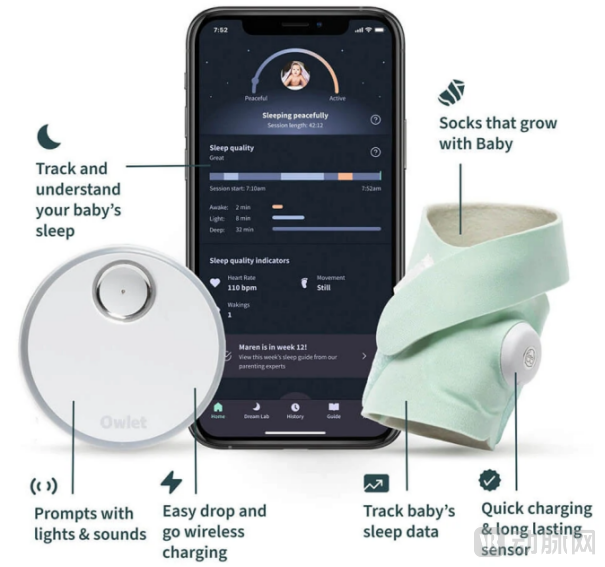
This product usesWearable Sensor (PPG) TechnologyAccurately collect sleep information, andAI Data Processing, so that guardians can view the baby's sleep quality metrics.
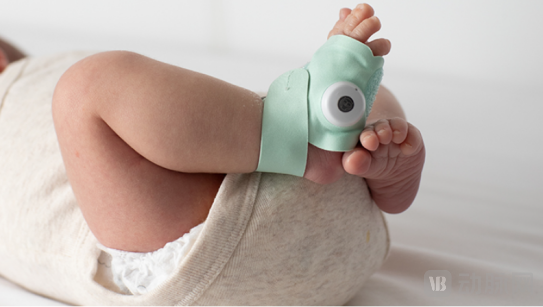
Owlet Cam uses a secure, encrypted Wi-Fi connection to stream high-definition 1080p video with night vision and two-way audio to the caregiver’s smartphone. Caregivers can stay attuned to their baby’s needs through background audio.
The advantages of this product series are:
Help parents understand their baby's sleep patterns.Parents receive in-app notifications when their child wakes up or falls asleep;
Digital Sleep Coach, providing parents with personalized sleep services based on infant and toddler sleep data to help children develop healthy sleep habits from an early age;
Timely Reminder ServicesWhen a child requires caregiver assistance to fall asleep, the caregiver receives a “Sleep Aid” push notification, while the wireless fast charger flashes lavender-colored lights and plays gentle music to alert the caregiver;
Push parenting guides tailored to the child's current developmental stage. For example, for parents of infants aged 0–18 weeks, the application recommends content related to newborn sleep, feeding, postpartum adjustment, and parental health.
Owlet is not the only company to have launched a smart baby monitoring system; its main competitors on the market include Nanit, Sense-U, and others.
These products all adopt commercial services similar to those of Owlet,Composed of software (apps, sleep guidance, premium app services, etc.) and hardware (cameras, sensors, etc.).
Nanit’s product is a strap-based monitor, while Sense-U is a small clip that attaches to the diaper.
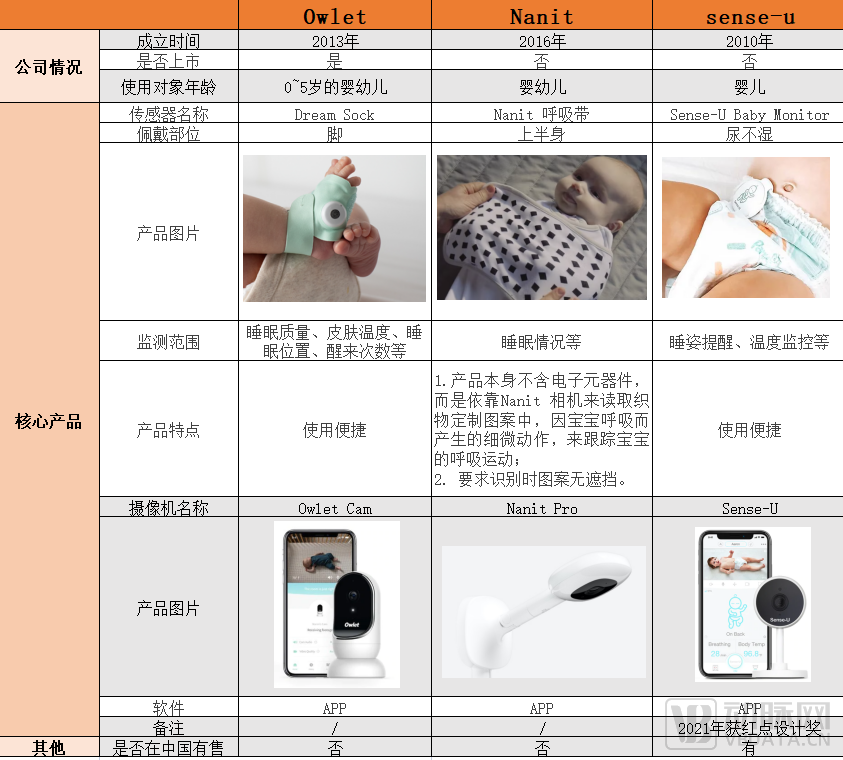
Comparison of Owlet, Nanit, and Sense-U Products
However, while Owlet made a push for its initial public offering, Nanit’s latest Series C financing round stalled in February 2021, and Sense-U’s funding status remains unclear. Each of the three companies has its own advantages: Sense-U is the earliest founded among the trio and won a Red Dot Design Award in 2021, giving it a first-mover advantage; Owlet boasts a compelling brand story and user-friendly, easy-to-operate products; and Nanit offers greater cost-effectiveness.
However, Owlet’s lead over the other three products is primarily due toProductandMarketingAdvantages in Two Aspects——
Compared to Nanit,Owlet’s product form and design are lighter and more user-friendly, offering a better user experience.Visually, Nanit employs a swaddle-like sensor design, which appears more restrictive and imposes specific clothing requirements for infants. During use, infants should not be overdressed, both to avoid compromising monitoring efficacy and to prevent overheating. In contrast, Owlet’s product form factor is lighter and resembles a sock, offering easy donning and doffing without restricting infant movement or being affected by clothing. Overall, Owlet appears more baby-friendly during use.
And inIn terms of marketing, Owlet overwhelmingly outperforms the other two competitors.Owlet places great emphasis on media promotion. Its official Facebook page has amassed over 680,000 followers, and its major overseas self-media channels are updated daily. Although Owlet’s TikTok account was launched only recently, it has already garnered more than 300,000 likes.
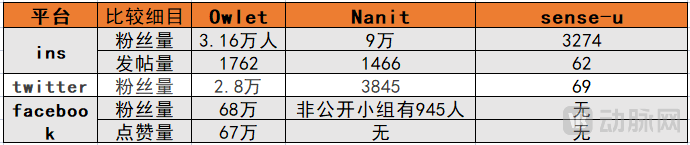
Owlet, Nanit, and Sense-U: Presence in Mainstream Media
and on the same platform,Owlet also conducts A/B testing on the same content to better align it with the platform and its users.Meanwhile, Owlet also partnered withLive Stream"tailwind," andAmazonReached a partnership and established a dedicated live-streaming studio at its Utah headquarters to better showcase Owlet’s products.
The baby monitor industry abroad is booming, yet consumer awareness of baby monitors in China remains relatively low.
The author interviewed friends who are already parents, and few were aware of the niche category of “baby monitors.” Most people use the common monitors available on the market.
With the implementation of the three-child policy, the maternal, infant, and child industry has once again garnered widespread attention and sparked nationwide discussion. Optimal birth outcomes, scientific parenting, and stress-free childcare have become the core demands of new mothers and fathers.
According to the "Latest Trends Report on the Baby Monitor Industry in 2021" jointly released by Tmall and Alibaba Research Institute, taking the baby monitor industry as an example, although the primary sales region for these products remains the North American market, the Chinese market is experiencing rapid growth. Meanwhile, due to the accelerating pace of life, consumer demand for time-saving and user-friendly baby monitoring devices continues to rise. On Tmall, sales growth of baby monitors has been particularly robust. As of April 2021, the sales revenue of baby monitors on Tmall increased by more than 270%.
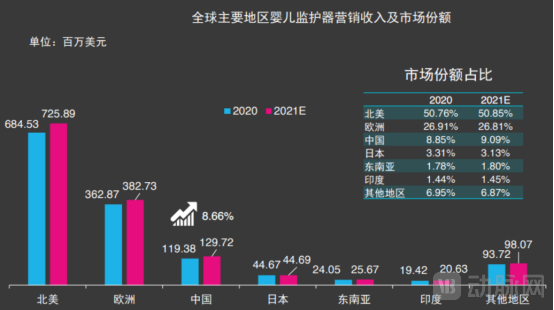
VCBeat Provides a Brief Overview of Domestic Infant Monitor Companies, if you are also working on baby monitors, feel free to contact the author.
Sense-u (Shanghai Gandong Technology Co., Ltd.), founded in Silicon Valley, USA, in 2010 by Huang He, a Yale University Ph.D. dropout (who completed three years of the five-year program) and a 2010 undergraduate graduate of the University of Science and Technology of China. It is positioned as a “home wearable device.” In addition to providing daily step counting, calorie tracking, and sleep statistics, Sense-U can monitor children’s sitting posture, detect falls among the elderly, and offer a visualized family member management platform.
Haima Babi (Wuhan Xingxun Intelligent Technology Co., Ltd.)Founded in 2017, this AI technology company specializes in embedded computer vision technologies and was recognized as a National High-Tech Enterprise in 2019. Its core products include the HippoBaby AI Baby Monitor and XiaoAn AI Camera. According to Tianyancha data, the company completed its latest funding round in February 2021, led by Changxiang Investment. Previously, it had received investments from Chuangxiang Future Capital, Cheetah Mobile, Tianqi Venture Capital, and Renren Inc.
iU Baby (Dongguan Nanhao Intelligent Technology Co., Ltd.)Founded in May 2018 by Dr. Du Minghui, a professor at South China University of Technology, and located in Tianan Cyber Park, Nancheng District, Dongguan City, Guangdong Province, the company is a high-tech enterprise dedicated to the development of intelligent maternal and infant products. With over four years of focus on R&D in this field, it operates two major brands, ebemate and AbellStar, and currently offers products including the Care Guardian, the Wee-Wee Assistant (a baby urine/stool alert system), and the Q&A Assistant.
OrtizA premium brand under Shuzhi Medical dedicated to comprehensive maternal and infant care, the company primarily provides integrated solutions for the healthy growth of infants, particularly preterm infants. It has currently established three major product lines: the Premature Caring System, the Sleeping Health System, and the Health Monitoring System. Notably, the preterm infant respiratory monitoring product, jointly developed by Shuzhi Medical’s Overseas R&D Center with the University of Oxford and Imperial College London, enables real-time monitoring, intervention, and early warning for apnea in preterm infants.
References:
1. Liu Zixuan, “Standing at the Eye of the IoT Storm? How Owlet Baby Care Carved Out a $1 Billion Slice of the Maternal and Infant Market with Just One Sock”
2. Owlet launches new sleep wearable for kids up to 5 years old
3. Owlet releases new baby sleep monitoring system Dream Duo
4. Owlet pulls Smart Socks following FDA warning letter