

From Black Market to Blue Ocean: Seizing Medical Waste Management Opportunities Post-CCTV Exposés
Can you imagine that used medical waste, such as IV tubing and disposable syringes originally discarded in hospital trash bins, could end up as toys in children’s hands after being resold and processed through multiple layers?
—This is not mere speculation, but a black-market supply chain for medical waste that was exposed twice by CCTV’s 3.15 Gala.
In 2019, according to a report by CCTV’s 3.15 Gala, instances of reprocessing discarded medical waste were uncovered in Puyang (Henan Province), Zaozhuang (Shandong Province), Baoding (Hebei Province), and other regions. Medical waste that had not undergone centralized harmless disposal was processed into shredded material and sold to recycled pellet manufacturers. This shredded material was then simply processed into recycled raw materials, which were further manufactured into daily necessities or children’s toys. In 2012, CCTV’s 3.15 Gala exposed similar practices in Chenghai District, Shantou City, Guangdong Province, where recycling stations openly sold used disposable syringes and other medical waste collected from hospitals; these items were subsequently turned into brightly colored, attractive toys.
Of course, these practices were investigated and penalized upon being reported. Meanwhile, the management of medical waste has made significant strides over the past two years, not only addressing public livelihood concerns but also propelling the industry into a new stage of development.
With the growth in medical service volume and the widespread use of disposable medical supplies and consumables, the amount of medical waste in China has been increasing year by year in recent years.
According to the Annual Report on the Prevention and Control of Environmental Pollution by Solid Waste in Large and Medium-Sized Cities released by the Ministry of Ecology and Environment, the amount of medical waste generated in large and medium-sized cities increased from 547,500 tons in 2013 to 843,000 tons in 2019. However, as the number of cities included in the annual statistics varies each year, these figures reflect the general trend to a certain extent but do not represent the exact growth.
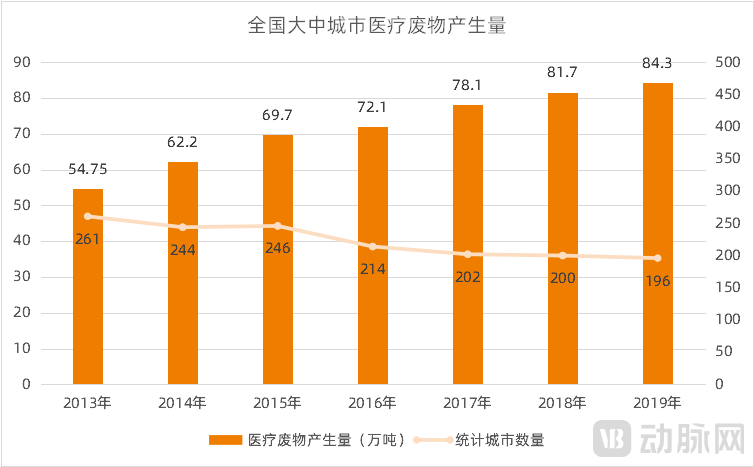
Medical Waste Generation in Major Chinese Cities, Data Source: Official Website of the Ministry of Ecology and Environment, Chart by VCBeat
Changes in individual cities clearly corroborate the overall trend. According to the Annual Report on the Prevention and Control of Environmental Pollution by Solid Waste in Large and Medium-Sized Cities Nationwide, medical waste generation in cities such as Shanghai, Beijing, Guangzhou, Hangzhou, Chengdu, and Chongqing has consistently ranked among the highest in recent years. A review of data from several key cities over the past five years reveals that, except for slight declines in Beijing and Guangzhou in 2020, all other cities experienced growth. Notably, Wuhan saw the largest increase in 2020, primarily due to epidemic prevention and control measures and the treatment of COVID-19 patients. The reduction in medical waste generation in Beijing and Guangzhou was associated with a decrease in healthcare service volume during the pandemic.
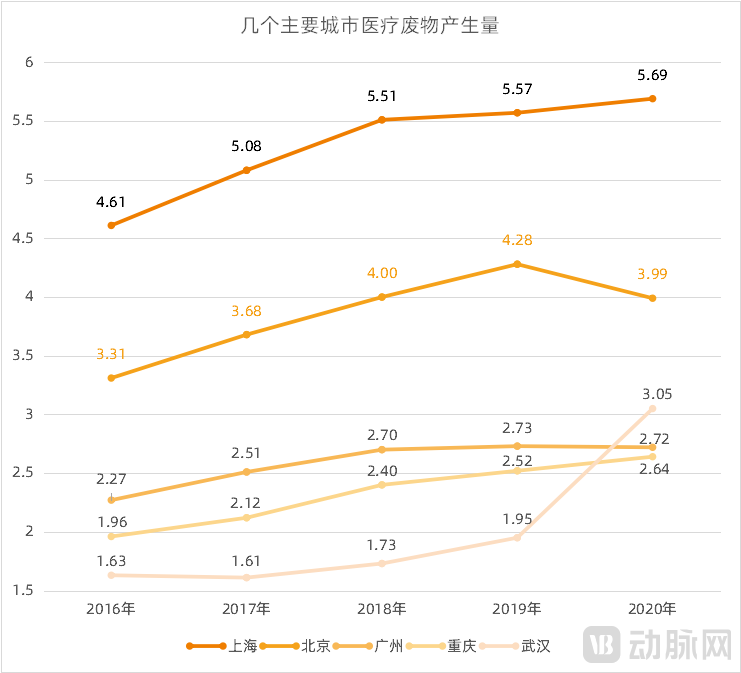
Medical Waste Generation in Major Cities (10,000 Tons); Data Source: Official Websites of Local Ecology and Environment Bureaus; Chart by VCBeat
The year-on-year increase in medical waste has created greater market opportunities for related industries. However, some of this waste has entered illegal channels, forming a black-market supply chain that not only threatens the ecological environment and public health but also hinders the orderly development of the medical waste management industry.
In 2019, Outlook Weekly published an article titled “The Black Market Chain for Medical Waste Persists Despite Long-Standing Bans,” which provided an in-depth analysis of the four major factors contributing to the formation of this illicit supply chain:
First, the lure of high profits. Processing one ton of medical waste can yield a profit of 4,000 yuan, whereas processing one ton of general waste generates only slightly over 1,000 yuan.
Second, formal recycling channels are inadequate. The overall treatment rate of medical waste remains low; waste incineration plants have limited disposal scale and capacity, and lack sufficient human and material resources to keep pace with medical waste treatment demands. Moreover, high costs and low returns dampen enterprises’ enthusiasm for participation.
Third, the source control of medical waste has not been effectively implemented. Some hospitals suffer from disordered internal management, fail to dispose of medical waste in accordance with relevant regulations, and have an imperfect system for the classified collection of medical waste.
Furthermore, relevant regulations and regulatory mechanisms remain inadequate, with responsibilities still ambiguously defined.
The article proposes countermeasures for governing the black-market supply chain, including: accelerating the formulation of relevant policies and standards at the policy level to promote standardized industry development; achieving seamless integration between medical institutions and waste disposal facilities to streamline disposal processes; ensuring the rational utilization of medical waste under the premise of safety; and pursuing economies of scale to enhance efficiency while stimulating the initiative of all stakeholders.
Encouragingly, numerous positive changes have occurred in the management of medical waste over the past two years, particularly since the onset of the pandemic in 2020.
In terms of regulatory mechanisms, medical waste now has a more precise classification and governance pathway.
According to the “Work Plan for Comprehensive Management of Waste in Medical Institutions” (hereinafter referred to as the “Work Plan”) issued in February 2020, medical institutional waste is categorized into three major types: medical waste, infusion bottles (bags), and domestic waste, each subject to distinct management protocols. Since uncontaminated domestic waste generated by medical institutions is managed in a manner similar to ordinary municipal solid waste, this article primarily focuses on the governance of medical waste and infusion bottles (bags).
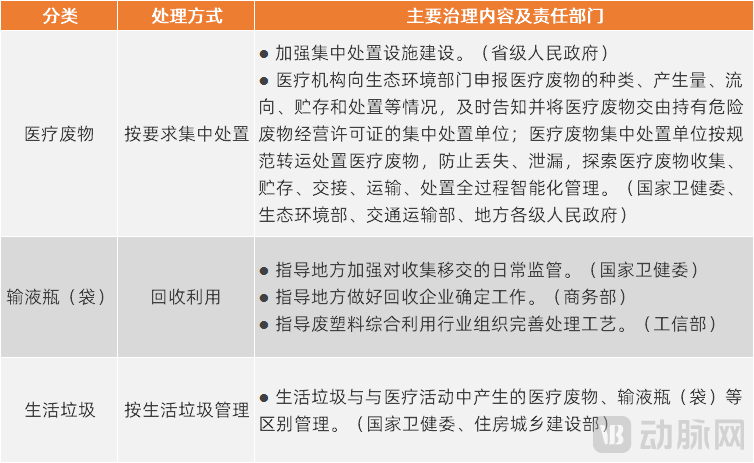
Key Points for the Classified Management of Medical Waste in Healthcare Institutions. Source: Official Website of the National Health Commission; Graphic by VCBeat
In February 2022, in its response to a proposal submitted by a deputy to the National People’s Congress, the National Health Commission stated that, in light of the prominent issues currently existing, the “Work Plan” proposes pragmatic and effective governance measures that emphasize both breaking down outdated practices and establishing new ones, based on comprehensive, multi-departmental policy interventions.Resolve with determination the persistent and long-standing issue of the illicit waste disposal chain in medical institutions, which has remained prohibited yet uncurbed and difficult to address for years.This clearly demonstrates the strong determination of the relevant authorities to combat black-market industrial chains through the formulation of the "Work Plan."
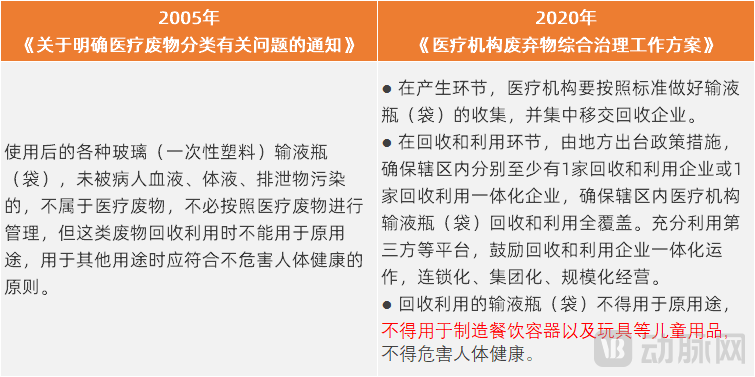
Changes in the Management of Infusion Bottles (Bags), Source: Official Website of the National Health Commission, Graphic by VCBeat
It is worth noting that uncontaminated infusion bottles (bags) are not classified as medical waste and can be recycled, consistent with previous regulations. Medical waste previously involved in illegal black-market supply chains also included mixed-in infusion bags. The Work Plan establishes the principles of “closed-loop management, designated collection and direction, and full-process traceability” for infusion bottles (bags). It not only provides more detailed provisions for the generation, recycling, and utilization stages but also explicitly stipulates that recycled infusion bottles (bags) “shall not be used to manufacture food-contact containers or children’s products such as toys.” In other words, even when recycled through formal channels, they cannot be used to produce the aforementioned products. These changes both demonstrate a response to public concerns and provide relevant enterprises with more comprehensive regulatory guidelines.
In 2021, the new edition of the “Classified Catalogue of Medical Waste” was released. Compared with the 2003 version, it specifies collection methods for five categories of medical waste, including infectious waste and sharps waste. Standardized collection practices are a fundamental prerequisite for preventing the loss or misdirection of medical waste and establishing a comprehensive, end-to-end management system.
In response to the historical shortcomings in medical waste disposal capacity and its uneven regional distribution, the National Development and Reform Commission, the National Health Commission, and the Ministry of Ecology and Environment jointly issued a document in 2020. This initiative allocated RMB 4.5 billion in central government investment to support the construction of 479 projects nationwide. Upon completion, these projects will significantly enhance China’s medical waste disposal capacity.
Overall, the governance of medical waste has established a more binding regulatory framework and secured more adequate financial support at the institutional level.
Medical Waste Management: Preventing waste leakage at the source is particularly critical, necessitating full-process management of waste from generation, classified collection, storage and transportation, to disposal. The application of smart technologies such as the Internet of Things (IoT), artificial intelligence (AI), 5G, and blockchain effectively meets this requirement.
Establish a traceability system to prevent the leakage of medical waste
Since 2020, various regions across China have initiated the construction of medical waste traceability management systems at the provincial, municipal, district, or healthcare institution levels. In addition, an infusion bottle (bag) recycling and traceability system, spearheaded by the Recycling Branch and the Recycled Plastics Branch of the China National Resources Recycling Association, has been launched. This system connects healthcare institutions, recycling enterprises, and regulatory authorities. By leveraging technologies such as the Internet of Things (IoT), big data, and cloud computing, it enables full-lifecycle traceability of infusion bottles (bags)—covering accurate classification and disposal, temporary storage, transportation, and reuse—thereby preventing their diversion to illegal workshops and entry into the food and toy industries.
Accordingly, leading technology companies are also racing to deploy smart management solutions for medical waste.
Yihui Technology is one of the earliest tech companies to apply smart technologies to medical waste management. As early as 2011, Yihui won the bid for the United Nations Environment Programme’s Internet of Things (IoT) medical waste management project. In 2019, Yihui’s Intelligent Supervision System for Medical Waste was implemented in Zhejiang Province, where it established a province-wide medical waste regulatory platform and a healthcare institution supervision system for the Zhejiang Provincial Health Commission. Since then, Yihui Technology has continuously upgraded its management systems and intelligent devices. Leveraging technologies such as wireless networks, mobile computing, and barcode recognition, the company enables real-time monitoring of each medical waste bag, bin, and collection vehicle. This facilitates control over the collection process and retains data for traceability, thereby achieving end-to-end supervision of medical waste.
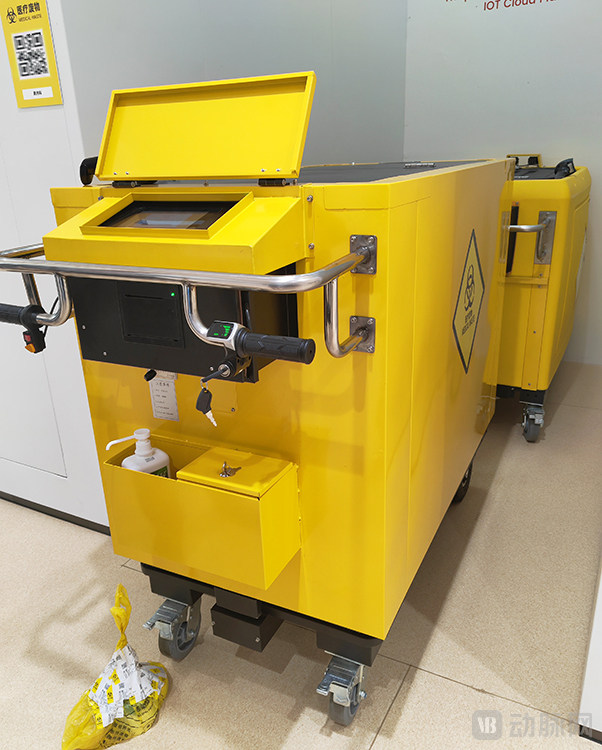
Smart Recycling Vehicles in the Intelligent Medical Waste Supervision System
“Five key elements are essential to achieving end-to-end management of medical waste: time, location, personnel, items, and environment—specifically, when and where what items were generated or handled by whom. Linking these numerous nodes forms a closed-loop management system.” Neusoft Hanfeng, a healthcare IoT service provider, launched its IoT-based regulatory system for medical waste in 2020, one year after its establishment in 2019. Lu Zhaoxia, Chairman and CEO of the company, explained the critical management nodes to VCBeat.
Lu Zhaoxia introduced that electronic tags are used to assign “identities” to medical waste, laying the foundation for full-process traceability; closed intelligent temporary storage containers, transport vehicles, and electronic scales serve as “digital personnel,” enhancing the efficiency of waste handover and transportation while preventing spillage and loss; 5G video surveillance is employed to capture non-compliant operations or behaviors that may pose risks of healthcare-associated infections; and artificial intelligence is applied to monitor and issue early warnings based on medical waste data, including anomalies such as weight discrepancies during handover and transportation, and excessively prolonged retention times of medical waste.
Medical waste management is a typical multi-center application scenario. Healthcare institutions, disposal companies, health commissions, and environmental protection agencies do not operate as absolute central authorities, making it particularly suitable for management through blockchain-based distributed ledger technology. Currently, Neusoft Hanfeng’s related products and services have been deployed in multiple large hospitals, including Shengjing Hospital of China Medical University. These solutions manage in-hospital processes and enable data integration with disposal companies and regulatory authorities.
Anxiang Smart Healthcare’s medical waste management solution also encompasses a full-process monitoring and regulatory platform, a full-process business informatization system, and a full-process behavioral traceability software system. Additionally, it integrates Ping An’s product liability insurance and public liability insurance to address logistical challenges in hospital operations.
From these solutions, it is evident that smart technologies ensure tight integration across all steps of medical waste management, thereby reducing the risk of waste escaping the closed-loop management system. Zhang Min, General Manager of Emerging Businesses at Anxiang Smart Healthcare, noted that medical institutions and relevant regulatory authorities across China are actively piloting intelligent and smart management of medical waste. By leveraging technologies such as the Internet of Things (IoT) and big data, they aim to effectively address issues including inaccurate weighing, non-compliant record-keeping, difficulties in process traceability, and lack of closed-loop workflows during transportation. Through collaborative efforts, the goal is to establish a unified national big data regulatory platform for medical waste, enabling full lifecycle traceability management.
Furthermore, intelligent solutions have been developed for specific procedural steps. In November 2021, an automated robot for sorting medical waste from intravenous (IV) infusions was deployed at Shanghai Tongren Hospital. This robot automatically cuts off the IV needles from the tubing, extracts the tubing from the IV bags, and completes segregated collection (Note: IV bags are recyclable; IV tubing is classified as infectious medical waste; and IV needles are classified as sharps/injury-causing medical waste). Co-developed by the hospital and Shanghai Hongtan Biology, this robot not only enhances recycling efficiency but also eliminates the risk of needlestick injuries associated with manual handling.
Smart Management of Medical Waste Emerges as a Blue Ocean Market
Despite the proactive efforts of regulatory authorities and healthcare institutions, there remains considerable room for the practical application of smart management in the field of medical waste.
“Clinical operations have electronic medical record (EMR) grading systems, and patient services are supported by internet hospitals; however, the level of informatization and data interoperability in medical waste management lags significantly behind these two areas, with smart management only just beginning to take shape,” stated Lu Zhaoxia. She noted that while the most fundamental objective of medical waste management is undoubtedly to ensure “zero incidents,” the long-term goal must be to promote refined hospital management and reduce costs for healthcare institutions.
Medical waste disposal is a cost item for hospitals, with hospitals paying fees to disposal companies. At present, requiring hospitals to invest additional funds in building intelligent management systems has not yet been widely accepted; such initiatives are prioritized below smart healthcare and smart service projects. Technology companies should note that they need to help hospitals reduce labor costs through technical means and meet the practical needs of different medical institutions via diverse service models and pricing structures. Large hospitals, which have robust IT infrastructure and relatively ample funding, can implement more comprehensive hardware and software configurations. In contrast, the numerous primary care institutions with limited budgets are better suited to adopt low-cost solutions such as cloud services and WeChat mini-programs.
Furthermore, medical waste management involves data integration across multiple institutions and departments, and the industry must continue to explore data standardization.
However, the proceeds from the recycling and utilization of infusion bottles (bags) constitute a compliant revenue stream for hospitals; therefore, systematic management of this inflow and outflow is even more necessary.
In March 2021, the General Office of the National Health Commission formulated the "Graded Evaluation Standard System for Smart Hospital Management (Trial)," which incorporated waste management into its evaluation criteria. The evaluation requirements indicate that manual registration and statistical reporting of medical waste are classified as Level 0. Higher-level evaluation standards impose requirements on the use of information systems, electronic records for medical waste handover, historical data analysis, medical waste volume forecasting, and cost data calculation.
Therefore, implementing smart management of medical waste to mitigate risks and prevent its unauthorized release represents only the most fundamental level; the more significant value lies in its integration into the refined management of healthcare institutions. Although the National Health Commission has not yet mandated smart management ratings, such ratings are merely a matter of time, as evidenced by the existing rating systems for electronic medical records and smart services.
In Zhang Min’s view, the post-pandemic era will usher in a new cycle for medical waste management systems. Regions across China will intensify efforts to expand disposal infrastructure, improve medical waste disposal systems, and address gaps in emergency response capabilities. “Against this backdrop, smart management of medical waste will become a key growth driver in the digital transformation of the hazardous waste industry. Niche markets such as government-led smart medical waste management platform development, tracking and traceability equipment, and intelligent operation of medical waste disposal facilities will gradually open up, emerging as new blue-ocean opportunities. Furthermore, public oversight of medical waste disposal projects will be strengthened, and information disclosure for such projects will become routine.”
In the face of a new development cycle, technology companies must continuously innovate to comprehensively meet the requirements of healthcare institutions and regulatory authorities for the smart management of medical waste. “We will also introduce more mature technologies, such as the Internet of Things (IoT), artificial intelligence (AI), 5G communications, and big data analytics, to accelerate the transformation of medical waste management toward intelligent and smart solutions,” said Zhang Min.
During the classified collection, transportation, and temporary storage of medical waste, intelligent solutions play a pivotal role in preventing waste from escaping closed-loop management. In the disposal phase, technologies and equipment are continuously being upgraded to achieve more efficient and cost-effective waste treatment, thereby squeezing the operational space for illicit black-market chains.
Innovative Medical Waste Disposal Technologies to Reduce Disposal Costs
In the stage of medical waste disposal, large-scale facilities in China currently employ both incineration and non-incineration technologies, which have become the predominant methods. In recent years, emerging technologies such as plasma processing, electric arc furnace treatment, magnetized pyrolysis, and liquid alloy treatment have gradually been applied to the disposal of solid medical waste. These methods demonstrate favorable disposal efficiency and effectiveness; however, their practical application is limited by substantial capital investment requirements.
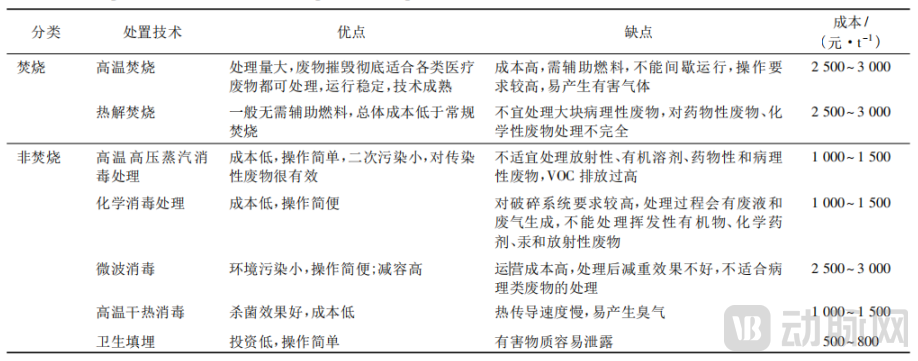
Comparison of Major Disposal Technologies for Medical Waste. Image source: Journal of Ecology and Rural Environment
However, as shown in the figure above, the major treatment technologies each have their own advantages and disadvantages, with significant variations in cost. Since the fee standards for medical waste disposal are government-priced and relatively fixed, medical waste disposal companies must reduce costs to increase profits. Non-compliant, low-cost disposal methods may lead to excessive pollutant emissions; therefore, under the premise of regulatory compliance, it is particularly critical to develop new technologies with lower costs.
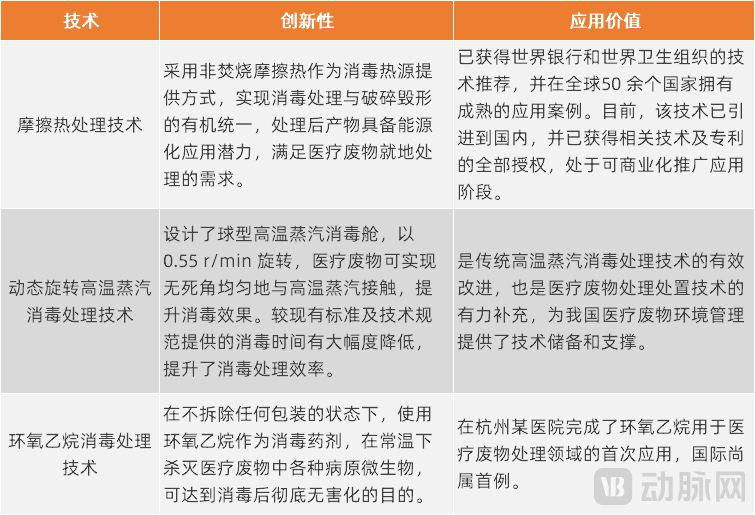
Innovative Technologies Explored in the Medical Waste Disposal Industry Over the Past Two Years. Source: Journal of Environmental Engineering, Environmental Science and Protection. Compiled and charted by VCBeat.
Over the past two years, the industry has continued to explore improvements to traditional technologies and the development of new ones, aiming to enhance treatment efficiency, reduce secondary pollution and remediation costs, and utilize energy generated during the treatment process.
For example, the frictional heat treatment technology outlined in the figure above achieves an organic integration of disinfection and size reduction/deformation, meeting the need for on-site medical waste disposal. The final product is stable in nature and has a high calorific value, offering potential for energy recovery applications. Dynamic rotary high-temperature steam disinfection technology represents an improvement over traditional methods; by redesigning square or rectangular sterilization chambers into spherical ones capable of dynamic rotation, it enhances both disinfection efficacy and medical waste disposal efficiency. Ethylene oxide disinfection technology can kill various pathogenic microorganisms in medical waste at ambient temperature without removing any packaging, with a processing cost of 312.31 yuan per ton of medical waste, resulting in relatively low overall costs.
Among the aforementioned technologies, friction heat treatment technology was introduced in December 2021 through a collaboration between Cellix (Shanghai) Medical Technology Co., Ltd. and Italy’s OMPECO, and has already reached the commercialization stage.
Although some new technologies are still in the improvement and validation stages, technological innovation will undoubtedly demonstrate significant potential in driving industry development.
Broad Prospects for the Application of Miniaturized and Mobile Devices
Large-scale facilities require long construction periods, substantial capital investment, and offer limited flexibility, making them suitable for the centralized treatment of large volumes of medical waste with stable output within a specific region. In contrast, compact and mobile disposal equipment has demonstrated significant advantages over the past two years.
During the pandemic, the aerospace mobile medical waste disposal cabins developed by Hangtian Shenhe (Beijing) Environmental Protection Co., Ltd. were deployed at Wuhan Leishenshan Hospital, Yichang Central People’s Hospital, and the Jiangnan Campus of Union Hospital, providing a critical supplement to emergency medical waste disposal capabilities. Subsequently, Inner Mongolia utilized mobile emergency medical waste disposal equipment from Shandong Xinhua Medical Environmental Protection Equipment Co., Ltd. for its pandemic response efforts.
Furthermore, China has a total of 35,800 township health centers and 608,800 village clinics. Many primary healthcare institutions are widely distributed and generate small volumes of medical waste, making timely transportation in compliance with regulations costly. Therefore, on-site disposal or pretreatment using compact mobile equipment is well-suited for these settings.
Miniaturized and mobile disposal equipment can better meet the resource allocation needs during events such as epidemics and natural disasters, while also extending coverage to primary healthcare institutions in remote areas, thereby promoting compliant medical waste disposal. Therefore, miniaturization and mobility will become key directions for innovation in disposal equipment.
Clearly, in the post-pandemic era, the medical waste management system has entered a new cycle of transformation, characterized by technology-enabled management processes, strengthened emergency response capabilities, and accelerated iteration of disposal technologies. Although medical waste governance appears more “marginal” compared to clinical operations and patient services, it is crucial not only for the normal functioning of healthcare institutions and the broader healthcare system but also for ecological environmental protection. Strictly speaking, standardized and even refined management of medical waste affects an even wider population. For industries related to medical waste, improvements in governance capabilities have redirected medical waste that previously flowed into illegal channels back onto the “right track,” thereby continuously expanding the market size. Healthcare institutions, disposal enterprises, and technology companies will all benefit from this trend.
References:
Outlook Weekly, May 2019: The Black Market Chain for Medical Waste Persists Despite Long-Standing Bans
Yu Xiaodong, Cao Yunxiao, Li Hui, et al. Research on High-Temperature Steam Disinfection Technology for Medical Waste Based on Dynamic Rotation[J]. Environmental Protection Science, 2021, 47(3): 30−33
Cao Yunxiao, Chen Weixing, Yu Xiaodong, et al. Application of Environmental Technology Verification in the Field of Medical Waste Disinfection and Treatment: A Case Study of Frictional Heat Treatment Technology[J]. Chinese Journal of Environmental Engineering, 2021, 15(9): 2985-2995
Feng Qinzhong, Chen Yang, Liu Liyuan, et al. Validation and Evaluation Study on Ethylene Oxide Disinfection Technology for Medical Waste: A Case Study of a Centralized Medical Waste Disposal Center in Hangzhou[J]. Environmental Protection Science, 2021, 47(3): 34−40
Zhang Shengtian, Li Mei, Li Qun, et al. Analysis of the Current Status of Medical Waste Management and Disposal at Home and Abroad and Countermeasure Suggestions [J]. Journal of Ecology and Rural Environment, 2020, 36(12): 1505-1513