Stryker Acquires Amplitude Vascular Systems to Expand Peripheral Vascular Portfolio with Next-Gen IVL Technology

Stryker
Medical Device R&D, Production, and Sales Company
AVS
Developer of Calcified Artery Disease Treatment Devices

Inari Medical
Cardiovascular Disease Treatment Device Developer

Source: Instrument Family
On April 13, Stryker announced that it had signed a definitive agreement to acquire Amplitude Vascular Systems (referred to as "AVS"), an innovative medical technology company focused on the treatment of calcific arterial disease.
It is reported that the purpose of Stryker's acquisition this time is to incorporate AVS's next-generation intravascular lithotripsy (IVL) technology into its peripheral vascular business segment, further consolidating its market position in the field of arterial disease treatment.
Notably, this transaction comes just a year after Stryker's $4.9 billion acquisition of peripheral intervention company Inari Medical, marking an acceleration in its vascular intervention sector. The high-growth IVL technology track is becoming the core battleground for industry giants.
As one of the top five global medical device companies, Stryker's recent acquisition is no coincidence. Facing procurement pressures in its orthopedic core business and a slowing market growth, the company has accelerated its transition to high-potential innovative fields in recent years. In 2024 alone, it completed seven acquisitions with a total investment exceeding $1.6 billion. The 2025 acquisition of Inari Medical marks a significant move as the company makes its first major entry into the peripheral intervention market.
Stryker Chairman and CEO Kevin Lobo clearly stated in the acquisition announcement: "This transaction is a key step in building a comprehensive peripheral vascular diagnosis and treatment platform, which will fill a significant unmet clinical need."
Industry analysis believes that, with the continuous expansion of the patient base with peripheral vascular diseases and the irreplaceability of IVL technology in the treatment of complex calcified lesions, Stryker's acquisition of AVS not only allows it to quickly obtain the next generation of IVL technology but also creates synergy with its existing peripheral vascular products, further consolidating its market position in the field of arterial disease treatment.
Data shows that AVS, established in 2017, is an innovative medical device company focused on the treatment of severe calcified arterial diseases. Despite its relatively short history, AVS has drawn significant industry attention due to its groundbreaking innovations in IVL technology. As of January 2025, the company had completed multiple rounds of financing, with investors including prominent institutions such as Michigan Biomedical Venture Fund and Cue Growth Partners. Its valuation experienced rapid growth over just a few years, ultimately earning it a place among the "Top Private Medical Technology Companies to Watch in 2026."
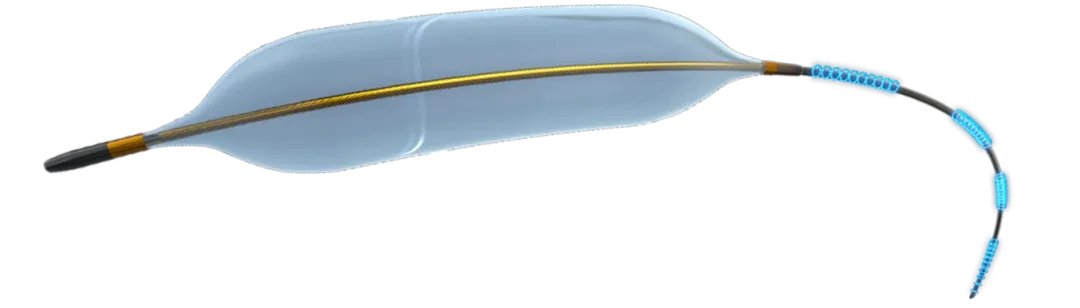
Image source: AVS official website
The core competitiveness of AVS stems from its self-developed Pulse Intravascular Lithotripsy System (Pulse IVL System), a product specifically designed for patients with moderate to severe calcified peripheral artery disease. Its technical principles differ significantly from traditional IVL products.
Unlike traditional technologies that rely on hydraulic or laser-generated energy waves, AVS innovatively adopts CO₂ pulse pressure wave technology. Through a specially designed balloon catheter, it delivers uniform and controllable pressure waves to vascular calcified plaques, achieving precise lithotripsy while minimizing damage to the vascular endothelium. More importantly, the system eliminates the electrical emitter found in traditional IVL devices and adopts a low-profile flexible catheter design, which not only enhances deliverability in tortuous lesion vessels but also shortens treatment time and improves procedural efficiency, perfectly meeting the clinical core requirements for safe, efficient, and minimally invasive treatment of complex calcified lesions.
Clinical data show that in the POWER PAD II pivotal clinical trial in the United States, the first 95 patients with moderate to severe calcified lesions received treatment with the Pulse IVL system. The results showed that 94 patients had a postoperative residual stenosis rate of less than 50%, and the incidence of major adverse events within 30 days was only 1%, significantly better than traditional treatments such as rotational atherectomy and high-pressure balloon dilation.
Based on this positive result, AVS plans to submit a 510(k) application to the U.S. FDA for market approval in 2026. Stryker's acquisition will undoubtedly provide strong support for the product’s regulatory progress, capacity expansion, and global commercialization. From a technological perspective, AVS’s Pulse IVL System focuses on peripheral artery disease, complementing Stryker’s existing neurovascular and peripheral venous intervention products. This is expected to build a comprehensive diagnostic and therapeutic solution covering all scenarios of vascular diseases.
In fact, Stryker's acquisition of AVS is essentially a strategic bet on the high growth potential of the IVL market. As an innovative technology in the field of cardiovascular intervention, IVL has become one of the core technologies for treating calcified peripheral and coronary artery lesions by targeting and breaking up vascular calcified plaques, addressing clinical pain points that traditional treatment methods have struggled to overcome.
According to the iData Research report, the global IVL market is expected to achieve a compound annual growth rate of 9.3% from 2020 to 2030, while the growth rate of the coronary IVL segment is expected to reach 5.5%. By 2033, the global coronary IVL market size will exceed $610 million. As a high-growth细分赛道 in the peripheral intervention field, IVL technology is becoming the core driving force for market expansion.
The explosive growth of the market has triggered a "land grab" among global medical device giants, with mergers and acquisitions becoming the main means for companies to quickly enter the赛道 and seize technological high ground.
In 2024, Johnson & Johnson acquired Shockwave Medical for $13.1 billion, setting a new record for medical device industry mergers and acquisitions that year. As a pioneer in the IVL field, Shockwave's products hold over 70% of the market share, with projected sales exceeding $900 million in 2024, demonstrating the commercial potential of IVL technology.
In 2025, Boston Scientific acquired Bolt Medical for $443 million, gaining its dual-energy IVL platform based on acoustic and laser technologies, further enriching its product pipeline. Additionally, Abbott is also accelerating its presence in the IVL market; meanwhile, FastWave Medical, a medtech company in 2025, is focusing on laser IVL technology, creating a differentiated competitive landscape.
——
Obviously, the current competition in the IVL market has shown characteristics of diversified technical paths and centralized market players. For Stryker, by integrating AVS's hydraulic pulse IVL technology, it will open up a third competitive track outside the two major technical routes of acoustic pressure waves and lasers, especially forming a technical barrier in the field of peripheral arterial disease. At the same time, with the global channel advantages of Stryker, AVS’s products are expected to quickly enter the European, American, and Asia-Pacific markets, directly competing with Johnson & Johnson and Boston Scientific.
Industry analysis believes that, with the continued investment by major players, competition in the IVL market will shift from technology research and development to a comprehensive strength contest encompassing technology, channels, and clinical evidence. Meanwhile, mergers and acquisitions will remain the main theme of the market in the coming years.
Whether the combination of Stryker and AVS can rewrite the competitive landscape of the IVL market remains to be tested over time. However, it is certain that with the continuous advancement of technology and the ongoing expansion of the market, IVL technology will bring good news to more patients with calcific arterial disease. The innovation and integration within the medical device industry will also drive the global healthcare sector toward higher quality development. We will continue to monitor this closely.
This article is a reprint, and all opinions belong to the original author.Platform, Medical DeviceMedical Device ManufacturerIndustryThe comment remains neutral on all viewpoints in the article and is intended solely for sharing and exchange.
*Advertisement
If you find the content rewarding, welcomeStarred、Like、Forward!
Your support is our greatest motivation