

Alibaba Health Deepens Grassroots Healthcare: Digital Technologies Power Cloud Hospitals, Cloud Pharmacies, and Cloud Services
At this year’s Two Sessions, the Government Work Report outlined new development plans: extending high-quality medical resources to cities and counties, enhancing primary-level capabilities in disease prevention and treatment, and enabling the public to access better healthcare services closer to home.
Concise and to the point, with only 38 characters, the objective and direction are very clear.
First, county- and city-level regions will gain access to a substantial amount of high-quality medical resources in the future.
Second, the diagnostic and preventive capabilities at the primary care level must be significantly improved.
Given the long-standing uneven distribution of medical resources and the relatively lagging capacity of primary healthcare services in townships and rural areas, how can we achieve the established goal of transferring high-quality medical resources from eastern coastal cities and economically developed large and medium-sized cities to the western regions, where healthcare capabilities are currently weaker?
As digital technology permeates the healthcare sector at every level, the rise of internet-based healthcare has created greater possibilities for rapidly empowering primary care. A top-down technological revolution has enabled primary healthcare institutions to ride the wave of the digital era.
It is understood that, catalyzed by the pandemic, internet healthcare has developed rapidly. Data shows that the number of internet hospitals in China has grown from over 100 in 2018 to more than 1,700 currently. Against the backdrop of the rapid integration and application of digital technologies, internet healthcare has become an important pathway for extending high-quality medical resources to grassroots levels.
Zhu Shunyan, Chairman and CEO of Alibaba Health, stated that the most prominent pain points in healthcare access for residents below the county level are threefold: a large population base, uneven distribution of medical resources, and inadequate digital infrastructure.
County-level populations account for more than half of China’s total, exceeding 700 million people, yet county-level physicians constitute only one-third of the nation’s total physician workforce. The pandemic has further exacerbated this imbalance, placing immense pressure on grassroots public health systems and rendering the workload in primary care settings extraordinarily burdensome.
The introduction of internet technology can break through geographical barriers, improve the current imbalance in medical resources in China, enhance the efficiency of primary healthcare services, and alleviate the practical pressures faced by grassroots doctors, thereby further addressing the difficulties and high costs of accessing medical care for residents at the county, township, and village levels.
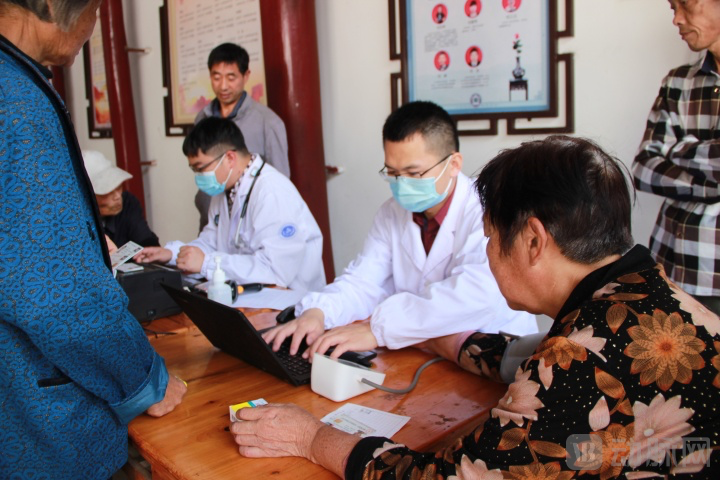
Take the case of Mr. Wu, a 70-year-old patient from Longhui County, Hunan Province. He lives in a remote mountainous area more than 100 kilometers away from the county seat. Suffering from chronic diseases for a long time, he failed to return to the county hospital for timely follow-up visits due to the distance, which resulted in persistent health complications. Consequently, he has had to rely on imported medications, available only in the provincial capital, to manage his condition.
This is a practical dilemma that many rural patients like Old Wu must face. It was not until this year’s Spring Festival, when his daughter taught him how to conduct online follow-up consultations and purchase medications, that the issue was finally resolved. With an electronic prescription issued by his physician, Old Wu was able to obtain life-saving medication unavailable at the county hospital.
Internet technology has brought the convenience of accessing medical care at their doorstep to rural residents, while also delivering tangible value to grassroots healthcare service capacity.
Leveraging internet technology can address the challenges of difficult access to medical care and medications. Similarly, for primary healthcare providers engaged in long-term chronic disease management, the integration of internet-based healthcare can connect county, township, and village health management networks, link the entire medical consortium, and achieve precise management of patients with chronic diseases.
In November 2020, with technical support from Alibaba Health and Xiniu Medical, Tiantai County People’s Hospital in Zhejiang Province launched the nation’s first county-level “Cloud-based Medical Consortium.” Covering 120 medical institutions across the county, it achieved integrated management of medical resources at the county, township, and village levels, delivering high-quality healthcare services directly to grassroots communities.
One year after launch, the county-level consultation rate increased by 5.3%, the coverage rate of family doctor contract services rose significantly, and the control compliance rate for chronic diseases such as hypertension and diabetes improved by 20.2%.
In this process, the Ali Health platform serves as a bridge connecting patients and physicians while enhancing the efficiency of medical resource allocation: doctors from tertiary hospitals in first- and second-tier cities initiate “cloud consultations,” providing follow-up care services through internet hospitals. This enables chronic disease patients in remote areas to address the “last mile” of chronic disease management without leaving their homes.
The Internet connects doctors and patients, transcending temporal and spatial constraints to facilitate the flow of high-quality medical resources. As physicians’ service radius continues to expand, an increasing number of patients in primary care settings can also access advanced medical resources via the Internet.
Zhu Shunyan further stated, “The value of internet healthcare can be vividly summarized as the ‘Three Clouds’: Cloud Hospitals, Cloud Pharmacies, and Cloud Services, which help address the pain points in primary healthcare.”
Cloud hospitals offer comprehensive medical services, including intelligent triage, remote consultations, medication guidance, and health education, enabling grassroots patients to “manage their health with a single smartphone” while also helping physicians efficiently manage and serve their patients.
Cloud Pharmacy enables residents in remote areas to conveniently purchase medications and home medical devices online. Meanwhile, by leveraging technologies such as AI for safe medication use, traceability codes, and smart logistics, it ensures that the public can “buy the right medications” and “buy high-quality medications,” including appropriate drugs unavailable in local county towns.
Cloud services have migrated a range of out-of-hospital offerings, such as chronic disease management, to the cloud, significantly enriching users’ health solutions.
Last year, during the Double Ninth Festival, Taobao launched the “Scan Medicine Bottles to Buy” feature. By activating the “Taobao Scan” function on a smartphone and pointing the camera at the medication packaging, users can achieve relatively accurate drug identification and be directed to the corresponding product page. In fact, many elderly individuals suffer from chronic diseases, and the Chinese generic names of numerous medications are often lengthy or contain uncommon characters, creating barriers for older adults when searching for and purchasing medicines. The “Scan Medicine Bottles to Buy” feature leverages digital technology to provide convenience for elderly patients with chronic conditions.
The “Statistical Report on the Development of China’s Internet” shows that as of December 2021, the number of online healthcare users reached 298 million, a year-on-year increase of 38.7%, making it the application category with the fastest growth in user base. At Ali Health, annual online consultation services exceeded 100 million visits, with more than half of the patients coming from grassroots areas.
Internet-based medical services are a public welfare initiative that enables patients to access top-tier medical expertise both within and outside their county without leaving home, and they also represent a key direction for the future development of primary care hospitals.
In terms of resource decentralization, internet-based diagnosis and treatment systems can also provide consultation support to township health centers and other medical institutions, thereby enhancing primary care capabilities. Regarding patient experience, improvements in service processes and quality have led to greater public acceptance of this new model of care, fostering increased trust and willingness to seek and remain within primary care settings for medical consultations.
In recent years, the rapid development of technologies such as cloud computing, AI, and 5G has fostered a wealth of innovative practices in healthcare services. Taking medical AI as an example, various intelligent algorithms can help enhance services related to medical care, pharmaceuticals, and chronic disease management. Primary healthcare represents one of the most impactful and efficient application scenarios for digital technology.
From Zhu Shunyan’s perspective, the most fundamental and urgently needed application of digital technology in the healthcare sector is the construction of a medical knowledge graph. This is also a key challenge that Alibaba Health is striving to overcome.
Medical knowledge graphs serve as a foundational technology for healthcare AI and underpin the “Three Clouds” (Cloud Hospital, Cloud Pharmacy, and Cloud Services). By leveraging dynamic data mining, association, reasoning, and integration, along with the establishment of unified professional terminologies and coding standards, they enable the creation of standardized, high-efficiency, and highly intelligent medical knowledge bases. This, in turn, enhances the quality of online diagnosis and treatment, pharmaceutical supply, chronic disease management, and medical science popularization.
As technology continues to evolve, an increasing number of telemedicine services are becoming more accessible. Discussing the future of the industry, Zhu Shunyan stated that his most anticipated scenario is the deployment of medical-grade devices and applications in home settings, providing users with medical-grade solutions suitable for home care while alleviating pressure on hospitals.
“The state has consistently provided strong support for the rapid development of the internet healthcare industry on a standardized basis. Since the outbreak of the pandemic, public health awareness has significantly increased, and people have become more accustomed to online medical and health services. It is fair to say that we are currently in a golden era for industry development,” said Zhu Shunyan. He added that it is both exciting and truly socially valuable to see people’s medical and health experiences take on a completely new look through industry collaboration and technological iteration.
At that time, the internet-driven development of primary healthcare will enter a brand-new track, and the comprehensive strength of primary healthcare institutions will also achieve leapfrog improvements.