

Pioneer of Serum-Free Cell Culture Media in China, Dr. Shun Luo: The Biopharma Industry Is at a Critical Juncture of Scaling Up
Not all talent needs to engage in new drug development; finding the right positioning within this complex and vast pharmaceutical ecosystem can also accelerate the process of new drug R&D and industrialization. For instance, cell culture media, a critical material in the biopharmaceutical manufacturing process, can provide high-efficiency, scalable industrial value for drugs after their successful development and market launch.
In this issue’s upstream tools feature, VCBeat New Medicine invites Dr. Luo Shun, Chairman and President of AOSCON Biotechnology and Gansu Jianshun Biosciences. With over 30 years of experience in biopharmaceutical research, Dr. Luo engages in a discussion with VCBeat New Medicine to explore a clear model for the overseas development of cell culture media, aiming to provide inspiration for the industry’s growth in China.
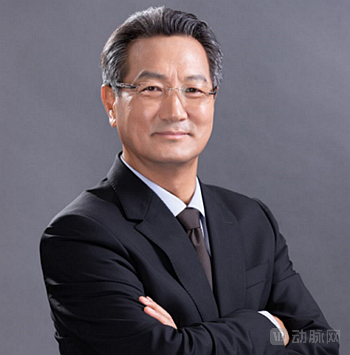
Profile: Luo Shun has been engaged in biopharmaceutical research for over 30 years. He has conducted research at several world-renowned biotechnology companies, including Serono (Switzerland/USA), the former JRH Biosciences/SAFC Bio (acquired by Sigma), Genentech (USA), and Amgen (USA).
LuoDr. Shun previously oversaw R&D and production at JRH, a leading industrial-scale serum-free cell culture media company. He built the independent R&D and production departments from the ground up, with his R&D and customization technologies gaining recognition from mainstream customers in Europe and the United States. His efforts helped drive the company’s sales from $40 million to $162 million and facilitated its successful acquisition by Sigma. He also worked at Genentech.Three YearsDuring this period, Dr. Luo Shun established a development and optimization platform for automated, high-throughput manufacturing processes of recombinant proteins (including antibodies). While at Amgen, the Cell Culture Media Process Technology Development Department led by Dr. Luo was renowned for achieving the industry’s highest therapeutic protein titer of 11 g/L.
Dr. Luo Shun founded Gansu Jianshun Biosciences Co., Ltd. in 2011, leading the company to become a pioneer in the industrialization of domestically produced serum-free culture media and breaking the decades-long monopoly held by three major Western corporations.
VBInsight: You returned to China in 2011 to start your business. At that time, there were very few domestic cell culture media companies, and innovative technologies within the industry were virtually nonexistent. What inspired you to take on such a daunting challenge with such solitary courage?
Dr. Shun Luo:At that time, returning to China to start a business indeed encountered many difficulties.
First, as a highly specialized and advanced field, the domestic biomedical industry was still in its nascent stages at the time, making the scarcity of talent an urgent issue we needed to address. By adopting industry-academia-research collaboration models, such as university-enterprise partnerships, we passed on decades of overseas industry experience through hands-on mentorship to young professionals in China, cultivating a new generation of teams for cell culture process development and gradually resolving this challenge.
The second challenge lies in quality regulation within the biopharmaceutical industry, which is an incremental process requiring sustained collaboration across the sector. To date, the cell culture media industry still lacks a comprehensive quality regulatory framework. Currently, domestic companies demonstrate the robustness of their quality systems through Drug Master File (DMF) filings, Good Manufacturing Practice (GMP) management system certification, ISO certification, medical device certification, and quality audits. Gansu Jianshun Biosciences Co., Ltd. has established complete credentials in all these areas and remains committed to continuous improvement. The company obtained ISO certification in 2013, registered and filed for Class I medical device production in 2015, and completed its DMF filing in 2020, marking steady progress.
Then there is the issue of shifting mindsets. A decade ago, China’s biopharmaceutical industry was still in its early stages, and cell culture media, as an upstream raw material sector, received little attention. At that time, people had not yet realized that the future boom of China’s biopharmaceutical industry would be inseparable from the support of related industries.
Although there are many difficulties, entrepreneurship itself requires courage.
Compared with the relatively mature biopharmaceutical system in the United States, China, as a developing country and the world’s second-largest economy, will see more new opportunities emerge with industry development. Most importantly, when considering various risk factors, cell culture media have a shorter commercialization cycle than biopharmaceuticals, and they are an essential requirement for the industrialization of biomedicine.Therefore, I chose to first establish a presence in the cell culture media sector, striving for excellence in this niche area to lay an industrialization foundation for our broader biopharmaceutical strategy.
VCBeat New Medicine: The biopharmaceutical industry and its related sectors are largely concentrated in the Yangtze River Delta region. When you returned to China to launch your startup in the cell culture media sector, you were essentially starting from scratch. Why did you still choose cities such as Lanzhou and Haimen, where the biopharmaceutical industry is relatively less “hot”?
Dr. Luo Shun:Choosing Lanzhou was actually a matter of serendipity. It was only after I arrived in Lanzhou in 2011 that I discovered its natural conditions—such as air quality, temperature, and humidity—were particularly well-suited for the production of powdered culture media. This “geographic advantage” enabled Gansu Jianshun Biosciences Co., Ltd. to achieve rapid development over the decade following the establishment of its manufacturing facility in Lanzhou, making it the largest company in China with industrial-scale production capacity for serum-free cell culture media.
Certainly. As the Group’s industrial footprint expanded from the culture media sector to the biopharmaceutical CDMO sector, our site selection naturally gravitated toward the Yangtze River Delta region. In 2017, we chose to establish our presence in Haimen, Nantong. As a high-growth hub in Jiangsu Province, Nantong’s biopharmaceutical industry is advancing at a remarkable pace. Moreover, Nantong boasts a strategic location; just beyond Chongming Island lies Shanghai, where we have also established operations in the Lingang area. Looking ahead, we will further consolidate our base in China while extending our reach globally.
Culture media products should be developed from an industrialization perspective,
Ensure Stable Supply Under the Premise of Safeguarding the “Three Key Points”
VBInsight: What do you see as the similarities and differences between the current state of global commercialization of cell culture media and that in China?
Dr. Luo Shun:The global biopharmaceutical industry is undoubtedly moving in the same direction. Although China’s biopharmaceutical and related industries started later than those abroad, we can build upon established international foundations to rapidly develop products with higher efficiency and lower costs. Currently, a large number of domestic biopharmaceutical companies are transitioning from Biotech to Biopharma. During this transformation, an increasing number of enterprises are gradually recognizing the importance of cell culture media as a critical raw material in biopharmaceutical manufacturing.
The stage of development currently being experienced by China’s cell culture media industry mirrors what I witnessed in the overseas market decades ago; however, many enterprises have yet to grasp the more fundamental principles at play. Most cell culture media companies view their products primarily through a technical lens, whereas in reality, cell culture media constitute the foundation for the industrialization of biopharmaceuticals. Therefore, we should approach the development of cell culture media products from an industrialization perspective.
Gansu Jianshun Biosciences Co., Ltd. was the first to recognize this essential nature. Leveraging my several years of prior experience in the overseas cell culture media industry, Jianshun became a pioneer of serum-free culture media in China, breaking the complete monopoly held by the three major European and American giants in the domestic serum-free culture media market for decades. In 2017, Jianshun became the enterprise with the largest market share in the domestic culture media industry, a position it has maintained ever since. According to Frost & Sullivan analysis, Jianshun accounted for over 7% of the total Chinese culture media market share in 2020.
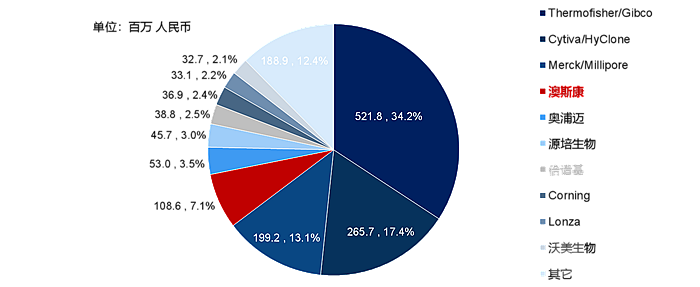
Competitive Landscape of China's Cell Culture Media Market in 2020, Source: Frost & Sullivan
Note: Market share breakdown is calculated based on the sales revenue of major manufacturers in 2020.
Based on the estimated 2021 global cell culture media market size of USD 5–6 billion, China’s market accounted for approximately RMB 3 billion. Leveraging cell culture media as a key raw material, we continue to expand our footprint in the biopharmaceutical sector. In 2017, we established Auscan Biologics, a biologics CDMO company, dedicated to assisting biopharmaceutical enterprises in developing manufacturing processes and achieving commercial-scale production. By providing comprehensive CMC services, we empower our clients to accelerate their scale-up and industrialization.
VBInsight: What is the current landscape of the cell culture media market?
Dr. Shun Luo:Currently, the global cell culture media market is dominated by three major players—Thermo Fisher Scientific (brand: Gibco), Merck (brand: Sigma), and Cytiva (brand: Hyclone)—which collectively account for nearly 90% of the market. Gibco primarily serves the research and development sector, while Sigma holds approximately 85% of the global industrial cell culture media market.
In terms of market segmentation, the current cell culture media market is primarily divided into the industrial market and the research market. The key difference between these two segments lies in their customer base: the industrial market serves pharmaceutical companies. In China, there are approximately 50 large-scale biopharmaceutical enterprises, many of which incur annual expenditures on cell culture media exceeding tens of millions or even hundreds of millions of RMB. In the industrial sector, pharmaceutical companies prioritize quality, scale, and price. Under the premise of ensuring these three factors, cell culture media manufacturers must also guarantee a stable production supply.
The R&D market resembles a retail model. With tens of thousands of laboratories across China, most have an annual demand for culture media of less than 1,000 liters. The key to success in this market lies in achieving profitability despite small-scale supply volumes. In this regard, Gansu Jianshun Biosciences Co., Ltd. has begun to make breakthroughs in the culture media R&D market through collaborations with prestigious universities and research institutions such as Peking University.
Equivalent to the United States in 2002,
China’s Biopharmaceutical and Related Industries Reach a Breakthrough in Commercialization
VCBeat New Medicine: How do you view the industrialization process of cell culture media in China?
Dr. Luo Shun:In terms of technological capability, China’s R&D and production standards for cell culture media, as well as its production scale, are on par with those in Europe and the United States. However, in terms of development timeline, the current stage of China’s cell culture media industry is comparable to that of the U.S. industry in 2002.In 2002, the U.S. biopharmaceutical industry reached a critical threshold for scaled industrialization; China is currently undergoing this same pivotal transition.
VBInsight: Can China Accelerate the Localization of Cell Culture Media by Drawing on the Mature Market Scale in Europe and the United States?
Dr. Luo Shun:By examining the evolution of the cell culture media industry in Europe and the United States over the past three decades alongside the growth of the biopharmaceutical sector, we can identify a series of patterns spanning from early-stage development to industrial-scale production. These insights, once refined, can be adapted and applied to the development of China’s cell culture media industry. Ultimately, as the most critical raw material for the industrialization of biopharmaceuticals, cell culture media must undergo comprehensive, multi-dimensional advancement encompassing quality, scalability, and supply chain security.
VBInsight: Does replicating mature overseas industry practices in China suggest that domestic cell culture media entrepreneurs should ideally possess corresponding international experience in the industrialization of culture media, as you do?
Dr. Luo Shun:Not necessarily. Today’s young Chinese professionals are highly accomplished. Over the past decade, Gansu Jianshun Biosciences Co., Ltd. has established a strong presence in China, providing domestic startups with a comprehensive, end-to-end model for developing cell culture media businesses—from inception to commercialization—enabling them to rapidly learn and apply these insights to their own growth.
The industry’s development is irreversible. I entered the European and American pharmaceutical industries in the 1990s for academic reasons, at a time when Chinese professionals were rarely seen in these sectors. Among industry insiders in Europe and America, China was perceived as having virtually no systematic pharmaceutical industry.
In 2004, biopharmaceutical giant Genentech developed bevacizumab for the treatment of colorectal cancer, leading to a growing recognition that cancer is not necessarily incurable. With continuously emerging biomedical therapies, many cancer patients can now achieve long-term survival.
In 2011, to ensure the smooth launch and implementation of the special tasks under the 12th Five-Year Plan and to further clarify China’s strategy for new drug development, China began to intensify its efforts in building a robust talent pool. An increasing number of scientists and entrepreneurs working overseas chose to return to China to help build the country’s biopharmaceutical industry.
The cell culture media industry in Europe and the United States has already reached a mature stage. Even if one secures employment with foreign cell culture media companies, it is no longer possible to seize the opportunities for parallel growth with the industry that were available in the 1980s and 1990s.
On the other hand, an increasing number of industry professionals now recognize that mature overseas development systems tend to confine practitioners to routine work and career progression. In contrast, China’s biopharmaceutical industry, currently at a critical juncture of development, presents significant industry opportunities and robust demand for talent.
VBInsight: In China, where the biopharmaceutical industry and its supporting sectors are experiencing rapid growth, what do you consider to be the key factors in the localization of the cell culture media industry?
Dr. Luo Shun:The key lies in achieving industrial-scale production while ensuring quality. Of course, in the face of the rapidly evolving industry landscape, enterprises must also possess sustained R&D capabilities. Success depends not merely on one or two formulations, but on holistic system management and continuous personalized development capabilities.
China's "Main Battlefield" for Cell Culture Media:
Vaccine Market Dominates, Protein Market Holds Huge Potential
VCBeat New Medicine: Compared with human and veterinary vaccines, are culture media used for the production of antibody drugs, gene therapy drugs, and cell therapy drugs characterized by higher technical difficulty, more complex manufacturing processes, and higher prices?
Dr. Shun Luo:This is a fallacy. Cell culture media formulations generally consist of amino acids, vitamins, inorganic salts, and trace elements. The variations in formulations are designed to provide different cell types with optimal nutrient pathways and metabolic regulation, thereby enabling cells to achieve the best possible growth and expression profiles. While the specific formulation of culture media may vary depending on the cell type—whether CHO cells, human cells, or other cell lines used for animal vaccine production—there is no causal relationship between these formulation differences and the research, development, or manufacturing processes.
Although the cell and gene therapy sector is currently experiencing significant hype, cell and gene therapies will not become mainstream in the therapeutic industry in the short term, whether viewed from the perspectives of drug development and production cycles, current treatment prices, or the number of approved products. Consequently, the volume of culture media required for these therapies will not constitute the mainstream segment of the culture media industry.
Prior to 2018, few domestically produced antibody and protein-based biologics manufactured in mammalian cell systems were marketed in China. During this period, the domestic cell culture media market was predominantly focused on the vaccine sector, which accounted for over 90% of the market share. To achieve success, companies must compete in the “main battlefield”; this explains why many domestic cell culture media enterprises failed to achieve rapid business growth.
While targeting the “main battlefield,” Gansu Jianshun Biosciences Co., Ltd. has also recognized the development trends and market potential of future antibody drugs, gene therapies, and cell therapies. Accordingly, the company is simultaneously advancing R&D in culture media for these applications and has established in-depth collaborations with leading domestic enterprises such as Hengrui Medicine, Qilu Pharmaceutical, Innovent Biologics, and BeiGene.
Increase the production efficiency of COVID-19 vaccine products by 17 times:
Cell Culture Processes Are a Key Competitive Advantage
VCBeat New Medicine: The technical barriers of cell culture media are not significantly related to the types of cell culture media. So, in which specific aspects are the corresponding core technologies reflected?
Dr. Luo Shun:Suitable culture media can support cells in achieving maximum metabolic efficiency, thereby increasing cell density and yield. The cell culture processes involved, such as perfusion culture, represent one of the core technologies. Perfusion culture offers advantages including high cell density, adequate nutrient supply, reduced accumulation of metabolic waste, extended culture duration, high productivity, timely product recovery, and high protein activity. During perfusion culture, the cell culture medium also directly affects the perfusion rate, impacting both production stability and downstream purification processes.
According to data from Gansu Jianshun Biosciences Co., Ltd.'s previous perfusion process-related projects, optimization of the perfusion process enables CHO cell cultures to achieve cell densities exceeding 85×10⁶ cells/mL.6cells/mL; using perfusion culture for a certain adenovirus, the viral titer increased by 10–20 fold compared with the original batch culture process.
Currently, multiple projects under Jianshun’s perfusion technology platform have successfully completed dual filings in China and the United States, with two products having entered the marketing stage. In terms of customer collaboration, we leveraged our perfusion process platform to help clients increase the production efficiency of their COVID-19 vaccine products by 17-fold.
VCBeat New Medicine: Finally, as a veteran in the cell culture media industry, please share some words of encouragement for newcomers to the culture media or biopharmaceutical sectors.
Dr. Luo Shun:The development of any industry follows discernible patterns. The course of history allows China to draw on the mature development frameworks of overseas biopharmaceutical and related industries. We should also take a pragmatic approach by starting with a specific niche sector, gradually laying out the entire biomedical industrial chain, and contributing to the advancement of China’s biomedical sector.