

Post-315 Crackdown on Medical Aesthetics: Pathways to Industry Rectification
The medical aesthetics industry has once again been thrust into the spotlight.
At the 2022 CCTV “3·15” Gala, the chaos surrounding crash courses in medical aesthetics was exposed to the public: after paying tuition fees of several thousand yuan,After just six days of training, the trainees obtained the so-called “Senior Certificate in Micro-Plastic Aesthetics.”, thereby becoming a “plastic surgeon.”
What is alarming is that these trainees all started from scratch, and the vast majority had never been exposed to any medical knowledge.“I have never handled a needle, nor have I ever given anyone an injection,” said a trainee participating in the training program, speaking on camera.
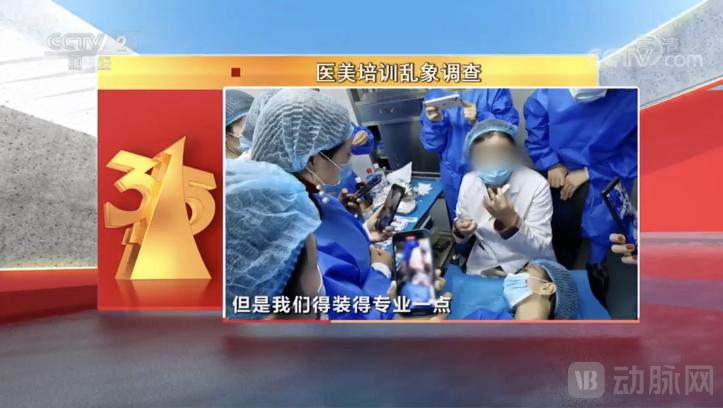 (Image source: 2022 CCTV “3·15” Gala)
Not only that, but instructors at these training institutions also share contact information for medical aesthetics drug wholesalers in class group chats. This allows trainees to purchase various injectables at extremely low prices from the wholesalers and then resell them to customers at a markup for administration.
What is the price difference? The procurement cost for a single injection vial is just over 1,000 yuan, but it is sold to aesthetic seekers at 12,800 yuan per vial—representing nearly a tenfold markup and constituting exorbitant profits.
The enormous profits have drawn an increasing number of individuals without any medical background into the field. After completing accelerated “minimally invasive cosmetic procedure” courses offered by training institutions, they quickly enter various beauty salons or plastic surgery hospitals and embark on their “practice careers.”
“These unlicensed fake doctors use non-compliant ‘three-no’ products and medical devices in illegitimate facilities to perform minimally invasive cosmetic procedures on beauty seekers,”These are all illegal practices that cause significant physical and psychological harm to individuals seeking aesthetic improvements, and may even lead to irreversible adverse outcomes such as blindness, facial paralysis, and disfigurement.“Li Bin, Chairman of United Beryl Group, told VCBeat.”
For example, in a report by China Central Television (CCTV), a cosmetic treatment seeker named Xiao Xue suffered severe complications during a hyaluronic acid injection. While the standard procedure requires intradermal administration, the so-called “plastic surgeon” inadvertently injected the filler into a blood vessel, causing central artery occlusion. As a result, Xiao Xue experienced blindness in her left eye and extensive cerebral infarction, leading to permanent disability.
Countless cases similar to Xiao Xue’s exist, and the data alone offers a glimpse into the severity of the problem. According to statistical data from the China Consumers Association, during the 10-year period since the rise of the medical aesthetics industry in China,On average, there are nearly 20,000 complaints annually regarding disfigurement resulting from cosmetic and plastic surgery, which amounts to 200,000 faces disfigured over a decade.A significant proportion of these cases are attributable to non-specialist physicians.
As is evident, industry chaos has severely undermined the healthy development of the medical aesthetics sector. The heavy-handed exposure by the “3·15” Gala undoubtedly delivers another blow to the industry. This compels us to ask: When and how will the turmoil in the medical aesthetics industry finally come to an end?
In recent years, the strong demand for beauty among an increasing number of young people has infused the medical aesthetics industry with immense potential.
According to iResearch data, the number of medical aesthetics users in China reached 13.672 million in 2019, and is projected to exceed 25 million by 2023, nearly doubling over the four-year period.
Expansion on the demand side has enlarged the market size. According to Frost & Sullivan data,China’s medical aesthetics market has a compound annual growth rate (CAGR) of 22%, making it one of the fastest-growing markets globally., China's medical aesthetics market is expected to exceed RMB 300 billion in 2024.
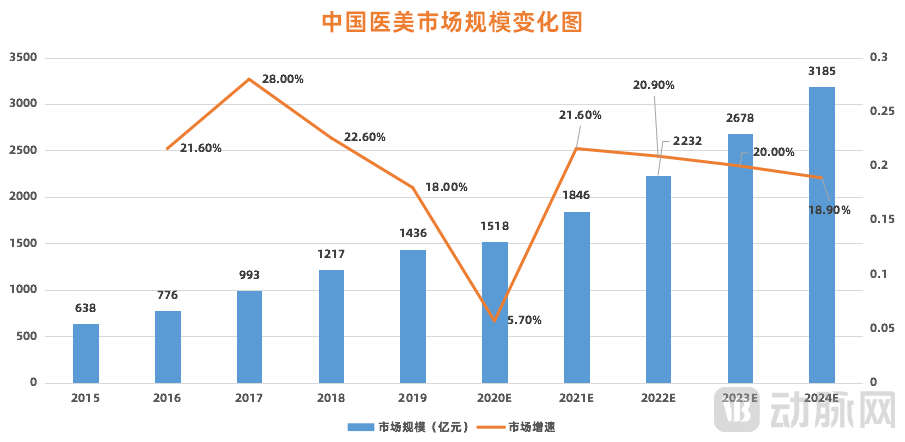 (Data source: Frost & Sullivan; chart by VCBeat)
The “market cake” is enticing, attracting numerous companies to enter the field. A search for “medical aesthetics clinics” on Qichacha by VCBeat revealed that more than 20,000 such entities have been established within the past year, not including medical aesthetics hospitals that expand their scale annually.
Behind the fierce competition lies the core reason: the high gross profit margin of the medical aesthetics industry.Data from the Suning Finance Research Institute shows that the gross profit margin of medical aesthetic service institutions generally remains at 50%, indicating sufficient profit margins for businesses in the medical aesthetics industry.
However, with a multitude of market entrants, the medical aesthetics industry is experiencing increasingly intense competition.This has also led to the current situation in which medical aesthetic service providers face high customer acquisition costs and low net profit margins.
“Despite seemingly healthy gross margins, many medical aesthetic service providers are left with net profit margins of just 0–10% after deducting sales and labor costs, making it an arduous and labor-intensive business,” Wu Feng, co-founder of a medical aesthetic service provider in Beijing, told VCBeat. “Moreover, many medical aesthetic services are one-off transactions; unscrupulous operators, having attracted beauty seekers through various advertising campaigns, focus solely on maximizing profits.”
Amid cutthroat competition, numerous illicit medical aesthetic institutions have emerged in the industry. According to the White Paper on Insights into China’s Medical Aesthetics Industry (2020),On average, approximately 100,000 people suffer injuries or disabilities annually due to illegal medical aesthetic procedures.
For instance, in 2020, China Central Television (CCTV) exposed a case of death resulting from cosmetic surgery. In this incident, Xiao Jiao, a 21-year-old woman from Xuzhou, spent 145,000 yuan at Changzhou Yaoyao Muyan Medical Aesthetic Clinic to undergo breast augmentation, rhinoplasty, and lip contouring procedures in pursuit of enhanced appearance. However, the operating surgeon was not registered or filed with the medical institution, and surgical errors ultimately led to Xiao Jiao’s death on the operating table.
In July 2021, the death of internet celebrity Xiao Ran due to improper procedures at a medical aesthetics clinic, which led to a fatal infection following liposuction, sparked widespread concern across society and within the industry. “Beauty at the Cost of Life” briefly became a popular summary among netizens expressing their dissatisfaction with the chaotic practices plaguing the medical aesthetics sector.
In addition,The medical aesthetics market is also flooded with numerous smuggled and counterfeit products, which severely infringe upon the rights and interests of consumers seeking aesthetic treatments.Taking minimally invasive aesthetic procedures as an example, data from the Chinese Association of Plastics and Aesthetics indicates that 70% of hyaluronic acid and botulinum toxin products sold in the domestic market are counterfeit or smuggled goods.
“Fake hyaluronic acid is not absorbed by the skin; its prolonged presence in the body can even cause tissue changes and lead to an uneven facial contour. What’s more dangerous,”Some unscrupulous clinics use PAAG, a gel classified by the World Health Organization as a suspected carcinogen, to pass off as hyaluronic acid. This is akin to implanting a ‘ticking time bomb’ in aesthetic patients, as the substance may degrade at any time and release highly toxic compounds, posing a life-threatening risk.“An aesthetic medicine doctor who wished to remain anonymous told VCBeat.”
Amidst the chaos, alarm bells ring for the medical aesthetics industry, which has been racing forward blindly.: In addition to the public scrutiny generated by the exposure of accelerated training programs at this year’s “3·15” Gala, regulatory authorities have also frequently issued directives in recent years to rectify the medical aesthetics industry, with such efforts showing an intensifying trend.
For instance, in 2021, in addition to the special rectification campaigns continuously promoted by the National Health Commission and other ministries, the State Administration for Market Regulation also issued the “Guidelines for Law Enforcement on Medical Aesthetic Advertising,” the strictest regulatory document on medical aesthetic advertising in history. Since then, policies have been introduced covering all aspects of the medical aesthetics industry, including advertising, qualifications, and services, ushering the sector into an era of comprehensive regulation.
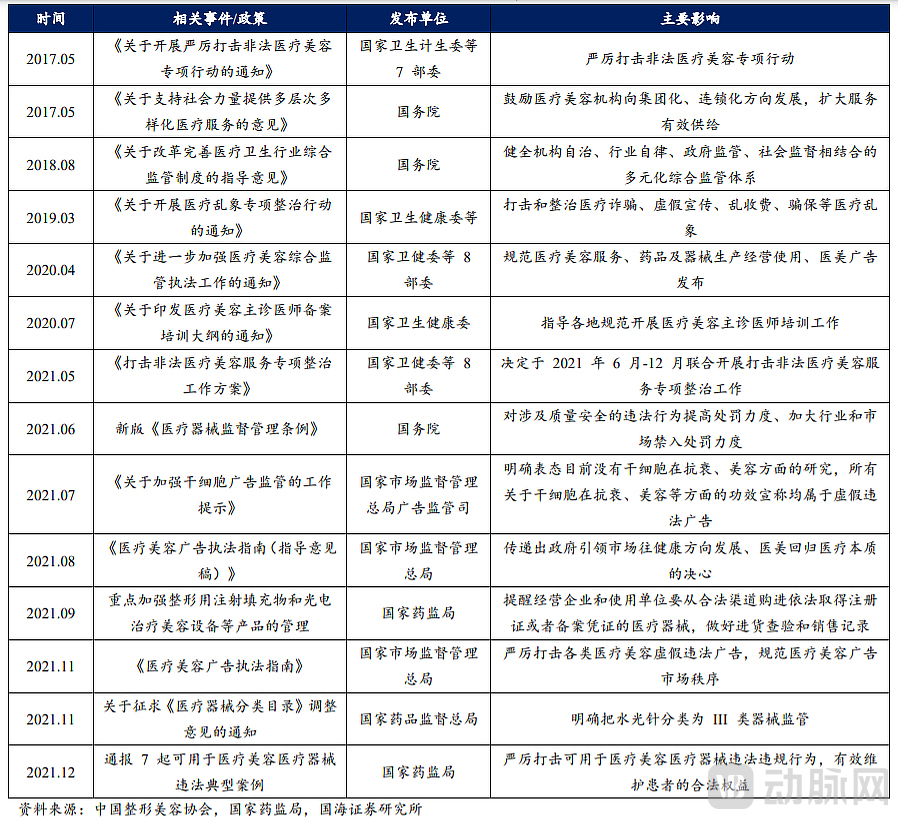 (Image source: Yema Finance)
Of course, relying solely on public opinion supervision and policy regulation is far from sufficient; the standardized development of the medical aesthetics industry requires greater industry self-discipline and self-regulation by every participant.
In the face of rampant irregularities in the medical aesthetics industry, how can the sector truly be “cleansed”?
First is the launch of industry self-regulatory initiatives.As an industry association, the Chinese Society of Aesthetic Medicine has collaborated with upstream and midstream enterprises and downstream medical aesthetics platforms since 2020, strengthening the promotion of industry self-regulation through the organization of relevant activities.
Furthermore, there is a shift in the strategic mindset of medical aesthetic institutions.“From the perspective of current industry compliance trends and existing policy adjustments, a suppressive stance has been formed against marketing-driven medical aesthetic service institutions. The key lever for industry rectification is advertising and marketing; it can be said thatThe current rectification campaign is steady, precise, and forceful, objectively compelling the entire industry to return to its medical roots.“Li Bin, Chairman of Union Lige Group, told VCBeat that under several new policies and public opinion supervision, different types of institutions should adopt differentiated strategies.”
For large institutions, the focus should be on retaining existing customers and driving repeat purchases; this represents a niche opportunity for such organizations.“Advance steadily, do not underestimate small opportunities; every inch of progress at a high level is significant.” Furthermore, large institutions must assume greater responsibility and contribute to raising the industry’s ceiling by expanding the technological boundaries, service offerings, and service process standards in medical aesthetics.
Small institutions must possess greater adaptability to sudden changes.“Because what remains constant are technology, organization, and customers; what changes are the policy environment, consumer confidence, and operational strategies. Optimizing the constant elements is the prerequisite for maintaining an unbeatable position. The technological advantages of smaller institutions will become immensely important in the future market; with excellent talent and organizational capabilities, these advantages can be converted into profits. In the future,”Smaller medical aesthetics institutions compete on the precision of their operational management; whoever executes this to the utmost degree will emerge as the ultimate winner.”
The strategic layout and control of platform enterprises are also critically important.This lies in,As a bridge between beauty seekers and medical aesthetic service providers, platform enterprises can reduce information asymmetry and exercise control over multiple aspects, including advertising and qualifications.
Xiaohongshu has recently launched a new round of governance against fake product endorsements, with the medical aesthetics category as a key focus. In the first phase, 279,000 non-compliant posts were removed, and 168,000 violating accounts were penalized. “This marks the fourth round of Xiaohongshu’s campaign against fake endorsements. We aim to gradually expand the scope of governance, further intensify enforcement efforts, and refine our regulatory measures,” said the head of Xiaohongshu’s special task force on combating fake endorsements.
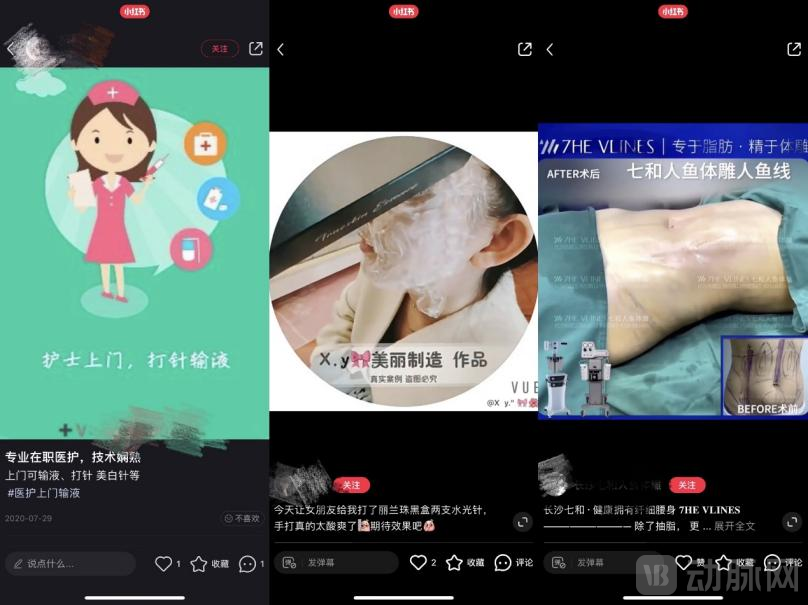 (Example of a Violation Note, Source: Xiaohongshu)
SoYoung has adopted a strategy of deep integration across the upstream and downstream segments of the industry chain, continuously strengthening efforts to ensure the authentication of genuine products and safeguard consumer rights. Launched in recent years, “YiMei Cha” is a precise and authoritative compliance verification tool introduced by SoYoung. It enables real-time, one-stop verification of the regulatory compliance of medical aesthetic institutions and practitioners, as well as the authenticity of pharmaceuticals and medical devices. In 2022, the peak daily usage of YiMei Cha surged by over 237%. As a key component of SoYoung’s systematic approach to guaranteeing product authenticity, YiMei Cha provides consumers with more transparent and authoritative information, making medical aesthetic consumption more convenient and secure.
Last year, Alibaba released the “Mei Wuyou” (Worry-Free Beauty) Standard, which screens merchants and product categories based on entry qualifications, safety, and service fulfillment. The standard covers dimensions such as procurement credentials for devices or pharmaceuticals, physicians’ professional qualifications, and offline service delivery. Meanwhile, Alibaba also requires merchants to sign a letter of commitment to ensure in-clinic services for users in accordance with standardized service procedures.
Finally, improving the talent development mechanism in the medical aesthetics industry is of paramount importance.As the core resource of the medical aesthetics industry, qualified medical aesthetics physicians have remained in short supply. Therefore, it is imperative to promptly establish talent development mechanisms and ensure the cultivation and reserve of high-quality professionals.
Thus, last year, the Ministry of Education proposed encouraging degree-conferring institutions with the necessary conditions to autonomously establish secondary disciplines related to aesthetic medicine under primary disciplines such as Clinical Medicine, based on their own development and social needs. This is undoubtedly a positive start, as it opens up new channels for the training of professionals in medical aesthetics, particularly providing young doctors with high-quality learning opportunities as the specialty enters university curricula.
It is evident that a more virtuous ecosystem for medical aesthetics is gradually taking shape, driven by the implementation of industry self-regulation, the compliant operations of medical aesthetic service providers, strengthened oversight by industry platforms, and the optimization of continuing education systems for physicians.
Under public scrutiny and stringent policy regulation, the medical aesthetics industry is evolving toward standardization. In this process, there are four major changes that every industry participant should take note of.
First, as compliance requirements become increasingly stringent, non-compliant medical aesthetic service providers will be gradually phased out of the market.“Currently, the midstream segment of the medical aesthetics industry is characterized by a certain degree of fragmentation and disorder, with numerous medical aesthetics service providers. It is difficult to achieve full regulatory compliance across the industry through policy measures alone. Therefore, there is an urgent need for one or two genuine leading enterprises in the medical aesthetics sector to guide industry development and set benchmarks,” Wang Zhen, Partner at Mingfeng Capital, told VCBeat. He noted that this would help legitimate institutions and approved products establish a firm foothold in the market, thereby promoting the healthy and sustainable development of the entire medical aesthetics industry.
In the view of Mu An, Managing Director of United Liger Group, “respect for doctors and a return to medical fundamentals” are essential to the compliant development of the medical aesthetics industry. “To this end, United Liger has assembled a large cohort of outstanding plastic and reconstructive surgeons with distinct core technical expertise. Led by Professor Cao Yilin as the academic head, its physician group includes over 100 shareholder-physicians, while an additional 200–300 medical aesthetics physicians have been recruited.”
Second, the medical aesthetics industry will see more niche opportunities, including private-domain operations, live-streaming training for medical aesthetics, digital transformation, and supply chain management.For example, Alibaba has entered the field of medical aesthetics live streaming and established China’s first “Medical Aesthetics Live Streaming Industry Demonstration Center” in Wuhou Shezhuang Town, Chengdu, Sichuan Province, to cultivate new talent in medical aesthetics and build a more comprehensive medical aesthetics ecosystem.
Third, the “physician responsibility system” will be an inevitable path toward compliance in the medical aesthetics industry.“Drawing on Union B&G’s development over the past decade and the broader trends in the medical aesthetics industry, it is evident that medical aesthetics, as a consumer-driven healthcare sector, requires greater physician leadership and the implementation of a ‘physician accountability system.’ This means that the legal representative or actual operator of a medical institution must be a licensed physician, who also assumes responsibility for treatment outcomes. Under the banner of ‘physician-led joint ventures,’ physicians can achieve both self-actualization and social value,” stated Mu An.
Fourth, in the process of continuous industry consolidation, only compliant, scaled medical aesthetic chain institutions that can set a positive example for the sector will inevitably become high-quality investment targets truly favored by the capital market.“Operational compliance and the standardization of operational data are key challenges and pain points for midstream investments in the medical aesthetics industry,” said Wang Zhen, Partner at Mingfeng Capital.As the industry moves toward greater regulatory compliance, investment opportunities are becoming more stable; therefore, medical aesthetic service providers must focus on strengthening their endogenous growth.
Despite increasingly stringent public scrutiny and policy-level regulation, Li Bin, Chairman of United B&A Group, remains optimistic about the prospects of the medical aesthetics market. “Medical aesthetics is a key component of new consumption, which is still in its early stages of development. Moreover, as post-2000s generations enter the workforce, they no longer view medical aesthetics as a private matter but rather as a lifestyle choice, leading to greater normalization of medical aesthetics consumption.” Furthermore, digital transformation will also drive the healthy development of the medical aesthetics industry.
More importantly, an increasing number of participants in the medical aesthetics industry are continuously driving innovation and regulatory compliance, which will serve as the impetus for the sector’s ongoing advancement.
Therefore, there is reason to believe thatFrom Unregulated Growth to Compliant Operations: The Medical Aesthetics Industry Will Ultimately Achieve Its Own Beautiful Transformation Under Societal Oversight and the Test of Time.
※Special thanks to Li Bin, Chairman of United B&G Group; Mu An, Managing Director of United B&G Group; Wang Zhen, Partner at Mingfeng Capital; Wu Feng, Co-founder of a medical aesthetics service institution in Beijing; and relevant representatives from Xiaohongshu (Little Red Book) and SoYoung for their generous support in the preparation of this article.