

National Cross-Regional TCM Decoction Pieces Joint Procurement Launches, Opening Participation to Retail Pharmacies and Non-Public Institutions
Cross-Regional Joint Procurement of Traditional Chinese Medicine (TCM) Decoction Pieces Is Here! On March 3, the Sanming Procurement Alliance (National) Inter-Provincial TCM (Materials) Procurement Alliance issued a notice to launch volume-based procurement of selected TCM decoction pieces across provinces (autonomous regions and municipalities) within the alliance. Following the issuance of the notice, multiple provinces, including Shandong, Ningxia, and Shanxi, released notifications to commence data submission for volume-based procurement.

Notice“The encouragement for private medical institutions and retail pharmacies to participate” has attracted widespread attention.March 10Day,Non-Public Medical Institutions in ChinaThe Association issued the "Notice on Forwarding the <ShanShandong Provincial Healthcare Security AdministrationSanming Procurement Alliance(China)Letter from the Office on Inviting Participation in the Joint Volume-Based Procurement of Traditional Chinese Medicine Decoction Pieces〉Notice on”, inviting all member units across China to participate in the joint procurement of traditional Chinese medicine decoction pieces.March 16Recently, the Shandong Non-Public Medical Institutions Association issued a latest notice, indicating that non-public medical institutions (including TCM clinics and general clinics) and retail pharmacies across China are eligible to participate in this joint procurement, with detailed operational procedures for participation and volume declaration attached.
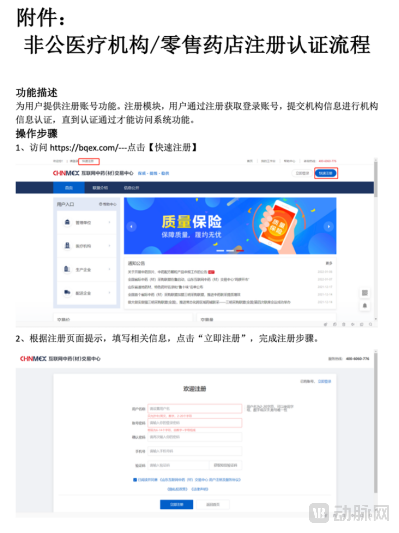
All participating medical institutions shall uniformly complete the online submission by logging into the Traditional Chinese Medicine (Materials) Zone of the Sanming Procurement Alliance (China)—Internet Traditional Chinese Medicine (Herbal Materials) Trading Center (https://www.bqex.com)Submission: Privately-run hospitals, TCM clinics, general clinics, and pharmacies shall complete the submission after self-registering and verifying their identities online.
It is reported that the cities participating in this round of the National Interprovincial Alliance for Traditional Chinese Medicine (TCM) Procurement include members from 12 provinces, autonomous regions, and municipalities such as Shandong, Inner Mongolia, Qinghai, Ningxia, and Shanxi, as well as members of the Sanming Procurement Alliance. The latest data shows that the Sanming Procurement Alliance covers 28 prefecture-level cities and four national healthcare reform demonstration counties across 16 provinces in China.
According to the list of procured items, this round of joint procurement of herbal decoction pieces includesAstragali Radix, Codonopsis Pilosulae Radix slices, Lonicerae Japonicae Flos, Angelicae Sinensis Radix, Carthami Flos, Gastrodiae Rhizoma, Ophiopogonis Radix, Coptidis Rhizoma slices, Pseudostellariae Radix, Paeoniae Radix Alba, Glycyrrhizae Radix et Rhizoma slices, Pheretima, Salviae Miltiorrhizae Radix et Rhizoma, Scutellariae Radix slices, Dioscoreae Rhizoma, Taraxaci Herba, Moutan Cortex, Platycodonis Radix, etc.Common varieties include many of the best-selling tonic and health-promoting herbal slices in pharmacies.
Joint procurement can reduce unnecessary distribution costs and lower the cost of traditional Chinese medicine (TCM) for the public. In addition to public medical institutions, policy also encourages private hospitals, TCM clinics, general clinics, and pharmacies to participate in this centralized procurement.
Traditional Chinese Medicine (TCM) decoction pieces are one of the three pillars of China’s TCM industry. In recent years, they have received favorable policy support, such as inclusion in the National Essential Medicines List and the National Medical Insurance Directory, exemption from drug proportion controls, and permission to retain a 25% price markup. According to data from the "2020 Report on Economic Operation of China’s Pharmaceutical Industry," the market size for TCM decoction piece processing reached RMB 178.2 billion in 2020. Data from Sinohealth CMH shows that in Q1 2021, the retail pharmacy market for TCM decoction pieces reached RMB 7.57 billion, a year-on-year increase of 26.7%.
This joint procurement of traditional Chinese medicine (TCM) decoction pieces presents a significant opportunity for retail pharmacies, clinics, and non-public medical institutions seeking to gain a share of the decoction pieces market.
As drug regulatory authorities across various regions intensify oversight of traditional Chinese medicine (TCM) decoction pieces, pharmacy management costs continue to rise. The root cause lies in the challenges pharmacies face in procuring TCM decoction pieces, including difficulties in quality control, weak bargaining power, and significant price volatility. How to reduce costs while maintaining the substantial profit margins associated with high-gross-margin categories has become a pressing challenge for pharmacies today.
AndThe primary issue to be addressed in the centralized procurement of processed Chinese herbal medicines is quality control.The Shandong Internet Traditional Chinese Medicine (Materials) Trading Center, which provided technical and service support for this joint procurement, aims to “ensure quality, upgrade standards, and stabilize supply.” By adopting a centralized quality-assurance warehouse model, it has established a full-process traceability and quality control system. This system links all upstream and downstream stakeholders through traceability codes, enabling automated data collection, recording, and monitoring across the entire workflow—from planting and harvesting to processing and decoction piece preparation, and from finished product testing to warehousing—thereby achieving “one-code traceability.”
Simultaneously, high-quality standards for processed traditional Chinese medicine (TCM) decoction pieces were established. Through competitive participation by enterprises, premium products with reasonable prices—sourced from selected planting bases and featuring full-process traceability—were prioritized. Measures such as quality insurance and retention sample comparisons were implemented to safeguard the quality of these decoction pieces, thereby enablingJoint Procurement of Traditional Chinese Medicine Decoction Pieces Significantly Improves Quality While Maintaining Price Stability。
On the "List of Varieties for Joint Volume-Based Procurement of Traditional Chinese Medicine (TCM) Decoction Pieces," the execution standards, characteristic descriptions, product specification codes, specifications, and specification grades are disclosed for the TCM decoction pieces subject to the upcoming joint procurement. For pharmacies, participating in the centralized procurement of standardized TCM decoction pieces will significantly reduce procurement and management costs associated with quality control issues. Furthermore, leveraging the advantages of consolidated volume ensures access to high-quality decoction pieces at stable prices.
Experts have stated that centralized procurement of traditional Chinese medicine (TCM) decoction pieces has become a trend and is expected to profoundly impact the decoction piece industry. During this year’s Two Sessions, centralized procurement of TCM formula granules and proprietary Chinese medicines once again became a focal point. At a regular policy briefing held by the State Council, a representative from the National Healthcare Security Administration indicated that the scope of centralized procurement for proprietary Chinese medicines would be expanded in an orderly manner this year. The year 2022 may well become a landmark year for centralized procurement of proprietary Chinese medicines, with its scope potentially expanding rapidly to cover more categories, including TCM formula granules and TCM decoction pieces.
In this context, large chain pharmacies should seize the opportunity, actively align with national policies, and proactively participate in centralized volume-based procurement to secure more sustainable long-term development.