

M2D2 Files IPO Prospectus After Incubating 260 Startups in 15 Years
The substantial profits have drawn intense envy from other U.S. states, yet they can only look on in frustration. This is because Massachusetts, a region seemingly blessed by divine favor, boasts a comprehensive and vibrant ecosystem for medical innovation. This ecosystem encompasses top-tier universities and research institutions, first-class scientific talent, outstanding entrepreneurs, an excellent investment climate, and leading medical innovation companies.
Along this ecosystem chain, the Medical Device Development Center and Biotechnology Incubator M2D2 stands out prominently, as it is hailed as the “lifeline” for emerging medical device companies in the state.
This is no exaggeration. Since its establishment in 2008, M2D2 has reviewed approximately 260 medical device and biotechnology startups in Massachusetts for inclusion in its incubation program, helping more than 80 startups advance the development of their medical device and biotechnology innovations. To date, 18 companies participating in the M2D2 incubation program have successfully graduated, either through acquisition or by expanding beyond the scope of the incubator.
In fact, the early M2D2 relied entirely on support from the government and MIT, but today it operates independently, has achieved “financial freedom,” and has delivered an impressive “track record” in medical innovation and incubation in less than fifteen years.
So, how did M2D2 stand out in the talent-rich state of Massachusetts? And what has enabled it to become the “top player” in the healthcare incubation sector? To answer these questions, VCBeat’s Orange Fruit Bureau conducted an in-depth analysis of the M2D2 incubator.
“Haier Brothers” and Their “Partners”
The commercialization of medical devices and biotechnology products is a lengthy and highly risky process, especially for startups.
To improve the success rate of startups, the University of Massachusetts Lowell (UML) and the University of Massachusetts Medical School (UMMS) collaborated to establish M2D2. Like the “Haier Brothers,” the two institutions contribute their respective “wisdom” to fully assist Massachusetts-based startups in crossing the “Valley of Death.”
Among them, the University of Massachusetts Lowell contributes its strong traditions in engineering science and business, while the UMass Medical School provides M2D2 with specialized medical expertise and a wealth of clinical scenarios.
However, these two elements alone are insufficient. To effectively advance medical innovation and incubation, M2D2 has also incorporated expertise from external professionals and relevant institutions, primarily through its Board of Directors, Executive Committee, and Advisory Council.
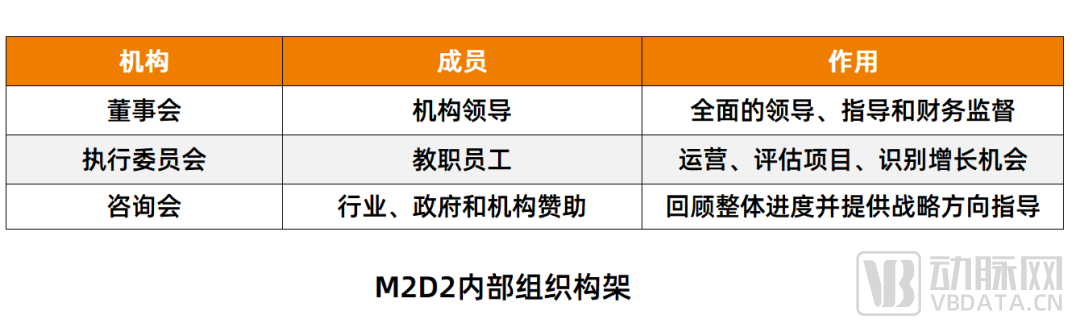
The Board of Directors is composed of leaders from each campus, who primarily provide comprehensive guidance and financial oversight to M2D2.
The Executive Committee meets every two weeks to discuss operational plans, evaluate the ongoing progress of medical device and biotechnology entrepreneurs, and establish corresponding objectives.
It is worth noting that most members of the Executive Committee come from top research institutions across the United States, and therefore possess expertise in nursing, technology transfer, engineering, business, clinical disciplines, health sciences, environmental health, and safety.
The primary function of the Advisory Committee is to assist in evaluating the innovation potential of early-stage enterprises. Its membership comprises three groups: senior executives from leading companies such as Johnson & Johnson, Boston Scientific, and Amgen; representatives from the University of Massachusetts Clinical and Translational Science Center (UMCCTS) across its five campuses; and professional representatives from the legal, prototyping, manufacturing, and regulatory sectors. The Advisory Committee convenes biennially, primarily to conduct investment assessments of incubated companies.
It is evident that M2D2 is backed by a powerful “think tank” comprising experts from diverse business sectors, who provide comprehensive support to incubator-based startups across all areas of need.
Providing “Soft Resources” That Are More Important Than “Hard Resources”
What is the general process for startups to enter M2D2?"Review Process"?
First, prospective tenant companies must complete an application form and schedule a presentation at the biweekly Executive Board meeting. During the presentation, the prospective tenant company shall systematically describe unmet needs, proposed solutions, funds raised to date, protected intellectual property, the team and its expertise, as well as the specific ways in which the company plans to engage with the incubator.
Subsequently, the Executive Committee evaluates applications based on these core factors and votes to accept or reject applicant companies. Upon approval, accepted companies must complete standard lease agreements and laboratory safety training prior to move-in.
Data shows that in 2021, M2D2’s occupancy rate exceeded 90%. Among the approximately 40 startups that moved in during February 2021, 15% were affiliates of the University of Massachusetts, 35% were academic spin-offs, and 25% were based outside of Massachusetts.
Why Is M2D2 So Popular Among Startups?
There is, of course, a reason for this. The most critical factor is that M2D2 has established a diversified and comprehensive innovation service chain for startups.
First is the suitable “greenhouse,” namely the physical space provided by M2D2. In 2011, the Massachusetts Life Sciences Center provided an initial investment of $4 million to develop the Wannalancit Mill space at the University of Massachusetts Lowell. Reportedly, this 24,000-square-foot project created six private laboratories, shared offices, and conference rooms.
In 2015, the University of Massachusetts Lowell partnered once again with the Massachusetts Life Sciences Center to develop a second incubator site at 110 Canal Street in Lowell. This $4 million project created 48 workstations within an 11,000-square-foot open-concept laboratory space, along with shared office areas, equipment, BSL-2 capabilities, and conference rooms.
It is worth highlighting M2D2’s laboratory. Reportedly, the lab is equipped with key instruments that support early-stage product development. More importantly, M2D2’s leadership conducts annual surveys among resident companies to gauge startups’ needs for shared equipment types and resources, using these insights to guide equipment upgrades and replacements. Statistics show that over the past year, M2D2 invested more than $1 million in equipment and upgrades.
Next is the strong capital and network linkage. The annual promotion event is another way for M2D2 to cooperate with industry sponsors, mainly providing exposure and funding channels for startups, helping them quickly raise funds or access market resources, which will greatly promote incubated enterprises to enter the market.
Along this business line, M2D2’s flagship initiative is the “M2D2 $200K Challenge,” an annual competition designed to identify and reward startups with significant market potential in the medical device and biotechnology sectors.
It is reported that the competition will recruit 200 participants globally each year. The M2D2 Executive Committee will conduct the first round of review, and the finalists selected will present their technologies at pitching and networking events. They will receive $200,000 in funding, as well as access to laboratory space and services in engineering, product development, legal, regulatory, clinical, and commercial areas.
Another fundraising event for startups is the “Barracuda Bowl,” a panel-style activity modeled after popular television shows. In this event, entrepreneurs pitch their ventures to a panel of investors, answering questions about their technology, current stage of development, and financial projections.
These initiatives are popular among startups because they offer enhanced corporate reputation, advertising opportunities in industry publications and at conferences, promotion through M2D2’s sponsorship and funding networks, and collaboration with international business organizations. Furthermore, throughout this process, M2D2 works closely with the technology transfer offices of all University of Massachusetts campuses to identify and nurture technologies suitable for incubation. Notably, M2D2 does not hold equity stakes in any companies nor claim ownership of any intellectual property rights.
Finally, there is the support of the federal government. During the first 10 years of M2D2’s establishment, thanks to the efforts of its founding directors, board members, and leaders across various campus institutions including the University of Massachusetts, as well as strong support from national and internal resources, M2D2 has continued to grow and expand, bringing tremendous value to startups.
Along this innovation incubation pipeline, several federally funded, peer-reviewed centers were established to further support the development of M2D2.
The first initiative is the advancement of the Point-of-Care Technology Center. The primary function of this center is to solicit and fund pilot projects, with M2D2 portfolio companies eligible to access its corresponding services and resources. Key offerings include the “Annual Innovator Showcase,” which helps facilitate financing; the “Biotech East Program,” which cultivates management capabilities within startup teams; and the “I-Corps Short Course,” which provides state-of-the-art training methods and strategic guidance at the technical level.
The second is the Rapid Diagnostic Center. This center primarily assists M2DE-incubated enterprises in conducting preclinical studies, such as limit of detection studies, feasibility studies for Emergency Use Authorization (EUA), system performance studies, cross-reactivity and analytical specificity studies, and provides usability feedback to accelerate the regulatory approval process and facilitate rapid market entry of their products.
The third is the Biomedical Advanced Research and Development Authority (BARDA). This agency, co-established by the Department of Health and Human Services, is primarily responsible for reviewing and developing medical countermeasures. As its strategic partner, M2D2 has received a five-year, $5 million award to identify innovative solutions to the nation’s most pressing healthcare challenges and to help develop more effective medical countermeasures.
Overall, the success of M2D2 is multidimensional, encompassing collaborative efforts between the University of Massachusetts and UMass Memorial Health Care, robust institutional and national support, rigorous oversight and extensive administrative resources, dedicated mentors, staff, and partners, as well as loyal external collaborators, among other factors.
Currently, M2D2 is collaborating with internal and external stakeholders to develop a strategic plan that incorporates emerging health trends, offering unprecedented opportunities for medical device and biotechnology developers in the coming years, including remote monitoring, virtual care, and digital health.