

Yilianzhong C.health Data Open Platform: Powering the Digital Health Industry with Intelligent Innovation
In the “Proposal of the Central Committee of the Communist Party of China on Formulating the Fourteenth Five-Year Plan for National Economic and Social Development and the Long-Range Objectives Through the Year 2035,” “accelerating digital development” was highlighted in a standalone section, with a call to establish a national unified platform for data sharing and openness. With the accelerated advancement of the “Digital China” initiative and the innovative application of technologies such as blockchain, artificial intelligence, cloud computing, and big data, healthcare data has gradually broken through silos. However, the current state of fragmented healthcare data—characterized by the paradox that “data has been aggregated but remains unusable”—remains a global challenge facing the industry.
The fragmentation of healthcare data has become the new “data silos” in the global landscape. Scattered across these “silos,” data suffer from inconsistent structures, non-uniform standards, and disparate dictionaries, preventing governments, institutions, and individuals from accessing complete and continuous healthcare records. This situation significantly hinders clinical diagnosis and treatment in medical institutions, administrative decision-making by regulatory bodies, scientific research efforts, and personal health management for patients, thereby becoming a major obstacle on the path toward a comprehensive era of public health.
To address the challenges of data sharing, the “C.health Data Open Platform,” developed by the Yilianzhong Personal Health Cloud team, has emerged to connect multi-scenario applications including hospitals, pharmaceutical companies, scientific research, clinical diagnosis and treatment, healthcare services, medical health information, and personal health record access. The platform aims to provide one-stop, standardized, and scalable data openness capabilities for practitioners and developers in the medical and health industry. Leveraging Yilianzhong’s over twenty years of experience and accumulated expertise in the digital livelihood sector, it builds a data-sharing platform for various medical and health service providers that features “user-tier-specific access, diversified data opening methods, and secure data application.” It supports the sharing of medical and health data knowledge bases, conversion of data standards, and integration of data services, thereby maximizing the value of data assets.
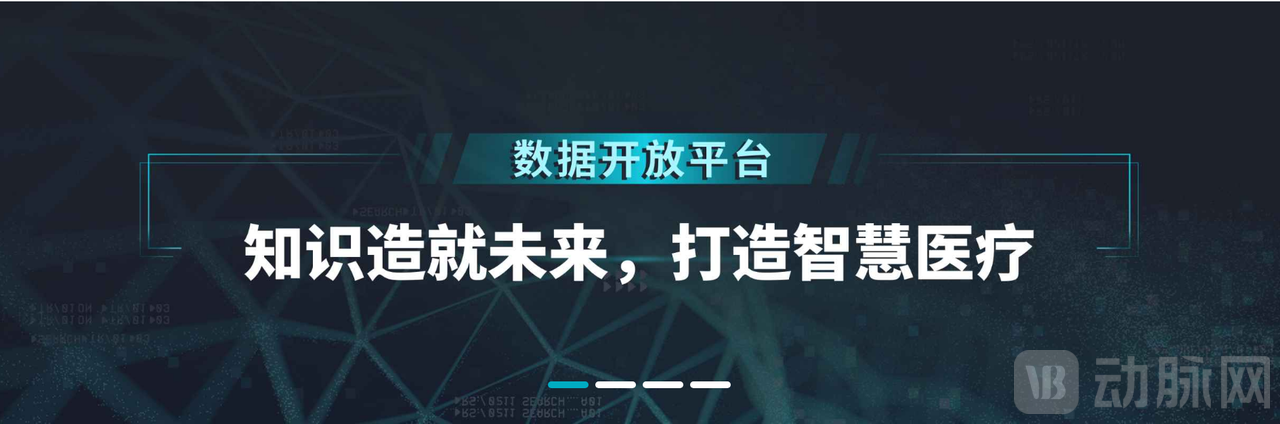
Yilianzhong C.health Data Open Platform is a medical data information sharing and service platform centered on healthcare knowledge and built for broad health application scenarios. It aggregates vast amounts of domestic and international standardized medical datasets and healthcare terminology libraries, including health information standard documents issued by the National Health Commission and provincial/municipal health commissions, the complete set of standard terminologies within the international OMOP Common Data Model framework, and multiple versions of ICD codes. By leveraging an intelligent data processing platform to perform in-depth standardization, business-oriented structuring, and knowledge-based enrichment of data, the platform reduces the barriers and costs for customers to access, integrate, and apply healthcare data. Yilianzhong C.health Data Open Platform is committed to transforming big healthcare data into infrastructure for Healthcare Web 3.0, addressing the fragmentation of healthcare data and enabling standardized data applications from the dimensions of comprehensive data, comprehensive knowledge, and the entire healthcare ecosystem.
Currently, healthcare informatization is entering an accelerated “metamorphosis” phase. However, issues such as data fragmentation and misaligned terminology have become major obstacles to cross-border disease discussions, disease research, clinical treatment, drug R&D, and the implementation of health applications. In response, Yilianzhong’s C.health Data Open Platform leverages four key pillars—“Health Information Standard Services, Metadata Services, Cloud-Chain Medical Terminology Sets, and Cloud-Chain Knowledge Graphs”—to align global data and achieve true digitalization of medical data.
(1) Health Information Standard Services
Guidance technical documents for health information standards are formulated in accordance with the Provisions on the Administration of National Standardization Guidance Technical Documents to facilitate industry communication. They serve as essential guidelines or references for scientific research, design, production, utilization, and management. However, due to the fragmented distribution of official medical standard documents across different cities and provinces, healthcare professionals currently incur substantial time and resource costs when searching for, interpreting, and applying these standards, resulting in high expenses and low efficiency.
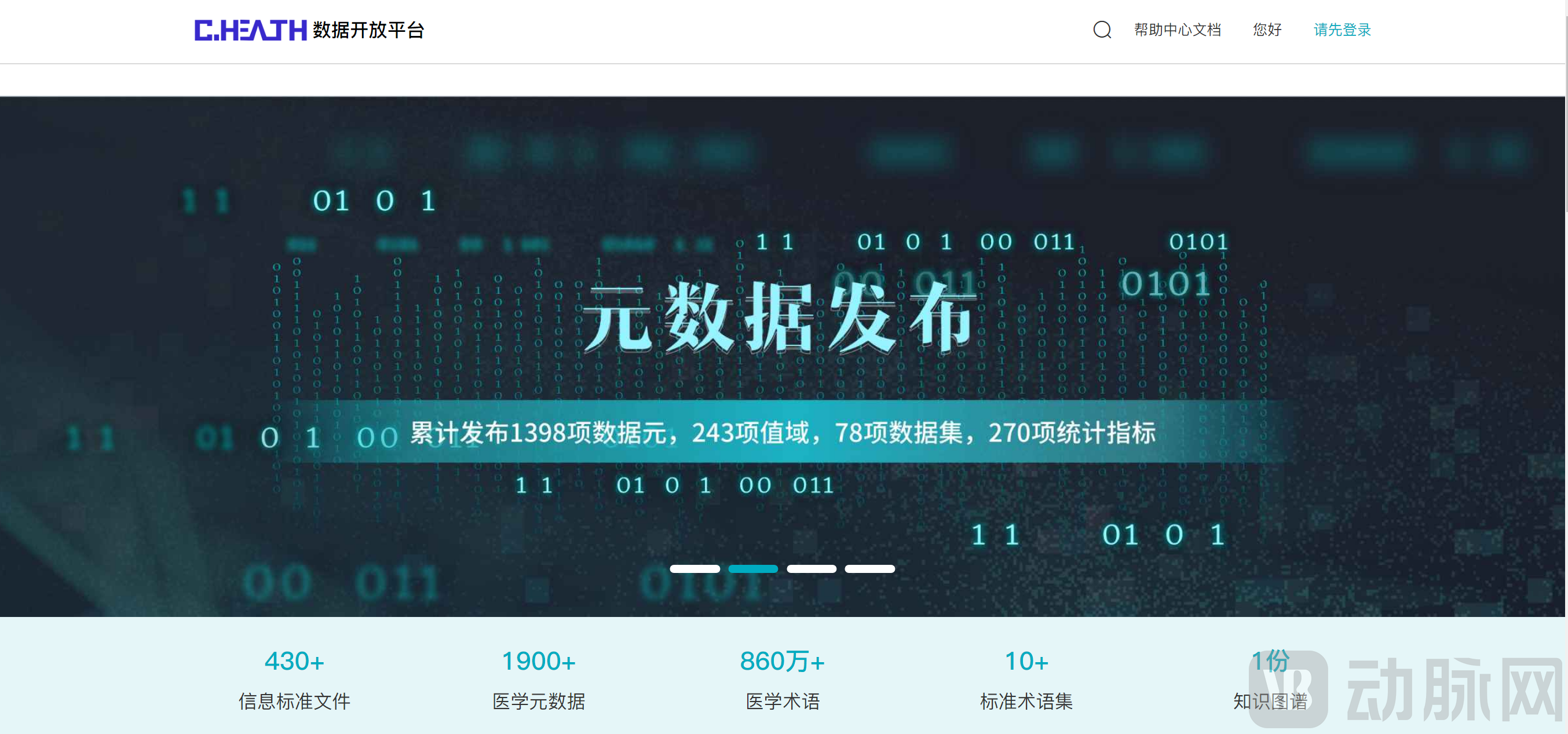
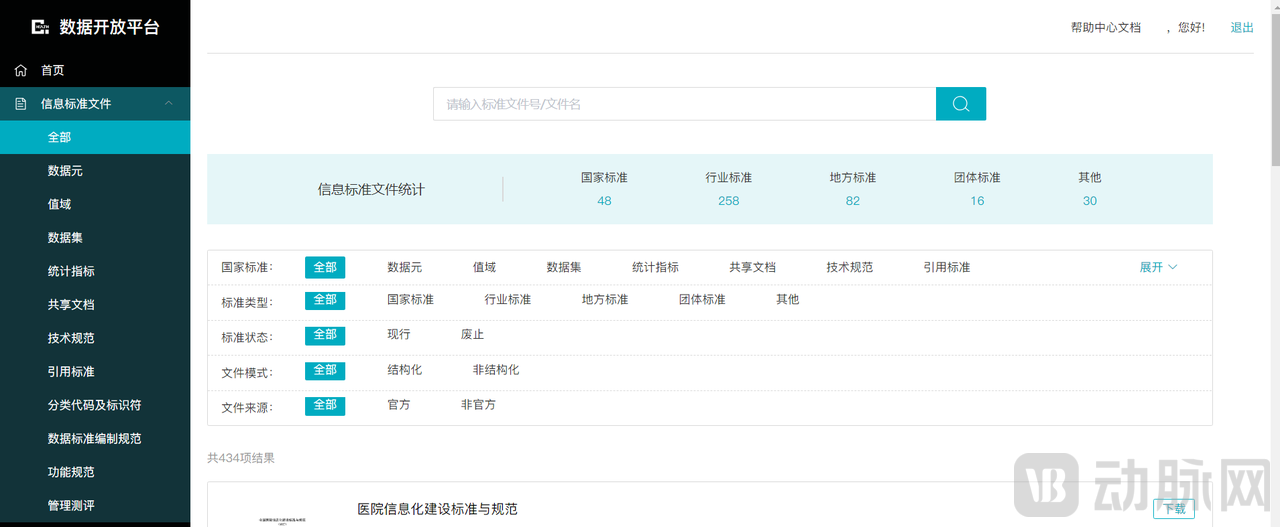
To help relevant professionals efficiently access and apply health information standards, the YLZ C.health Data Open Platform aggregates official standard documents from the National Health Commission and local municipal health commissions into a one-stop repository. It structurally processes data elements, value domains, data sets, statistical indicators, shared documents, technical specifications, referenced standards, classification codes and identifiers, data standard compilation guidelines, functional specifications, and management assessments, thereby building an intelligent engine for health information standard services that provides standardized services based on these standards.
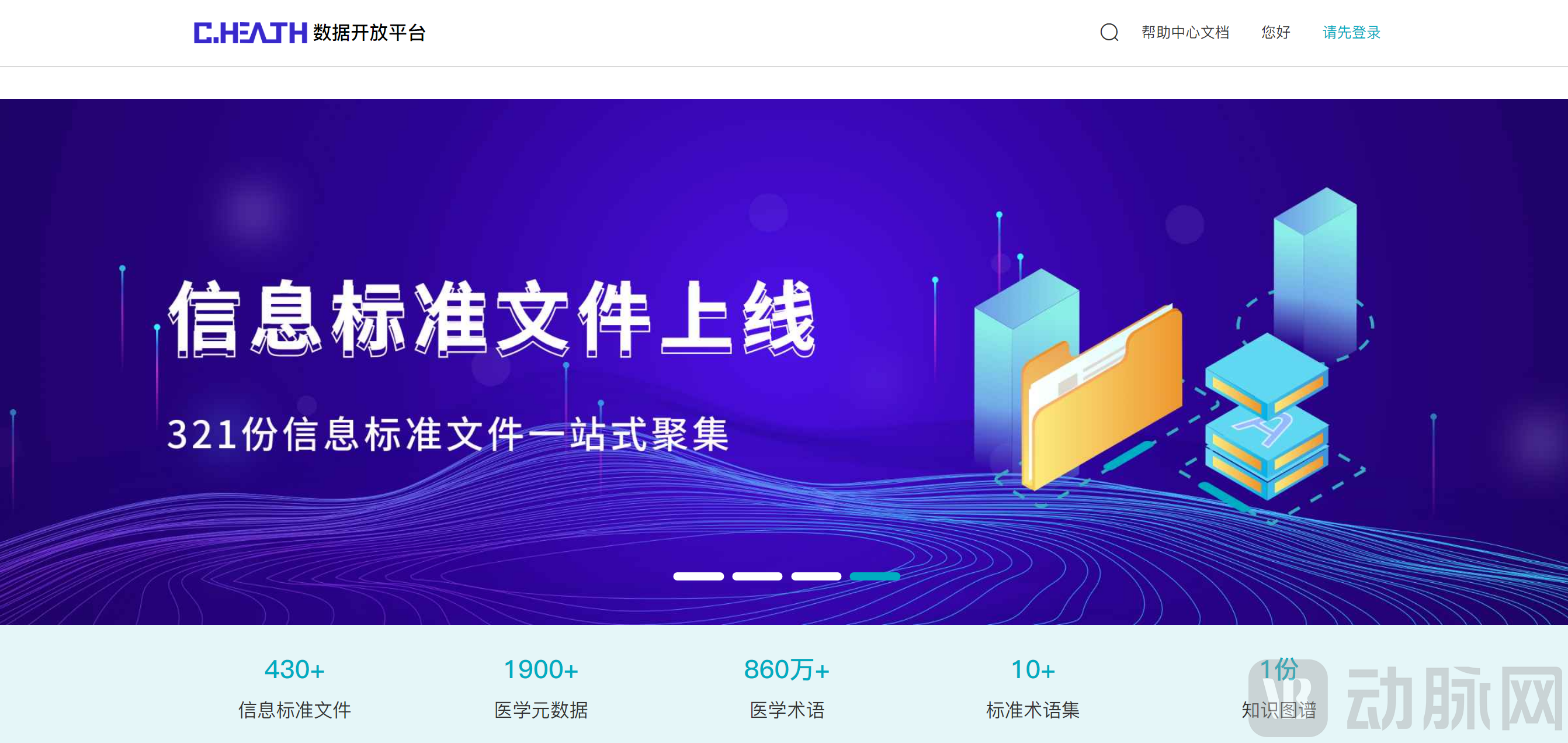
Currently, the platform has indexed over 400 health information standard documents and offers free downloads of these resources, supporting filtering by dimensions such as standard type, status, and source. Moving forward, the Yilianzhong C.health Data Open Platform will continue to index national standards, industry standards, group standards, and other normative standard documents issued in the field of health information, providing the industry with query and download services for standard documents related to hospital information and regional health information interoperability.
(2) Metadata Service
Metadata is data that describes other data, providing explanations to facilitate understanding and interpretation. However, in daily practice, metadata derived from national-level data collection, statistics, and reporting publications has significant limitations in scope and fails to cover the metadata required for practical informatization initiatives. Furthermore, inconsistent coding standards for data description across different systems and standards result in data being unfindable, incomprehensible, and unreliable, as well as unusable directly by computers. Ultimately, this plunges users into a "data swamp."
To address the aforementioned pain points, Yilianzhong has developed a unified data application standard system suitable for both domestic and international contexts. This system is based on China’s metadata-related standard frameworks and the international OHDSI OMOP Common Data Model (CDM). It performs structured extraction of content from standard files by applying Extraction-Transformation-Loading (ETL) processes to observational data sourced from various systems, such as Hospital Information Systems (HIS), Electronic Medical Records (EMR), and Laboratory Information Systems (LIS), thereby forming standardized data structures.
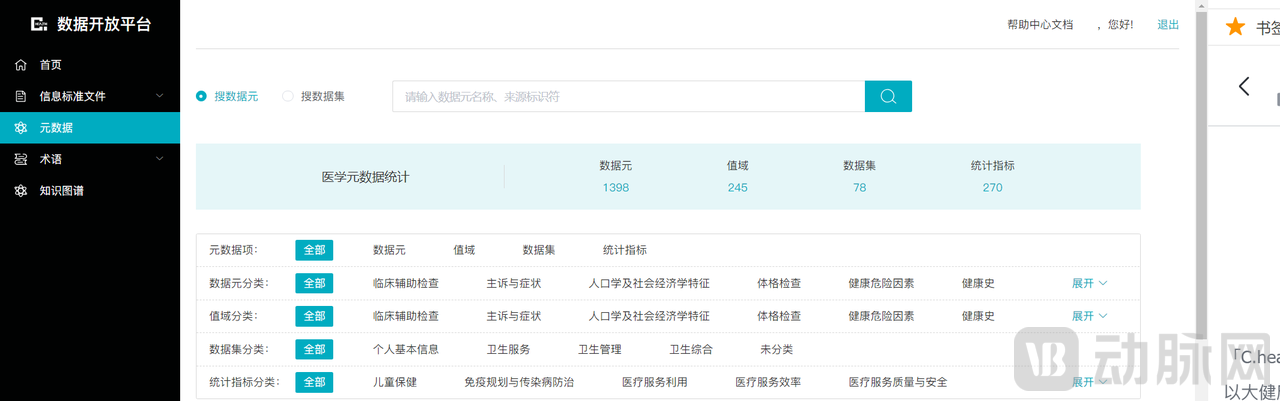
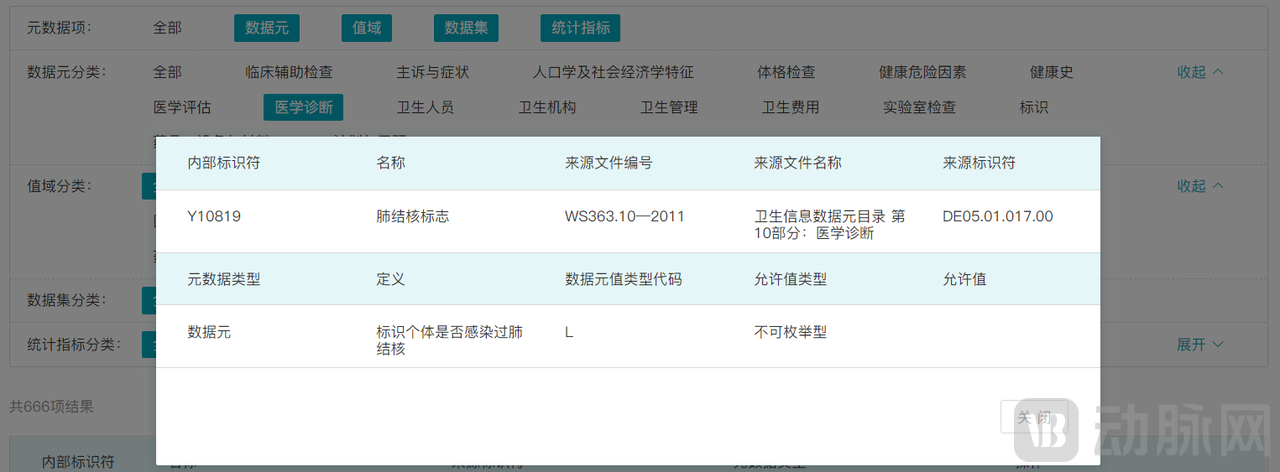
By defining data units through a series of attributes such as definitions, identifiers, representations, and permissible values, the platform helps bridge the communication gap between business operations and IT in the healthcare industry. This facilitates better understanding and interpretation of data, enabling practitioners to map data from healthcare information systems to relevant data models. Leveraging these models for data querying, analysis, and sharing addresses the challenges of data being “unfindable, unintelligible, untrustworthy, and not directly usable by computers,” thereby achieving unified management of health and medical data at the metadata level.
(3) Cloud Chain Medical Terminology Service
Through an in-depth understanding of the domestic landscape, Yilianzhong has identified that the diversity in medical terminology expression constitutes a barrier to the standardization of healthcare information. Those operating within the healthcare industry frequently encounter this scenario:
At Hospital A, the procedure is termed “Repair of Cerebrospinal Fluid Incisional Fistula,” whereas at Hospital B, it is referred to as “Repair of Cerebrospinal Fluid Incisional Leak.” When exchanging information between the two hospitals, semantic interoperability is not achievable because computer systems can only recognize codes and identifiers.
This is because the Hospital Information Systems (HIS) and Electronic Medical Record (EMR) systems used by hospitals vary, resulting in medical standard terminologies with coarse granularity that cannot fully support data utilization and communication needs in complex real-world clinical settings.To solve this difficult problem, the most effectiveofThe approach is to establish a standardized medical terminology set tailored to the Chinese clinical environment.
To this end, Yilianzhong’s C.health Data Open Platform has launched the “Cloud-Chain Medical Terminology” service. By implementing rigorous and standardized rules for terminology creation and maintenance, it aggregates a vast collection of commonly used domestic and international disease and procedure codes. This results in a high-quality, industry-reusable Chinese medical terminology set that achieves unification across four dimensions: standardized medical record front-page documentation, disease classification and coding, procedure classification and coding, and medical nomenclature. The service provides stable and reliable medical terminology support for the expression, storage, exchange, sharing, and systemic interoperability of healthcare information across the entire medical industry.
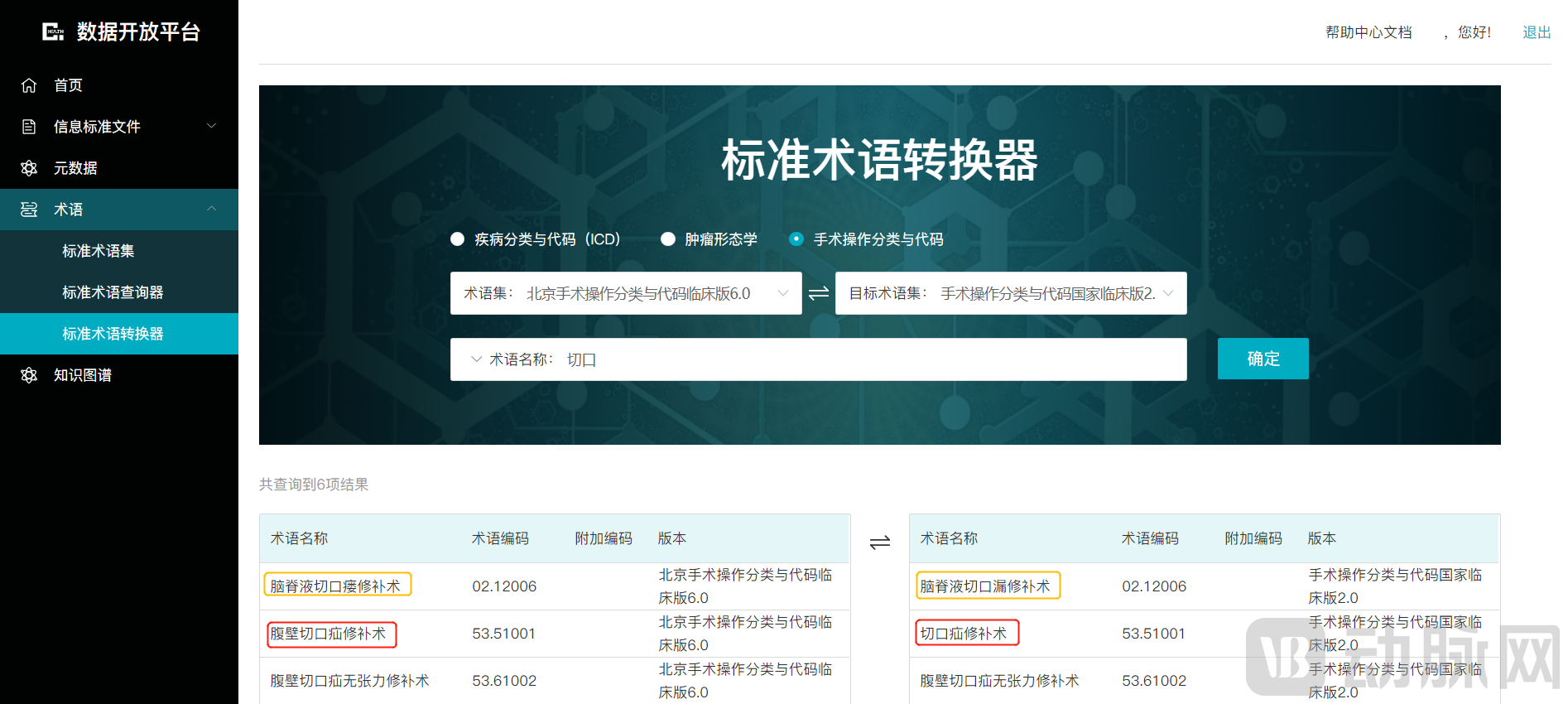
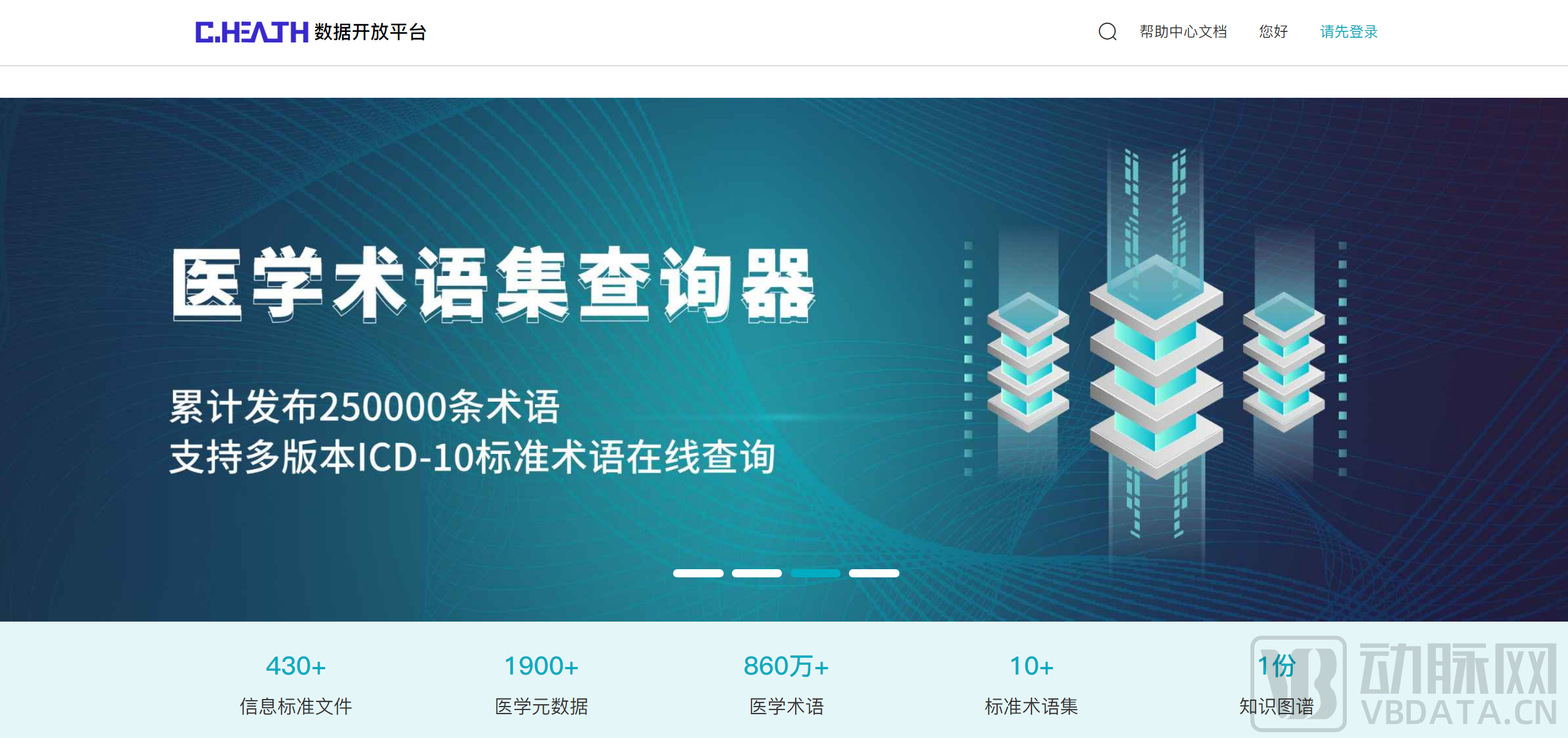
Currently, the platform has aggregated over 8.4 million medical terms within the OMOP framework, covering medications, procedures, diseases, and more; over 250,000 domestic ICD terms; and multiple versions of terminology, including the insurance-covered versions of ICD-9 and ICD-10 as well as the National Clinical Version, thereby providing standardized references for medical informatization. Based on the “Health Information Standards and OHDSI OMOP” Common Data Model (CDM), the platform has achieved metadata mapping for health information. By continuously adding health information standard documents and metadata resources, it helps the industry leverage data models to conduct more accurate and rapid data exchange, reducing errors associated with manual comparison and standard conversion.
(4) Cloud-Chain Knowledge Graph
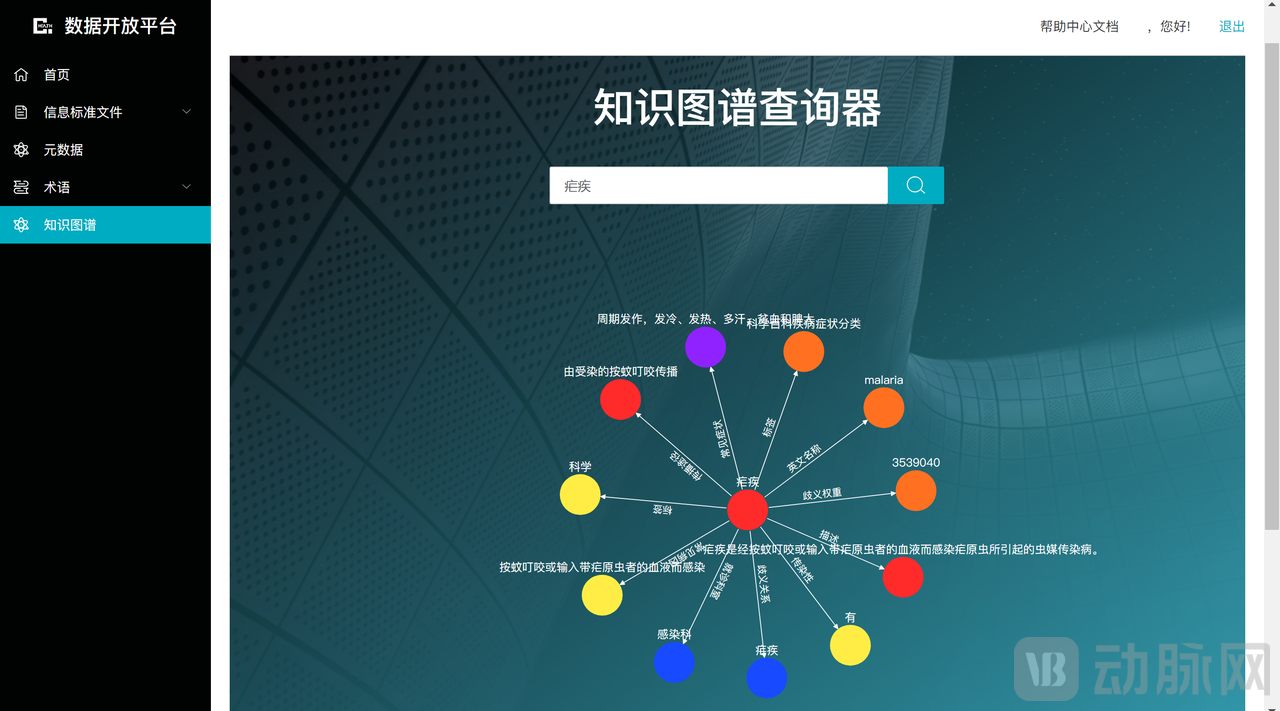
Yunlian Knowledge Graph is a healthcare knowledge graph built upon open, high-quality medical knowledge resources, constructed through automated extraction and expert review. It has currently integrated 156 million entities. Based on the 140 million entity-attribute relationships (triples) obtained after integration, it establishes connections between entities using a node-edge model to represent knowledge. Furthermore, Yunlian Knowledge Graph is deployed on the company’s NLP self-learning platform. It leverages various algorithms, including deep learning, to address incomplete or inaccurate knowledge definitions, and automatically discovers new knowledge through an adaptive learning mechanism. This achieves a qualitative leap from “small knowledge + big data = big knowledge,” enabling deeper applications of healthcare knowledge.
YiLianZhong Personal Health Cloud TeamHead of AI TechnologyDr. Hong Jingjin said: “Based on the above four major services, we expectFurther PromoteMedical InformaticsofDigitalization, Intelligent and Human-Centered Transformation, truly breakingThe New "Data Silos"Shackles。For healthcare institutions, the platform addresses the challenges associated with clinical data collection and management by enhancing data interoperability and structuring health-related medical data, thereby improving the utilization of data within the healthcare industry. In the field of medical and health research, the platform is poised to assist research institutions in exploring disease mechanisms, expanding medical knowledge, and fostering medical innovation, thus bridging the “gap” that hinders the direct application of real-world data to clinical studies. For medical device manufacturers, the health insurance industry, and developers of health applications, the Yilianzhong C.health Data Open Platform provides comprehensive, robust data support for the healthcare ecosystem. Leveraging foundational data infrastructure, data standard definitions, and tools for data query and services—based on information standard documents, health information metadata, medical terminology sets, and medical knowledge graphs—the platform enables professional, trustworthy, and secure interconnectivity of medical data, unlocking greater data potential.
The Golden Mirror of Medicine states: “If a physician is not well-versed in the classics, the principles will remain unclear; if the principles are unclear, clinical acumen will lack precision.” This means that failure to comprehend the theoretical foundations laid out in medical texts leads to imprecise diagnosis and pattern identification. Such lack of precision results in “hesitation and indecision during clinical practice, absence of firm judgment, mismatch between prescribed medications and the patient’s syndrome, and thus difficulty in achieving therapeutic efficacy.”
With the application of artificial intelligence in the field of big data for healthcare, helping “AI physicians” achieve a thorough understanding of medical knowledge and enhance their reasoning capabilities to better support individual health and effectively address healthcare challenges has become a critical issue faced by major medical institutions, vendors, and developers. Addressing this pain point, Yilianzhong’s C.health Data Open Platform leverages rich health data and medical knowledge resources as its core, supported by artificial intelligence technologies. Through an integrated data service model of “data + knowledge + tools,” it empowers various stakeholders in the healthcare industry, meets the needs of institutions in their digitalization and intelligent transformation, and facilitates the practical implementation of emerging technologies such as AI in the medical sector.
Currently, the Yilianzhong C.health Data Open Platform has entered its trial operation phase. With a professional and rigorous approach, the platform aggregates vast amounts of medical data and breaks down information silos through technologies such as “multi-channel data aggregation,” “intelligent data governance,” and “distributed data storage.” Notably, its robust and precise medical coding mapping functionality provides a standardized reference for medical data processing, thereby enabling data value enhancement and empowerment.
Unlike conventional open data platforms, the Ylzsoft C.health Open Data Platform provides AI-powered data services and solutions, enabling the rapid integration of extensive information resources, as well as efficient information delivery and service application tailored to specific healthcare scenarios and needs. For instance, by integrating with Ylzsoft’s “Personal Health Profile SanCore Engine,” the platform establishes a comprehensive tag library that consolidates big health data across nutrition, physical activity, pathology, physiology, and psychology. This supports the Personal Health Profile SanCore with end-to-end, full-lifecycle implementation services.
As stated in the *Complete Collection of Medical Works from the Gujin Tushu Jicheng*, “The practice of medicine demands precision; lack thereof can cause significant harm.” The path toward intelligent healthcare is long and arduous. Guided by its corporate mission to “ensure no one has to endure a difficult life,” Yilianzhong adopts an open mindset and shares services through the C.health Data Open Platform. This initiative aims to help the medical and health industry achieve “mastery of medicine” after attaining “thorough understanding of principles,” thereby better safeguarding public health. Dr. Hong Jingjin stated that, moving forward, Yilianzhong will continuously accumulate new data, refine its medical knowledge base, and optimize intelligent terminology mapping tools. The company is building an emerging technology ecosystem integrating four core products: the “C.health Data Open Platform,” the “NLP Self-Learning Platform,” the “Personal Health Profile SanCore Engine,” and the “Big XI Life Laboratory.” This ecosystem will serve as a new engine driven by digital-intelligence innovation to propel the greater health industry into the Web 3.0 era.