

Who Will Emerge as the Dark Horse Among CDMOs in China's Booming Cell Therapy Industry?
In 2022, Emily Whitehead, the first child in the world to be cured of leukemia by CAR-T cell immunotherapy, marked her 10th year of cancer-free survival.
In 2012, Emily, who had been diagnosed with B-cell acute lymphoblastic leukemia (B-ALL), participated in a CAR-T clinical trial for pediatric B-cell acute lymphoblastic leukemia initiated by a hospital in Philadelphia after her disease relapsed for the second time and no effective treatments were available. Following CD19-targeted CAR-T therapy, her cancer cells completely disappeared within three weeks. Ten years later, she remains free of relapse.

Photo of Emily
(Image source: public information; remove if infringing)
The “miracle” cure of the tumor that appeared in Emily has inspired countless elites in the scientific research and industrial sectors to delve deeper into CAR-T cell immunotherapy, with related products being approved successively in recent years—The U.S. FDA has approved six CAR-T products, the European Union has approved three, and two CAR-T products have currently been approved in China.
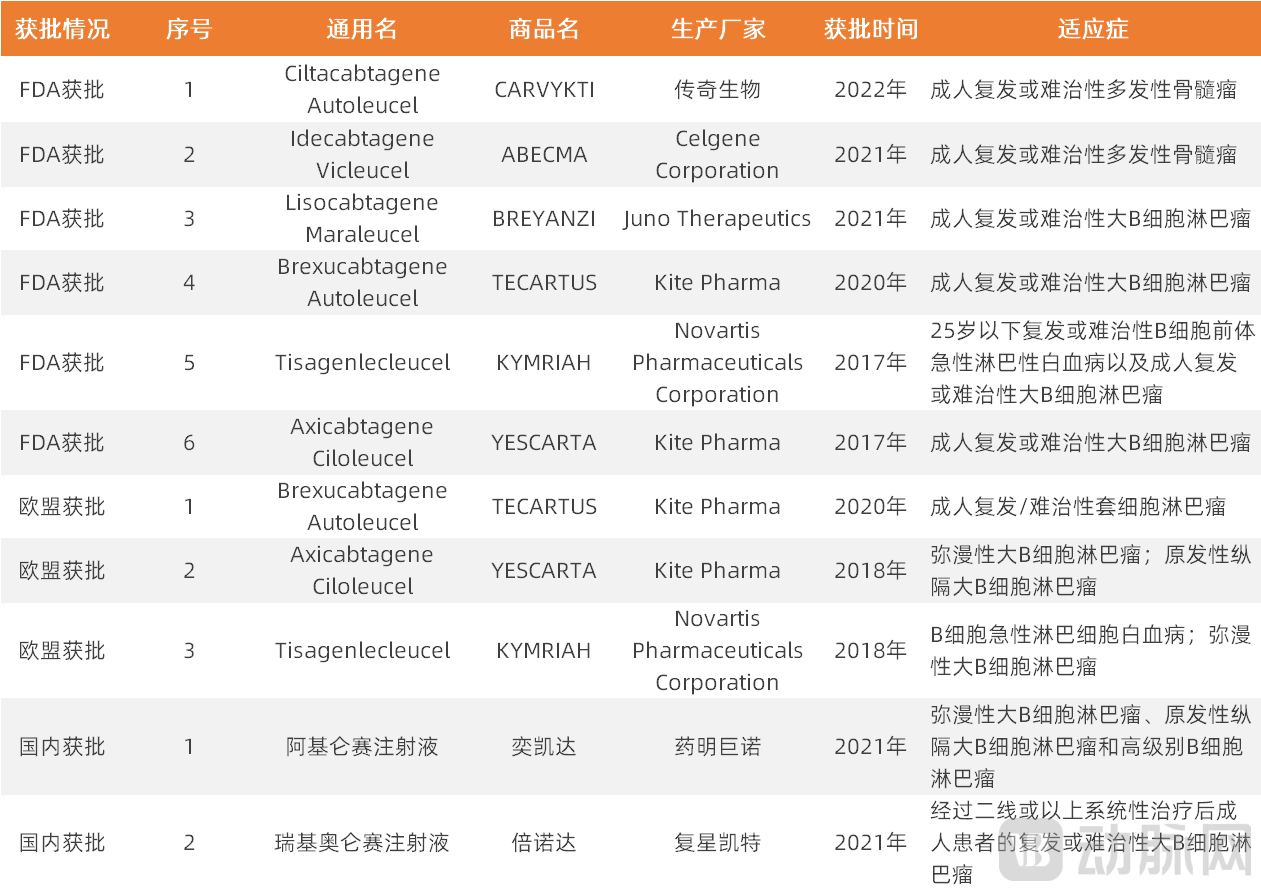
Current Global Approval Status of CAR-T Products
(Compiled from public information; graphic by VCBeat)
Emily’s “miracle” is a very typical case among cell therapy products, but in fact, there are others, including DC products,Other Immune Cell Therapy Productsas well as including hematopoietic stem cells (HSCs), mesenchymal stem cells (MSCs), and othersStem Cell Products, similar “miracles” to Emily’s are unfolding in different patients.
Recently, the top academic journal *Nature* published a research report on the long-term potential and stability of CAR-T cell therapy for leukemia. A team led by Professor Carl June, widely recognized as the "father of CAR-T," has found through long-term studies thatIn two patients with chronic lymphocytic leukemia, active CAR-T cells remained detectable after ten years; although present at low levels, they were measurable and retained cytotoxic activity, resulting in sustained disease remission.
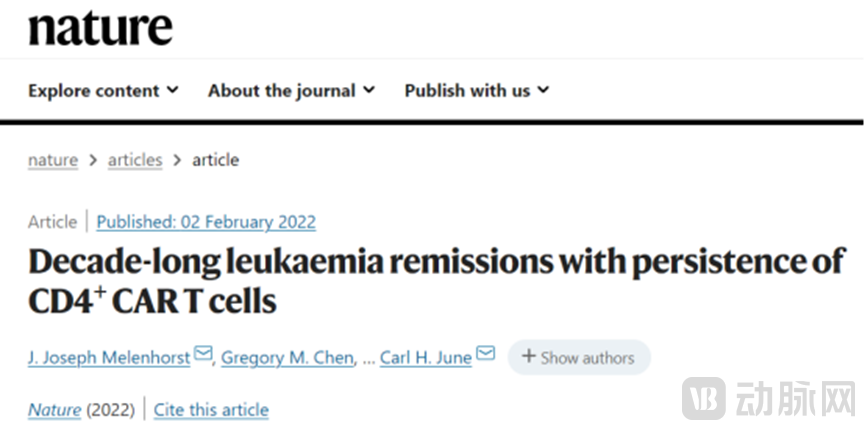
Image source: Melenhorst, J.J., Chen, G.M., Wang, M. et al. Decade-long leukaemia remissions with persistence of CD4+ CAR T cells. Nature 602, 503–509 (2022).
The hope and emotion interwoven behind these miracles have fueled the booming global trend in cell therapy development—Europe and the United States have collectively approved dozens of cell therapy-related products to date.Looking at the domestic landscape, the sequential approvals last year of two cell therapy products—Fosun Kite’s Yikaida (axicabtagene ciloleucel injection) and JW Therapeutics’ Beinuoda (relmacabtagene autoleucel injection)—coupled with the successful global launch this year of Legend Biotech/J&J’s BCMA CAR-T therapy, ciltacabtagene autoleucel (cilta-cel, marketed as Carvykti), have significantly bolstered confidence in the development of the cell therapy industry among Chinese industrial stakeholders and the market, further intensifying their enthusiasm for this therapeutic sector.
Countless enterprises are sparing no effort to actively advance the development of their own cell-based products, while vast amounts of capital are being poured into promising cell therapy startups.
The resulting situation is,China currently ranks second globally in the number of cell therapy clinical trials, trailing only the United States. In 2020 alone, total financing in China’s cell therapy sector reached RMB 12.6 billion, with a compound annual growth rate (CAGR) of 118.8% in financing from 2016 to 2020.
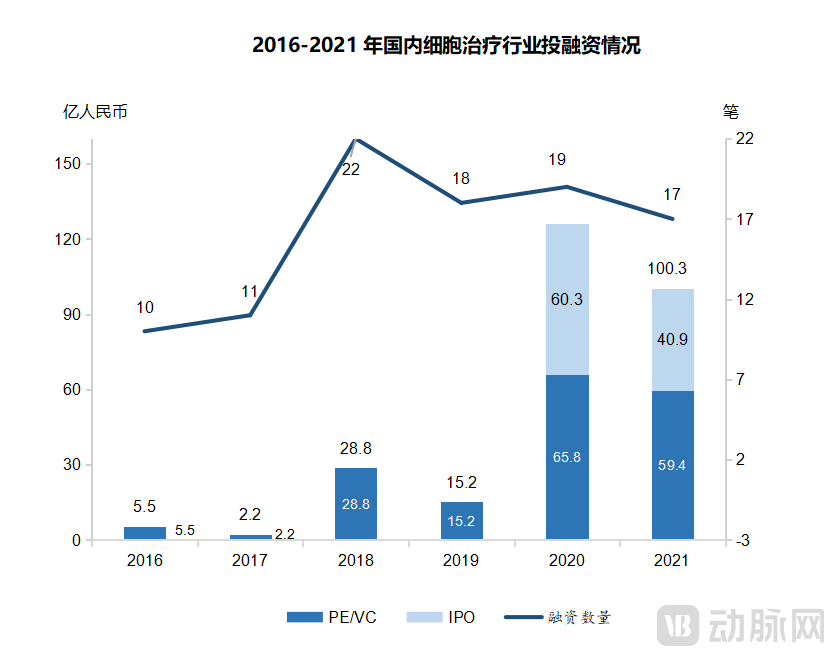
Investment and Financing in China’s Cell Therapy Industry, 2016–2021
(Source: Frost & Sullivan Report)
The entire cell and gene therapy industry is beginning to enter the stage of large-scale industrialization. AndThe success rate and speed of product development have become the key to corporate victory.
Industrial-scale validation and pharmaceutical process development of cell-based therapies are the “rate-limiting steps” hindering innovative drug companies from advancing the industrialization of cell-based therapies.Therefore, how CDMOs facilitate the industrialization of cell therapy has become a focal point in the industry—the booming development of the cell therapy sector has directly ushered in a “spring” for the cell therapy CDMO industry.
The primary functions of a cell therapy CDMO are to provide process development and manufacturing services for clinical-stage novel drugs, as well as process optimization and large-scale production services for marketed drugs, including the production of investigational medicinal products for preclinical and clinical trials, and commercial drug manufacturing.
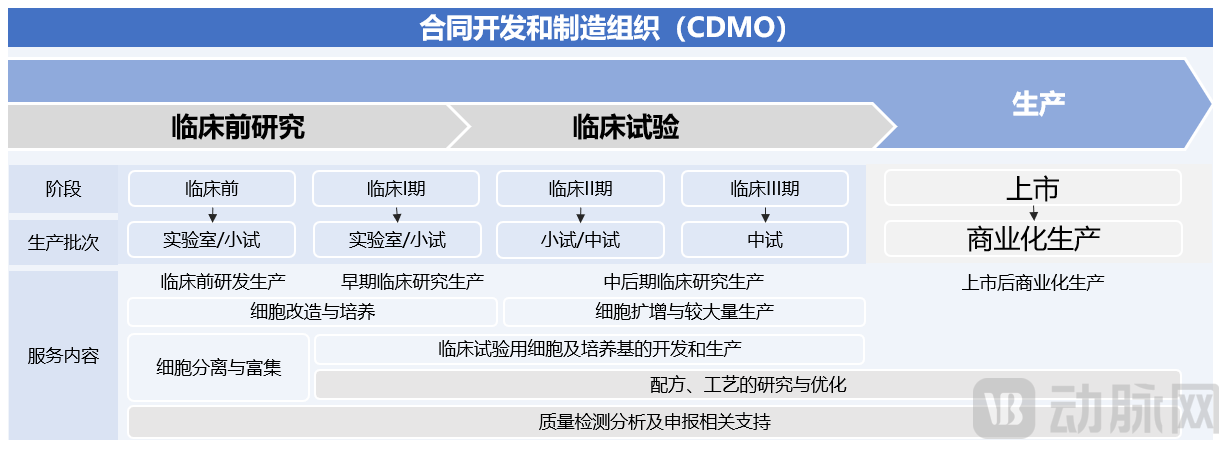
Overview of CDMO Services
(Source: Frost & Sullivan Report)
Its role in the industry, includingReduce production risks and costs for companies in the early-stage R&D of cell therapy drugs, shorten corporate R&D cycles, and meet regulatory compliance requirements regarding product quality and safety.etc., similar to the application scenarios for CDMO services in the traditional pharmaceutical sector.
However, the cell therapy industry exhibits a stronger demand for and greater willingness to engage CDMOs.
The underlying reasons are mainly reflected in three aspects:
1. As an emerging sector, the relevant enterprises are predominantly start-ups, with many companies tending to allocate funds to pipeline development, team building, and other areas;
2. Compared with traditional drug development, cell therapy drugs require higher R&D investment;
3. The manufacturing process for cell therapy drugs is complex, with higher entry barriers.
As an emerging sector, the cell therapy industry is predominantly composed of biotechnology start-ups, with larger traditional pharmaceutical companies representing a minority. AndStartups often lack sufficient financial, human, and other resources, yet they face challenges such as high capital costs for building in-house production capacity, slow construction timelines, lengthy validation periods, and the need to recruit large numbers of production and quality control (QC) personnel.Therefore, compared with other traditional pharmaceutical sectors, the cell therapy sector has stronger and more urgent demand for CDMO services.
According to Frost & Sullivan’s report, the R&D costs for cell and gene therapies during the discovery and preclinical stages range from $900 million to $1.1 billion, while those in the clinical stage range from $800 million to $1.2 billion;The high investment required for the development of cell therapy drugs has created a strong demand among cell therapy companies to leverage specialized outsourced R&D and manufacturing teams to reduce drug development costs.
Regarding the cost issues of cell therapy drugs, Wang Liqun, founder of Xingyi'ang Biopharma and former CEO of Fosun Kite, has publicly stated that,Since any change to the CMC (Chemistry, Manufacturing, and Controls) of cell therapy products results in a “completely different product,” there is limited room for cost reduction once the product filing is completed. Therefore, cost reduction strategies for cell therapy products should be considered from the initial project initiation stage.“We can apply the experience gained from the first product to the development of the second and third products through innovation,” said Wang Liqun.
However, given that most companies lack experience in the development of cell-based therapies and the success of their first product is critical, professional cell therapy CDMOs with established capabilities in basic research and process development offer pharmaceutical companies a more reliable alternative.By providing comprehensive solutions, CDMOs can help companies enhance R&D efficiency and mitigate risks, ultimately achieving the commercialization of cell-based products.
Furthermore, given the R&D challenges in cell therapy drug development—such as the difficulties in scaling up manufacturing and the high technical barriers to process optimization—companies in this sector have a stronger demand for CDMO services.Compared with traditional large-molecule and small-molecule drugs, cell therapies impose higher requirements on research, development, and manufacturing: these include not only the establishment of cell banks, selection and optimization of viral vectors, and scaled-up cell culture, but also more stringent standards for quality control, batch-to-batch consistency, formulation, transportation, and administration.
Cell therapy CDMOs typically maintain extensive libraries of cells and vectors, enabling pharmaceutical companies to select optimal candidates and optimize manufacturing processes. This approach reduces trial-and-error costs while enhancing R&D efficiency and success rates. Their robust production platforms and stringent quality control measures help pharmaceutical companies lower commercialization costs and shorten timelines. Professional QA/QC personnel and rigorous end-to-end oversight ensure that cell therapy products are manufactured in compliance with national GMP quality standards. Furthermore, some cell therapy CDMOs offer one-stop regulatory services, including Investigational New Drug (IND) applications and New Drug Applications (NDA), thereby further accelerating the R&D progress for pharmaceutical companies.
Overall, cell therapy CDMOs can achieve standardized manufacturing of target products in a manner that is high-volume, rapid, high-quality, and cost-effective, while simultaneously meeting the customized needs of pharmaceutical clients, thereby facilitating regulatory filings for cell-based drugs and ensuring a stable supply.
However, the many advantages of cell therapy CDMOs mentioned above hold true only under the premise that the cell therapy CDMO is highly mature and professional. If a cell therapy CDMO lacks sufficient maturity and expertise, pharmaceutical companies will inevitably harbor numerous concerns and doubts when entrusting their cell-based drug products to such CDMOs. So, what is the current state of development in China’s cell therapy CDMO sector? Amidst the cell therapy industry teeming with “gold rush” participants, which dark horse from the “water seller” ranks will emerge as the frontrunner?
VCBeat previously conducted a review of the gene and cell therapy CDMO sector, revealing that few companies in China specialize exclusively in cell therapy CDMO services; most CDMO firms offer both gene and cell therapy CDMO services. Puxin Biology may be the only provider in China focused on delivering comprehensive CDMO solutions for cell therapy. The company recently completed a Pre-A financing round of nearly RMB 100 million, led by PuHua Capital.
As an emerging development track in the medical field, cell therapy presents significant risks, requiring startups that bet on this niche sector to possess considerable strength and courage. To gain a deeper understanding of a company that has chosen the “path less traveled by most”—focusing specifically on the CDMO niche within cell therapy—we spoke withDr. Yi Zhu, CEO of PuXin BioA conversation was held.
Why Choose to Focus on Cell Therapy CDMO Services? Dr. Zhu Yi stated that this decision was entirely based on the company team’s own strengths and advantages—the Puxin Biologics team had previously developed related cell therapy products in the early stages, accumulating extensive experience in the research, development, and manufacturing of cell-based drugs.Leveraging its own understanding and development capabilities in cell-based therapies,Pu Xin Bio can help clients avoid potential pitfalls in the research, development, and manufacturing of cell-based therapies and effectively resolve numerous challenges encountered during the process, thereby enabling clients to “take fewer detours.”
“Compared with CDMO services in the antibody and small molecule fields, cell therapy CDMO services have their own uniqueness, with significant differences in processes and production standards. Therefore“In addition to conventional cGMP compliance, production capacity, and quality standards, cell therapy CDMOs are now subject to higher, newer, and more critical requirements—namely, a profound understanding of cell therapies and robust capabilities in industrial translation.”Dr. Zhu Yi stated that evaluating CDMO services from a drug development perspective is a highly challenging issue, particularly for cell therapies, where research and development are closely intertwined with manufacturing.
Novartis, a leader in the field of cell therapy, has repeatedly chosen to collaborate with Oxford Biomedica (OXB) for the production of cell-based drugs, serving as a strong testament to this partnership. Founded in 1995 and listed on the stock exchange in 2001, Oxford Biomedica is recognized as a pioneer in lentiviral vector gene therapy. It owns the proprietary LentiVector® gene delivery platform, based on which it has developed multiple gene therapy products, while also providing contract development and manufacturing organization (CDMO) services for gene and cell therapies. Recognizing Oxford’s unique expertise in the research, development, and manufacturing of gene therapy products, Novartis has maintained a close collaboration with Oxford since 2013, repeatedly selecting the company to supply lentiviral vectors for its CAR-T candidate products in clinical trials.
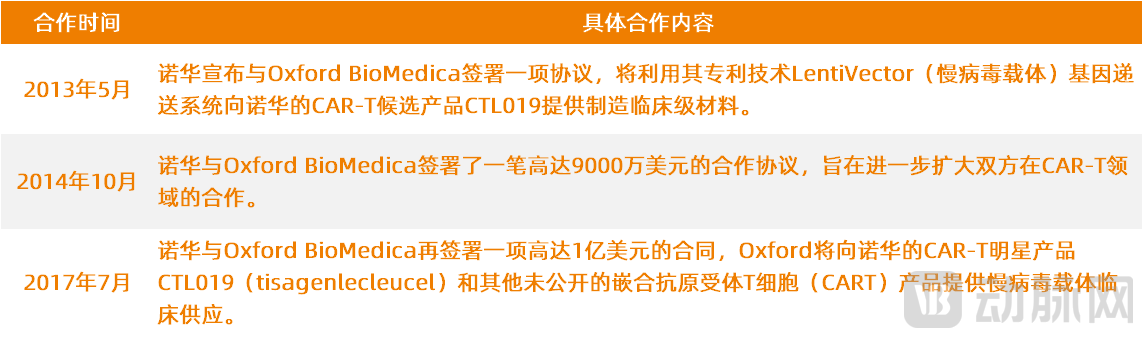
Novartis and Oxford Biomedica Have Engaged in Multiple Strategic Collaborations
(Compiled from public sources; graphic by VCBeat)
Similarly,Adhering to drug development standards for order fulfillment, Puxin Biology provides customers with practical corrective action plans upon timely issue detection, even at the product design level.“This places high demands on our team, but it significantly reduces obstacles in the subsequent product development process. Ensuring the success rate of product development while maintaining speed at each stage is the added value that Puxin Services delivers to clients. We believe such services are highly valuable to customers.”
The first project undertaken by Puxin BiotechRegistration of Clinical Production ProjectsIt is a Phase I/II CAR-T cell therapy project.Based on extensive experience across the entire lifecycle of cell therapy development, including early-stage R&D, IND filing, and clinical-grade manufacturing for registration purposes,PuXin Bio has established a comprehensive, multi-dimensional, and mature end-to-end service capability.
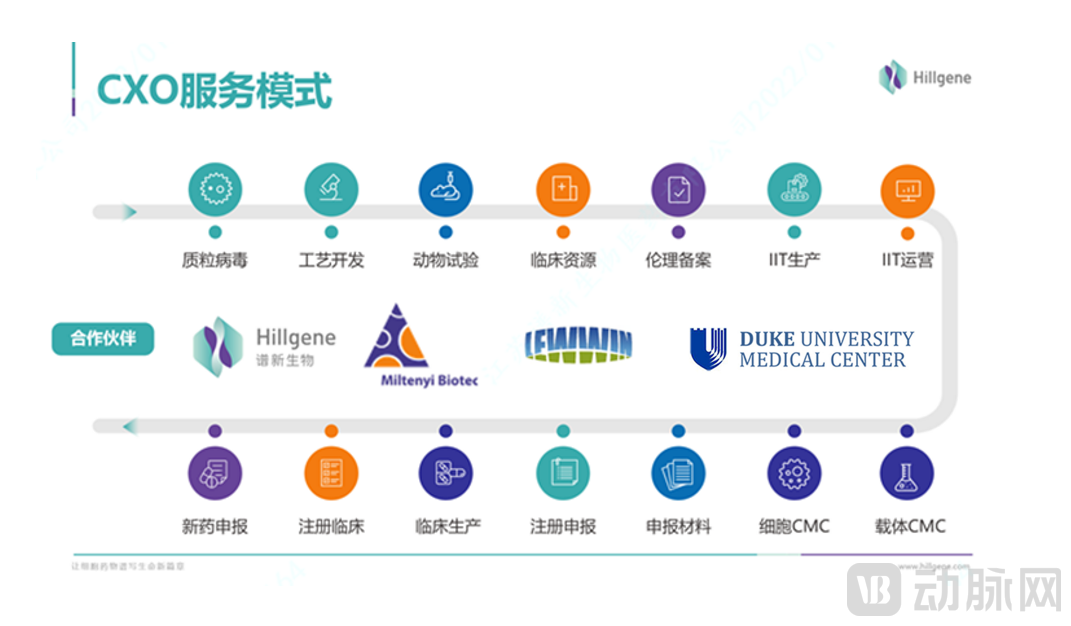
The Current State of Domestic Cell Therapy CDMOs: Most Companies Are Still Navigating Uncharted Waters and Growing Alongside Their Clients, with Few Possessing Mature Delivery Experience for Cell Therapy Projects.Puxin Biologics is one of the very few CDMO companies in China with practical experience and capabilities to undertake such projects, which is a key reason for its strong industry performance despite the widespread entry of leading enterprises and startups into the cell therapy sector.
As one of the first companies in China to establish a presence in cell therapy CDMO services, Puxin Biologics has served over 100 industrial clients. The company began independent operations in late 2020 and secured orders totaling RMB 120 million throughout 2021. In August 2021, Puxin Biologics entered into a comprehensive strategic partnership with Promab Biotechnologies for the contract development and manufacturing of cell therapy drugs. Leveraging its process development capabilities and GMP-compliant manufacturing capacity for cell therapies, Puxin Biologics provides CDMO services for multiple novel CAR-T cell therapies developed by Promab.
“Customers’ trust in Puxin is the best testament to our capabilities,” said Dr. Zhu Yi with delight.
Focusing on the field of cell-based therapies, Puxin Bio has established an innovative platform that stands out in the industry—includingHiLenti™ Lentiviral PlatformandHiCellx™ Cell Technology Platformetc., is an industrialization translation assessment and service platform for CDMO manufacturers based on the first cell therapy drug production under the MAH system. Puxin Biology has extensive experience in plasmid process development and pilot-scale production, mastering safe and scalable suspension serum-free cell culture as well as single-use bioreactor-based lentiviral vector production processes. It has successfully supported multiple partners in incubating various drugs including CAR-T, TCR-T, and stem cell therapies.
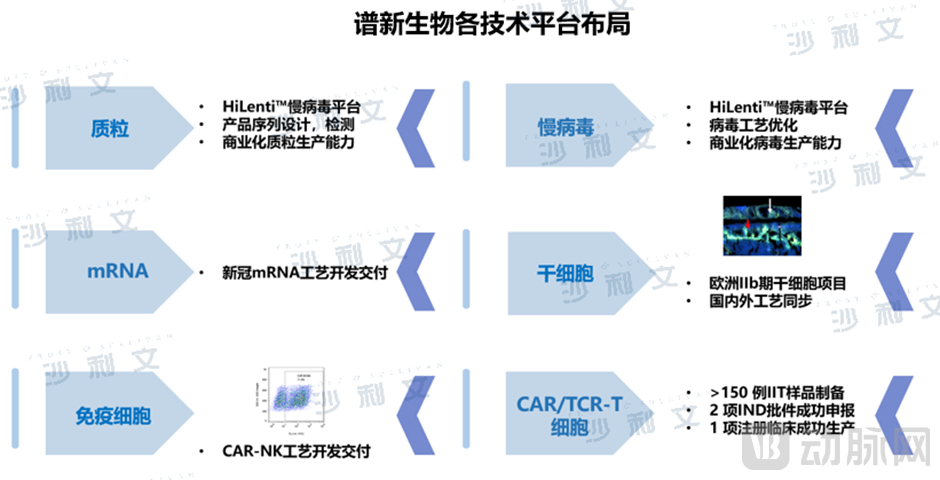
Spectrum Bio's Layout of Various Technology Platforms
(Source: Frost & Sullivan)
“Pu Xin Biologics is the first company in China to achieve serum-free suspension culture technology, and it is also one of the few CDMO companies that have projects using suspension serum-free lentiviral processes and have obtained implicit IND approval,” said Dr. Zhu Yi.As the cell therapy industry enters the late stage of industrialization, higher demands are being placed on the yield, quality, and stability of viral vectors.From a technical perspective, the production capacity of virus-producing adherent cells is sufficient for small-scale research use; however, for commercial manufacturing, suspension culture systems can deliver higher yields and quality.
Puxin Bio’s HiCellx™ cell technology platform is equipped with closed-cell production systems widely recognized by international health regulatory authorities, and features a mature closed-cell manufacturing process that has already supported cell production for multiple projects.“To fundamentally address the issue of production stability, it is essential to minimize human intervention and increasingly adopt automated, fully closed culture systems for product manufacturing; this represents the future development trend of the cell therapy industry.”Dr. Zhu Yi said.
In terms of capacity building, Puxin Bio currently operates a 10,000-square-meter GMP facility at its Suzhou headquarters, with an additional 8,000-square-meter GMP facility under construction at its Shenzhen base, thereby initially establishing a nationwide production network. Furthermore, a facility in North Carolina, USA, is also under construction to synchronize the company’s global capacity layout. “Puxin Bio currently possesses production capabilities and quality systems on par with those of companies that have commercialized cell therapy products. All production facilities and overall construction standards are established to support the future commercial manufacturing of cell and gene therapies.”
On January 6, 2022, the General Office of the National Medical Products Administration (NMPA) publicly solicited comments on the “Good Manufacturing Practice for Drugs – Appendix: Cell Therapy Products (Draft for Comment),” which constitutes the second draft version of the GMP appendix for cell therapy products.This document takes into account the practical realities of manufacturing management for cell therapy products, a specialized category of pharmaceuticals, while also imposing higher regulatory requirements and stricter standards for all aspects related to safety.
"The document raises the entry threshold for the industry and imposes higher requirements on production management."“All manufacturing facilities of Puxin Biologics have been constructed in strict accordance with the high regulatory standards for cell therapy products set by Chinese regulators; in certain details, domestic standards even exceed those of the U.S. FDA. Therefore, the implementation of this document by the National Medical Products Administration (NMPA) is beneficial to our company. Puxin Biologics consistently approaches all issues arising during its development from a pharmaceutical perspective.”
“Let cell-based therapies write a new chapter in life” is the vision of Puxin. Leveraging their team’s capabilities, they strive to maximize their focused strengths—a hallmark of their operational style. In the seemingly niche segment of cell therapy CDMO, the Puxin team harbors ambitious dreams.