

TriSalus Life Sciences Submits IPO Filing for Innovative Interventional Oncology Platform
TriSalus Life Sciences
Tumor Treatment Method Developer
Interventional radiotherapy is a minimally invasive technique that utilizes vascular maps provided by angiography to guide microcatheters through body lumens to the lesion site, thereby achieving targeted therapy. Compared with normal tissues, the growth and proliferation of malignant tumors are more dependent on blood supply. Therefore, vascular interventional techniques can be employed in conjunction with embolic microspheres to disrupt the blood supply to tumor cells. Meanwhile, chemotherapy or radiotherapy drugs can be coated onto the surface of the embolic microspheres, on one handReduces tumor size by slowing or even blocking blood supply.the role of, on the other hand, canTargeted delivery of chemotherapy or radiotherapy drugs to kill tumor cells.
ThisThis technology offers the following advantages: minimally invasive intraluminal access, no scarring, low risk of infection, high surgical success rate, and short postoperative recovery time.On the flip side, this technology also has certain drawbacks: puncture-based intervention requires operationalThis procedure demands a high level of physician expertise, is relatively time-consuming, carries risks of vascular injury and major hemorrhage, and may lead to potential side effects due to off-target effects caused by blood backflow during puncture.For example, intestinal ulcers and cholecystitis.
Located in Westminster, Colorado, USATriSalus Life Sciences (hereinafter referred to as “TriSalus”)The company has optimized its products and technologies to address these issues, achieving favorable clinical outcomes.
TriSalus Life Sciences was founded in 2009. Originally named Surefire Medical, the company was renamed TriSalus Life Sciences on September 12, 2018. The name “TriSalus” is derived from Salus, the Roman goddess representing health, prosperity, and safety, while “tri” is an acronym for its three strategic pillars: Targeted Therapeutic, Regional Tumor-Directed Delivery, and Immunomodulation.
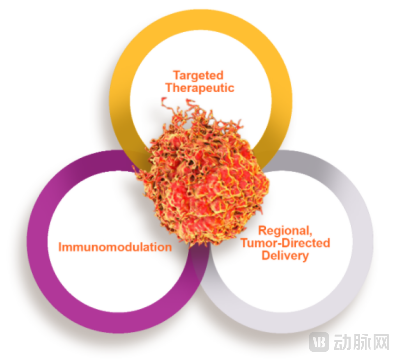
TriSalus’ Three Strategic Pillars
This enterpriseDedicated to the research and development of interventional radiology treatment devices.Focus onDevelopment of Drug Delivery Technologies for Solid Tumors, aiming toProvide innovative therapies for hard-to-treat tumors, such as pancreatic cancer and liver metastases, and improve the management of immuno-oncology (IO) therapies.
The company’s products overcome a series of limitations associated with traditional interventional radiology therapies through their unique design. The microcatheters, featuring excellent flexibility and a highly hydrophobic outer coating, effectively reduce resistance during surgical cannulation, thereby lowering the risk of bleeding and significantly shortening procedural time.
Its unique infusion pressure design enables precise drug delivery to the target area, thereby significantly increasing the effective drug concentration in tumor tissue. The soft and elastic distal tip of the microcatheter effectively reduces backflow during drug injection, thus minimizing side effects on normal tissues. Early clinical results indicate that this technique yields a favorable drug response in 80% of patients with hepatocellular carcinoma.
The company had secured four rounds of funding prior to its name change, totaling $52.1 million.
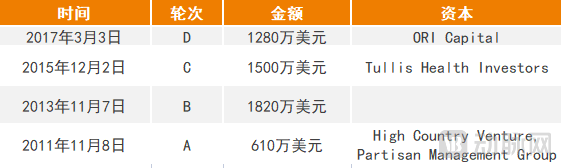
TriSalus Financing History
Studies have demonstrated that intratumoral pressure (ITP) significantly impacts therapeutic delivery. The use of standard treatment modalities may fail to achieve effective tumor penetration and saturation.
TriSalus has invented Pressure-Enabled Drug Delivery (PEDD) technology and is dedicated to developing its application in the treatment of solid tumors and immuno-oncology (IO).
PEDD is a novel approach powered by SmartValve technology that works in synchrony with the heart to augment the delivery pressure generated by the cardiovascular system itself. This may help open collapsed vessels within tumors and achieve deeper perfusion.
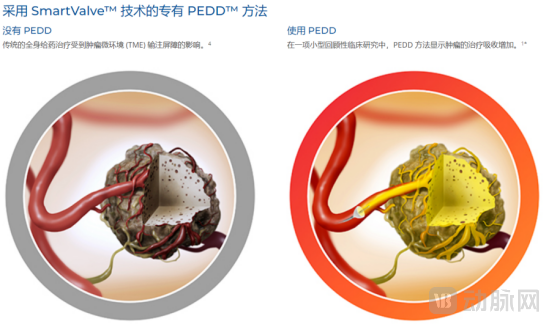
SmartValve technology is a unidirectional, intermittently occlusive valve that physiologically and non-invasively increases local vascular pressure at the target site to improve therapeutic delivery while preserving normal tissue.
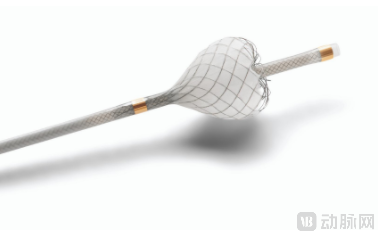
TriNav Infusion System
Its flagship product, the TriNav Infusion System, combines the advantages of PEDD and SmartValve technologies to provide interventional radiologists with endovascular tumor access, improvingTraceability and Compatibility with Standard Angiographic Catheters(Can be used with 0.035 and 0.038 standard angiographic catheters) and withStandard intervention-comparable workflow.
The TriNav Infusion System is a 0.021-inch lumen microcatheter with a SmartValve self-expanding tip. The SmartValve facilitates pressure generation, enabling the delivery of therapeutic agents to selected sites within the peripheral vascular system, including solid tumors in the liver.
According to the TriSalus website, the tumor microenvironment creates a pressure barrier that restricts inflow into solid tumors. The PEDD equipped with SmartValve can generate a high-pressure gradient, thereby improving the delivery and penetration of therapies into tumors. The porous, expandable SmartValve is designed to allow antegrade flow and leverage blood flow to deliver doses deep into solid tumors. The SmartValve enables the delivery of therapeutics to the intended target.
Based on clinical studies conducted to date,TriNav has demonstrated the potential to overcome intratumoral pressure in solid tumors, thereby improving the distribution and penetration of therapy during arterial embolization.
Dr. Ripal Gandhi, an interventional radiologist at the Miami Heart and Vascular Institute and the Miami Cancer Institute, spoke highly of the product: “The TriNav device effectively penetrates and saturates tumor tissue. It also reduces non-targeted delivery to normal liver tissue.”
In addition to the TriNav Infusion System, TriSalus also offers the Pancreatic Regional Venous Infusion (PRVI) System, which is designed to provide direct venous access to the vasculature draining pancreatic tumors, enabling targeted delivery of therapeutic agents into the tumor’s vascular system.
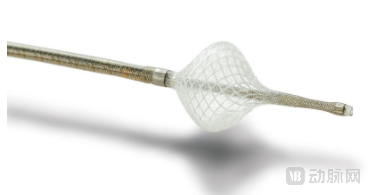
Pancreatic Infusion System (PRVI)
In addition to advancing its product portfolio, TriSalus is conducting research on SD-101 to reactivate the immune system within the liver and pancreas, thereby enhancing the efficacy of other immunotherapeutic agents (such as checkpoint inhibitors and CAR T-cell therapies) and ultimately improving patient outcomes. This platform leverages TriSalus’s proprietary Pressure-Enabled Drug Delivery™ (PEDD) method to modulate intravascular pressure and flow, thereby increasing therapeutic drug delivery to tumors.
A robust business pipeline is inseparable from the strategic planning of the team behind it.

TriSalus Core Leadership Team
Ms. Mary Szela, Current CEOWith nearly 30 years of experience in both the commercial and clinical sectors. She served as Chief Executive Officer of Novelion Therapeutics, a rare disease company, and orchestrated the merger of Aegerion Pharmaceuticals and QLT Therapeutics. Previously, she held key positions at Novelion and Abbott Laboratories, accumulating extensive expertise in corporate governance, risk management, and strategy.
Current Chief Medical Officer Steven KatzHe joined TriSalus in 2018 as Chief Medical Advisor and Chair of the Scientific Advisory Board. In September 2020, he became Chief Medical Officer of TriSalus. Previously, he served as Director of the Office of Therapeutic Development at Roger Williams Medical Center and as Associate Professor of Surgery at Boston University School of Medicine. Dr. Katz attended New York University School of Medicine, where he was awarded Alpha Omega Alpha honors. He completed his general surgery residency at NYU Langone Medical Center and conducted research in immunology and surgical oncology at Memorial Sloan Kettering Cancer Center, serving as Chief Administrative Fellow. He possesses profound medical expertise and robust research capabilities.
The remaining core team members comprise both medical experts and multidisciplinary professionals with extensive industry experience. Leveraging their exceptional management capabilities and market innovation skills, they effectively integrate mature clinical, strategic, and commercial competencies to drive substantial growth for TriSalus Life Sciences.
According to the latest global cancer data released by the International Agency for Research on Cancer (IARC) of the World Health Organization, there were approximately 19.29 million new cancer cases worldwide in 2020. Among these, China ranked first globally with 4.57 million new cases, making the oncology treatment market a substantial and critical necessity in the country. Of all cancer types, primary liver cancer in China accounted for 410,000 new cases and approximately 390,000 deaths, ranking second among all cancers. This highlights the urgent need to address the demand for liver cancer treatment in China.
Transarterial Chemoembolization (TACE) is the preferred first-line treatment for intermediate-to-advanced stage liver cancer. Since its inception 30 years ago, the technique has been continuously refined and improved, achieving widespread application globally, andhave developedThree major techniques: conventional transarterial chemoembolization (c-TACE), drug-eluting bead transarterial chemoembolization (D-TACE), and transarterial radioembolization (TARE).VCBeat had previously"Boston Scientific and Hengrui's Layout in the Oncology Intervention Market: How Drug-Device Combination Can Break into the Blue Ocean"For a detailed introduction, interested readers are encouraged to proceed to the article.
Currently, the domestic TACE market is characterized by “two highs and one low”:
High Growth—primarily stemming from the large base of liver cancer patients in China;
High Barriers—As a drug-device combination product, TACE products feature exceptionally high barriers in R&D, patents, and manufacturing; they are complex products supported by an integrated knowledge base encompassing synthetic chemistry, biochemistry, microelectronics, pharmacology, immunology, and other disciplines.
Low Participant Enrollment——The formidable barriers in talent and technology serve as both a moat for early movers and a trench that latecomers must cross. Consequently, few companies in China have mastered the industrialization technology for drug-eluting microspheres.
VCBeat (WeChat ID: vcbeat) has conducted a brief review of relevant enterprises and products in China. If you are also active in this industry but have not been featured, please feel free to contact us!
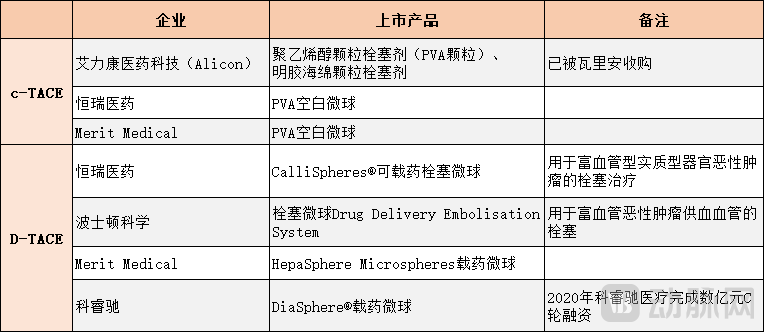
References:
Peng Hong: [Research Value Analysis] Interventional Radiology Therapy Company: Surefire Medical
Yang Xue, “The Oncology Interventional Market Targeted by Boston Scientific and Hengrui Medicine: How Drug-Device Combinations Are Carving Out a Blue Ocean”