

Domestic TIL Therapy Race: Which of the Eight Startups Will Emerge as the Biggest Dark Horse?
The TIL field has been abuzz with activity recently.
In terms of financing, three TIL therapy developers—Cartey Therapeutics, Junsei Bio, and Lanma Medical—have successively announced the completion of new rounds of financing, each amounting to hundreds of millions of yuan. The total financing involved reached RMB 380 million, with an average of RMB 130 million per round.
In terms of clinical progress, the Investigational New Drug (IND) applications for Gravel Biotech’s TIL therapy GT101 and Junsei Bio’s autologous natural tumor-infiltrating lymphocyte injection have been successively accepted by the National Medical Products Administration (NMPA). On February 10, Jinfeng Bio announced further good news: its TIL therapy product has received approval from the U.S. Food and Drug Administration (FDA) to enter Phase I clinical trials. Jinfeng Bio has become the first domestic company developing TIL therapies to obtain approval for clinical trial initiation.

Across the industry, calls for “Iovance Biotherapeutics’ TIL therapy product, lifileucel, to be approved in 2022” have been growing louder, and the TIL field is poised to see its first approved product this year.
For the field of TILs, 2022 is destined to be an extraordinary year.
In light of the numerous recent advancements in the field of TIL therapy in China, VCBeat has conducted a comprehensive review of the domestic TIL landscape and released two industry articles. In the previous article“The First Cell Therapy Product for Solid Tumors Is Imminent: Will This Sector Be the Major Hotspot This Year?”In this article, we begin by examining recent hotspots in the field of tumor-infiltrating lymphocytes (TILs) in China. We outline key historical milestones in the global development of TILs therapy, detail four specific advantages of TILs therapy compared to other immune cell therapies, and provide a comprehensive overview of listed companies worldwide engaged in TILs therapy as well as the latest clinical advances in the industry. Finally, we present the most recent updates on the product pipelines of eight Chinese companies developing TILs therapies.
Following the logic of our previous article, this piece provides a detailed overview of the current development status of eight domestic TIL companies, covering their basic profiles, distinctive technological platforms, latest progress in their R&D pipelines, and financing situations. As these eight Chinese startups compete for dominance, which one will emerge as the most promising “dark horse” in the TIL field? Could any of them even rival the global leaders in the TIL space today? Furthermore, what advantages do TIL therapy companies rooted in the Chinese market hold compared to their counterparts developing abroad?
Since the first financing event occurred in February 2020, there have been a total of 16 financing events in the TIL field from 2020 to the present. The publicly disclosed 14 financing events involved a total funding amount of up to RMB 2.2 billion, with an average financing amount of RMB 150 million per transaction.
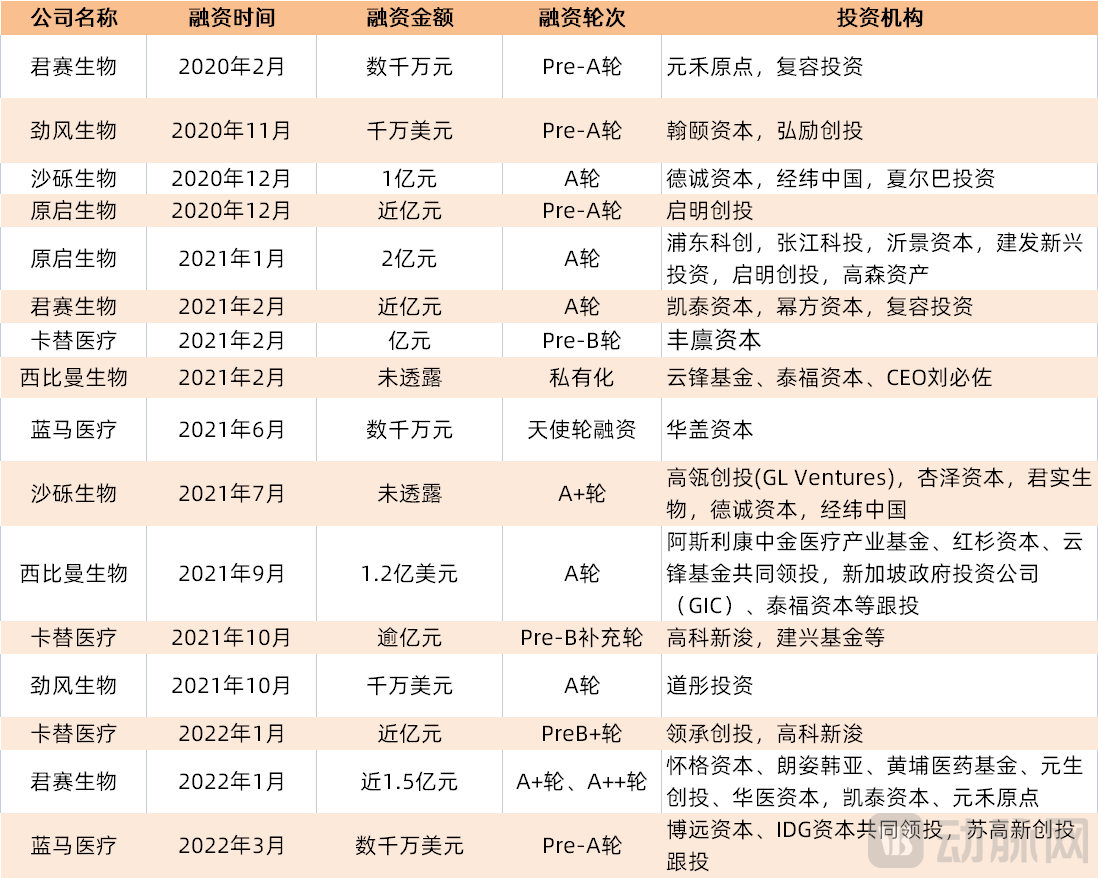
Overview of TIL Therapy Financing in China
To date, 2021 witnessed the highest number of financing events in the TIL sector, with a total of nine deals. Among these, seven publicly disclosed financing rounds amounted to a total of RMB 1.54 billion, averaging RMB 220 million per round. In contrast, there were four financing events in the TIL sector in 2020, involving a total funding amount of RMB 280 million, with an average of RMB 70 million per round.
Among the eight companies developing TIL therapies, which one is most favored by investors? What is the current development status of each company? Below, we provide a detailed overview of each company’s basic profile, distinctive technological platforms, latest progress in their R&D pipelines, and financing activities.
Sibiomann: The “Big Brother” Pivoting from the Secondary Market, Boasting World-Class Cell Therapy CMC Processes and Two TILs Pipelines in Development


Founded in 2009, Cibioman Biologics is the first Chinese cell therapy biotechnology company to be listed on the NASDAQ in the United States. On February 20, 2021, Cibioman Biologics announced the completion of a privatization transaction initiated by a buyer consortium led by Yunfeng Capital, Taifu Capital, and CEO Liu Bizuo. In September 2021, Cibioman Biologics completed a $120 million Series A financing round.
TIL therapy is just one of CytoMed Therapeutics’ business lines.According to the official website, Cytopeutics owns two major cell technology platforms: (1) an immune cell therapy platform; and (2) a stem cell platform. In October 2018, Cytopeutics licensed patent technologies related to TIL therapy from the U.S. National Cancer Institute (NCI) to develop, manufacture, and commercialize next-generation neoantigen-reactive tumor-infiltrating lymphocyte (TIL) technology for the treatment of a broader range of cancers, including solid tumors.
Currently, the company is primarily advancing two TIL therapy product pipelines: TIL1 (in combination with anti-PD-1), which is in the preclinical stage for the treatment of non-small cell lung cancer; and TIL2 (in combination with anti-PD-1), which is in the proof-of-concept stage for other solid tumors (such as gastric cancer, cervical cancer, and head and neck cancer).


Carpenter Biopharma possesses world-class CMC capabilities for cell therapy. In September 2018, Carpenter Biopharma entered into a strategic licensing and collaboration agreement with Novartis to manufacture and supply the CAR-T cell therapy Kymriah® (tisagenlecleucel) in China. Kymriah® was approved by the U.S. FDA in August 2017, becoming the first cell therapy product to receive FDA marketing authorization globally. Currently, Kymriah® is marketed in the United States, Canada, Europe, Australia, and Japan for the treatment of leukemia and lymphoma. The technologies, processes, and systems related to the production and quality control of Kymriah® have been fully implemented at Carpenter Biopharma.
Cartey Medical: Strong Anti-Tumor Efficacy Achieved with “Ultra-Potent TILs” Without the Need for Surgical Tissue Harvesting

Chineo Medical, established in 2015, is a representative enterprise in China for innovative immunocellular therapies, including TIL, neoantigen, and novel CAR-T treatments. To date, Chineo Medical has secured nearly RMB 500 million in financing.
Katai Medical’s independently developed “Supercharged TIL” immune cell therapy technology leverages patented technologies such as “enhanced receptors” and “expansion factors” to genetically modify TILs. This endows the cells with super-enhanced functions, including the ability to overcome barriers within the tumor microenvironment and to undergo nearly unlimited replication and expansion in vivo. By capitalizing on the natural tumor-specific recognition capability of TILs, this approach simultaneously addresses three major challenges—tumor recognition, microenvironmental resistance, and efficient expansion—thereby achieving potent anti-tumor efficacy.
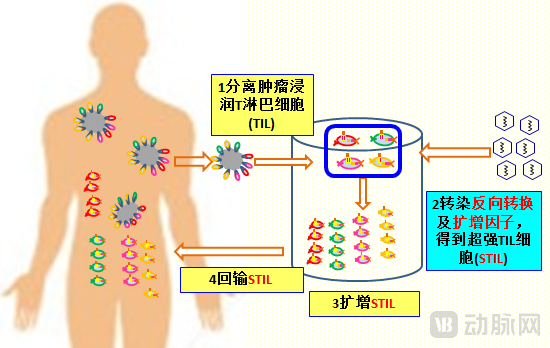
Preparation Process of Supercharged TILs (Image Source: Cartey Therapeutics Official Website)
ScTIL is the fourth-generation TIL therapy developed by Cartey Therapeutics based on traditional TIL therapy. The cellular source of this product does not rely on surgical tissue but requires only peripheral blood collection, thereby significantly enhancing the convenience of treatment administration. Furthermore, genetic modifications are applied to endow the TILs with enhanced capabilities to overcome barriers within the tumor microenvironment and to expand in vivo. Leveraging the natural tumor-specific recognition of TILs, this approach simultaneously addresses three major challenges: tumor recognition, overcoming the microenvironment, and efficient expansion, thereby achieving potent anti-tumor efficacy. In earlier proof-of-concept clinical studies, the product demonstrated positive efficacy and safety profiles.
Origin Biotech: Independently developed an efficient, stable, and controllable culture platform for Ori® TIL cell expansion, effectively addressing multiple bottlenecks in TIL therapy; three TIL pipelines are currently under development


Yuanqi Biopharma (formerly known as “Yuanneng Medicine”) was founded in 2015, focusing on the research and development of novel immuno-oncology drugs. Like CytoMed Therapeutics, Yuanqi Biopharma’s product pipeline is not limited to TILs therapy; it has also developed multiple product candidates targeting liver cancer, ovarian cancer, gastric cancer, cervical cancer, and non-small cell lung cancer, including CAR-T, UCAR-T, and mono-/bispecific antibodies. To date, Yuanqi Biopharma has secured total financing of nearly RMB 300 million.
In the field of TILs, OriGene has developed the Ori®TIL cell high-efficiency expansion and stable, controllable culture platform. This platform employs three key technological approaches to effectively address bottleneck issues such as the difficulty of in vitro TIL expansion, the lack of specific assays for detecting residual tumor cells, and high manufacturing costs:
(1) Enhancing the youthfulness of TILs to boost their tumor-killing activity and purity, while increasing tissue-resident memory T cells (TRM) and shortening the cell culture period, thereby ensuring clinical efficacy;
(2) Developed a novel, universal detection method with sensitivity below the standard limit of detection; the T-cell composition is well-defined and quality is controllable, ensuring the safety of the infusion product;
(3) By adopting a closed-system production process, the average preparation cost is reduced through optimized use of reagents and consumables (such as culture media and growth factors), equipment, personnel, and facilities, thereby enhancing the affordability of clinical treatment costs.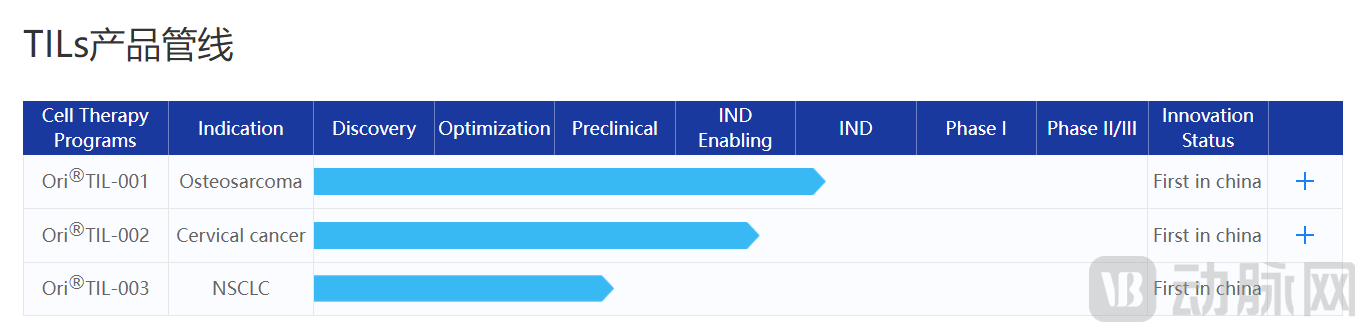
According to the official website,Currently, Origin Biopharma has established three TIL product pipelines: OriTIL-001 (indicated for osteosarcoma), OriTIL-002 (indicated for cervical cancer), and OriTIL-003 (indicated for non-small cell lung cancer).Among them, OriTIL-001 and OriTIL-002 have currently passed hospital ethics review and initiated exploratory clinical studies.
At the 2021 Annual Meeting of the Chinese Society of Clinical Oncology (CSCO), Yuanqi Biotech publicly disclosed for the first time the clinical research progress in treating pulmonary metastatic osteosarcoma. Preliminary clinical data demonstrated that OriTIL-001 exhibited a favorable safety profile in the treatment of recurrent and refractory osteosarcoma.
Junsai Biologics: NMPA Has Accepted the Clinical Trial Application for Autologous Natural Tumor-Infiltrating Lymphocyte Injection (TILs Therapy)

Junsai Biologics, founded in July 2019, is dedicated to developing innovative TIL-based therapies for solid tumors and “first-in-class/best-in-class” cell therapies, addressing a wide range of recurrent and refractory cancers. To date, Junsai Biologics has completed three rounds of financing, raising a total of RMB 270 million.
Dr. Jin Huajun, Founder, CEO, and CTO of the company, possesses extensive cross-disciplinary expertise spanning academia, industry, and clinical medicine. With over a decade of dedicated experience in tumor immunology mechanisms and cell therapy, he has accumulated substantial first-hand R&D and clinical research expertise. He has deep insights into the pain points, improvement directions, and strategies for solid tumor cell therapies, and is proficient in the entire lifecycle of novel cell therapy development, including early-stage design, process and assay development, preclinical studies, clinical trials, and regulatory submissions. He pioneered the world’s first clinical-grade CAR-T cell technology with self-expressing antibodies for treating solid tumors, and developed China’s first non-viral vector-based CAR-T cell therapy product. Additionally, he independently established an efficient and simplified technology for TIL cell enrichment and culture, as well as a gene-modified TIL cell therapy regimen.
Currently, Junsaibio has established core technologies such as TIL cell enrichment culture and efficient, safe non-viral vector-mediated T-cell gene modification.On February 9, 2022, the official website of the Center for Drug Evaluation (CDE) indicated that the National Medical Products Administration (NMPA) had accepted the clinical trial application for Shanghai Junsaier Biotechnology Co., Ltd.’s TIL therapy, Autologous Natural Tumor-Infiltrating Lymphocyte Injection.

Lanma Medical: From Research to Industry, the Founding Team Has Been Deeply Engaged in the Field of TIL Therapy for Nearly 20 Years


Lanma Medical, established in December 2020, specializes in the development of cell-based immunotherapy products centered on TIL therapy.Lanma’s primary R&D focuses include genetically engineered TILs to enhance therapeutic efficacy, combination regimens integrating TIL therapy with other immunotherapies, targeted therapies, or chemoradiotherapy, and the development of novel gene vectors for delivering tumor-specific T cells to tumors.To date, Lanma Medical has completed two rounds of financing, raising a total of nearly RMB 150 million.
The founding team of Lanma Medical has been deeply engaged in the field of Tumor-Infiltrating Lymphocytes (TILs) for many years. Two members have extensive research experience at the TIL Laboratory of The University of Texas MD Anderson Cancer Center, focusing primarily on product development and process optimization for TIL therapies. Furthermore, the founding team possesses substantial industry experience in TIL therapeutics, having previously overseen related product pipeline development at the largest TIL therapy company in the United States and participated in completing corresponding product filings with the U.S. Food and Drug Administration (FDA). Spanning both academic research and industrial applications, the founding team has accumulated nearly 20 years of experience in TIL therapy product manufacturing, optimization, and team management.
In terms of external collaborations, Lanma has established close partnerships with leading medical centers and experts both domestically and internationally. Robust international scientific exchange, combined with abundant domestic clinical expert networks and patient resources, will accelerate Lanma’s product research and development.
Currently, Lanma Medical has completed the research, development, and establishment of its core manufacturing processes, as well as achieved import substitution for certain raw materials and reagents. According to Dr. Feng Li, Co-founder and Chief Scientific Officer (CSO) of Lanma Medical, the company’s product, LM103 Injection (Tumor-Infiltrating Lymphocytes, TILs), utilizes a newly developed process that demonstrates significant advantages over similar products in terms of cell yield (>1×10¹⁰), cell viability (>90%), and expansion rate.
In addition, Lanma Medical’s GMP-compliant manufacturing facility in Suzhou has successfully passed acceptance inspection. The company plans to administer its independently developed innovative drug, LM103 injection (TILs), to patients with malignant tumors participating in clinical studies in 2022.
Jinfeng Bio: The First TIL Therapy R&D Company in China with a TIL Therapy Product Approved for Clinical Trials


Jinfeng Biologics was founded in 2020 by Dr. Yu Fuli, a scientist-entrepreneur, with the aim of enhancing the efficacy of tumor-infiltrating lymphocytes (TILs) and advancing their clinical application through the seamless integration of multi-omics, bioinformatics, and artificial intelligence with cell therapy. To date, Jinfeng Biologics has completed two rounds of financing, raising nearly RMB 130 million.
Leveraging genomics and proteomics, Jingfeng Biotech has overcome bottlenecks in tumor liquid biopsy and single-cell sequencing technologies. By integrating non-invasive tumor detection and screening into the research, development, and application of precision cell therapy, and by utilizing bioinformatics and artificial intelligence to deeply mine multi-omics tumor data, the company aims to intelligently optimize cell therapy strategies, enhance the efficacy of tumor treatment, and improve patients' quality of life.
It is reported that even before Jingfeng Biotech was officially established, it had already gained recognition from renowned experts in the industry. Based on his confidence in Dr. Fu Li, Professor Brendan Lee, a member of the U.S. National Academy of Sciences and Chair of the Department of Molecular and Human Genetics at Baylor College of Medicine, became an angel investor during the early planning stages of Jingfeng Biotech and currently serves as a member of the company’s Scientific Advisory Board (SAB). The SAB also includes Professor Helen Heslop, a member of the National Academy of Medicine and a global leader in the field of cell therapy, who has led more than 20 registered clinical trials in cell therapy.
Since its inception, Jinfeng Biotech has fully leveraged its team’s innovative capabilities to continuously refine and develop its cutting-edge TIL (tumor-infiltrating lymphocyte) therapy platform. Currently, its “arsenal” includes neoantigen-driven TILs and single-cell multi-omics TIL subclone scanning (neoTCRTM), and end-to-end CMC (NextGenTILTM)。
On February 10, 2022, Jingfeng Biologics announced that its TIL therapy product had received approval from the U.S. FDA to enter Phase I clinical trials. The company will subsequently collaborate with leading cancer treatment centers and top-tier principal investigators (PIs) in the United States to advance the clinical development of this product.In 2022, Jingfeng Bio is expected to achieve the milestone of filing for indications in specialized solid tumors in both China and the United States.
As a biotech company, advancing its product to the clinical stage within just over a year of establishment represents an exceptionally rapid pace in both China and the United States. As the first domestic TIL therapy developer to have its product approved for clinical trials, the company benefits from a management team led by Dr. Fu Li that has demonstrated strong execution capabilities in both technological R&D and commercial operations, leveraging complementary advantages between China and the U.S. In 2021, Jinfeng Bio began construction of its GMP-compliant manufacturing facility, spanning several thousand square meters, which is expected to be completed and operational by the end of 2022.
Grit Biotech: NMPA Has Accepted the Clinical Trial Application for GT101, a TILs Therapy

Grit Biotechnology was founded in 2019, focusing on the research and development as well as clinical application of innovative tumor-infiltrating lymphocyte (TIL) products for solid tumors. To date, Grit Biotechnology has completed two rounds of financing, with the publicly disclosed amount for its Series A round being RMB 100 million.
Gravel Bio’s core team has been deeply engaged in the field of tumor immunology for many years, with highly complementary scientific backgrounds; 70% of its members possess overseas experience in the industrialization of cell therapies. In terms of external collaborations, Gravel Bio has established strategic partnerships with more than 10 leading hospitals in China, securing a substantial number of clinical samples to support process development.
Currently, Gravel Bio has established three technology platforms as the cornerstone of its TILs product development:
(1)StaViralTM——Stable Virus-Producing Cell Lines: An Efficient T Cell Editing Platform;
(2)ImmuT FinderTM——Immune Modulation Target Finder—A Discovery Platform for Identifying T Cell Optimization;
(3)StemTexpTM——Stemness TIL Expansion Technology——A proprietary expansion method that makes TILs a viable cell therapy product.

GravelBio currently has multiple TIL product pipelines under development, with target indications including melanoma, cervical cancer, lung cancer, gastrointestinal tumors, and gynecological tumors.On January 30, 2022, the clinical trial application for GT101, a TILs therapy developed by GravelBio, was accepted by the NMPA.

Cellular Medicine: The TIL product AVL-201 is currently in the exploratory phase of investigator-initiated trials (IITs), with indications for gynecological and other solid tumors.

Xunsheng Medicine was established in March 2021 and is dedicated to the development of novel personalized tumor immunotherapy products. Currently, the company has built two core technology platforms: (1) a TIL therapy platform developed for solid tumors; (2) a nucleic acid vaccine therapeutic platform developed for cervical cancer (HPV).
It is understood that the core executive team of Xunsheng Medicine hails from Fortune 500 international pharmaceutical companies. Leveraging robust resources in translational scientists for new drug applications, the company collaborates with scientists worldwide in the fields of basic research and clinical medical research to jointly conduct translational studies from laboratory innovation to clinical application.
Through years of research accumulation, the Xunsheng Medical team is able to “activate” Tumor-Infiltrating Lymphocytes (TILs) derived from patients, restoring their anti-tumor activity while enhancing their ability to target tumor cells, thereby strengthening the cytotoxic effect of TILs against tumors within the patient’s body. To ensure the efficacy and safety of TILS products, Xunsheng Medical has strictly adhered to relevant regulatory standards for cell-based therapies and submitted new drug applications since the inception of its R&D efforts.
Currently, Xunsheng Medicine has partnered with the Cancer Center of the Chinese PLA General Hospital to complete the basic research and preclinical development of TILs cell therapy products.According to Liu Hongchuan, Co-founder and Chairman of Xunsheng Medicine, the research on the company’s TILs product AVL-201 is currently in the exploratory phase of investigator-initiated trials (IITs), with indications for gynecological and other solid tumors.
Overall, a company’s reception in the capital markets is often proportional to the capabilities of its management team, but this does not reflect the company’s absolute strength. Ultimately, a company’s true prowess is demonstrated by its products. Given the variations in business focus among the aforementioned TILs therapy companies, the amount of financing raised by each does not necessarily indicate their level of influence or voice in the TILs therapy sector.
Currently, JinFeng Bio’s TIL therapy product has received FDA approval to enter Phase I clinical trials. Meanwhile, the clinical trial applications for Gracell Biotechnologies’ TIL therapy GT101 and JunCell Biosciences’ autologous natural tumor-infiltrating lymphocyte injection have been sequentially accepted by the NMPA. This indicates that China’s TIL therapy industry has reached a new level. With an increasing number of overseas elite talents returning to China, more promising contenders are bound to emerge in this field.
Judging by the current development trends in the industry, China’s TIL sector is not significantly behind its international counterparts. Some TIL therapy teams believe that, in terms of the business environment for TIL companies, domestic enterprises actually possess numerous developmental advantages. These are mainly reflected in:
(1) China has a large population base, offering more abundant patient resources;
(2) The types of high-incidence tumors in China differ from those abroad, and certain cancer types exhibit significantly different clinical manifestations compared to their counterparts overseas; this provides greater room for innovation and market opportunities for domestic TIL therapy companies to explore additional indications for their products.
(3) The capabilities of top-tier Grade A tertiary hospitals in China are on par with those of foreign hospitals, and they even demonstrate stronger comprehensive operational capabilities and higher efficiency. This undoubtedly provides significant convenience for cell therapies that require tissue sampling from patients;
(4) Both labor costs and the costs of various materials are lower than those abroad;
(4) The current domestic policy environment in China is favorable, with comprehensive and flexible supporting services provided by government industrial parks; capital shows a high degree of receptiveness to outstanding emerging technology enterprises.
Beyond the aforementioned advantages, we must not overlook the objective challenges currently facing TIL therapy in China.
Key bottlenecks constraining the development of TIL therapy in China still include challenges in TIL enrichment and expansion, immunosuppression within the tumor microenvironment, difficulties in obtaining surgical specimens, and prolonged cell manufacturing cycles coupled with high costs. Furthermore, in terms of basic research, China lags behind the United States—which has over three decades of experience in developing TIL therapies—in both the depth and breadth of its investigations. From a regulatory policy perspective, China has yet to establish a comprehensive framework of standards for TIL therapy. Nevertheless, these issues are gradually being resolved over time. The scientific community, industry, and government are working in concert to advance the development and application of these cutting-edge therapies, offering much-anticipated hope to millions of cancer patients.
Currently, as seasoned scientists and industry veterans with years of deep expertise in the field of TIL therapy return to China, the development of TILs in the country has entered a fast lane. The future of TIL therapy is clear and promising. If Iovance’s TIL therapy product, Lifileucel, successfully launches this year, enthusiasm for TIL therapy in China will undoubtedly reach new heights.
2022 was undoubtedly an extraordinary year for TIL.