

First-in-Class Solid Tumor Cell Therapy on the Horizon: Is the TILs Sector Set to Become the Hotspot of 2026?
The field of TILs has recently been abuzz with activity.
In terms of financing, three TIL therapy developers—Cartey Therapeutics, Junsaibio, and Lanma Medical—have successively announced the completion of new rounds of financing amounting to hundreds of millions of yuan.
In terms of clinical progress, the Investigational New Drug (IND) applications for Gravel Bio’s TIL therapy GT101 and Junsaibio’s autologous natural tumor-infiltrating lymphocyte injection were successively accepted by the National Medical Products Administration (NMPA). On February 10, Jinfeng Bio announced further good news: its TIL therapy product had received approval from the U.S. Food and Drug Administration (FDA) to enter Phase I clinical trials. Jinfeng Bio thus became the first domestic company developing TIL therapies to obtain approval for clinical trials in China.

Across the industry, calls for the approval of Iovance Biotherapeutics’ TIL therapy product, lifileucel, in 2022 have been growing louder, raising expectations that the TIL field will see its first approved product this year.
For the field of TILs, 2022 is destined to be an extraordinary year.
Adoptive Cell Transfer Therapy (ACT) refers to the process of isolating immunologically active cells from a patient with cancer, expanding and characterizing their function ex vivo, and then reinfusing them into the patient to directly kill tumor cells or stimulate the body’s immune response against them. Adoptive cellular immunotherapy includes LAK, DC, CIK, DC-CIK, CAR-T, TCR-T, NK, CAR-NK, TILs, and others.
Only the Gold Remains After the Waves Wash Away the Sand. After decades of research, the cell therapies currently demonstrating outstanding performance are primarily CAR-T, TCR-T, and TILs.
In recent years, with the successive market launches of multiple CAR-T products, the field of immune cell therapy has entered a period of prominence. Related star products have become alternative treatment options for various hematologic malignancies due to their outstanding clinical performance. However, progress in applying CAR-T technology to solid tumors has been relatively slow, constrained by factors such as the availability of specific cell surface targets. At this juncture, TILs (Tumor-Infiltrating Lymphocytes) therapy, which has demonstrated significant potential in the treatment of solid tumors, has garnered widespread attention from the industry.
In fact, TIL therapy not only demonstrates excellent clinical efficacy in the treatment of solid tumors but also offers numerous other advantages, such as a higher safety profile with virtually no toxic side effects, the ability to specifically target multiple tumor antigens, overcoming tumor heterogeneity, and favorable tumor infiltration.
Overall, the advantages of TIL therapy compared to other types of immune cell therapies mainly include the following four points:
1. High safety profile with virtually no toxic side effects
For any treatment regimen, safety must be considered as a prerequisite to evaluating its efficacy; TILs clearly meet this criterion.
Because TILs are derived from the patient’s own body, they are not recognized by the immune system as foreign antigens, thereby offering exceptional safety.Over the more than 30 years of development in TIL therapy, no significant side effects attributable to TILs themselves have been observed. Most adverse events associated with TIL therapy arise from the chemotherapy regimen or interleukin-2 (IL-2) administration and fall within a manageable risk profile—a distinct advantage that is difficult for other types of immune cell therapies to match.
2. Demonstrates significant efficacy in treating various solid tumors, with remarkable results when combined with PD-1 inhibitors
While CAR-T therapy has shown remarkable efficacy in treating hematologic malignancies, it has demonstrated suboptimal performance against solid tumors, which account for more than 90% of cancer cases. Although TCR-T therapy has achieved superior therapeutic outcomes compared to CAR-T in the treatment of solid tumors, current clinical applications remain limited, primarily focusing on a few specific types such as melanoma, liver cancer, and ovarian cancer.
TIL therapy has demonstrated significant potential in the field of solid tumors. As an effective therapeutic approach for solid tumors, TIL therapy is currently being evaluated in clinical trials worldwide for a variety of indications, including metastatic melanoma, nasopharyngeal carcinoma, head and neck squamous cell carcinoma, cholangiocarcinoma, recurrent or refractory ovarian cancer, osteosarcoma, cervical cancer, ovarian cancer, non-small cell lung cancer (NSCLC), glioma, and pleural mesothelioma. Notably, it has shown remarkable clinical efficacy in the treatment of certain solid tumors, particularly metastatic melanoma, head and neck squamous cell carcinoma, cervical cancer, and non-small cell lung cancer.
3. "Many-to-many" precise identification with high specificity, effectively overcoming tumor heterogeneity
Tumors are composed of various cancer cells harboring different genetic mutations. Conventional targeted therapies, including CAR-T and TCR-T, can only target a specific mutation type and are prone to target escape; even if the most abundant cancer cell population is completely eradicated, it remains difficult to prevent the growth of other mutant cancer cell populations.
TILs, due to their natural infiltration within tumor tissues and prior exposure to a variety of tumor-specific antigens, can recognize and target multiple specific tumor neoantigens. Their broad-spectrum tumor recognition capability and specificity enable them to overcome the challenge of tumor heterogeneity.Possesses the advantage of long-lasting tumor cell killing.
4. Good infiltration, high efficacy, long-lasting therapeutic effect, and strong anti-recurrence capability
TIL drugs are derived from the expansion of immune cells within the patient’s own tumor. Having undergone complete priming and lymph node activation, these immune cells exhibit high expression of homing receptors and enhanced motility, enabling them to be more efficiently recruited by tumor-associated chemokines and infiltrate the tumor upon reinfusion.
Furthermore, TIL therapy demonstrates long-term efficacy and robust anti-recurrence capabilities. Evidence indicates that TILs continue to “patrol” the body for years after infusion, potentially controlling tumor recurrence even before it becomes detectable by imaging. In conjunction with radiotherapy and chemotherapy, TILs show significant therapeutic effects in eliminating residual tumor cells post-surgery and in preventing postoperative recurrence and metastasis. Some patients have remained tumor-free for many years following a single TIL infusion.

Since Steven A. Rosenberg and colleagues first discovered in the 1980s that tumor-infiltrating lymphocytes (TILs) could inhibit the metastasis of malignant melanoma cells in patients, TIL therapy has undergone more than three decades of development. For the industry, the most significant turning point was likely 2019, when Iovance Biotherapeutics, Inc., a benchmark company in TIL therapy founded in 2007, first demonstrated to the industry, regulatory agencies, and oncology researchers the potential of TIL therapy for treating solid tumors in clinical studies.

At the 2019 ASCO Annual Meeting, Iovance Biotherapeutics announced significant clinical trial results for its TIL product candidates LN-145 and LN-144 in the treatment of patients with recurrent or metastatic cervical cancer and malignant melanoma, drawing widespread attention from the medical community. In the same year,FDA Grants Iovance’s LN-145 Breakthrough Therapy Designation for the Treatment of Patients with Recurrent, Metastatic, or Persistent Cervical Cancer Following Chemotherapy. This Marks the First Time a Cell-Based Immunotherapy for Solid Tumors Has Received This Distinction.
In 2020, at the American Association for Cancer Research (AACR) Annual Meeting, the H. Lee Moffitt Cancer Center & Research Institute in the United States announced its Phase I clinical trial results based on TIL cell therapy:Among 12 evaluable patients with non-small cell lung cancer, TIL therapy achieved an overall response rate of 25%, with two patients attaining durable complete responses.Most patients exhibited significant tumor regression on CT scans following their initial TIL therapy. Three patients achieved disease remission, including two with complete responses that have persisted for over one year.
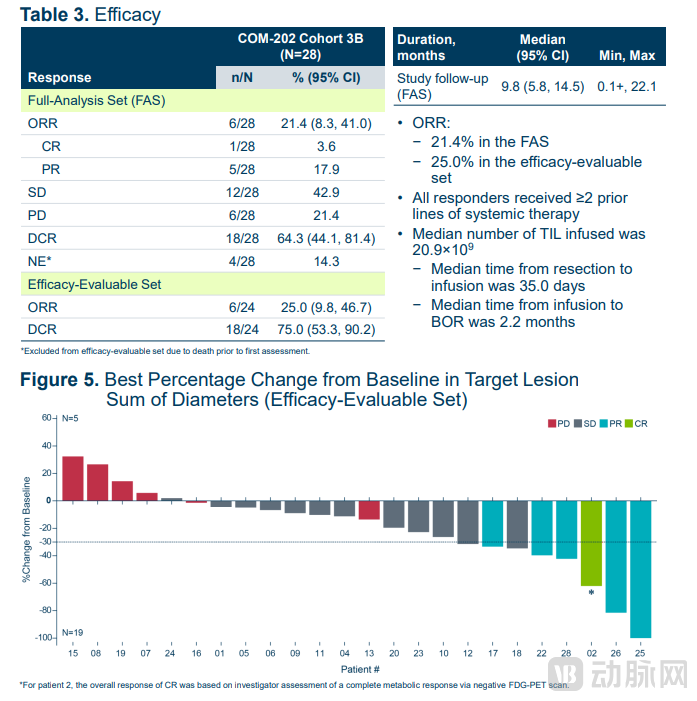
In November 2021, at the annual meeting of the Society for Immunotherapy of Cancer (SITC), Iovance announced the clinical study results of its TIL therapy product LN-145 for the treatment of metastatic non-small cell lung cancer (mNSCLC): the results showed thatAmong 28 patients with relapsed/refractory metastatic non-small cell lung cancer (mNSCLC), monotherapy with LN-145 yielded an overall response rate (ORR) of 21.4% (1 complete response [CR] and 5 partial responses [PR], including 2 cases with PD-L1–negative tumors), with 12 patients achieving stable disease, resulting in a disease control rate (DCR) of 64.3%.
Even PD-1 monoclonal antibodies, hailed as “miracle anti-cancer drugs,” pale in comparison to the clinical efficacy of TIL therapy.The objective response rate (ORR) of PD-1/PD-L1 inhibitors is modest, typically ranging from 10% to 30%, with an overall clinical efficacy rate not exceeding 20% and benefit limited to a subset of patients. Furthermore, the emergence of drug resistance renders subsequent treatment significantly more challenging.
For patients who have developed resistance to PD-1 inhibitors, TIL therapy can still achieve favorable therapeutic outcomes. According to data from Iovance Biotherapeutics, TIL therapy demonstrated an overall response rate (ORR) of 36% in melanoma patients resistant to PD-1 antibodies, and an ORR of 21% in patients with non-small cell lung cancer (NSCLC) resistant to PD-1 antibodies.
The combination therapy with PD-1 monoclonal antibodies has achieved remarkable clinical efficacy in patients with advanced solid tumors.

From December 11 to 14, 2021, at the annual meeting of the Society for Immunotherapy of Cancer (SITC), Iovance Biotherapeutics presented clinical data on the TIL therapy Lifileucel (LN-144) in combination with the PD-1 monoclonal antibody Pembrolizumab for the treatment of various solid tumors. The latest clinical data for Lifileucel (LN-144) showed:
▷ Cervical Cancer
Compared with pembrolizumab monotherapy, patients with advanced cervical cancer treated with the combination of lifileucel and pembrolizumab (brand name: Keytruda) achieved an overall response rate (ORR) of 57.1% (8/14), including one complete response (CR), six partial responses (PRs), one unconfirmed partial response (uPR), and five cases of stable disease (SD) as the best response.
▷ Melanoma
Compared with pembrolizumab monotherapy, patients with advanced melanoma treated with the combination of lifileucel and pembrolizumab achieved an overall response rate (ORR) of 60.0% (6/10), including three complete responses (CR; 30%) and three partial responses (PR). Three patients had stable disease (SD) as their best response. One previously unconfirmed CR (uCR) and two complete metabolic responses previously reported at ASCO 2021 were converted to confirmed CRs per RECIST 1.1. Among the six responders, 66.7% (4/6) had confirmed responses during a median study follow-up of 11.5 months.
▷ Head and Neck Squamous Cell Carcinoma (HNSCC)
Compared with pembrolizumab monotherapy, patients with advanced head and neck squamous cell carcinoma who received lifileucel plus pembrolizumab combination therapy achieved an overall response rate (ORR) of 38.9% (7/18), with best responses including 1 complete response (CR), 1 unconfirmed complete response (uCR), 4 partial responses (PRs), 1 unconfirmed partial response (uPR), and 7 cases of stable disease (SD). Among the 6 patients evaluated, 50.0% (3/6) had ongoing confirmed responses during a median study follow-up of 7.8 months.
The remarkable efficacy demonstrated by multiple clinical studies across various cancer types, coupled with the FDA’s favorable stance toward TIL therapy, underscores the promising future of this treatment modality.Thus, countless dedicated pioneers have joined the exploration of TIL therapy with great enthusiasm.
As the first TIL therapy to be submitted for market approval, Lifileucel’s path to launch has not been entirely smooth. Its Biologics License Application (BLA) faced two delays from the FDA (in October 2020 and May 2021), as the agency requested Lovance Biotherapeutics to provide additional Chemistry, Manufacturing, and Controls (CMC) data. Nevertheless, this has not dampened industry expectations for the eventual approval of Lifileucel.“Lifileucel is expected to be approved in 2022,” with strong industry consensus.
“Lifileucel is the first TILs product globally to submit a BLA application, so it is quite normal for the FDA to request additional, more comprehensive data,” said Dr. Yu Fuli, founder of Jingfeng Bio.The FDA did not raise questions regarding the clinical data, indications, or other aspects of lifileucel.The request is solely for Iovance to supplement certain CMC process data, with the expectation that Iovance will provide additional evidence to validate lifileucel.
Dr. Steven Dai, Co-founder and CEO of Lanma Medical, also stated that as the first TILs product globally to submit a Biologics License Application (BLA), Lifileucel differs from other immune cell therapy mechanisms. From a regulatory perspective, it is regarded as an entirely novel product, necessitating further refinement of its product validation trials. Therefore, it is reasonable for the FDA to request additional CMC process data; however, thisIt does not affect the final approval of Lifileucel or the future development of Iovance itself.
Overall, cell and gene therapy is a relatively emerging field, with each new therapy presenting novel challenges to regulatory agencies. In recent years, ongoing concerns regarding clinical efficacy and safety have prompted regulators to adopt a more cautious stance. Risk-taking is not inherent to the role of regulators; therefore, the FDA’s familiarity with the assessment of new technologies will require a considerable period to develop. AndThe foundational work Iovance has completed in its interactions with the FDA, oncologists, and CROs regarding the manufacturing of TIL products has paved the way for other companies launching TIL therapies.
In addition to Lifileucel (LN-144) and LN-145, Lovance Biotherapeutics’ pipeline candidates LN-145-S1 (a PD-1-selective TIL therapy) and LN-145-Gen 3 (third-generation TIL therapy) have also entered Phase 2 or Phase 3 clinical trials, targeting indications such as head and neck squamous cell carcinoma (HNSCC) and metastatic non-small cell lung cancer (NSCLC).
According to relevant statistics, there were 79 clinical trials of TILs therapy between 2011 and 2020, involving 22 TILs products. The number of trials peaked in 2018 and 2019.

Clinical Trials of Global TILs Therapy from 2011 to 2020
Image source: public information
Currently, in addition to Iovance, another company focused on the development of TIL therapies has successfully gone public.

Instil Bio, Inc. was founded in 2018 and successfully listed on the NASDAQ in 2021. In early 2019, Instil Bio licensed its core technology, TIL therapy, from Immetacyte Ltd., and completed the acquisition of Immetacyte in March 2020. Through this acquisition, Instil Bio obtained manufacturing intellectual property rights and process technologies, as well as nearly a decade of related research data.
Adopting the pharmaceutical industry’s “fast-follower” model, Instil Bio has built upon Iovance’s success with TIL therapy products. Instil Bio’s clinical pipeline is similar to that of Iovance—its melanoma clinical trial is in Phase II, while IND applications are being filed for other indications (non-small cell lung cancer, head and neck cancer, and cervical cancer).
Instil Bio’s core pipeline candidate, ITIL-168, is an allogeneic tumor-infiltrating lymphocyte (TIL) therapy indicated for advanced melanoma that is refractory to or has relapsed after PD-1 inhibitor treatment. On April 27, 2021, the U.S. Food and Drug Administration (FDA) granted orphan drug designation to ITIL-168 for the treatment of patients with Stage IIb–IV melanoma.

Instil Bio's Investigational Product Pipeline
(Image source: Instil Bio official website)
In addition to developing autologous TIL therapy products, Instil Bio is also engineering TILs using Co-Stimulatory Antigen Receptors (CoStAR). These modified TILs still rely on natural, specific T-cell receptors to bind to tumor neoantigens, but incorporate CoStAR molecules to bind tumor-associated antigens, thereby enhancing co-stimulation of T cells.
In contrast, the current industrial progress in China is still relatively early-stage.

Domestic Companies with TIL Therapy Products in Development (Incomplete List; Additions Welcome)
We have identified eight domestic companies developing TIL therapy products: CytoMed Therapeutics, Yuanqi Biopharma, Carter Medical, Junsei Bio, Shali Bio, Jinfeng Bio, Lanma Medical, and Xunsheng Medicine.
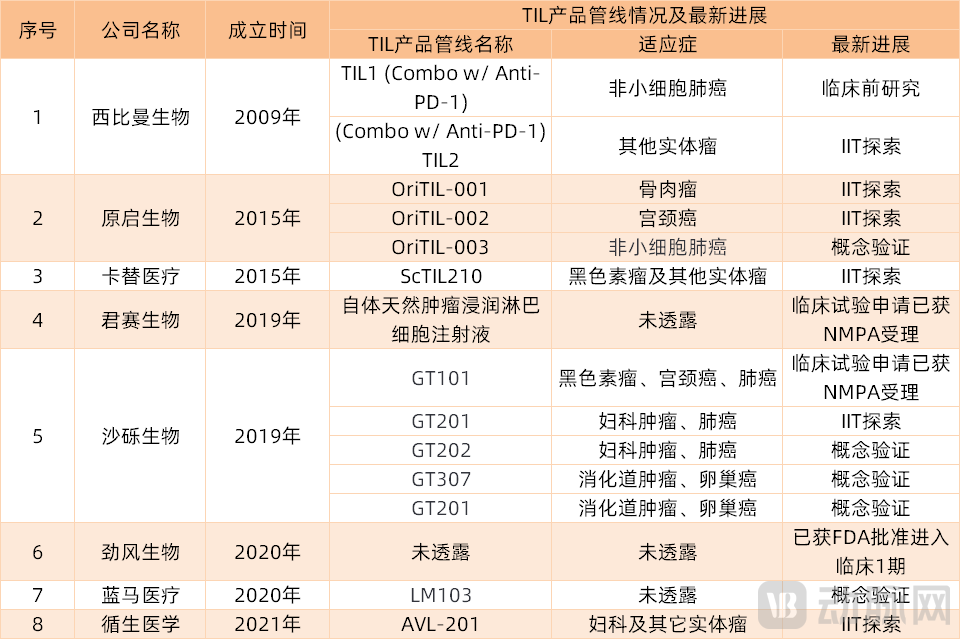
Pipeline Status of Eight Domestic TIL Therapy Companies (Source: Company Websites)
Among the eight TIL therapy companies, Jinfeng Bio currently has the most advanced clinical pipeline. On February 10, Jinfeng Bio announced that its TIL therapy product had received approval from the U.S. FDA to enter Phase I clinical trials. The trial will be conducted in collaboration with leading U.S. cancer treatment centers and top-tier principal investigators (PIs).
Additionally, the CDE website shows that the clinical trial applications for Grail Bio’s TIL therapy GT101 and Junsei Bio’s autologous natural tumor-infiltrating lymphocyte injection were accepted by the NMPA on January 30 and February 9 of this year, respectively.


Eight Chinese Startups Vie for Dominance: Who Will Emerge as the Brightest “Dark Horse” in the TILs Field, Even Rivaling Today’s Global Leaders? What Advantages Do TILs Therapy Companies Rooted in China Hold Compared to Those Developing Abroad?Stay tuned for further discussions on the TILs therapy landscape in China.