

Who Will Lead the Next Era of Digital Pathology in China?
Over the past two decades, China’s digital pathology industry has undergone a transformation from pathology image-and-text reporting systems to remote consultation systems, from web-based informatization to whole slide imaging (WSI)-enabled remote diagnosis, and from slide digitization to full digitalization. Mr. Fan Yujun, Chairman of Jinan Danjier Electronics Co., Ltd. (hereinafter referred to as “Danjier”), has been both a witness to and a practitioner of this developmental journey, spanning the industry’s nascent, growth, and maturity stages.
Today, digital pathology has gained widespread acceptance, and digital slide scanning systems have become essential tools for hospitals at all levels, third-party testing centers, disease control agencies, new drug development, and scientific research.
Now,The digital pathology industry is accelerating its transition from mere slide digitization toward comprehensive digitalization, intelligence, and cloud-based solutions.At a Critical Juncture in China’s Digital Pathology Industry, How Can Companies Seize Opportunities? How Does Full Digitization of Pathology Lay a Solid Foundation for AI Pathology? VCBeat Held a Dialogue with Mr. Fan Yujun, Founder of Danjier, a Leading Domestic Digital Pathology Enterprise.
In many niche segments of the medical device industry in China and around the world, brands from Germany, the United States, and Japan often dominate. However, in the field of digital pathology, it is rare to see a Hungarian brand shine so brightly.
In the late 16th century, the Dutch scientist Antonie van Leeuwenhoek invented the microscope. For the past century, the microscope has remained the primary tool for pathological diagnosis. It was not until 1999 that Professor Bela Molnar from Hungary invented the fully automated digital scanning microscope, marking the first time humanity entered a digital era for observing the microscopic world of cells.
Thirteen years ago, Fan Yujun demonstrated remarkable foresight by introducing 3DHISTECH, the world’s first original digital pathology brand founded by Professor Bela Molnar in Hungary, into the Chinese market after six months of negotiations. This move significantly broadened the application perspectives of pathologists and creatively stimulated digital thinking within the pathology community. During the same period, brands such as Hamamatsu from Japan and Aperio from the United States also entered the Chinese market, marking the nascent stage of digital pathology in China.
From 2013 to 2019, the rapid development of digital pathology was driven by the widespread adoption of the internet, increased bandwidth, and significantly improved internet connectivity and transmission speeds, which enabled near-synchronous image loading for remote expert consultations. Coupled with a heightened clinical awareness of digital pathology, China’s digital pathology sector achieved leapfrog growth.
During this period, the traditional mindset in pathology has undergone a transformation. Frozen section consultation and routine remote diagnosis have provided new approaches for primary care hospitals and medical institutions with limited pathology infrastructure. Precise diagnosis is the prerequisite for precision medicine, and panoramic digital pathology-based remote consultation and diagnosis have significantly facilitated the implementation of tiered diagnosis and treatment systems.
Meanwhile, digital pathology overcomes the limitations of traditional optical microscopy in various usage scenarios, addressing long-standing concerns such as visual fatigue and chemical odor pollution from specimens under the microscope. The diagnostic method of microscopic slide examination is rapidly being replaced by digital slide review. The rapid development of internet-based healthcare, big data applications, and digital technologies has had a significant impact on improving medical standards.

It was also during this period that 3DHISTECH emerged as a leading brand in the field, thanks to its superior high-resolution image quality, multi-layer fusion area-scan technology, and absolute advantages in fluorescence and FISH imaging. This breakthrough disrupted the market landscape previously dominated by the United States and Japan, leading to a rapid increase in its market share.
Founded in 1996, 3DHISTECH is the world’s first manufacturer of original digital pathology scanners. Its founder, Professor Bela Molnár, is a gastrointestinal pathology expert at Semmelweis University in Hungary. “Digital slide reading provides pathologists worldwide with a convenient diagnostic approach that is completely unrestricted by location or time. It enables quantification of cellular morphological changes and even allows visualization of 3D structures from 2D images, greatly facilitating machine deep learning and batch interpretation of slides. Future pathological AI will address the current shortage of personnel.” These were the remarks made by Professor Bela Molnár at the 2019 USCAP Conference.
At the 2010 European Digital Slide Scanner Competition, 3DHISTECH’s digital slide products secured first place in image quality. In the 2012 and 2016 International Digital Slide Scanner Competitions, the company’s digital slide products again ranked first in image quality, and achieved first place in a total of five categories, including high-throughput scanning, image analysis, and green IT products.
As the Chinese distributor for 3DHISTECH, Jinan Danjier Electronics Co., Ltd. has dedicated its full corporate resources since 2013 to introducing 3DHISTECH into China’s medical and scientific research markets. By fully leveraging the advantages of 3DHISTECH products in terms of image clarity, scanning speed, system stability, recognition accuracy, and ease of operation, the company has transformed 3DHISTECH—originally a little-known Hungarian brand—into a leading force in digital pathology in China.
What is the underlying logic? Fan Yujun remarked, “First, customers are relatively rational when purchasing medium-to-large instruments; they do not blindly follow brands. Most make their decisions only after hands-on demonstrations and trials, followed by multi-dimensional comparisons. The success of 3DHISTECH is precisely attributable to this factor. Second, over more than a decade, Jinan Danjier Electronics Co., Ltd. has cultivated an excellent team comprising application technical support, sales, after-sales service, and a localized distributor network, ensuring worry-free usage for its users.”
Fan Yujun revealed that after 2013, 3DHISTECH’s annual sales in China continuously exceeded expectations,Installed base of over 1,000 hardware units, becomingThe Manufacturer with the Highest Installed Base of Imported Brands in China, andTens of thousands of pathologists worldwide use its open-source digital slide viewing software.
By 2019, China’s digital pathology industry had stabilized, with high-end imported brands such as 3DHISTECH dominating the market for large tertiary hospitals and research institutions, while domestic brands prevailed in the grassroots county-level market.
The five years from 2020 onward are regarded by Fan Yujun as the phase of upgraded application in the digital pathology industry.Full Digitalization and Intelligence in Pathology Become Hot Topics, wherein the digitalization of general practice serves as the foundational infrastructure for AI-assisted diagnosis. Clearly,Full digitalization of pathology has become a key element for digital pathology companies to build new competitive moats.
For a long time, slide digitization has remained the core product in the digital pathology industry. However, over the past two years, as the shortage of pathologists has continued to widen and clinical demands for high-efficiency, high-precision, and convenient pathological diagnosis have further increased, demand for comprehensive digital solutions has surged rapidly.
The digitalization of general pathology must firstAchieve integration with information systems, 3DHISTECH’s image format complies with the DICOM 3.0 standard, allowing the entire slide image to be viewed in DICOM format. This encompasses full digitalization of the specimen grossing, registration, and slide preparation processes, enabling sample tracking and integration with the hospital’s communication system; secondly,End-to-End Digitalization, including the interconnectivity of tissue embedding machines, tissue processors, stainers, and coverslippers; followed byIntelligentization, applying AI pathology software for more accurate, efficient, convenient, and cost-effective diagnosis.

Overseas, the application of comprehensive digital pathology in hospitals has become relatively widespread and mature. Brands such as 3DHISTECH, Philips, and Leica have all deployed comprehensive digital solutions, and institutions like the Memorial Sloan Kettering Cancer Center and Massachusetts General Hospital have already adopted comprehensive digital pathology. Particularly against the backdrop of the COVID-19 pandemic, remote pathological diagnosis by physicians from home via comprehensive digital solutions has emerged as a new trend overseas.
In China, the digitalization of general pathology is still in its early stages, with Jinan Danjier Electronics Co., Ltd. serving as a key driver. Its distinctive approach to comprehensive digitalization features product diversification, end-to-end digital workflows, and AI-assisted capabilities.
Jinan Danjier Electronics Co., Ltd.’s comprehensive digital solution incorporates imported high-quality, highly stable digital slide scanners available in various models and throughput capacities, alongside domestically produced multi-throughput models that offer high cost-effectiveness, diversity, and low cost.This combination is highly scientific and efficient, while also alleviating the pressure of high costs.“High-throughput systems are suitable for continuous scanning at night, while medium- and low-throughput systems are ideal for scenarios requiring immediate scanning and diagnosis, aligning with clinical workflow characteristics.”
For example, a 3DHISTECHHigh-Throughput Digital Scanner with a Capacity of 1,000 SlidesP1000 can scan up to 2,000 slides within 24 hours, providing high-efficiency support for comprehensive digital pathology. In April 2021, 3DHISTECH obtained the import product registration certificate for pathological slide scanners from the National Medical Products Administration (NMPA), making itThe world's first digital pathology product with fluorescence scanning capabilities approved by a national regulatory authority。
Furthermore, amid the trends of digital pathology penetrating grassroots healthcare facilities and the substitution of imported products with domestic alternatives, Danjier introduced Zhiying Medicine, an original Chinese brand in digital pathology, in 2020. This move provided hospitals with a wider range of models and price points, laying the foundation for Danjier to promote comprehensive digitalization in grassroots county-level medical institutions and small- to medium-sized laboratories.
Meanwhile, Danjier and 3DHISTECH have established Shandong Siruidi Medical Technology Co., Ltd. in China to build a reserve for import substitution. Upon full-scale production, costs will decrease significantly, enabling the provision of cost-effective, high-quality digital systems to primary healthcare institutions.
“Leveraging its multi-model, high-throughput capabilities, Danjier can extensively cover large hospitals, research institutions, and primary healthcare facilities, providing tiered hardware support to meet the comprehensive digital pathology needs of medical institutions.”
Danjier has integrated a full-process sample tracking system covering specimen registration, grossing, embedding, dehydration, staining, mounting, and digitization.In 2018, Danjier introduced the Italian brand DIAPATH. DIAPATH specializes in achieving full-process automation and standardization of pathological diagnosis, including tissue processing, embedding, sectioning, staining, and mounting. This complements Danjier’s various models of digital slide scanners, truly forming a comprehensive digital solution for pathology.
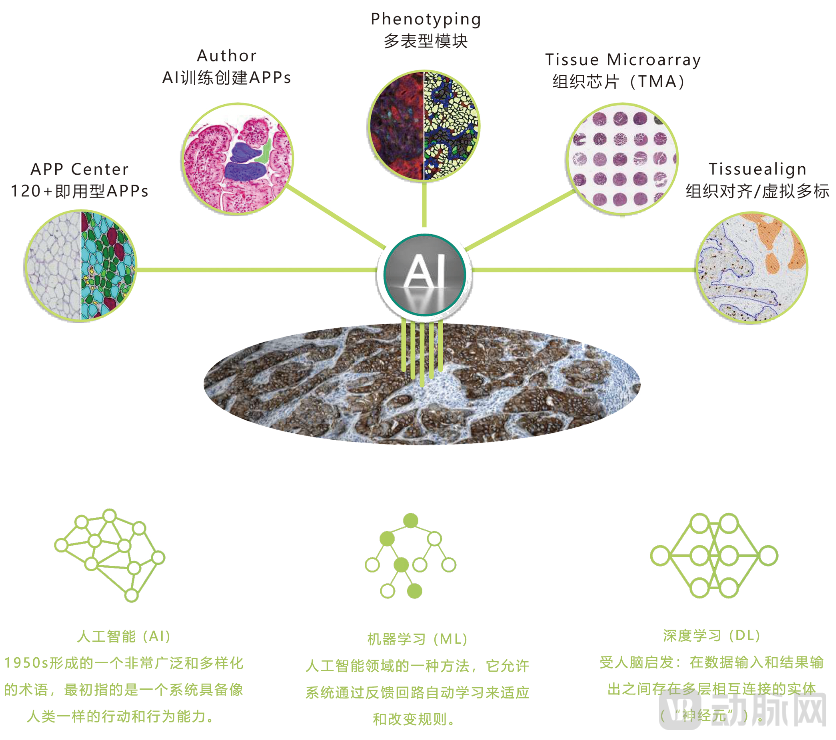
In the realm of AI-assisted digital pathology, Jinan Danjier Electronics Co., Ltd. newly introduced the full suite of Visiopharm’s AI-powered digital pathology quantitative analysis software in June 2021.. Visiopharm is positioned in the scientific research market, with 19 of the top 20 global pharmaceutical companies being its deep-cooperation clients, and thousands of research institutions worldwide utilizing its solutions.
It is worth noting that the threshold for full-scale digitalization in pathology is relatively high. Large tertiary hospitals process over 5,000 slides per day, requiring equipment to operate under high load for extended periods. At this stage, imported brands such as Danjier have accumulated greater advantages in terms of device stability, durability, and service team capabilities. Therefore,VCBeat believes that in China’s high-end market, imported brands will be the first to complete their digital layout for comprehensive pathology.
The inevitable trajectory of digital pathology development spans from slide digitization to department-wide digitization, and ultimately to intelligentization. In recent years, AI-driven pathology has emerged as a highly anticipated sunrise sector within the industry, attracting a significant influx of internet professionals and overseas-returning experts into this niche field.
“On the contrary, digital pathology companies have adopted a more cautious stance toward AI.” Fan Yujun emphasized, “AI-driven pathology must be built upon the foundation of comprehensive digitization across all pathology disciplines. Only after achieving full-spectrum digital pathology can the necessary conditions for integrating AI into pathology be met.”Digital pathology companies should deepen and thoroughly implement digitalization to provide the digital infrastructure for AI-based pathology, thereby leveraging complementary strengths.”
In the future, Jinan Danjier Electronics Co., Ltd. will collaborate with partners such as 3DHISTECH to continue leveraging its expertise in digital pathology, launching a wider range of diversified products—including miniaturized instruments with fluorescence scanning capabilities and quantitative analysis software—to lay a solid foundation for AI-driven pathology.
“Frankly speaking, AI in pathology is still in the experimental phase and remains some distance away from true AI-assisted diagnosis. Over the next five years, as full-scale digitalization of pathology matures, AI pathology is poised to achieve significant breakthroughs.”
The overarching logic of the pathology industry has consistently evolved around several key themes: high quality, high efficiency, convenience, precision, and energy conservation. Fan Yujun believes that following the comprehensive digitalization and AI integration of pathology, the next step for digital pathology will be cloud-based transformation. This shift will support cloud-based big data applications, transforming pathological work from individual labor into a clustered and collaborative model. This transition will significantly enhance operational efficiency, alleviate staffing shortages, and spur the emergence of an entirely new pathology diagnostics industry.