

YunQue Medical Files for IPO: Empowering 2.6 Million Grassroots Doctors to Drive Primary Healthcare Innovation
In mid-March, at the PICA headquarters in Shanghai’s Pudong district, Liu Na, who had just returned from a visit to township health centers in Kaili, Guizhou Province, accepted an interview with VCBeat. It was evident that she rarely spends time in the Shanghai office; employees often seize fleeting opportunities to communicate with her about work matters.
Liu Na developed asthma in her teenage years. She underwent surgery in Shanxi Province, where she experienced significant postoperative hemorrhage despite being treated at a major hospital. Her maternal grandfather, who served as a village doctor, passed away from pulmonary tuberculosis when she was in elementary school; her maternal grandmother died of liver cancer during her high school years. These experiences have instilled in her a deep-rooted connection to her rural origins, fueling her aspiration to leverage medical expertise to help more people.
Over the past two years, Liu Na has frequently visited grassroots physicians and medical institutions, covering 21 provinces and municipalities with a travel distance of nearly 200,000 kilometers and conducting on-site visits to hundreds of primary care facilities. She believes that without insights into the realities at the grassroots level, it is impossible to grasp the true pulse of primary healthcare services, and most business decisions made would be mere castles in the air.
“Each grassroots visit lasts anywhere from two or three days to two or three weeks. Over the long term, this poses significant challenges to physical stamina, time, and energy, but PICA staff have long since grown accustomed to it.”
Liu Na and everyone at PICA understood that PICA, established only a few years ago, couldCovering more than 410,000 primary healthcare institutions, with over 2.6 million primary healthcare professionals onboarded, 1.8 million annual active users, and presence across all 37,670 township-level administrative divisions in China, behind these figures lies the enduring practice of “reaching out to grassroots communities.”

Liu Na, CEO of PICA
On-Site Visits to Grassroots Levels
Grasping the Pulse of Primary Healthcare Development
Liu Na has 10 years of audit and consulting experience at the Big Four accounting firms. As a US Certified Public Accountant, she worked extensively with leading global enterprises during her tenure, which gradually sparked her entrepreneurial drive.
Determined to leave her accounting firm, she embarked on an entrepreneurial venture in the United States. This brief stint as an entrepreneur made Liu Na acutely aware of the gap between reality and her ideals. Upon returning to China in 2011, Liu Na joined JD.com as Chief Financial Officer, aiming to further hone her capabilities for future independent entrepreneurship.
“At the end of 2013, JD.com launched a management rotation system, and I immediately chose to rotate to the business side.” At that time, JD.com primarily operated as a self-run platform, with its open marketplace just getting off the ground. Liu Na did not hesitate long before taking on the role of head of the Operations Management Department for JD’s Open Platform.
At that time, newly expanded businesses such as education, internationalization, and pharmaceuticals were all integrated into the open platform. In 2015, Liu Na was appointed General Manager of JD.com’s Pharmaceutical Division, formally marking her entry into the medical and health industry, where she quickly developed a strong interest in the pharmaceutical sector.
“We partnered with companies such as Shanghai Pharmaceuticals and quickly secured 2,000 SKUs of pharmaceutical products, achieving annual sales exceeding RMB 100 million.” Despite the remarkable success in drug sales, Liu Na believed that the business should not remain confined to mere medication retailing. She began exploring new opportunities and soon targeted the primary healthcare market, aiming to collaborate with grassroots physicians to provide online consultations and facilitate the distribution of medications to lower-tier markets.
Liu Na believed that the true scale of opportunities in primary healthcare could only be determined through on-site investigations. She therefore traveled to Shanxi Province, where she spent a month living in rural areas and visiting multiple village clinics. This month-long immersion gave Liu Na a clearer and more realistic understanding of the primary healthcare market.
“Around 2015, smartphones and mobile internet were still ‘luxuries’ in rural villages. Residents’ needs remained focused on earning more income to improve their quality of life, with no surge in health-related demands. Meanwhile, intravenous infusions constituted the primary source of income for village doctors, who had little interest in the downward distribution of pharmaceutical products.”
The outcome of her first visit to primary care institutions was disheartening. “There were no signs of internet-based healthcare taking root at the grassroots level; pushing forward aggressively would certainly not work.” After returning from the countryside, Liu Na spent several months reflecting but failed to find answers. Soon thereafter, she decided to pursue further studies in the United Kingdom, earning a Sloan Master’s degree in Leadership and Strategy from London Business School.
In 2019, after returning to China, Liu Na joined Medbank Health as Chief Operating Officer (COO). “During this period, I gained a clear understanding of the underlying logic for addressing payment issues through insurance.”Insurance is an indispensable component of the healthcare system, but establishing a basic framework for health services must precede any insurance initiatives."After that, I came across PICA."
“What resonated with me most about PICA is its unwavering commitment to centering its services around physicians—this was precisely the answer I had been seeking during my first visit to grassroots healthcare facilities. Physician resources represent the most challenging hurdle for internet platforms to overcome. By leveraging free educational training for physicians as its entry point, PICA had already accumulated a user base of 1.8 million grassroots doctors within just three years of its establishment, when I first came into contact with the company.”
In mid-2020, Liu Na and her team visited 12 provinces and municipalities within a month, speaking with numerous village doctors. “Only three village doctors had never heard of PICA.”Leveraging the vast pool of physician resources, my envisionedThis establishes the foundation for realizing a closed-loop health management system encompassing prevention, diagnostic assistance, testing, medication, and follow-up.。”
Primary Care: The Optimal Setting for Health Management
From Pharmaceuticals to Accessible Early Cancer Screening
Grassroots awareness is deeply ingrained in PICA’s corporate culture. The conference rooms at PICA’s headquarters are named after counties such as Lishu, Yishui, Xiangtan, and Jimo—all selected from regions where PICA’s grassroots physician users are particularly active.
With PICAFrom Medical Education and Training Platforms to the Next Stage—Digital Healthcare Service Platforms,"Visiting grassroots communities" became a routine part of Liu Na’s daily life.
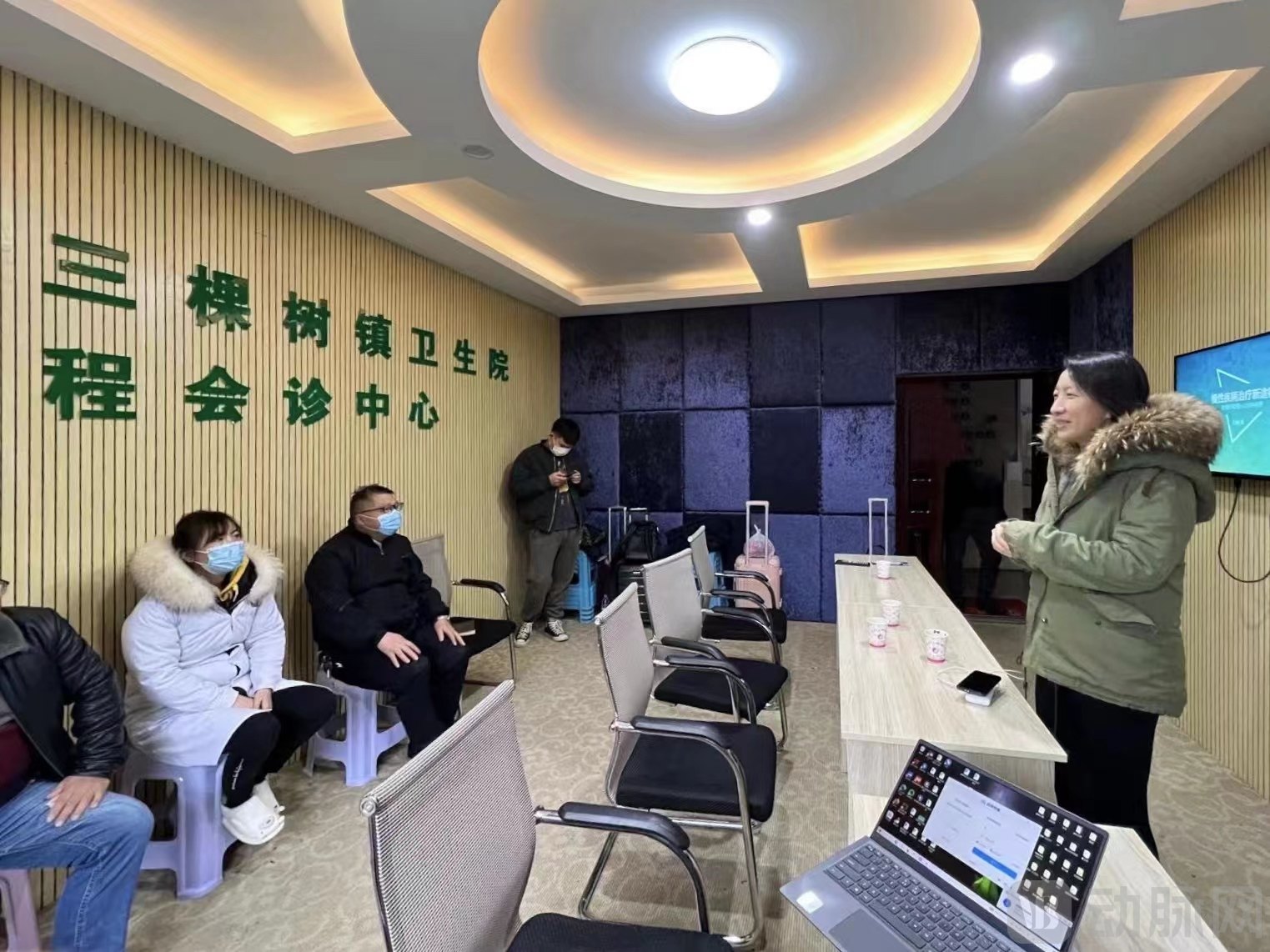
Liu Na Explains Service Solutions for Primary Healthcare Institutions in Kaili, Guizhou
“The scarcity of drug varieties is my most profound observation at the primary care level. Although the National Essential Medicines List comprises 685 drugs, the village clinics I visited typically stock only 50–100 medications, primarily consisting of treatments for colds, fever, hypertension, and diabetes.”
When deciding to expand pharmaceutical access to grassroots markets, Liu Na was always asked these questions: “Is there sufficient medical consumption capacity at the grassroots level? Should we first focus on grassroots markets in developed provinces and cities, or in less-developed regions?” With these questions in mind, Liu Na once again visited grassroots healthcare facilities.
Liu Na first visited Zhejiang, where she found that the integration of local medical consortia was already quite mature. She then traveled to Shaanxi, Sichuan, Chongqing, and Yunnan, discovering that in most provinces and municipalities, medical consortia were still in their early stages. She also observed that even at the primary care level, there was no lack of payment capacity. “This journey through grassroots healthcare has strengthened my resolve to push for the downward distribution of pharmaceuticals.”
In September 2020, PICA officially launched its initiative to distribute pharmaceutical products to grassroots healthcare institutions, introducing a range of differentiated medications to the primary care level. The business experienced explosive growth in October and November. By December, Liu Na continued to explore new strategic priorities and identify incremental market opportunities.
“The channel for pharmaceutical market penetration into lower-tier markets must be opened up, but this is a saturated market with limited growth potential and intense competition., most stakeholders have built their systems and operations around the “treatment” phase. In fact, primary healthcare should focus more on prevention and rehabilitation follow-up. Under the Healthy China strategy, the “prevention-centered” approach has gained recognition.At the primary care level, there is a lack of effective products and services in the “preventive treatment of disease” segment, representing a blank market.”
China’s health management market grew from RMB 248.0 billion in 2015 to RMB 850.3 billion in 2020, and is projected to reach RMB 2,189.8 billion by 2025, representing a compound annual growth rate (CAGR) of 20.8% during this period.PICA prioritizes the health management needs of primary care physicians and residents, building a localized service system for primary healthcare from the perspective of its long-term interests.
“As of 2020, there were 970,000 primary healthcare institutions across China, yet they faced challenges such as limited clinical service offerings and inadequate incentive mechanisms. Residents’ needs at the primary care level should extend beyond basic blood pressure and blood glucose measurements.” Liu Na observed that in recent years, a wave of simple, convenient, AI-assisted diagnostic devices suitable for deployment at the grassroots level has emerged, creating new growth opportunities for the industry.
“Since 2021, a number of companies in fields such as early cancer screening and AI-based imaging have engaged with PICA to address primary care needs, aiming to provide easy-to-use, highly accurate cancer early screening products suitable for population-wide screening, as well as AI-powered fundus screening devices, to serve the primary healthcare market. The deployment of cutting-edge technologies at the primary care level has opened up a vast market for us.”
In 2021, PICA intensified its efforts in primary disease prevention and began to fully promote the penetration of early screening and testing products into grassroots healthcare settings.
Village clinics, township health centers, community health service stations, and community health service centers represent highly promising commercialization scenarios for early screening and diagnostic products. Residents’ trust in primary care physicians exceeds expectations, and these physicians have a strong desire to expand their diagnostic and treatment offerings and provide value-added services.Since July 2021, more than 200,000 primary care physicians have used the PICA APP to facilitate early screening tests for nearly one million residents in grassroots communities.
PICAEstablished partnerships with multiple early-screening companies in the fields of colorectal cancer, gastric cancer, liver cancer, lung cancer, bladder cancer, as well as digestive and immune health., includingNew Horizon Health, Boercheng, Benchmark Medical, Laimeng Healthand others, becoming the preferred partners for cancer early screening companies expanding into grassroots markets.
Next, PICA aims to address the cumbersome processes associated with early cancer screening tests. “Medical institutions often introduce multiple early cancer screening products from various manufacturers. Each manufacturer has its own internal laboratory tracking codes and workflows, causing significant inconvenience for medical staff. We are promoting the ‘PICA Code’ to resolve this issue.”
Establish Vertical Integration Among Medical Institutions
Accelerating the Realization of Tiered Diagnosis and Treatment Is the Ultimate Goal
Many of PICA’s product and business decisions, guided by Liu Na, stem from grassroots insights and are built from the bottom up; yet Liu Na has also had moments of “stubbornly going her own way.”
China’s medical resources are unevenly distributed, primary healthcare services lack sufficient capacity, the “siphon effect” of large hospitals is widespread, and the implementation of tiered diagnosis and treatment remains in its early stages.
“PICA’sStep 1 is to empower primary care physicians through education and training., based on this,PICA empowers medical infrastructure by deploying pharmaceuticals, medical devices, and early screening products to lower-tier markets.Eliminate urban-rural disparities and facilitate the deployment of high-quality medical resources at the grassroots level,At the same time, primary care physicians can also receive better personal incentives."The long-term strategic goal is to support the nation in advancing tiered diagnosis and treatment."
Liu Na believes that “to implement tiered diagnosis and treatment, there must be connectivity between different levels of care. When primary-care physicians encounter diagnostic or therapeutic challenges, they need to seek assistance from specialists at higher-level institutions. Therefore, we developed the ‘Physician-to-Physician Consultation’ product to enable primary-care physicians (along with their patients) to consult with specialists at higher-level hospitals.”
This was the only product Liu Na decided to develop without fully relying on field research at the primary care level. In March 2021, “YiYi Consultation” was launched. However, there were skeptical voices within the company about this product. “Almost everyone told me that primary care providers are very concerned with ‘saving face,’ and that primary care physicians would not swallow their pride to seek help from senior physicians in front of patients.”
But Liu Na remained resolute: the “Yi Yi Wen Zhen” product must be developed—the only question was whether to build it by burning cash or by generating revenue. She once again visited grassroots healthcare facilities and found that primary-care physicians consistently needed to learn and master new medical knowledge and skills, with a particularly strong desire to acquire appropriate traditional Chinese medicine (TCM) techniques.
“A village doctor I met in Ziyang, Sichuan Province, often registered as a patient to consult with physicians at tertiary hospitals, seeking to learn from them when faced with challenging symptoms and having no one to discuss them with. This has bolstered my confidence in promoting ‘doctor-to-doctor consultations.’”
Now, "Yi Yi Consultation" has become one of the core products of PICA, mainly focusing on traditional Chinese medicine consultations. It has established a complete system for upward referral consultations, free training courses, and assessment mechanisms.Connecting 160,000 primary care physicians and nearly 3,000 doctors from tertiary hospitals,Effectively help grassroots physicians enhance their professional capabilities.
Recently, PICA, in collaboration with the Institute of Basic Theories of Chinese Medicine under the China Academy of Chinese Medical Sciences and the World Acupuncture Communication Center, conducted training on appropriate Traditional Chinese Medicine (TCM) techniques. Participants who successfully complete the coursework and pass the clinical practice assessment will receive a “Certificate of Training in Appropriate TCM Techniques” jointly issued by the three organizations.
Why does Liu Na care so much about “Yi Yi Wen Zhen,” and why is she so eager to accelerate the implementation of tiered diagnosis and treatment? Liu Na’s answer is: “Against the backdrop of rapid national economic development and policies aimed at strengthening primary healthcare,”The implementation of tiered diagnosis and treatment is inevitable; it is merely a matter of who will lead the initiative and how quickly it will be rolled out.”
“PICA has never aimed to be merely a channel for pharmaceuticals or cancer early screening products. Whether it involves training and education for primary care physicians, the deployment of early screening tests to grassroots levels, or facilitating referrals from primary care physicians to higher-level specialists, these are all means by which PICA leverages market-oriented mechanisms to ensure the efficient operation of the tiered diagnosis and treatment system.”
Over the past two years leading the PICA team, Liu Na has deeply realized that every step PICA takes is in the right rhythm. Each product launch and strategic upgrade is centered on the actual needs of primary care institutions, with the goal of facilitating tiered diagnosis and treatment.
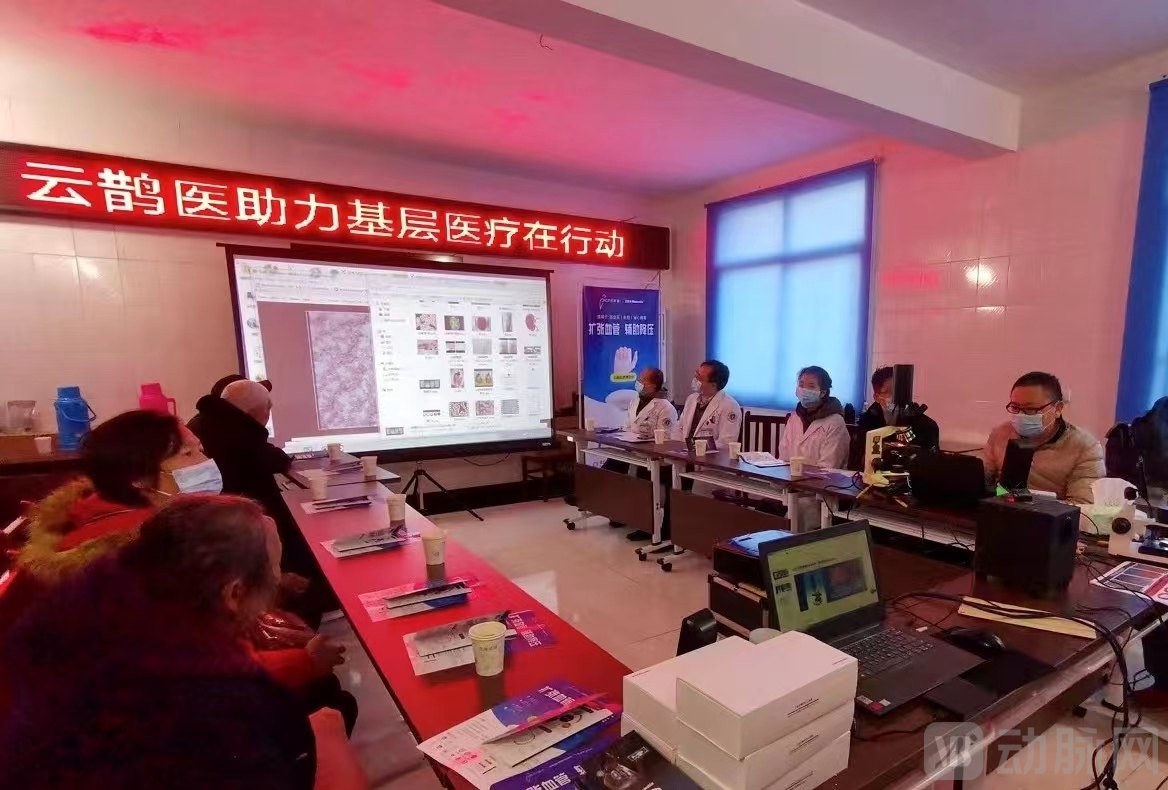
PICA has covered more than 410,000 primary healthcare institutions, a feat inseparable from its longstanding practice of “reaching the grassroots.”
Now, “going to the grassroots” is no longer just Liu Na’s personal habit; every employee at Yunque Yi has had such experience. They all deeply understand that without visiting grassroots facilities, gaining on-the-ground insights, and engaging in face-to-face exchanges with grassroots doctors, the products and services they launch will always remain detached from reality.
In the future, the practice of “reaching out to grassroots communities” will continue. The two growth curves—front-end health prevention and back-end follow-up management—are rising rapidly in the primary healthcare market. PICA will remain focused on the grassroots health management sector, strengthening physician education and training capabilities as well as empowering medical infrastructure, thereby accelerating the realization of tiered diagnosis and treatment.