

From Electronics Titan to Healthcare Newcomer: Samsung Group's Strategic Pivot and Innovation Logic in the Medical Sector
As the “synonym” for South Korea’s global presence, Samsung Group has always been a source of national pride for Koreans as their flagship conglomerate.
Of course, it also helps South Koreans maintain this “face,” given that their strength is plainly evident.
First, in terms of output value, the Samsung Group's total output accounts for more than 20% of South Korea's entire GDP., is the “lifeline” of South Korea’s economic support chain; secondly, in terms of scale, the Samsung Group wields immense global influence,With 429 locations and 230,000 employees across 68 countries worldwide, the group has three subsidiaries ranked among the Fortune Global 500, with its flagship company, Samsung Electronics, consistently ranking within the top 15.Finally, from a professional perspective, Samsung Group’s business operations are extensive,It has a total of 85 subsidiaries under its umbrella,It spans multiple sectors, including electronics, finance, machinery, and chemistry, achieving industry-leading status in each.
Even so, the Samsung Group has never halted its forward momentum and is expanding into broader fields. In April 2011,Samsung BiologicsOfficially established, the Samsung Group has finally entered the vast landscape of the healthcare industry amid widespread anticipation.
Just as everyone was expecting Samsung to “fail miserably” in the healthcare sector, Samsung Biologics delivered a satisfactory performance in just ten years.
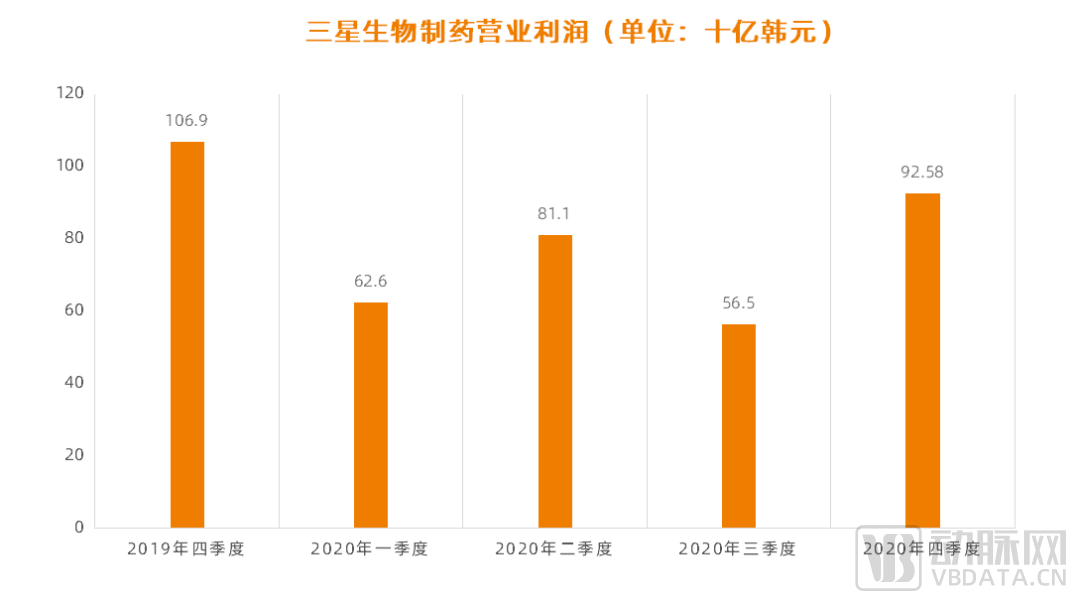
According to financial data,In 2020, Samsung Biologics recorded total sales of KRW 1.1648 trillion (approximately RMB 6.7 billion), representing a 66% year-on-year increase, with net profit reaching KRW 241 billion (approximately RMB 1.4 billion), a year-on-year growth of 18.76%. In 2021, Samsung Biologics’ sales reached KRW 1.568 trillion (approximately RMB 8.2 billion)., an increase of 34.6% year-on-year, with a net profit ofKRW 537.3 billion(approximately RMB 3 billion), a year-on-year increase of 123%.
This is no easy feat, as numerous giants have exited the healthcare sector in disgrace; in China,Evergrande, China Resources, abroad there areAmazon, Berkshire Hathaway, and JPMorgan Chase.
So why did the Samsung Group succeed?
From Electronics to Healthcare: Samsung’s Path of Transformation
In 2019, the Samsung Group ushered in“The Darkest Hour”。
According to the financial data for that year, Samsung Electronics’ net profit in the second quarter of 2019 amounted to only KRW 6.6 trillion, representing a 55.6% year-on-year decline—effectively halved. Among its three core business pillars, net profit from the semiconductor division fell by 71% year on year, while the IT and mobile communications segment saw a 41.6% decline.
In fact, this was all foreshadowed. In earlier years, Samsung suffered severe setbacks in the mobile phone market, with its market share threatened and squeezed; meanwhile, its semiconductor business also faced challenges from new market entrantsQualcommandMediaTekcaptured the majority of the business. Under such a severe situation,The Samsung Group is in urgent need of developing new business foundations.
As the then “head” of the Samsung Group,Lee Jae-yongSeen.Integrating information technology, pharmaceuticals, and biologicsThe opportunities it holds. He has always firmly believed that biotechnology is an innovative field capable of driving rapid profit growth for the Samsung Group, and he aspires to carve out a new business frontier in the healthcare sector, much like his father, Lee Kun-hee, who once led Samsung’s bold entry into the semiconductor and mobile phone industries.
In 2010, under the leadership of Lee Jae-yong,Samsung has officially begun expanding from its consumer electronics business into the healthcare industry.
On December 14, 2010, Samsung Group acquired Medison, a manufacturer of ultrasound diagnostic equipment, and Prosonic, a manufacturer of transducer probes and cables. On November 16, 2011, Samsung Group acquired the Nexus division from ITC, a global leading provider of point-of-care testing solutions for cardiology. In April of the same year, Samsung Biologics was established. In January 2013, Samsung Group acquired NeuroLogica, a medical device startup, marking its entry into the CT scanner manufacturing sector.
After nearly four years of continuous investment, Samsung Group officially released its annual flagship smartphone, the GALAXY S5, at MWC 2014. This phone featuresWorld's First Built-in Heart Rate Sensor. Its functionality is primarily achieved through reliance on“S Health”, this is a cardiac signal transmitter that can be connected to other health monitoring devices; the product received FDA clearance in the same year.
In November 2014, Samsung Electronics and Thermo Fisher Scientific entered into a strategic partnership to jointly design, develop, and market new point-of-care (POC) diagnostic products, with a focus on applications such as drug abuse testing and therapeutic drug monitoring. In December of the same year, Samsung Group merged its software subsidiary, Medison, with its Medical Device Business Division.
Therefore,The healthcare sector has become one of the “Five New Businesses” selected by Samsung Chairman Lee Kun-hee.(Solar cells, plug-in batteries for hybrid electric vehicles, LEDs, biopharmaceuticals, and medical devices)One of。
"The Tripartite" Medical Landscape
Released in 2010KRW 23 trillionStarting with the “Energy and Environmental Healthcare Investment Plan,” followed by four years of business groundwork primarily focused on “acquisitions” and “mergers,” Samsung Group has gradually established its presence in the healthcare sector.“Healthcare Services + Biopharmaceuticals + Digital Health”the tripartite model.
First, medical services, which primarily focus on establishing world-class medical centers.
As is well known, the Samsung Group permeates the entire lives of the South Korean people, a phenomenon inseparable fromSamsung Seoul Hospital.Since its opening in 1994, Samsung Seoul Hospital has spanned the full spectrum of clinical care, research, and education, rapidly ascending to the ranks of South Korea’s premier medical centers.
In terms of clinical care, the Cardiovascular and Cerebrovascular Hospital was established in 2014, and the Cancer Hospital was officially founded in 2018. At this point, Samsung Seoul Hospital’s total floor area exceeded 300,000 square meters, with 200 outpatient clinics serving over 20 million patients.
In the field of research, there are approximately 1,100 in-service researchers at the hospital, a number roughly equal to that of physicians. This robust research team has contributed 1,135 scientific publications to the academic community and is currently undertaking more than 3,000 research programs or innovative projects.
In the field of education, Samsung Medical CenterSungkyunkwan UniversityEstablishment of the SKKU Institute for Medical Science, aimed at cultivating outstanding medical professionals and promoting research projects across various fields of medical science.
In fact, as an electronics and technology company, Samsung Group has already achieved considerable success in hospital construction, but what truly put Samsung Medical Center on the global map is“Ultra-high Cancer Treatment Survival Rate”
According to statistics from South Korea's international medical organizations,Samsung Seoul Hospital Achieves 73.6% Five-Year Cancer Survival Rate, far exceeding that of the United States, yet charging only 20%-30% of U.S. rates. Such “high-quality, affordable” medical services attract a large number of international patients to South Korea for treatment each year, and it is precisely on this basis that Samsung Seoul Hospital has boarded the fast train of the overseas medical care market.
Next is biopharmaceuticals, the “leader” of the industry in the post-pandemic era.
In August 2021, Lee Jae-yong, who was imprisoned due to a bribery scandal, was granted parole by the South Korean government. In response, South Korean Minister of Justice Park Beom-kye stated that the primary reason for the government’s decision to grant him parole was that,Prompted Samsung Group to take critical actions amid the economic uncertainty brought by the COVID-19 pandemic, including addressing the challenges in COVID-19 vaccine supply.
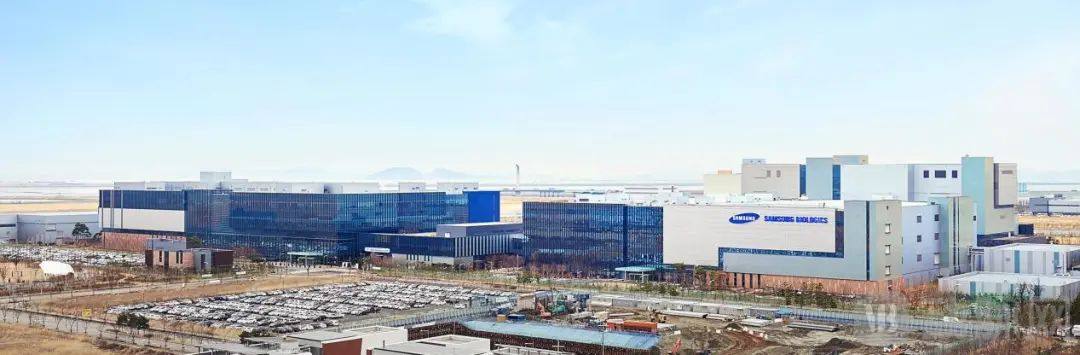
To address the shortage of Moderna vaccines in South Korea, Samsung Biologics officially began manufacturing Moderna vaccines at its facility in South Korea in the third quarter of 2021.
Throughout the entire vaccine production process,Samsung BiologicsThe advantages of the supply chain are perfectly demonstrated. For preventive medications, raw materials are essentially standardized, eliminating the need for repetitive experimentation; instead, mature production lines can be leveraged to scale up drug manufacturing. This aligns precisely with Samsung Biologics’ core competency: specializing in the mass production of non-patented pharmaceuticals.
CEO of Samsung BiologicsKim Tae-hanIt stated that the factory was not large in scale at first, but after seeing that the pandemic had created an entirely new product category (COVID-19 drugs) and prompted pharmaceutical companies and governments around the world to seek new manufacturing sources, they pushed forward with more ambitious expansion plans.
Kim Tae-han stated, “The COVID-19 pandemic has brought us not a crisis, but greater opportunities.” According to statistics, in the third quarter of 2021, Samsung Biologics’ production orders tripled compared to the same period last year, reaching$1.5 billion.Meanwhile, the deal reached with GlaxoSmithKline will bring in over the next two years$370 millionRevenue, which is equivalent to 60% of last year's sales.
Finally, digital health is leveraging its full strength to seize the future direction of healthcare.
As a global enterprise led by digital products,Samsung Group can be described as "highly adept" in the field of digital health.。
In fact, Samsung Group has long identified business opportunities in the digital healthcare sector, and its strategic layout can be vividly represented by an equation:"Digital Health Patents + Digital Health Platform + Diabetes Management + Wearable Medical Watches + Mobile Medical Vehicles + Smart Hearing Aid Market = Samsung Medical"
It is reported that Samsung Group is one of the top ten companies worldwide in terms of patent applications in the digital healthcare sector. Between 2018 and 2021,A total of 600 digital health patents have been filed.
In terms of specific products, Samsung Group released in 2014Digital Healthcare Platform SAMI,This product supports real-time data transmission between wearable devices, such as smartwatches, and mobile health applications. It also provides API software interfaces for third-party developers, thereby fostering a digital healthcare ecosystem for developers, medical institutions, and partners worldwide.
In terms of digital health application software, Samsung has developed“S Health”In collaboration with the Ontario Telemedicine Network (OTN) in Canada, it provides users with information services for diabetes management. In addition, Samsung isMobile IVD Devices, Digital X-ray, Ultrasound, Hearing AidsIt has also ventured into the field of medical equipment.
Currently, Samsung Medical Center’s mobile platform has undergone a comprehensive redesign, enabling patients to access Samsung Medical Center’s cloud-based outpatient services more conveniently and effortlessly via their smartphones. Based on 2021 figures, the annual number of visitors to Samsung Medical Center’s mobile platform reached 6.9 million, reflecting an annual growth rate of over 10%. This demonstrates strong market recognition of Samsung’s digital healthcare solutions.
Samsung Group’s “Industrial Breakthrough Logic”
In 2022, Samsung Group further increased its investment in the healthcare sector.
According to public information, over the next three years, Samsung Group will invest more than$205 billion. In addition, starting from 2022, Samsung Group will annually increase its investments in the fields of chips, batteries, and biotechnologyApproximately 20 trillion South Korean won (equivalent to approximately RMB 10.5 billion)Investment.
Why Is Samsung Group So “Aggressive” in the Healthcare Sector?In addition to being drawn by the massive market opportunity, another factor is its proud “industry breakthrough logic.”
How Does Samsung Group Define “The Right Path for Itself”? It Primarily Relies on Three Evaluation Principles.
The first principle is to choose what you are good at.Following the completion of the “Super Plant,” which is expected to commence operations in early 2023,Samsung Biologics Will Become the World’s Largest Contract Development and Manufacturing Organization (CDMO) for Biopharmaceuticals.Regarding the “contract manufacturing” process, Samsung Group has long mastered it. According to the latest data released by IDC, Samsung Group has remained the world’s largest mobile phone contract manufacturer for many consecutive years.
The second principle is to avoid direct confrontation with strong competitors.Unlike other giants that have left a “muddled ledger” in the healthcare sector, Samsung Biologics has a very clear positioning within the industry chain, namelyRather than competing with the US, Europe, and Japan in new drug R&D, or with China and India in clinical trials, it focuses on off-patent biosimilars and similar biologics, as well as contract design and contract manufacturing for patented products.
The third principle is to seize the opportunities in emerging industries.Taking medical services as an example, Samsung Seoul Hospital has steered clear of the booming domestic medical aesthetics industry and instead focused more onCancer, Cardiovascular, Ophthalmology...and other frontier technology fields; and further into biopharmaceuticals. According to data released by the London-based research firm Evaluate, the market size of the biotechnology sector will exceed $278 billion in the next five years, which has enabled Samsung Group to identify a new growth curve.
The healthcare sector requires “heavy investment,” particularly in the early stages, making it especially crucial for market entrants to ensure a robust cash flow.
And this is precisely the strength of the Samsung Group; in fact, Samsung has never been “stingy” with its investments in the medical field. Between 2011 and 2015, the Samsung Group invested more than$2.74 billion, and apply the technology for manufacturing mobile phone chips to drug production. In October 2018, Samsung Biologics' third pharmaceutical plant was completed.Total investment reached $740 million; in early 2021, Samsung Group further invested $2 billion to establish a “super factory.”
In addition to building out its “hardware infrastructure,” Samsung Group has spent nearly $10 billion on acquisitions and investments in the healthcare sector.
Samsung Group integrates financial capital, manufacturing and construction, high-tech electronics, and shipbuilding and steelmaking. Once it decides to focus on a particular sector, it can rapidly mobilize funds, recruit talent globally, and deploy its most advanced equipment to provide support.
Therefore, we have seen the flagship smartphone GALAXY S5 implanted with“S Health”; We have also observed Samsung Seoul Hospital’s strategic choices in R&D, which align closely with Samsung Biologics’ production pipeline, aiming to provide scenarios for clinical validation and market application.
Every business segment under the Samsung Group has achieved industry-leading standards, and this holds true for its healthcare division as well. To achieve this goal, Samsung Group has been making aggressive efforts.
John Rim, CEO of Samsung Biologics“It has been stated that ‘Samsung Biologics will pursue multi-dimensional growth over the next decade, expand its portfolio in the contract development and manufacturing (CDMO) sector, and lay the foundation for new drug development. On the other hand, to further solidify its position as a key player in the biopharmaceutical industry, Samsung Biologics will rapidly expand the global reach of its CDMO business, drive the continued growth of its biosimilars subsidiary, and ultimately achieve the ambitious goal of developing new drugs.’”
The “Samsung Power” That Cannot Be Ignored in the Medical Field
In recent years, amid the ravages of the global pandemic, people have placed increasing emphasis on their personal health. The broader health industry is emerging as a new economic hotspot, attracting major global players to enter the market.
However, due to the unique industrial ecosystem of the biomedical sector, it is no easy feat for any company to establish a foothold. Even global giants have seen numerous failures.
For Samsung Group, the reason it has achieved such remarkable success in the healthcare sector within a short period isOn the one hand, it lies in its precise market positioning and step-by-step approach, which has paved a development path tailored to the company’s own growth; on the other hand, it stems from the Samsung Group’s robust corporate strength, its unwavering commitment to high product standards, and its refined management system.
It is precisely on this basis that Samsung Group’s potential in the healthcare sector is boundless; indeed, it has already achieved part of this vision at the current stage, and the remaining components will be realized in the near future.