Stanford 2026 AI in Medicine Report: 8 Disruptive Insights Shake the Industry, Chinese Firm Enters Global Top Three

GE Healthcare
Digital Solution Provider


The report is up toPage 423,The following text focuses on summarizing"Chapter Six - Medicine" provides an overview of the advancements of artificial intelligence in the medical field, including scientific discoveries, clinical applications, patient engagement, and ethical considerations.

The report first focuses on the field of molecular biology and proposes the core viewpoint:Smaller models perform better than larger models.
AI Protein Research Grew by Approximately 71% Between 2024 and 2025, with Protein Language Models (PLMs) Highlighted; the Field is Shifting from Scale Competition to a Focus on Model Efficiency and Specialization.
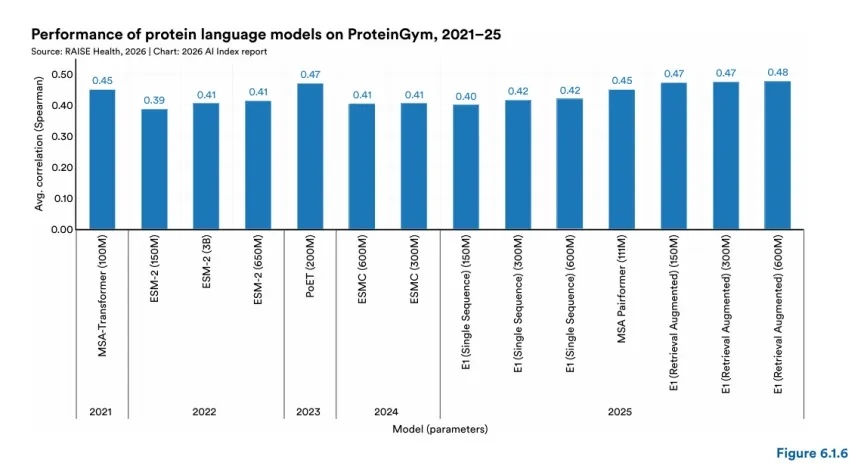
The report also specifically mentioned two examples, respectively, with onlyProtein Language Model with 1.11 Billion ParametersMSAPairformerInAuthoritative ListOutperforms on ProteinGymGiant with multiple hundred-million parameters;
And haveThere is200 Million Parameter Genome ModelGPN-Star, PerformanceBetter to PossessA model with 40 billion parameters.

Virtual Cell Model isHottest in 2025China'sNew Field, OnlyNumber of PubMed PublicationsHas grown50%, includingArc Research InstituteEvo 2、STATEAnd DeepMind'sAlphaGenomeIs the most attention-grabbing product.
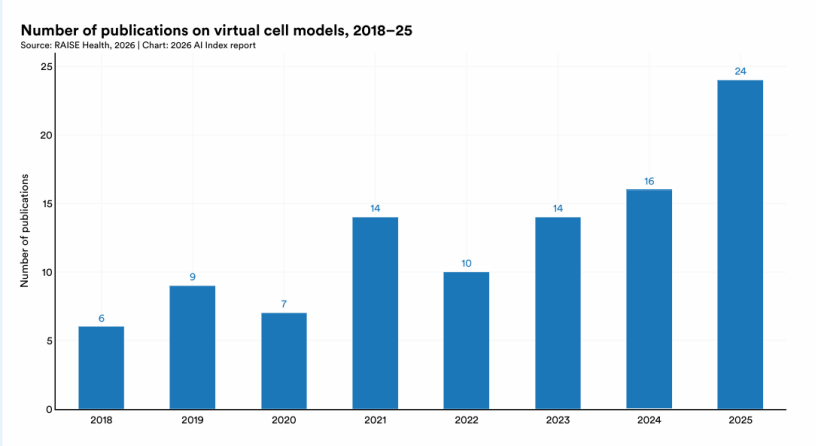
These models are designed to predict cellular responses to drugs and genetic variations without the need for wet lab experiments, offering significant potential applications in the clinical stages of drug development.
However, the systems in this field still need to be validated through experiments at present., and training methods and data management remain crucial determinants of performance.

Clinical artificial intelligence has evolved from the pilot stage to enterprise-level deployment, where clinical records can be automatically generated from patient visit records.AI Note-taking ToolIs the most typical application.
In multiple hospital systems, doctors have reduced the time spent on writing medical records by up to83%, with Northwestern Medicine achieving an impressive return on investment of up to 112%.

258 AI Medical Devices Approved: Chinese Companies Break into Top Three
As ofIn September 2025, the FDA approved 258 AI-powered medical devices, surpassing the total number of approvals in all previous years. Specifically, regarding manufacturers,GE HealthcareLeading with 93 devices, followed bySiemens(82) and from ChinaUnited Imaging Healthcare(38).
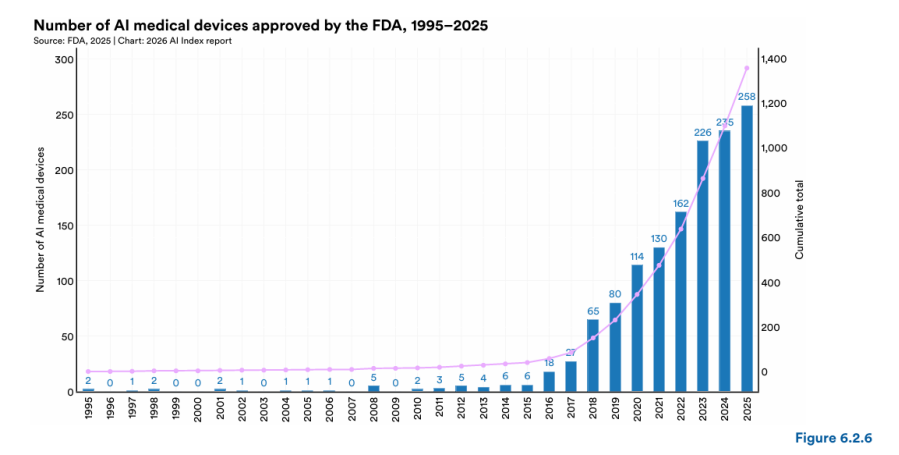
But the vast majority of approved products enter the market through a device modification pathway that relies on existing safety and efficacy evidence (rather than new randomized trials), with only2.4% of devices have clinical research support backed by randomized trial data.

AI Agent Defeats Human Doctors
Autonomous and semi-autonomous agents have become a significant achievement in the field of AI healthcare.
The greatest achievements in this field come fromMicrosoftAI Medical DiagnosisBreak ToolMAI-DxO, in 304Published in The New England Journal of MedicineComplex CasesChina-IsraelAn astonishing accuracy rate of 85.5%, surpassing human doctors who did not use any auxiliary tools.(The score is only 20%).
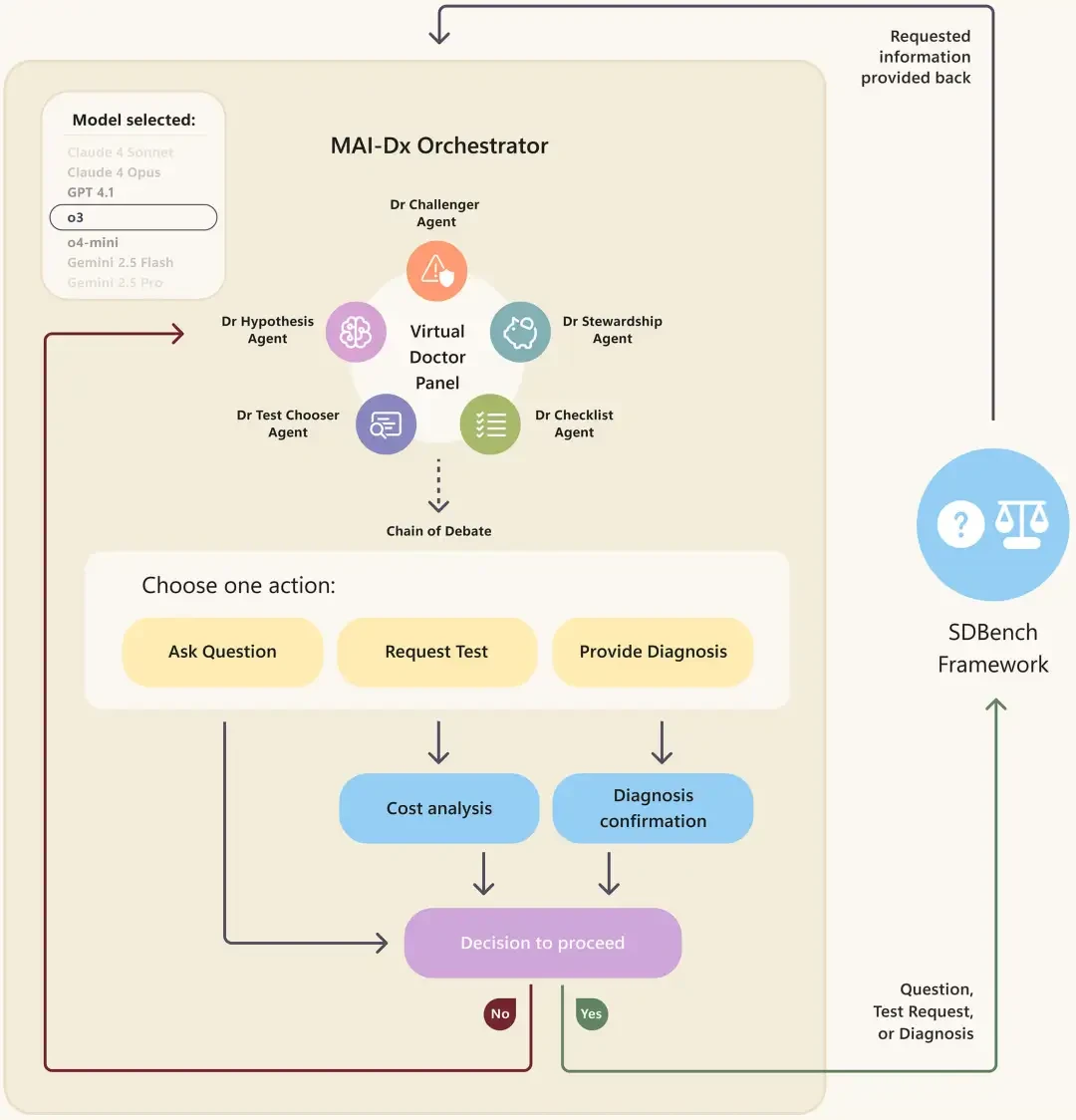
At MicrosoftAI Diagnostic Orchestrator (MAI-DxO) enhances multi-agent framework performance when used in conjunction with OpenAI's o3.7%-60%Diagnostic accuracy, superior to single-agent baseline.

84% of Health Searches Are Now Dominated by AI
Summaries generated by artificial intelligence now appear in84%-92%At the top of Google search results related to health.
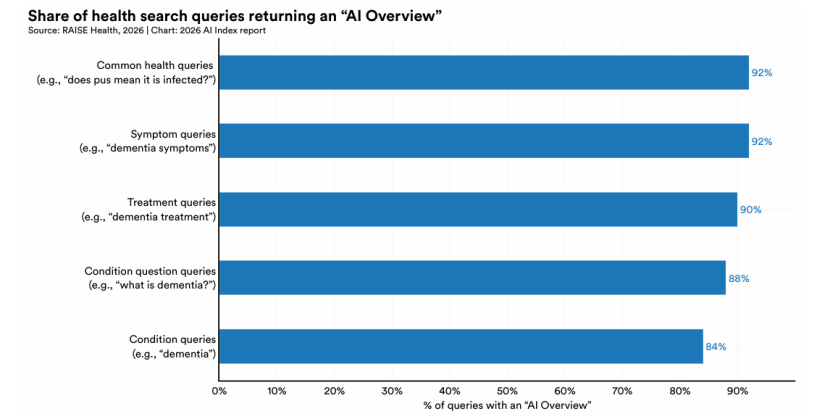
Among which92%Symptoms and Common Health IssuesIt will trigger the AI overview function, followed by inquiries about treatment plans and disease conditions. These overviews have now become standard features in health information searches, influencing users' initial interpretations of their own issues.

Digital Twin Worth Attention
The academic interest in medical digital twins is growing rapidly, with the number of publicationsIncreased from nearly 0 in 2015 to 372 in 2025,and in the trials that have been conducted, early results have all shown promising prospects.
In a study targetingIn a randomized trial of 150 patients with diabetes, 71% of the participants successfully achieved healthy and stable blood glucose levels within one year, while also being able to safely reduce their medication dosage.

Data Remains the Ceiling for AI
As in other fields, the development of AI life science models is increasingly being bottlenecked by data rather than architecture.
As the co-folding model now covers all structural types in the Protein Data Bank,In 2025, this field began to shift towards refined datasets based on AI-predicted structures and utilized integrated experimental data sources for training.Thereby expanding the scale of the training dataset from hundreds of thousands of entries to tens of millions.
In the end:
In addition, the report also involves the field of medical ethics. The content discussing ethical issues in medical artificial intelligence publications in 2025 has more than doubled, but the scope of related discussions remains relatively narrow.
Governance issues have dominated the discussion, while topics like algorithmic accountability, biosecurity, and global health equity remain underexplored.
Original Report:https://hai.stanford.edu/ai-index/2026-ai-index-report/medicine