

Zepp Health Releases 2021 Global Sleep White Paper: Chinese Adults Average Less Than 7 Hours of Sleep Per Night
In 2021, the global average sleep duration decreased, the number of days with less than seven hours of sleep increased, and the sleep duration of Chinese people fell below the global average. Are you aware of these changes and trends in sleep patterns? On the occasion of World Sleep Day on March 21, Huami Technology (NYSE: ZEPP), a global leader in smart wearable devices and health cloud services, released the "2021 World Sleep White Paper" (hereinafter referred to as the White Paper). The White Paper is based on more than 26 million valid samples, covering 71 countries and regions worldwide. By analyzing sleep, exercise, and related health data collected from Huami’s smart wearable devices, it presents the state of global sleep in 2021 from multiple perspectives, including by country, time period, and demographic group.
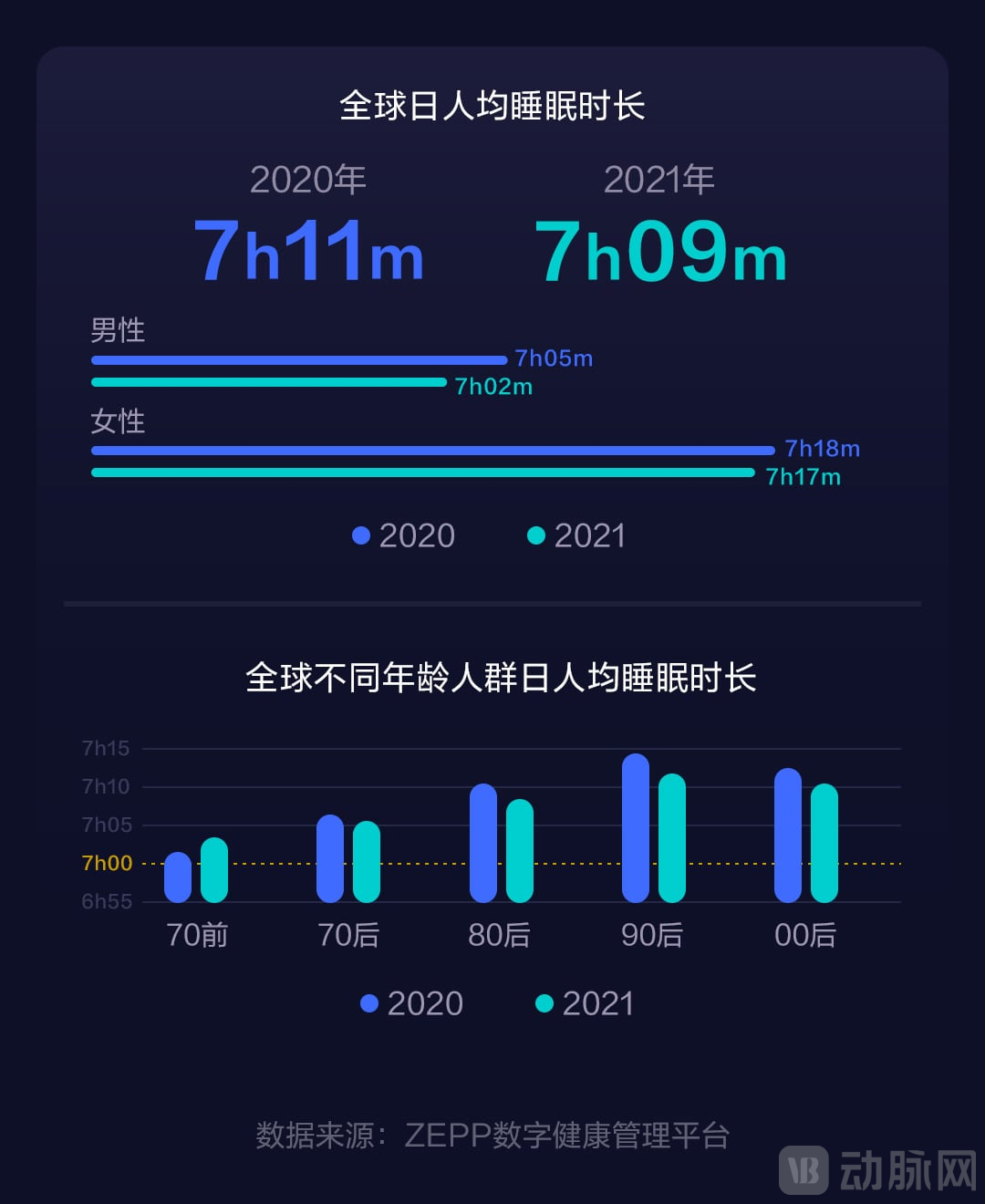
Data shows that among the countries and regions covered in this white paper, the global average daily sleep duration per person was 7 hours and 9 minutes in 2021, a decrease of 2 minutes compared to 2020. Men slept less than women. The post-1990s generation had the longest sleep duration, while those born before the 1970s had the shortest nighttime sleep duration. However, among all generational cohorts, only those born before the 1970s saw an increase in average daily sleep duration in 2021.
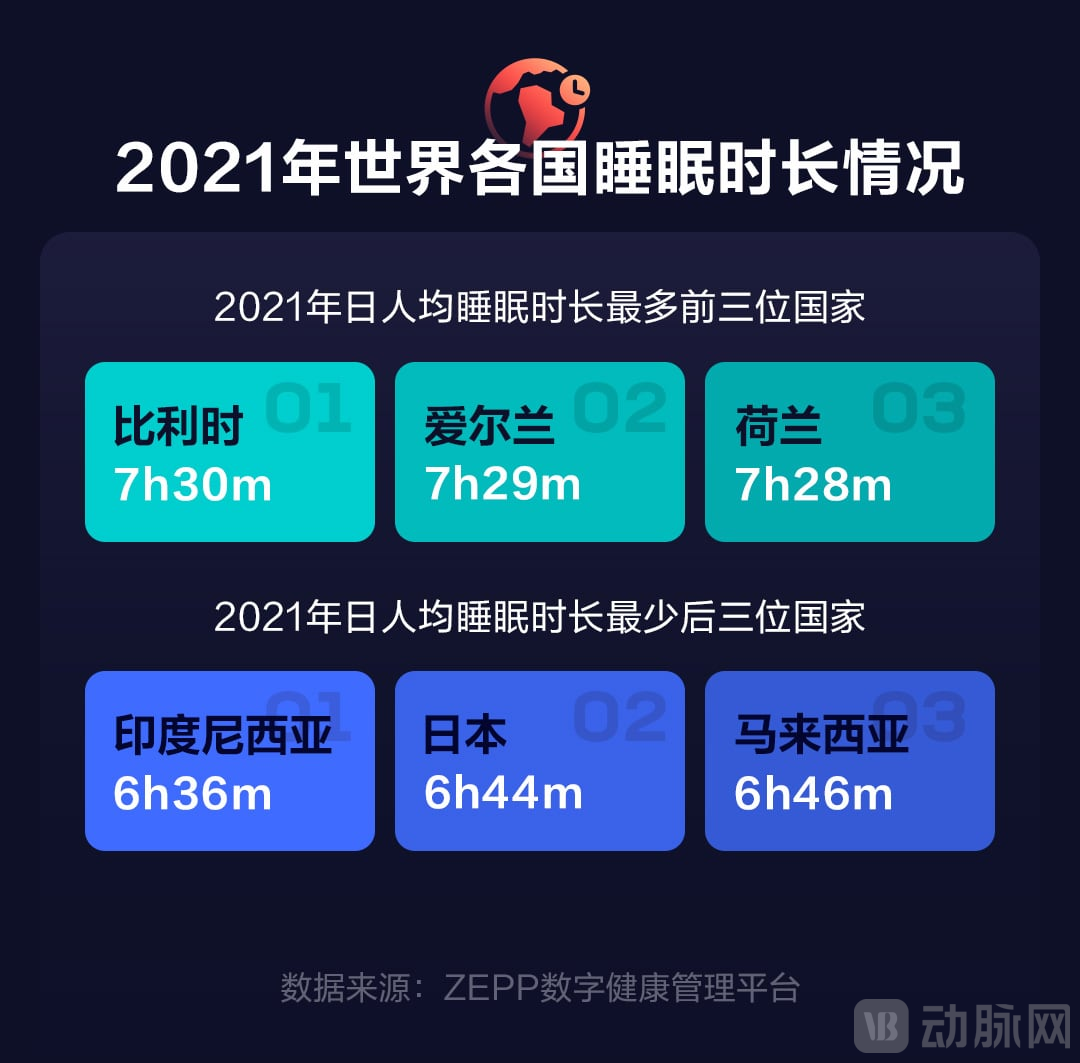
The countries with the longest average daily sleep duration are Belgium, Ireland, and the Netherlands, each averaging around seven and a half hours. The three countries with the shortest average daily sleep duration are Indonesia, Japan, and Malaysia, with Indonesia having the least at only 6 hours and 36 minutes.
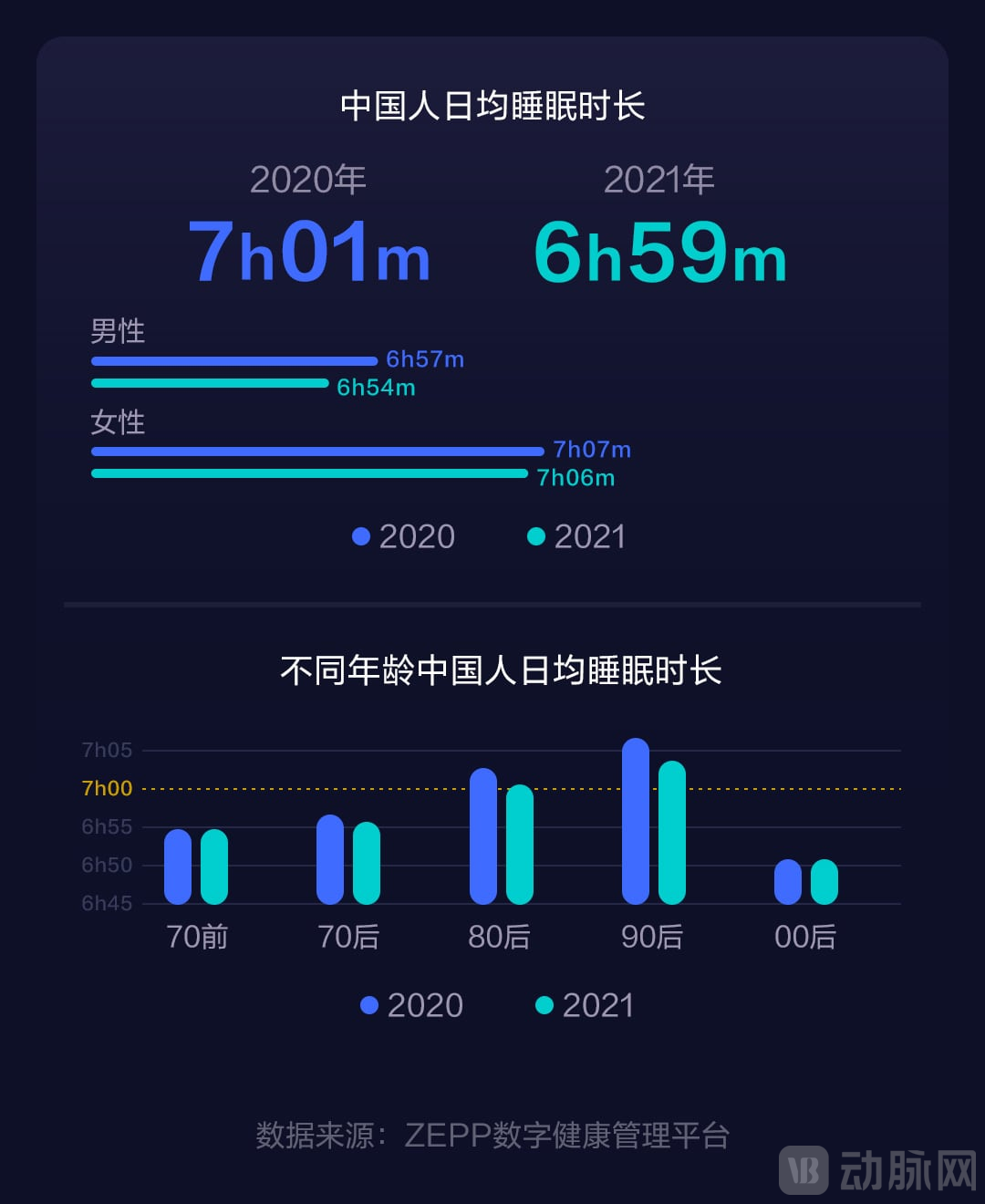
The overall sleep duration of Chinese people is less than the global average within the scope of this sample. In 2021, the average sleep time was 6 hours and 59 minutes, barely reaching the normal range, and showing a decrease compared to 2020. Among all age groups, those born in the 1970s, 1980s, and 1990s all experienced a reduction in daily average sleep duration. Only those born in the 1980s and 1990s achieved an average of 7 hours of sleep per day, while individuals born after 2000 suffered from the most severe sleep deprivation.
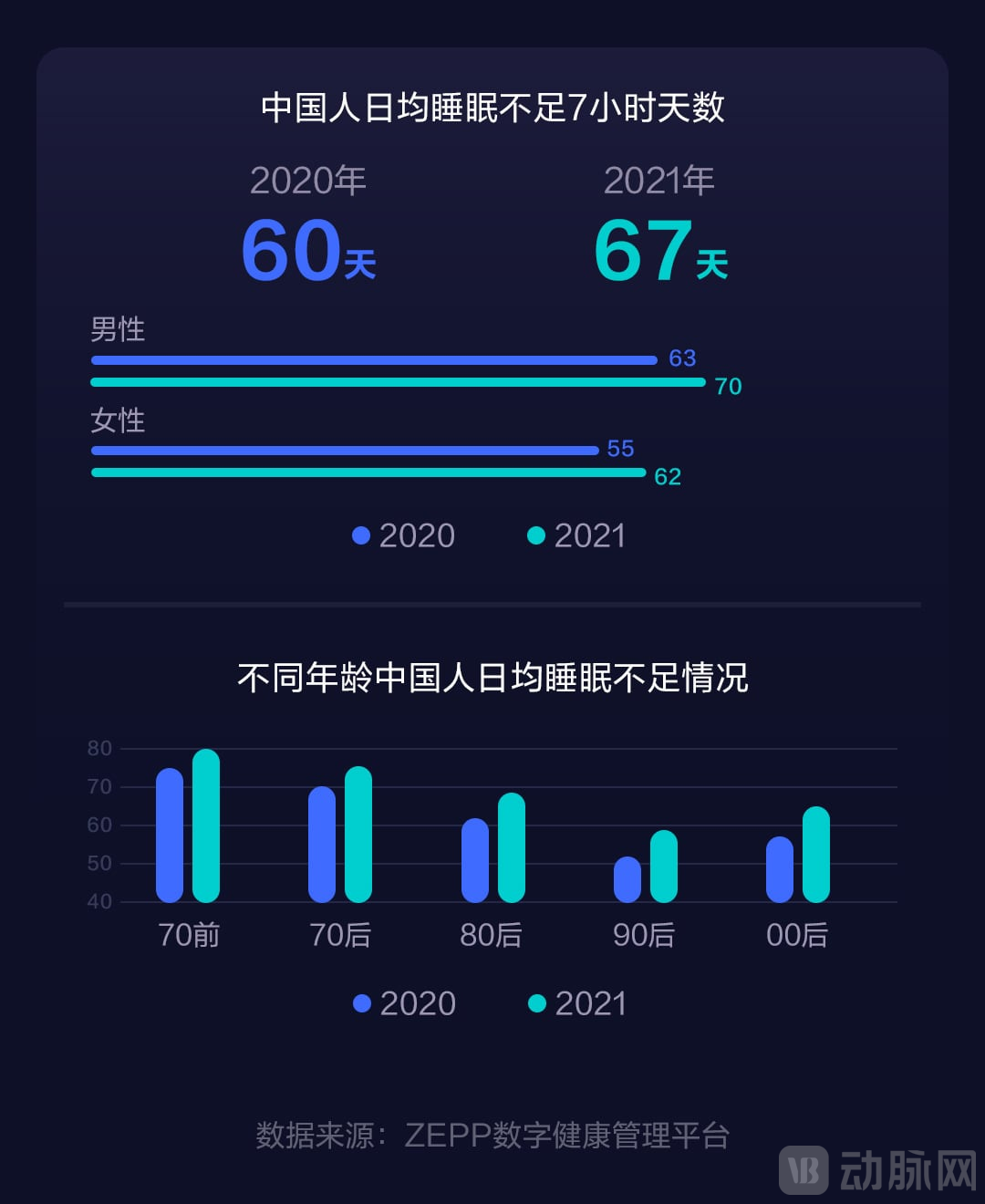
In 2021, the global average number of days with less than 7 hours of sleep per person reached 59 days, an increase of 7 days from the previous year. Sleep deprivation was more severe among men than women, and the number of days with insufficient sleep increased with age.
Compared with the global average, sleep deprivation was more severe in China in 2021, with the number of days with less than 7 hours of sleep reaching 67 days, an increase of 7 days from 2020. In 2021, individuals born before 1970 in China experienced 80 days of sleep deprivation, while those born in the 1990s had the highest number of days with less than 7 hours of sleep.
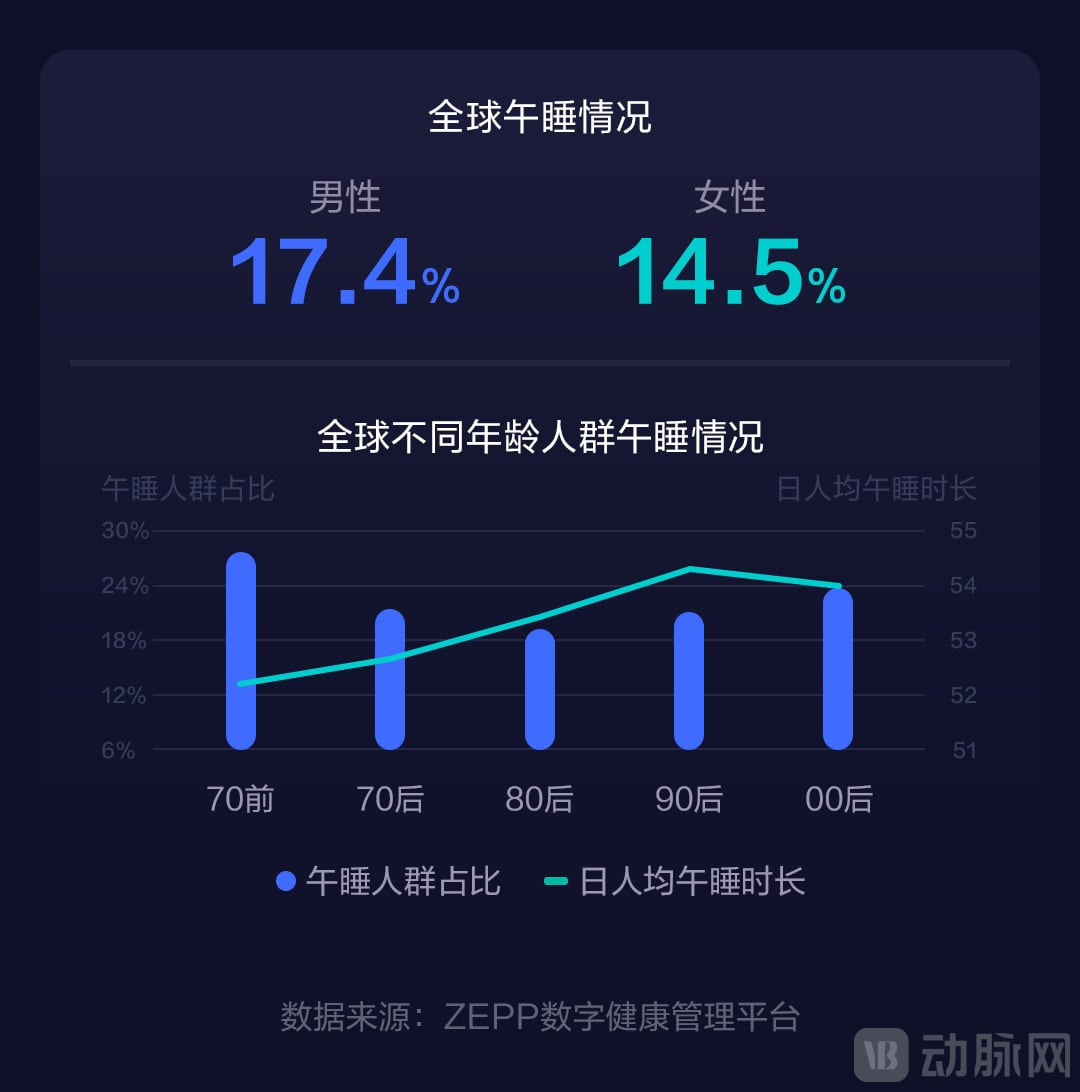
In 2021, an average of 16.3% of the global population engaged in napping daily, with an average duration of 51 minutes per person. The proportion of male nappers was higher than that of females. Individuals born in the 1980s had the lowest prevalence of napping, while those born before the 1970s had the highest. The three countries with the highest proportions of nappers were Vietnam, China, and Spain, whereas the countries with the lowest proportions were Turkey, Ireland, and New Zealand.
Appropriate exercise helps improve sleep quality. The analysis in this white paper also reveals that individuals who walk 12,000–20,000 steps per day achieve the highest sleep scores, and a longer sleep duration is associated with a higher proportion of individuals maintaining a BMI within the normal range. When sleep duration reaches 7–8 hours, individuals tend to exhibit more favorable outcomes in terms of BMI, resting heart rate, and sleep scores, along with a higher proportion reporting a relaxed stress state.
Huami Technology is a global leader in smart wearables and health cloud services. It currently owns two proprietary brands, Amazfit and Zepp, and has established a comprehensive health and fitness ecosystem. This ecosystem includes the Zepp Health Management Platform; wearable devices such as smart bands, smartwatches, and sports earphones; and sports- and health-related products including treadmills, weighing scales, body fat scales, and athletic footwear and apparel. The company has expanded rapidly in the global market, entering more than 90 countries and regions, with cumulative global shipments exceeding 200 million units.