

Bostem Announces Positive Real-World Evidence for Its Digital Therapeutic for Cognitive Impairment and Launches Certified Brain Training Brand 'NaoQingSong'
Cognitive disorders, exemplified by Alzheimer’s disease, are becoming among the most burdensome diseases globally. Early prevention, screening, and treatment of cognitive disorders represent major challenges in global public health. Meanwhile, China is poised to become one of the countries with the fastest-growing aging population over the next 30 years. Therefore, there is an urgent need for innovative solutions in China to effectively manage cognitive disorders.
To address this global challenge, what preparations should healthcare systems make? How should technology companies contribute? How can early detection and diagnosis be achieved through digital biomarkers, blood tests, genetic analysis, big data, and other means?How can digital technologies be leveraged to deliver superior solutions and drive a transformation in the industry landscape for the prevention, screening, and treatment of cognitive impairment?Recently, Bositeng released “impressive” data—its one-year real-world study results clearly demonstrate that multi-dimensional cognitive domain activation digital therapeutics, based on cognitive neuroscience theory, can effectively help users establish healthy brain-use habits and enhance their overall cognitive function.
Bositeng is a digital therapeutics company specializing in cognitive impairment, primarily providing end-to-end digital solutions for cognitive impairment to the middle-aged and elderly population. To date, Bositeng has cumulatively provided cognitive impairment risk assessment and intervention training services to over 13 million users.
A one-year real-world study was conducted from 2020 to 2021 to evaluate the therapeutic efficacy of the Bosteng Brain Training Program in middle-aged and older adults, particularly those with mild cognitive impairment (MCI).
This cohort study enrolled 2,133 middle-aged and older adults from the community. The intervention group (n=1,112), which included 205 individuals with suspected mild cognitive impairment (MCI), participated in the Bosthen Brain Training Program. The control group (n=1,021), which included 180 individuals with suspected MCI, joined a conventional brain health community and received routine brain health education and interactive activities.
After a 12-month observation period, the intervention group’s MoCA-B cognitive assessment scale, compared with the control group,The average score increased by 5.32% (p < 0.05), equivalent to a 1.6-point increase in the average score.(The MoCA-B has a maximum score of 30, with scores of 25 or below indicating a high likelihood of MCI); compared to the suspected MCI population in the control group, the MoCA-B scale scores of the suspected MCI population in the intervention groupThe average score increased by 12.85% (p < 0.05), equivalent to a 3.9-point increase in the average score.The experimental results were notably positive and promising. In contrast, no statistically significant difference was observed in the mean MoCA-B scores of the control group before and after the observation period.
In terms of adherence, over 70.6% of users in the intervention group maintained consecutive daily check-ins, and 92.6% checked in five or more days per week, indicating that adherence to the Bosten Brain Training Program far exceeds that of traditional pharmacological treatments. Additionally, users in the control group who participated in routine community-based health education interactions reported that regular engagement with community health guidance served as a reminder to prioritize self-care and well-being. Both the intervention and control groups provided positive evaluations of the overall process, reporting enhanced sense of well-being and improved quality of life.
The trial results corroborate the findings of the Finnish Geriatric Intervention Study to Prevent Cognitive Impairment and Disability (FINGER), published in the prestigious medical journal The Lancet in 2015, demonstrating that multidomain cognitive intervention training significantly activates various functional brain regions, accelerates information processing speed, enhances working and long-term memory, and improves overall cognitive function, well-being, and quality of life.
The intelligent software for cognitive function assessment and training used in this cohort study was jointly developed by Bostern and experts from top-tier tertiary hospitals in China, and it received medical device approval from the National Medical Products Administration in early 2022.
In January 2022, Bositeng’s software for cognitive function assessment and training received a Class II Medical Device Registration Certificate issued by the National Medical Products Administration (NMPA). The software is designed to assist in the assessment of brain cognitive functions and to provide cognitive training for patients with mild cognitive impairment (MCI). Comprising two modules, “Assessment” and “Intervention,” it holds the distinction of being the first certified digital therapeutic product available on mini-program platforms within the field of “brain health.”
Bositeng’s Cognitive Function Assessment and Training Software integrates professional components—including cognitive training, cognitive-motor exercises, health management, nutritional intervention, and sleep therapy—into daily training tasks to enhance users’ overall cognitive abilities. Leveraging multimodal interaction and using voice as a digital biomarker, the software’s technological sophistication has been endorsed by numerous leading experts both domestically and internationally.
A 2020 study on the applicability of intelligent screening tools for cognitive impairment demonstrated that the Bosteng Cognitive Function Assessment Software offers advantages over traditional screening tools such as the MMSE and MoCA-B, including faster administration, greater objectivity, and higher accuracy. The study enrolled 407 volunteers who were randomly assigned to undergo assessment using either the traditional cognitive screening scales (MoCA-B and MMSE) or the Bosteng Cognitive Function Assessment Tool. Analysis revealed that the Bosteng cognitive assessment product achieved higher acceptability, with an accuracy rate of 93% and an error rate of only 0.1%.
In late March 2022, with the public release of real-world study results and the approval of medical device qualifications, Bositeng will undergo a comprehensive upgrade and prominently launch its next-generation products along with the brain health brand “Nao Qingsong.” This is a brain health training product designed across four key dimensions: scientific efficacy, personalized customization, age-friendly design, and online companionship.
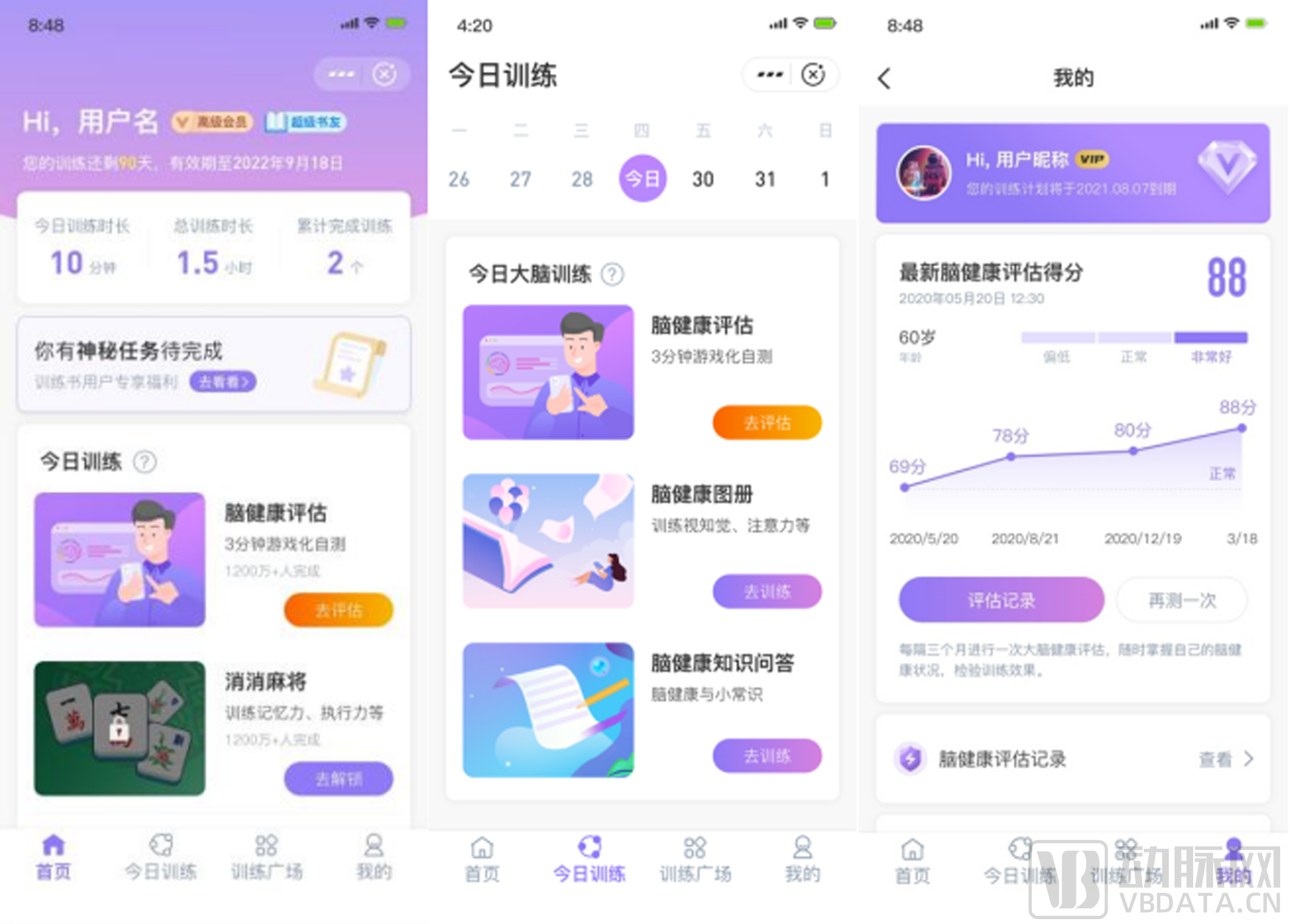
Source: Bostern Brain Health Official Account
Scientifically Effective:This “scientifically validated” and “medically certified” brain training service encompasses 10 cognitive domains—including memory, attention, and abstract reasoning—along with 30 training series and over 2,000 training modules. Its design principles are aligned with the intervention training systems of leading overseas research institutions. By using “Nao Qingsong,” users can conveniently access cutting-edge international medical concepts and knowledge on reducing the risk of cognitive impairment, thereby actively combating cognitive decline.
Personalized Customization:Based on assessments of seniors’ cognitive function, mobility, baseline health status, and lifestyle habits, AI algorithms are used to personalize and schedule their daily training tasks, offering tailored, dynamically adjusted, and targeted activation programs for each individual.
Age-Friendly Design:Specifically designed for elderly Chinese users, the company’s age-friendly design team has fully responded to national initiatives and customer needs by adhering to the principles of “simple, fun, and easy to use” and “large text, abundant images, and voice support.” It caters to various scenarios, including “playing independently at home” and “engaging in group activities within the community.”
Online Companionship:Each senior is assigned a dedicated cognitive training companion to provide comprehensive online guidance and support (Teach & Coach), including daily reminders, encouragement, brain exercises, and supervised companionship.
Mr. Lu Xiaoxiang, CEO of Bositeng, stated: “Our original aspiration has been to diligently transform our core ‘serious medical-grade’ products into digital solutions for ‘disease prevention.’ Therefore, our team has remained committed to conducting real-world studies and clinical trials, integrating our insights and reflections into product development. The recent acquisition of the medical device registration certificate further attests to our team’s authority and expertise in this field.”
At the same time, we also aim to develop “consumer-grade viral products” on the foundation of serious medical care, thereby enhancing the product experience for the middle-aged and elderly population.
“It is our team’s mission to provide comprehensive cognitive function services for middle-aged and elderly individuals, helping every family stay free from Alzheimer’s disease. Our newly launched brand—the ‘Nao Qingsong’ mini-program—aptly reflects all the insights and perspectives we hold as a technology-driven healthcare company.”
Currently, there is existing research on dementia prevention and multidimensional cognitive intervention; however, high-quality clinical evidence for the application of digital technologies in dementia prevention remains lacking.
Bosteng will subsequently collaborate with authoritative institutions to conduct the world’s first large-scale, randomized controlled trial (RCT) of multidimensional cognitive domain activation training delivered via a mobile mini-program for the prevention and management of cognitive impairment. This study aims to scientifically evaluate the clinical efficacy of the “Nao Qingsong” brain training program in patients with mild cognitive impairment (MCI), as well as its effectiveness in preventing progression from MCI to Alzheimer’s disease and other types of dementia.
By establishing this large-scale out-of-hospital cohort, Bosteng is also actively collaborating with scientists, clinicians, and industry stakeholders to foster their deep involvement, thereby transforming this real-world study platform into an open platform for brain science research, diagnosis of brain disorders, and the validation and tracking of the efficacy of numerous digital therapeutics in home and community settings.
With the continuous advancement of digital technology, numerous technological innovations have been incorporated into clinical trials of therapeutic drugs. Various tools and technologies, represented by digital therapeutics and digital biomarkers, are developing rapidly.In five years, the journey from home to the doctor’s office will become seamless, and digital cognitive screening will be ubiquitous.Digital therapeutics can also better assist physicians and patients in real-time monitoring and adjustment of intervention outcomes, thereby more effectively integrating prevention and treatment through a broader array of emerging technologies.