

China's First Mid-to-High-End Dental Chain Listed: Exclusive Interview with Simon Zou, Founder of Raylight Group

ARRAI
Oral Healthcare Service Provider
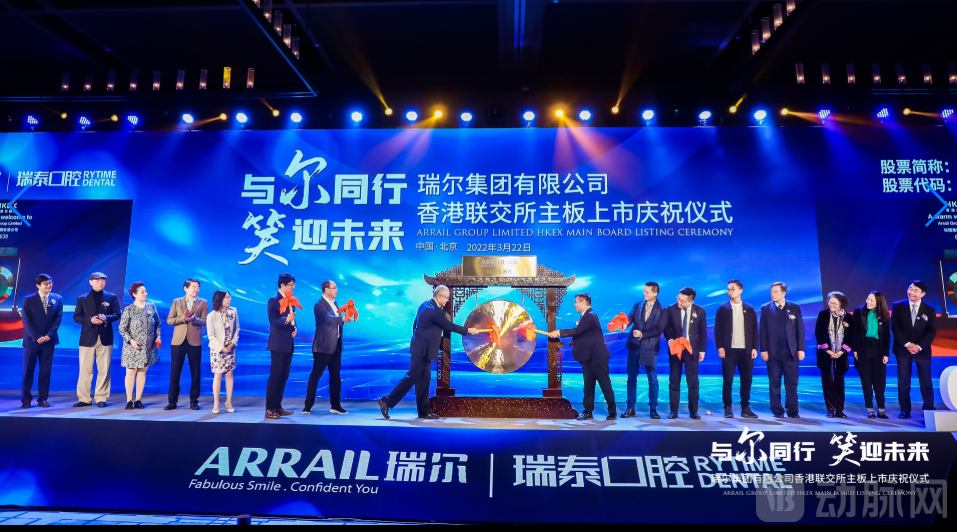
Today, ARRAI officially went public, becoming the first dental chain medical service provider to list on the Hong Kong Stock Exchange, with the stock code “06639.HK” and an opening market capitalization exceeding HK$8 billion.
Since its inception in 1999,ARRAI currently owns two major brands: “Arrail Dental,” positioned for high-end dental medical services, and “Ruitai Dental,” targeted at the mid-range market., primarily offering three types of dental services: general dentistry, orthodontics, and dental implants.
According to Frost & Sullivan data, based on total revenue in 2020, ARRAI ranked third in China’s overall private dental medical services market. In the high-end private dental medical services market, it held a market share of 24.1%, ranking first.
Notably, ARRAI is the first listed dental chain company in China to establish a nationwide presence.As of now, ARRAI operates 7 dental hospitals and 104 clinics across 15 first- and second-tier cities in China, placing it in the top tier of the dental services industry in terms of both the number of institutions and geographic coverage.
The prospectus shows,ARRAI is backed by a consortium of prominent Chinese and foreign investment institutions, including Temasek, OrbiMed, Goldman Sachs, Hillhouse Capital, Qiming Venture Partners, and New Horizon Capital.
What did ARRAI do right to achieve a successful IPO? What strategic layout will it adopt post-listing? How will the dental industry evolve in the future? To address these questions, VCBeat conducted an exclusive interview with Zou Qifang, Founder and President of ARRAI, for a detailed analysis.
It took ARRAI 23 years from its founding to its listing today.
In this process,Zou Qifang and the ARRAI Group, under his leadership, have witnessed the entire journey of China’s private dental services industry from its nascent stage to rapid growth.
“There are two important inflection points in China’s private dental services industry: first, the relaxation of regulations on medical institutions in 2000, which led to the emergence of more private dental clinics; and second, by 2019, when China’s per capita GDP and per capita GNP both exceeded US$10,000, reaching a tipping point for explosive growth in consumer demand and purchasing power for oral health care,” Zou Qifang told VCBeat.
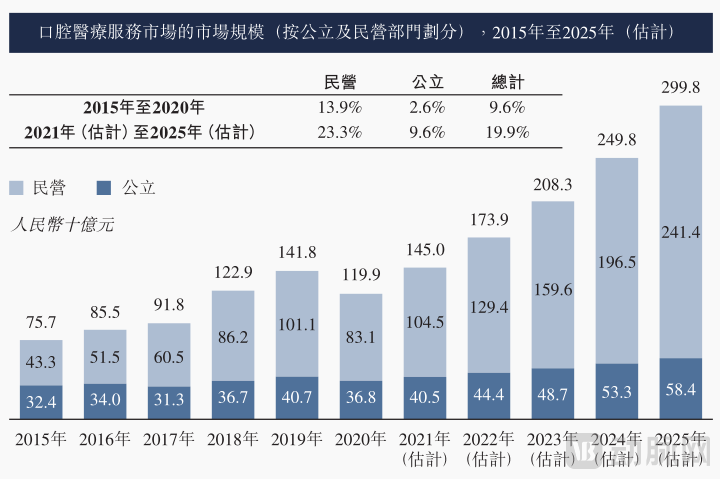 (Changes in the Market Size of Dental Medical Services. Image source: Prospectus)
Although the oral care industry continues to expand, with its market size exceeding RMB 100 billion, in factLooking back, ARRAI’s journey has not been particularly rapid.
Counting from the establishment of the first Arrail Dental clinic in Beijing in 1999, by 2004, Arrail Dental had only opened new branches in cities such as Shenzhen and Shanghai, totaling five clinics within five years, indicating a relatively slow expansion pace.
“I believe that slowness is inevitable; corporate growth, much like personal development, requires a step-by-step approach. One must believe that slow is fast.” In Zou Qifang’s view,The healthcare industry is a highly serious sector, and companies entering it must lay a solid foundation.“Oral care has strong consumer attributes, but it still falls within the medical category; this is a critical premise that must be taken seriously.”
How Did ARRAI Lay Its Foundation?The core rests on three pillars: talent, brand, and platform.
First, let’s look at talent.In the dental services industry, dentists have always been a scarce resource.According to data from the China Health Statistical Yearbook, in 2019, there were only 195,000 licensed stomatologists in China, accounting for 6.1% of the total number of licensed physicians; there were 50,000 licensed assistant stomatologists, accounting for 7.6% of the total number of licensed assistant physicians. The total number of registered dentists was far below the demand of both public and private dental medical service institutions.
Therefore, talent recruitment and development are of paramount importance for dental service providers. Over its 23-year history, ARRAI has become a highly sought-after employer brand. It pioneered campus recruitment by building its dentist team through on-campus hiring and internal training programs at dozens of specialized institutions, such as Peking University School of Stomatology and West China School of Stomatology. Additionally, it has attracted numerous authoritative experts, including master’s and doctoral supervisors, to join in full-time roles. Within the group, over 50.7% of full-time dentists hold a master’s degree or higher, and 38.5% have more than 10 years of industry experience.To facilitate the professional growth of dentists, ARRAI has established a relatively comprehensive talent development system.
“We conduct training almost every day, particularly for dentists who are new to the profession. Whenever there are seminars on complex cases, we ensure their participation so they can gain exposure to a wider variety of cases in real-world practice and learn from senior colleagues,” said Zou Qifang.
Not only that,To align the interests of talent with the Group’s development, ARRAI has piloted the ARRAI Partnership Mechanism.To date, 17 dentists have been promoted to management and business partners.
Regarding frontline employees, ARRAI implemented an employee stock ownership plan (ESOP), granting 22.42% of the company’s restricted shares as incentives to 616 employees and mid-to-senior-level executives within the group. By October 2021, approximately 45% of the incentive shares under the ESOP had been awarded to frontline medical personnel.
The establishment of the entire talent ecosystem has demonstrated promising results.The prospectus shows that hospitals and clinics managed by partner dentists of ARRAI achieved an average rapid revenue growth of 92% from fiscal year 2020 to fiscal year 2021, higher than the average growth rate.
Furthermore, the performance of dentists who joined ARRAI in 2016, 2017, and 2018 grew at compound annual growth rates (CAGRs) of 43%, 54%, and 30% over five-year, four-year, and three-year periods, respectively. Dentists with five, ten, and fifteen years of tenure at ARRAI accounted for 31.9%, 11.2%, and 4.8% of the total dentist workforce, respectively. The retention rate for full-time dentists with three or more years of experience was 95.8%, demonstrating an exceptionally high level of retention.This indicates that physicians exhibit strong work motivation and a high sense of identification with the enterprise.
Next, let’s look at the brand.Currently, ARRAI has established its unique dual-brand strategy, namelyTargeting the high-end and mid-range markets through “Arrail Dental” and “Ruitai Dental,” respectively.
Specifically, Arrail Dental primarily targets patients in first-tier cities who possess high purchasing power and a high lifetime value. Arrail clinics command a premium by delivering high-quality medical technology and personalized services. As of September 30, 2021, the Arrail brand operated 51 clinics across seven cities, with the majority located in core commercial districts and Grade A office buildings.
Ruitai Dental primarily targets new middle-class consumers in first-tier and core second-tier cities, covering a broader geographic area. Ruitai’s positioning is to expand the larger mid-market for dental medical services by providing high-quality care at more affordable prices. Unlike Arrail Dental, which relies mainly on organic growth, Ruitai Dental pursues a dual-engine expansion strategy combining self-built facilities and mergers and acquisitions. As of September 30, 2021, the Ruitai brand operated 7 hospitals and 53 clinics across 10 cities, with the majority located in residential areas. Currently, Ruitai Dental continues to maintain rapid growth and has established a more extensive nationwide chain network.
Taking Chengdu as an example, Ruitai opened its first dental hospital in the city in 2014 and added five more clinics by December 31, 2020. From fiscal year 2015 to fiscal year 2021, the company’s revenue in Chengdu achieved a compound annual growth rate (CAGR) of 100%, while the number of dental chairs in Chengdu increased from 19 to 81.
Arrail is also actively pursuing synergistic M&A opportunities. Taking Chongqing as an example, the company entered the market in 2015 by acquiring ten clinics, subsequently opening one hospital and six additional clinics. Since then, Arrail’s revenue in Chongqing has grown significantly, with a compound annual growth rate (CAGR) of 35% from fiscal year 2016 to 2021, while the number of dental chairs in the region increased from 80 to 217.
The results indicate that the dual-brand strategy has achieved commendable outcomes.As of the end of September last year, ARRAI Group operated a total of 111 hospitals and clinics, comprising 7 hospitals and 104 clinics. The group had nearly 1,300 dental chairs and approximately 900 full-time dentists, having served over 7.4 million patients cumulatively in the past decade.
According to the report by Frost & Sullivan,In terms of total revenue in 2020, ARRAI has become China's largest provider of high-end private dental medical services.
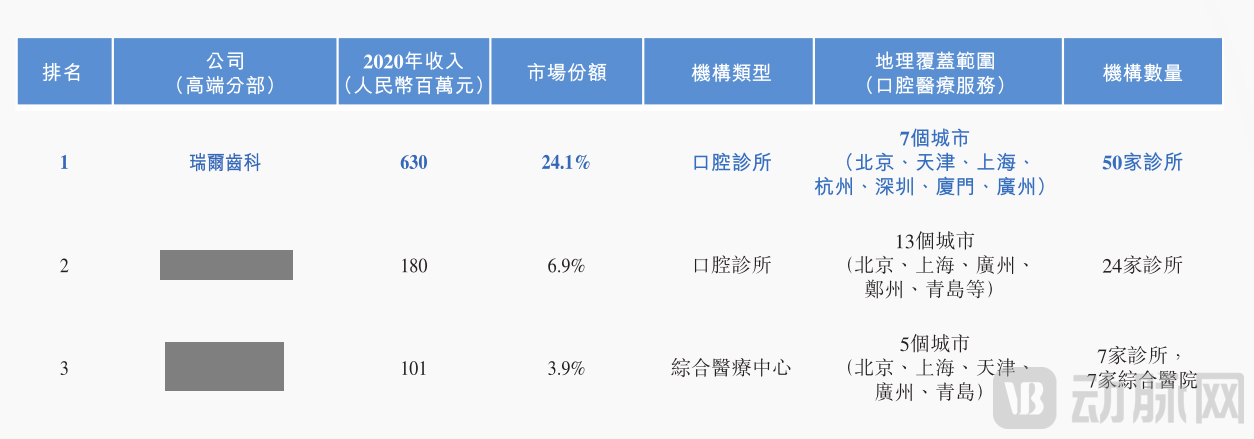 (One of the top three high-end private dental healthcare service providers in China; Image source: Prospectus)
“Behind a brand lies quality, which encompasses all aspects of quality management, including medical care quality management and service quality management,” said Zou Qifang. He noted that achieving high quality is no easy feat; it requires years of accumulation and refinement, as well as a committed, deep-dive approach.These efforts are also reflected in the establishment of the third pillar—the platform—which has provided significant support for the chain development of Arrail Dental.
Dental chain businesses have always appeared glamorous on the surface, but in practice, their implementation is often starkly challenging.
Multiple investors focusing on the consumer healthcare sector told VCBeat that, thanks to the sustained rise in domestic demand for oral health consumption, dental chain practices theoretically enjoy favorable opportunities.However, as a capital-intensive business, the expansion of each dental clinic requires substantial funding. Coupled with the challenges of achieving standardization, this entails significant risks.
Based on previous research, the expected investment cycle for dental chain clinics generally ranges from 5 to 10 years, with some cases extending even longer; therefore, short-term losses are inevitable. From a long-term perspective, the scarcity of dentists, intense competition, and high customer acquisition costs have become major obstacles hindering the development of dental chain clinics. Consequently, many dental chain organizations in the industry have primarily adopted the strategy of “regional deep cultivation.”
ARRAI’s ability to expand nationwide is driven not only by the establishment of its talent system and the implementation of a dual-brand strategy, but also by its highly standardized platform operational capabilities.This includes standardized operational procedures and systems, as well as digital infrastructure construction, thereby ensuring ARRAI’s consistent service quality and operational efficiency.
More specifically, ARRAI has established a SaaS platform for operations and medical quality management. This platform supports business operations, customer relationship management, and BI data analytics across different brands, regions, organizational structures, and service offerings. It also ensures compatibility for data exchange with other healthcare IT systems, thereby enhancing the capacity to rapidly open and expand new clinics and hospitals. Furthermore, it enables the seamless integration of acquired clinics into ARRAI’s centralized management framework, ensuring a consistent experience for customers.
Furthermore, ARRAI has established extensive supply chain management and centralized procurement capabilities, thereby strengthening its bargaining power. In terms of training platform development, ARRAI currently offers more than 300 online courses and over 200 case studies, covering a wide range of topics including standard operating procedures, new skills, management lectures, and thematic training camps, to support continuous learning and professional growth for dentists within its network.
Supported by its three core pillars, ARRAI has managed to address, to some extent, the challenges associated with scaling dental clinic chains, a fact reflected in its operational data.
The prospectus shows that ARRAI’s customers are mainly individual patients. As of September 30, 2021, revenue from individual patients and corporate clients accounted for 93% and 7% of total revenue, respectively. This indicates that ARRAI is able to continuously attract C-end customers without relying on a single B-end major client, thereby avoiding the risk of excessive operational concentration.
Another indicator requires close attention., in fiscal years 2019, 2020, and 2021, as well as for the six months ended September 30, 2021, the repeat visit rate of loyal customers (i.e., the percentage of patients who returned to ARRAI for treatment within six months after their initial visit, excluding follow-up visits for the same course of treatment) reached 42.1%, 41.4%, 45.8%, and 47.6%, respectively, showing a gradual upward trend. In addition, ARRAI’s customer satisfaction rate was 97% over the past three fiscal years. In other words,Currently, approximately half of the customers have developed high stickiness, and the vast majority continue to recognize ARRAI’s services, which has alleviated the customer acquisition challenges faced by dental chains to a certain extent.
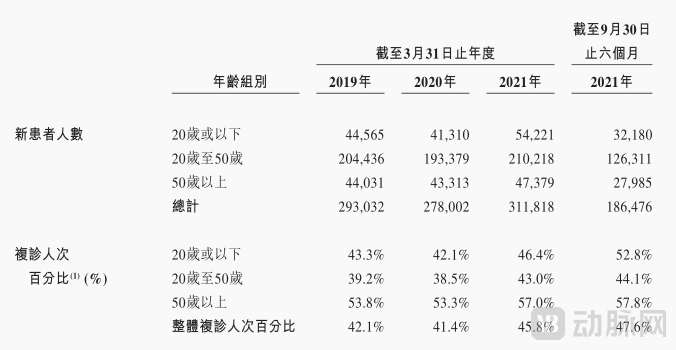 (Percentage of New Patients vs. Follow-up Visits; Source: Prospectus)
Of course, in addition to customer acquisition, chain expansion also involvesProfitability and cost control are also key performance indicators.
In fiscal year 2021, ARRAI generated RMB 1.5 billion in revenue, representing a 37.7% year-on-year increase. The company turned profitable during the same period, achieving an operating profit of RMB 124 million, with operating cash flow of RMB 243 million. Its adjusted EBITDA (earnings before interest, taxes, depreciation, and amortization) amounted to RMB 359 million, corresponding to an adjusted EBITDA margin of 23.7%.
What is even more commendable is that over the past three years, ARRAI Group has demonstrated a favorable downward trend in its major cost and expense ratios relative to revenue. For instance, store-level labor costs decreased from approximately 43% in fiscal year 2019 to 38% in fiscal year 2021. As of December 31, 2021, ARRAI Group held cash and cash equivalents totaling RMB 1.1 billion, providing sufficient support for its sustained growth.
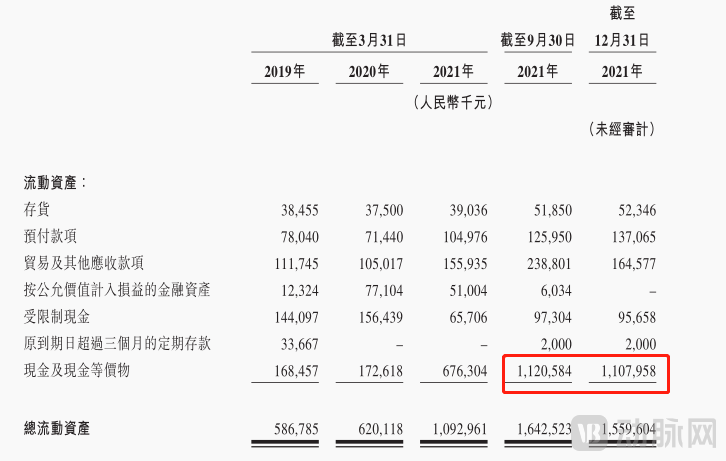 (Image source: Prospectus)
Zou Qifang revealed that with the increasing number of mature stores under ARRAI’s steady growth model, the chain development has reached a new turning point, and profitability potential will be further unleashed in the future.
This is reflected in the prospectus. According to ARRAI’s classification, its hospitals and clinics are divided into three stages: the first stage comprises hospitals and clinics that have been in operation for less than three years and are in the ramp-up and expansion phase, with 24 such facilities currently; the second stage includes those that have been in operation for three to six years and are experiencing rapid growth, with 25 facilities at present; and the third stage consists of hospitals and clinics that have been in operation for more than six years and have entered a phase of steady growth, totaling 52 facilities.
It can be seen that the proportion of stores in a steady growth phase has exceeded half of the total.It is important to note that store profit margins have shown an upward trend across different stages. Taking hospitals and clinics in the stable growth phase as an example, their average profit margin increased from approximately 24% in fiscal year 2019 to around 33% in fiscal year 2021. This indicates that the growing number of mature stores will gradually elevate the overall profitability of ARRAI Group.
“We“It used to be a case of ‘a small horse pulling a big cart,’ but ARRAI has now entered a stage of healthy and rapid development.”“Zou Qifang stated, ‘Our philosophy is health first, then development.’”
The oral care industry is entering a period of rapid development, as evidenced by the heightened interest from capital markets.
According to statistics from VCBeat, there have been a total of 58 financing events in the primary dental care market from 2021 to the present, with the total financing amount approaching RMB 10 billion. Multiple companies have secured two or more rounds of financing within a single year. Among them, Linker Care, Meow Dental, Smartee, MicroCloud AI, Fussen Technology, and Canban have each raised hundreds of millions, and in some cases over RMB 1 billion, in financing.
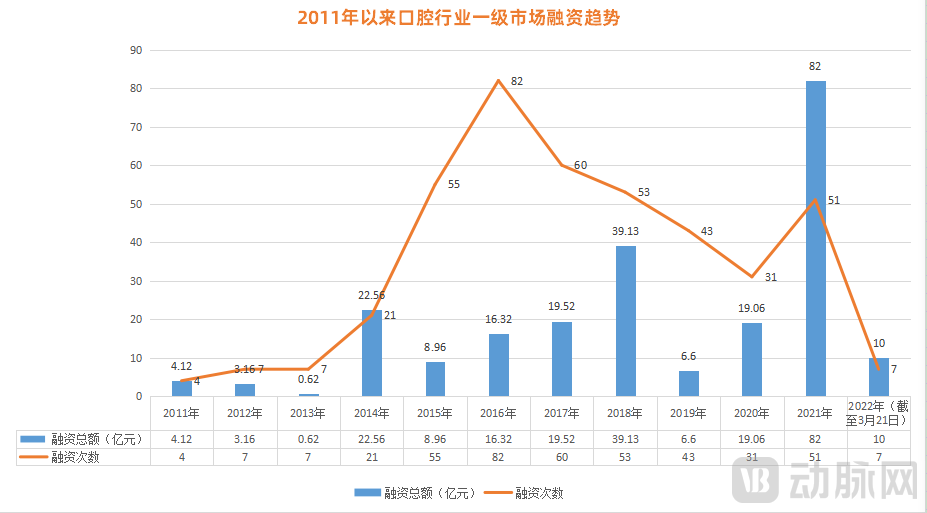
(Data source: Qichacha, Arterial Orange Database; Chart by VCBeat)
In the secondary market, over the past year or so, companies including ARRAI and Angelalign have successfully gone public, while Vimi, Henglun Medical, and China Oral Health Group have each filed their prospectuses.The entire oral care sector is exceptionally hot.
“The oral care market is closely correlated with economic conditions and education levels. After more than two decades of accumulation and consolidation, the industry has reached a new inflection point,” said Zou Qifang. “As long as the industry continues to develop in a healthy direction, all professionals in the dental healthcare sector will have ample opportunities.“Of course, we must always stay true to our original mission. ARRAI will continue to prioritize patients’ interests above our own, focus on the core essence of medical care, and proceed in a steady, step-by-step manner without taking shortcuts.”
Regarding the upcoming plans,ARRAI specifically mentioned in its prospectus that it will continue to develop a robust ARRAI ecosystem and build a DSO business model.The so-called DSO model is a collective term for non-clinical business support services provided to dentists and dental clinics. In other words, ARRAI will provide business solutions such as medical and operational support for dental clinics, further empowering external industry institutions and dentists, and accelerating the digitalization and transformation of the oral healthcare industry.
Recalling the most memorable moments from his 23-year entrepreneurial journey, Zou Qifang vividly remembers a charitable mission to remote areas of Guizhou in 2009. The team donated tens of thousands of oral care kits to local children, each containing items such as towels, cups, toothbrushes, and toothpaste. “Seeing the children’s radiant smiles as they held these oral care supplies was the moment I felt the greatest sense of accomplishment in my entrepreneurial career.”
It is reported that the "Comprehensive Prevention and Treatment Project for Oral Diseases in Orphaned and Disabled Children," jointly launched by ARRAI and the China Foundation for Dental Health, had provided oral health services to more than 40,000 orphaned and disabled children as of June 2021.
“What are your expectations for ARRAI following its IPO?” VCBeat asked at the end of the interview.
Zou Qifang replied with a gentle yet firm gaze, “I hope to continue enabling more Chinese people to smile with health and confidence.”