

Joint Orthopedic Robotics: Riding the Surge to Uncover the Next Market Dark Horse

Lancet Robotics
Developer of Robotic Systems for Orthopedic Joint Replacement Surgery
As one of the most advanced procedures in orthopedic surgery, joint replacement surgery has consistently faced a situation where demand exceeds supply.
According to Frost & Sullivan statistics, with an incidence rate of 15%, the number of patients with joint diseases in China is as high as 120 million; calculated at a penetration rate of 20%, there are nearly 10 million people in China with an urgent need for joint replacement. Although the compound annual growth rate (CAGR) of joint replacement surgeries in China has been nearly 24% over the past five years, showing a trend of rapid growth, surgeons qualified to perform artificial joint replacement surgeries must have at least 10 years of surgical experience in this field. Such experts are extremely scarce in China, and most are concentrated in top-tier hospitals. Currently, the annual volume of such surgeries is only around 1 million, far failing to meet market demand. There is a huge gap between supply and demand.
With the advantages of minimal invasiveness, high precision, reduced learning curve for surgeons, and standardized surgical procedures, robot-assisted orthopedic surgery has become a key innovation to alleviate the current shortage of medical professionals, and has also emerged as a hot spot for capital investment in recent years.
Another factor driving the explosion in this sector is the reshuffling of the hospital-based healthcare landscape brought about by volume-based procurement.
Starting in late July 2019, the centralized volume-based procurement of high-value orthopedic joint consumables was launched, with average prices dropping from RMB 30,000 to below RMB 10,000, representing an overall reduction of more than 80%. The significant contraction in the market share of artificial joints has unleashed potential in other related markets.
Drawing parallels with the post-volume-based procurement (VBP) landscape for coronary balloon therapy and assessment, as well as the surge in innovative fields such as interventional robotics, this article looks to the future from the current juncture of VBP for orthopedic consumables.Precision, digitalization, and intelligence in orthopedics will become new profit growth drivers and a major industry trend.Innovative medical services, primarily driven by surgical robots, are also bound to become a key lever in future healthcare reforms, injecting greater vitality into medical institutions.
The policy has also served as a significant boost to the orthopedic robotics sector.
The “13th Five-Year Plan Outline for the Development of the Orthopedic Robotics Industry” explicitly mandated a 30% increase in the orthopedic robotics sector by 2020. The draft for comments on the “Medical Equipment Industry Development Plan (2021–2025)” designated surgical robots as a key area for development. In August 2021, the Beijing Healthcare Security Administration announced that, effective October 23, robot-assisted orthopedic surgeries would be included in Beijing’s Category A medical insurance reimbursement list (eligible for 100% reimbursement), while disposable robotic-specific instruments would fall under Category B medical insurance coverage (eligible for partial reimbursement). These policies encourage society to conduct in-depth exploration and adoption of robotic technologies.
In March 2022, the National Healthcare Security Administration issued the “Guidelines on Improving Pricing and Related Policies for Assistive Procedures Such as Orthopedic ‘Surgical Robots’ and ‘3D Printing’ (Draft for Comment),” further establishing norms and benchmarks for the industry. It is certain thatOrthopedic robots are transitioning from a phase of unregulated expansion to one of standardization and commercialization, while truly superior products will emerge to maintain their leadership in the field.
Repeatedly Favored by Capital, with Accelerating R&D Progress for Products in Development
Amidst the policy tailwinds, what kind of orthopedic robotics will emerge as the dark horse in this future track?
The foundation of orthopedic surgical robots, along with the underlying technological capabilities of the product, determines the future upper limit of the product.Currently, the core of future commercial competition in orthopedic robotics lies in the barriers established by underlying technologies in visual and haptic algorithms, human-machine collaborative interaction design mechanisms, and big data processing methods for different clinical functional modules. How to leverage underlying technology platforms through technology transfer to expand across fields into other surgical procedures and adjacent departments in the future is also a core competency that will define the ceiling for growth in the surgical robotics sector.
Beyond the technology lies the actual demonstration of clinical outcomes. This is the core determinant of whether surgical robots can address the pain points of traditional surgery.Stability, precision, ease of operation, and compatibility with surgical procedures are all key concerns for physicians during use. Avoiding the addition of cumbersome operational steps for surgeons is also a major focus of competition among products in this sector. If a robotic system ensures surgical accuracy but involves an overly complex workflow that increases procedural complexity and prolongs operative time, it will face challenges in achieving widespread adoption in the future.
How to achieve substantial growth in robot adoption, building upon foundational technologies and clinical outcomes, is another key point.This necessitates reasonable pricing and comprehensive support services, truly leveraging affordable prices to drive the healthy development of the industry. This will enable more hospitals to equip themselves with relevant devices without being hindered by prohibitive costs, thereby ensuring that patients in need receive higher-quality medical care.
Shenzhen Lancet Robot Co., Ltd. (hereinafter referred to as “Lancet Robot”) is a technology-driven company specializing in cross-specialty surgical robots, which VCBeat recently learned about.According to Huang Zhijun, the company’s founder, its pioneering total hip arthroplasty surgical robot, total knee arthroplasty surgical robot, and dental implant surgical robot have all completed China’s registration clinical trials at multiple renowned Grade A tertiary hospitals, including Nanjing Drum Tower Hospital Affiliated to Nanjing University Medical School, The Second Affiliated Hospital of Zhejiang University, and Xi’an Honghui Hospital, demonstrating excellent clinical performance. Furthermore, Lancet Robot has comprehensively deployed an intelligent surgical solution platform software and has already generated tens of millions of yuan in revenue.
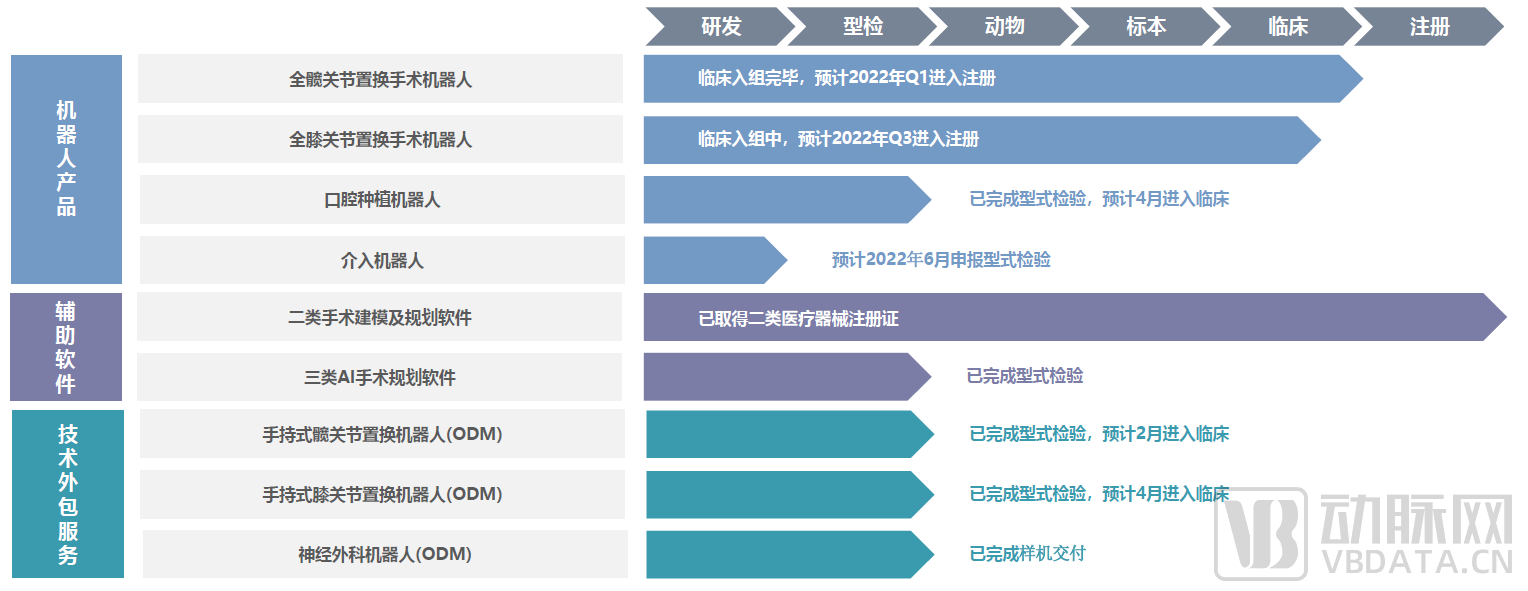
Lancet Robot: Product Portfolio and R&D Progress
“I have long been responsible for the R&D and marketing of medical devices at Siemens Healthineers, Dräger Medical, and Shukang Robotics. Later, recognizing the imbalance between supply and demand in orthopedic surgery, as well as the opportunities presented by the increasing penetration of digital technologies in surgical procedures, I sought to leverage my industry insights and years of technical expertise to develop a surgical robot that harnesses technological power to address these challenges. During my master’s studies in Computer Science at Tsinghua University, I built substantial technical expertise in medical image processing algorithms and robotic motion control algorithms. Perhaps it was this dedication to surgical robotics that enabled me to find like-minded partners.”Huang Zhijun remarked.
In 2020, Huang Zhijun assembled an entrepreneurial team comprising students from Harbin Institute of Technology, Shanghai Jiao Tong University, and Tsinghua University. He established deep collaborations with Dean Sun Lining of the State Key Laboratory of Robotics at Harbin Institute of Technology, Dean Jiang Qing of Nanjing University Medical School, and Academician Zhang Dan of the Canadian Academy of Engineering, founding Lancet Robot in Shenzhen.
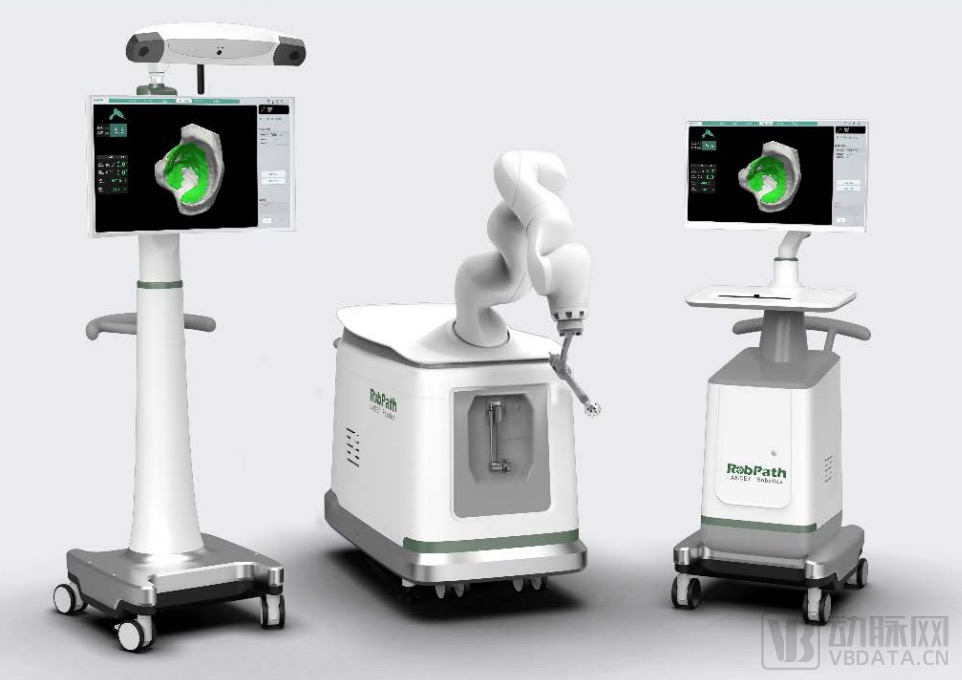
Lancet Total Hip Arthroplasty Surgical Robot
Lancet Robot, established less than two years ago, has garnered significant investor confidence and accelerated its product development pace. In 2021 alone, the company secured three rounds of financing and advanced its self-developed robotic systems for total hip arthroplasty, total knee arthroplasty, and dental implant surgery to the clinical registration stage in China and the FDA registration stage.
Currently, the surgical robot developed by Lancet has successfully integrated modules for preoperative planning, intraoperative real-time positioning and navigation, and postoperative simulation-based assessment, thereby covering the entire workflow of joint replacement surgery. It provides a comprehensive intelligent solution for precise bone resection, accurate implant placement, and realistic evaluation of postoperative outcomes.
Specifically, the Lancet total hip arthroplasty surgical robot is equipped with a precise navigation and positioning system as well as an intelligent surgical planning system. Its open surgical platform is compatible with mainstream domestic and international joint prosthesis brands. The built-in precise navigation and positioning system achieves a positional accuracy of 1 mm, an angular accuracy of 1°, and force control accuracies of 0.25 N and 0.025 Nm. Furthermore, the proprietary robotic arm control algorithm fully aligns with the operational habits of the lead surgeon while ensuring safety, enabling seamless collaboration between the surgeon and the robotic arm to complete the procedure.
Moreover, the Lancet surgical robot has optimized the surgical workflow and registration methods, significantly reducing operation time. Compared with similar imported products, the registration time can be shortened by 10–15 minutes.
Three Proprietary Technological Foundations Empower Core Robotic Products
Huang Zhijun provided a detailed introduction to the R&D philosophy behind the Lancet surgical robot products: “Based on insights into the current and future pain points of surgical robots, we believe that enhancing the clinical value of products from the patient demand perspective and strengthening technological upgrades to meet physicians' needs for intelligent operation are two particularly important directions.Lancet Robot will build on this foundation and proceed from three directions:
First, preoperative planning is more intelligent and reliable. We aim to leverage artificial intelligence to rapidly perform 3D reconstruction of medical images, thereby providing surgeons with a clearer surgical field of view.By integrating recognition and computational functions related to human physiological signs, the system enhances surgical intelligence, enabling automatic identification of skeletal landmarks and calculation of parameters such as leg length and offset, thereby assisting physicians in accurate preoperative surgical planning.
Second, optimize surgical workflows and registration methods to achieve more precise and efficient surgical localization.We aim to reduce surgeons’ operative time, minimize patient blood loss, and lower the risk of surgical site infections through this approach. Our independently developed intelligent algorithm for selecting registration points based on big data–driven retrospective analysis can provide tailored registration strategies for various complex cases, such as those involving severe inflammatory lesions or developmental malformations. This helps mitigate the impact of heterogeneous soft tissues and osteochondral surfaces on registration accuracy, ensuring rapid and precise intraoperative registration for surgeons, thereby reducing surgical risks.
Third, the integration of the robot’s precision and intelligent features with surgeons’ traditional operative experience makes surgical procedures safer and more convenient.Lancet Robot aims to unlock the value of surgical robotics while preserving the surgeon’s fundamental tactile feedback. We have independently developed haptic feedback control for human-robot collaboration in our robotic arms and systematically designed the dynamic performance of the entire system. This enables dynamic control over the robot’s motion trajectory and impedance, thereby providing precise haptic feedback that makes surgical operations more convenient and less physically demanding for surgeons.
Meanwhile, the deeply self-developed boundary control technology for robotic arms dynamically adjusts the virtual boundaries for surgical cutting and grinding, ensuring that these procedures do not damage critical areas, thereby enhancing patient safety. These are all core technologies inherent to surgical robots.”
“It is precisely because of our robust technical expertise and proven project delivery capabilities that we have established strong partnerships with numerous well-known listed companies in the industry. Lancet Robot provides customers with customizable, intelligent surgical solutions for orthopedics. By adopting a customer-centric approach, we have not only diversified our revenue streams but also driven continuous technological iteration and innovation within our team.”Huang Zhijun added.
Cross-Departmental, Multi-Product Line Advancement to Build a Comprehensive Solution
Based on the technological foundation of Lancet Robot and the team's execution capabilities,The company has established two product portfolios: a surgical robot product line and an intelligent surgical assistance software product line.
In addition to products that have entered the clinical enrollment phase, Lancet Robot has also launched a vascular interventional surgical robot. Reportedly, this product can assist physicians in performing peripheral and coronary interventional procedures in a radiation-free environment.
In the development of intelligent surgical assistance software, its independently developed total knee arthroplasty (TKA) robotic system features the globally pioneering Lancet-KBAS system for quantitative assessment of soft tissue tension. This system provides real-time, precise intraoperative soft tissue tension data via disposable consumables, thereby assisting surgeons in conducting more comprehensive evaluations. This technology has received high acclaim from numerous clinical experts and physicians and will undergo separate product registration.
A comprehensive review of Shenzhen Lancet Robot Co., Ltd.’s product portfolio strategy and its R&D initiatives clearly reveals that,The company is continuously advancing its product portfolio through “cross-departmental” integration, “multi-product line promotion,” and the development of comprehensive solution capabilities.
How is this achieved? Huang Zhijun stated, “The core lies in our proprietary technological foundation. This independently developed foundation encompasses the medical image processing algorithms, intraoperative registration and robotic arm motion control algorithms, surgical workflow planning algorithms, and master-slave real-time control technologies I mentioned earlier. Built upon this foundation, we can continuously expand our product portfolio.”
First is the expansion of departments. This includes bone and joint replacement, dental implants, vascular intervention, etc., which we have basically achieved.
"Next is the comprehensive solution for the surgical process. It mainly involves preoperative intelligent surgical planning and modeling, precise execution during surgery, as well as postoperative evaluation and rehabilitation management services. This can be described as forming a complete closed-loop commercialized solution."
In the future, Lancet Robot will accelerate the domestic and overseas registration and approval processes for its products to commercialize its surgical robot series as soon as possible.