

Billion-Dollar Blue Ocean Market of FSMP in China Awaits Breakthrough: Core Pain Points Must Be Addressed for Industry Takeoff | Exclusive Interview with Yang Hui, Chairman of DaXiang Nutrition Supply Chain Group
How should we understand the current market for foods for special medical purposes (FSMP) in China? Let’s begin by examining a set of data—
First, there is a difference in the market size of foods for special medical purposes.In 2020, the global market size for foods for special medical purposes (FSMP) was RMB 81.48 billion. The domestic market size for FSMP in China was RMB 7.72 billion.
Secondly, there is the change in the growth rate of the market for foods for special medical purposes.From 2016 to 2021, the market size of foods for special medical purposes (FSMP) in China expanded steadily, with a growth rate significantly higher than that of the global FSMP market, achieving an average annual growth rate of over 30%. Furthermore, China's share of the global FSMP market continued to increase. In 2016, this proportion was only 3.9%; by 2020, it had risen to 9.5%.
However, as the market size for foods for special medical purposes (FSMP) in China expands rapidly and shows positive development trends, challenges facing the industry are beginning to emerge. How can the three key stakeholders—FSMP manufacturers, hospitals, and patients—converge within a legal and compliant framework to form a complete ecosystem? This is a pressing issue for numerous industry practitioners, and its resolution is critical to optimizing patient health outcomes and facilitating recovery and rehabilitation.
Is there a solution to this problem?
We interviewedYang Hui, Chairman of Daxiang Nutrition Supply Chain Group (hereinafter referred to as “Daxiang”). Discussions were held on current hot topics in the industry for foods for special medical purposes (FSMP), with the aim of contributing to the sector’s positive development through a Q&A format. To enhance readability, the interview content has been appropriately edited and condensed without altering its original meaning.
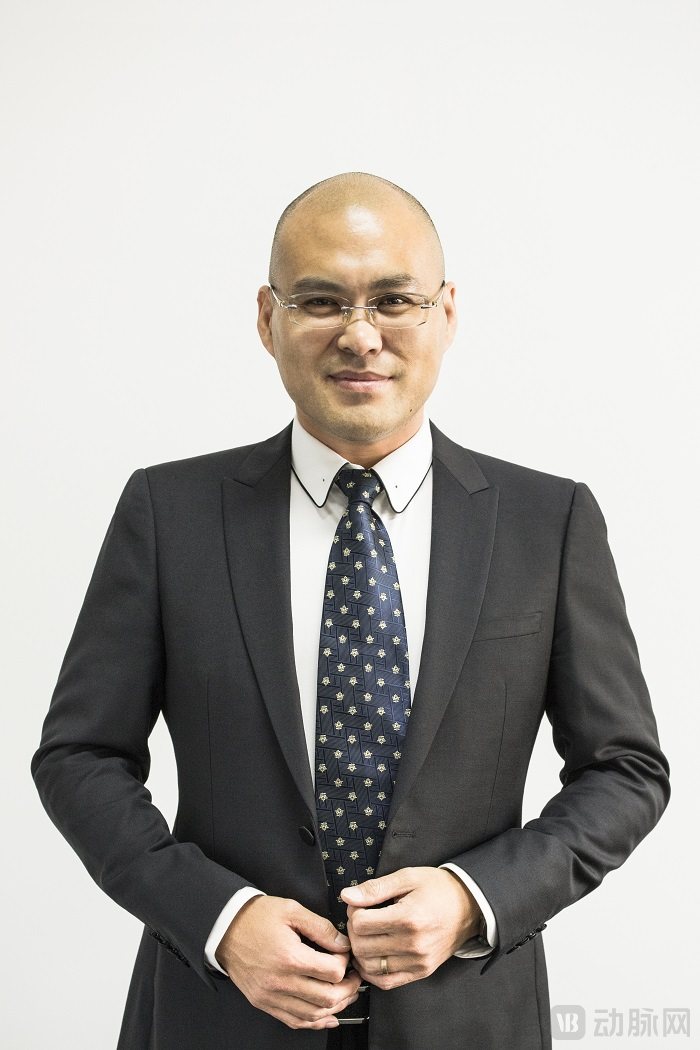
Yang Hui, Chairman of Daxiang Supply Chain Group, has dedicated 22 years to the medical industry and has been an entrepreneur for over a decade. His expertise spans the research and development, manufacturing, investment promotion, and sales of pharmaceuticals, medical devices, consumables, and reagents. Leveraging his forward-looking insights into national policies and the healthcare sector, along with his deep understanding of the business ecosystem and the special medical food industry, he transitioned into the field of medical nutrition in 2017.
1、
VCBeat: You began engaging with the special medical purpose food industry in 2017 and established Elephant Nutrition Supply Chain Group in 2018. What rationale underpinned your decision to enter this sector?
Yang Hui: In 2015, when I founded a medical device R&D enterprise, I began to consciously study healthcare reform policies and the future trajectory of the industry. In 2016 and 2017, I devoted two years to in-depth research. During this process, I distilled three core insights for survival and development in the healthcare industry under the healthcare reform policies:
First: “Food for the living, and medical care for the sick” are two fundamental necessities for human survival; therefore, the healthcare industry is the most promising sector.
Second: The original intent of healthcare reform is to eliminate unreasonable practices, so enterprises must not engage in profit-seeking at the expense of national interests; instead, they should “transform their business models without changing their industry.”
Third, medical nutrition is closely linked to patient recovery. In an era where the nation, healthcare providers, and patients alike place greater emphasis on rehabilitation, foods for special medical purposes (FSMPs) that facilitate enhanced recovery after surgery will represent a key direction for future development.
Medical foods that can save costs for medical insurance and accelerate patient recovery are bound to usher in an industry boom.
VCBeat: You are very confident about the future development of foods for special medical purposes (FSMP). What policy supports have you observed? What additional policy supports do you think the industry still needs?
Yang Hui: We can briefly review the policies from previous years.
In 2016, the “Outline of the Healthy China 2030 Plan” pointed out that it is necessary to “implement clinical nutrition interventions.” Its underlying implication is: “Nutrition” must be addressed!;
In 2017, the National Nutrition Plan (2017–2030) stated that it is necessary to “conduct nutritional screening, assessment, diagnosis, and treatment for hospitalized patients” and “promote the standardized application of foods for special medical purposes and therapeutic diets.” The former outlines how nutritional care should be delivered, while the latter specifies what tools or products should be used in nutritional interventions.
In 2018, the draft for public comment of the National Food Safety Standard: Specifications for the Clinical Application of Foods for Special Medical Purposes (FSMP) was released. The specifications state: “Nutritional screening and assessment shall be conducted by physicians or clinical dietitians to identify nutrition-related issues and etiologies, and to establish a nutritional diagnosis based on the findings. For patients who meet the indications and do not have contraindications, individualized nutritional treatment plans and prescriptions for FSMP shall be formulated.” This clarifies the authorized prescribers. Notably, the document was jointly issued by the National Health Commission (NHC) and the State Administration for Market Regulation (SAMR). Typically, such guidelines would be issued solely by the NHC, which oversees medical practitioners, whereas the SAMR regulates commercial operations. The underlying implication is that hospitals are encouraged to engage in the commercial distribution of FSMP.
Most critically, the 2021 release of the Expert Consensus on Clinical Management of Foods for Special Medical Purposes (FSMP), authored by the Hospital Management Institute of the National Health Commission, is pivotal. As the foremost authority in the development of hospital operational systems, the Institute’s expert consensus covers comprehensive aspects, including the establishment of dedicated departments within clinical institutions for standardized management, physician prescribing practices, product traceability, and integration into hospital information systems. The publication of this consensus essentially provides clear guidance on best practices.
A review reveals that the state has issued extensive and detailed guidance. Nevertheless, some individuals still perceive a lack of governmental support for the foods for special medical purposes (FSMP) industry; in reality, this misconception stems from an inadequate understanding of policy documents.
Regarding the support needed, it is well known that the administration and management of foods for special medical purposes (FSMP) fall under the purview of the Special Food Safety Supervision Department of the State Administration for Market Regulation. In my view, the most critical support currently required by the industry is to clarify which department within the National Health Commission should be responsible for overseeing and promoting “the relevant work concerning the use of FSMP in medical institutions.”
Enhancing policy awareness and clarifying the responsibilities of competent authorities can accelerate the healthy development of the FSMP industry.
VCBeat: When do you think the FSMP industry will enter a phase of accelerated development?
Yang Hui: The pace of industry development will undoubtedly accelerate over the next two years. First, as healthcare reform deepens, both patients and hospitals are placing greater emphasis on the speed of recovery, making nutritional intervention a “market necessity.” Second, many pharmaceutical manufacturers are undergoing transformation; from a certain perspective, their professional expertise surpasses that of pure food companies.
2、
VCBeat: What do you consider to be the current development obstacles or pain points in the FSMP industry?
Yang Hui: For the FSMP (Food for Special Medical Purposes) industry, policy support is already quite comprehensive; the industry’s pain point stems from the lack of an operational system within medical institutions. For example, hospitals have established standardized operational processes for the procurement and sales of pharmaceuticals, medical devices, and consumables. However, current hospitals lack a standardized operational system for the procurement and sales of FSMPs. FSMP manufacturers seeking market access in hospitals need to conduct academic promotion activities. In the absence of an operational framework for FSMPs within hospitals, these academic efforts lack effective entry points and focus. This constitutes the most significant pain point facing the industry today.
The current landscape of collaboration between FSMP (Food for Special Medical Purpose) enterprises and hospitals is complex, yet all parties face the challenge of being unable to conduct systematic sales. For instance, some hospitals issue handwritten prescriptions to patients, while others transmit information through Hospital Information Systems (HIS); many manufacturers still rely on out-of-hospital prescription models. Furthermore, policies mandate that FSMPs be used under the guidance of physicians or clinical dietitians. If FSMPs are utilized outside medical institutions or without physician involvement, their medical attributes become “diluted.” Over time, continued sales under such conditions risk relegating FSMPs to the status of a “second-tier” health supplement, thereby further diminishing their functional value and market positioning. Therefore, FSMPs must be distributed within the healthcare system. Currently, due to the lack of effective distribution channels, both hospitals and manufacturers have resorted to fragmented procurement and sales practices.
The core challenge facing the industry is one of awareness. Currently, patient awareness is virtually non-existent; only physician awareness matters. Foods for Special Medical Purposes (FSMP) must be used under medical supervision, and physicians’ understanding is typically shaped by guidance from higher-level authorities, such as experts from medical associations. However, manufacturers lack effective channels to engage with these experts, just as experts lack leverage when advocating for nutritional interventions. Without establishing this operational framework within hospitals, FSMP products cannot gain hospital access, academic recognition cannot be built, physicians will fail to develop the necessary awareness, and patients will remain deprived of the “shelter” provided by proper nutritional support.
Building hospitals as the sole sustainable operational sales channel is the core solution to addressing current industry pain points.
VCBeat: In your opinion, what favorable factors are currently driving the rapid development of the FSMP industry?
Yang Hui: In my view, the most significant development is likely the “2021 Expert Consensus on Clinical Management of Foods for Special Medical Purposes (FSMP),” which addresses the challenge healthcare institutions face in managing these products, serving as the industry’s strongest tailwind. Secondly, the implementation of Diagnosis-Related Groups (DRGs) and Big Data Diagnosis-Intervention Packet (DIP) payment systems is also driving rapid industry growth. Data from international experts indicate that nutritional interventions can reduce medical expenditures by more than 21%. For hospitals, saving 20% on medical costs is equivalent to gaining an additional 20% in profit. The introduction of DRGs and DIP has reshaped the industry landscape, and hospitals’ self-initiated cost-containment measures will undoubtedly benefit industry development.
VCBeat: Online platforms such as JD Health are also partnering with companies in the special medical purpose food sector to provide products and services to patients through online channels. How do you view the trend of digitizing the distribution of special medical purpose foods?
Yang Hui: First, the medical nature of foods for special medical purposes (FSMP) requires the involvement of physicians or dietitians in patients’ nutritional interventions. Second, FSMP are relatively frequently used among hospitalized or surgical patients; within the hospital setting, FSMP that are readily available on-site are undoubtedly more convenient and natural for patients. Of course, as the FSMP market matures to a certain extent in the future, patients’ repurchase behavior after discharge may shift more toward online channels. However, at present, I strongly urge industry practitioners to focus their efforts on hospitals.
VCBeat: Online platforms currently also provide pre-purchase consultation services for patients buying foods for special medical purposes (FSMPs) and recommend suitable FSMPs based on individual patient conditions. Do you think this differs significantly from the hospital-based, physician-led model of FSMP use?
Yang Hui: Current awareness of the FSMP (Foods for Special Medical Purposes) industry has not yet reached a stage where patients proactively purchase these products. In fact, the scenario in which doctors inform patients during hospital visits that they require nutritional intervention with FSMPs has not even been realized. Online purchases of FSMPs by patients may only become commonplace after both doctors and patients develop a certain level of understanding regarding nutritional intervention, a process that could take 3–5 years.
VCBeat: Some industry practitioners and patients are hoping that foods for special medical purposes (FSMP) will be included in the national medical insurance catalog. What is your view on this idea?
Yang Hui: Foods for Special Medical Purposes (FSMP), commonly referred to as “patient meals” prescribed by physicians, are intended to support patient recovery rather than to treat diseases.
Logically, the cost of “meals” consumed by patients should not be borne by the state. In September last year, in its response to the “Proposal on Promoting the Healthy Development of the Food for Special Medical Purposes (FSMP) Industry” submitted by Committee Member Lu Xiaoming, the National Healthcare Security Administration also stated: “The current basic medical insurance system is still founded on the principle of ‘covering basic needs.’ According to the Social Insurance Law of the People’s Republic of China, the scope of expenses covered by the basic medical insurance fund includes medicines, diagnostic and treatment items, and medical service facilities; FSMPs are not included.”
It is evident that, at least in the short term, foods for special medical purposes (FSMP) will not be included in the National Reimbursement Drug List.
3、
VCBeat: We have previously discussed many topics related to the industry and policies. What are the main business activities of “Daxiang,” the company you founded? What pain points and issues in the medical food for special medical purposes (FSMP) industry did you aim to address by establishing “Daxiang”? In your opinion, what are the core competitive advantages of “Daxiang”?
Yang Hui: “Daxiang” helps hospitals legally, reasonably, and compliantly manage the entire process from procurement to sales of foods for special medical purposes (FSMP) through the construction of an operational system. This is the core focus of Daxiang’s business. By building a comprehensive service system that spans from manufacturers to hospitals, covering production-to-sales logistics, prescription billing, and in-hospital SPD (Supply, Processing, and Distribution), Daxiang facilitates sales channel development for both hospitals and manufacturers, enabling them to identify and leverage key strategic points effectively.
“Daxiang” boasts three core advantages: First, it focuses exclusively on resolving distribution channel issues, serving all manufacturers by acting solely as a “distributor.” Second, it possesses comprehensive expertise in regulatory policies and detailed operational practices within the entire FSMP (Foods for Special Medical Purpose) industry. Third, guided by its core value of “altruism,” it serves both hospitals and manufacturers, ultimately aiming to benefit patients.
VCBeat: Why did you name your company “Elephant”? What is the meaning behind this name?
Yang Hui: This carries a dual meaning. First, it refers to the “tangible elephant,” where the “elephant” symbolizes health, longevity, strength, and gentleness, conveying positive cultural symbolism. Second, it refers to the “intangible elephant.” The Tao Te Ching states, “Hold fast to the great image, and all under heaven will come to you; they come without harm, thus achieving peace, stability, and harmony.” This passage elucidates an ecological relationship characterized by symbiotic prosperity, stability, and peace. The “elephant” precisely embodies our aspirational vision of collaborating with other industry practitioners to jointly support the development of the sector.
VCBeat: Do you have any other messages for industry practitioners?
Yang Hui: I hope everyone will refrain from “demonizing” foods for special medical purposes (FSMP). It is essential to understand the functional attributes of FSMP—they are intended to accelerate patient recovery, not to serve as treatments. If nutrition alone could cure diseases, what would be the role of pharmaceuticals? Therefore, do not expect FSMP to cure illnesses; it is sufficient that they can expedite patient recovery. Patients’ desire for earlier discharge hinges on meeting certain conditions for better recuperation, and this is precisely where FSMP plays its role.
I believe the favorable winds have arrived for the FSMP (Food for Special Medical Purposes) industry, and its future is promising! As pioneers on this path, we must remain steadfast in our resolve and press forward with diligence and determination!