

Aiqin Medical Files IPO Prospectus After Two Decades of Innovation in Non-Invasive Cerebral Oximetry
Oxygen is one of the most essential substances for maintaining normal human life activities. Human tissues can only carry out normal aerobic metabolism and thereby achieve relevant physiological functions when they receive an adequate oxygen supply and maintain a certain level of oxygenation. Prolonged hypoxia can lead to functional and organic damage to tissues, and may even be life-threatening.
The brain exhibits an exceptionally high dependence on oxygen. Relevant studies indicate that the adult brain consumes approximately 20% of the body’s total oxygen under resting conditions, and cerebral hypoxia lasting merely five minutes can induce neuronal apoptosis. According to clinical reports, ischemia and hypoxia account for up to 90% of deaths associated with brain injury. Therefore, implementing effective measures to prevent hypoxia holds significant clinical importance.
Before cerebral oximetry monitors were widely adopted in clinical practice, physicians traditionally assessed the adequacy of cerebral perfusion and oxygenation using indirect indicators such as blood gas analysis, pulse oximetry, and blood pressure. However, these methods only provide indirect estimates of cerebral tissue oxygenation levels. Consequently, even when these parameters appeared normal, some patients still failed to receive effective cerebral protection, leading to adverse neurological complications post-treatment—a challenge that has caused significant concern among clinicians. As one physician noted, the absence of direct monitoring metrics for cerebral tissue oxygenation renders clinical assessment of cerebral perfusion and oxygenation akin to “blind men feeling an elephant,” relying heavily on experience and intuition rather than direct, objective data support.
The development of Near Infrared Spectroscopy (NIRS) technology and the emergence of near-infrared cerebral oximeters have undoubtedly resolved this issue. In addition to being non-invasive, real-time, continuous, and rapid, these devices enable direct and precise monitoring of regional cerebral tissue oxygen saturation.
Based on NIRS technology, in collaboration with the research group led by Professor Ding Haishu of the School of Medicine at Tsinghua University,Suzhou Aegean Biomedical Electronics Co., Ltd. (hereinafter referred to as “Aegean Medical”)With over two decades of research accumulation in the non-invasive monitoring of tissue oxygenation using near-infrared spectroscopy, Aegean Medical has established China’s first original R&D team in the field of cerebral oximetry and achieved the industrialization of cerebral oximeters.
Li Yue presented the prototype of the Aegean cerebral oximeter to VCBeat. According to Li, this technology enables non-invasive, real-time, and continuous monitoring of blood oxygen parameters in human tissues. It is now widely applied in areas such as cerebral protection during cardiopulmonary bypass surgery, cerebral protection in intensive care, early detection of neonatal cerebral hypoxia, post-transplant tissue perfusion monitoring, and prevention and treatment of high-altitude hypoxia. Its primary applications span departments including anesthesiology, critical care, pediatrics, cardiology, general surgery, cardiac surgery, neurosurgery, and orthopedics. Furthermore, Aegean employs Spatially Resolved Spectroscopy (SRS) algorithms, which emerged in the early 21st century and represent the most advanced technology currently available. In addition to measuring Tissue Oxygenation Index (TOI), it provides a proprietary exclusive indicator: the Tissue Hemoglobin Index (THI). The latest ECO-N17 model from Aegean offers more than 10+1 indicators, enabling clinicians to comprehensively assess local tissue oxygenation and perfusion status in patients.
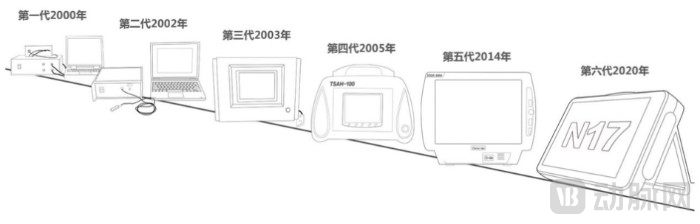
Aegean Cerebral Oxygen Monitor
Aegean Cerebral Oximetry Monitor: The first four generations were developed and prototyped in the Tsinghua University laboratory.
More than two decades ago, Aegean Medical entered the field early, initiating the research and development of cerebral oxygenation monitoring devices based on near-infrared spectroscopy technology.
In 1994, a research group led by Professor Ding Haishu of the School of Medicine at Tsinghua University undertook a research project on the non-invasive monitoring of tissue oxygenation using near-infrared spectroscopy (NIRS). It is reported that during collaboration and exchanges with Professor Britton Chance, widely regarded as the father of NIRS technology, Professor Ding’s team received full affirmation from him for the frontier nature and novelty of their research.
From 1996 to 2004, a Tsinghua University research team established a domestic R&D team specializing in original technologies for cerebral oximetry. After years of exploration, the team obtained multiple national invention patents in 2005 and successfully achieved the commercialization of its scientific and technological achievements. Its fourth-generation prototype secured the first CFDA registration certificate in the field of NIRS in China.
In 2014, Aegean Medical obtained the registration certificate for the EGOS-600 series cerebral oximeters, which have been successfully applied in multiple clinical fields, including perioperative care, critical care medicine, neonatal medicine, and tissue transplantation.
Moreover, Aegean Medical’s proprietary NIRS technology remains at the forefront of international advancements. Its next-generation product, the N17, has gained approval from the European Union, making Aegean Medical the first Chinese enterprise in the NIRS field to obtain CE certification. In 2020, Aegean Medical was listed among the high-tech enterprises contributing to the fight against the pandemic. Through more than a decade of relentless efforts—spanning specialized research on detection algorithms, prototype development and performance evaluation, clinically oriented studies integrating medicine and engineering, as well as product development and application promotion—Aegean Medical has achieved numerous innovative breakthroughs in fundamental algorithms, testing technologies, and clinical applications.
Currently, 1 international patent, 7 invention patents, 17 utility model patents, and 4 design patents have been granted, along with 1 registered software copyright.
The “10+1” Golden Parameter Combination and Triple-Integration Modeling: Upholding Product Innovation
“Suzhou Aegean Biomedical Electronics Co., Ltd. (Aegean Medical) has been in operation for 11 years since its establishment in 2011, while I have been engaged with Near-Infrared Spectroscopy (NIRS) since 2000, marking nearly 22 years of deep expertise in this field. From initial theoretical innovations to current product iterations, we have consistently adhered to an integrated approach combining industry, academia, and research with medical engineering, striving for technological advancement and application innovation. On one hand, I hold a profound emotional attachment to this technology; on the other, I hope that such experience and background can drive product innovation and shape market concepts in this domain.” When discussing cerebral oxygenation monitors, Li Yue became more talkative.
Li Yue explained the underlying principles to VCBeat.As introduced, NIRS operates within a spectral range of 700 nm to 900 nm, offering good penetration into human tissues. After emission, photons are attenuated by the tissue and then detected by a receiver. The signal undergoes photoelectric conversion, filtering, amplification, and analog-to-digital conversion before being processed to calculate tissue oxygenation parameters of the target tissue. Since the measurement site is typically located beneath superficial layers, the algorithm must also eliminate the influence of these outer layers, such as the scalp, skull, and cerebrospinal fluid.
Aegean Medical's products utilize NIRS technology to significantly reduce interference from superficial tissues on detection results., enabling non-invasive, continuous, real-time, and direct cerebral oxygen monitoring to promptly detect patient hypoxia and alert clinicians to take timely intervention measures. By monitoring ischemic-hypoxic indicators in real time, while accounting for both absolute cerebral oxygen levels and relative changes, it allows for comprehensive assessment of the severity of tissue ischemia and hypoxia and timely capture of trends in cerebral oxygenation, thereby facilitating early clinical evaluation and prognosis of the patient’s condition.
In terms of parameter configuration, the ECO-N17 series cerebral oximeters from Aegean Medical adopt a “10+1” gold-standard multi-parameter combination, including tissue oxygen saturation and tissue hemoglobin concentration index (ΔTOI + ΔTHI + ΔCtHb + ΔCHb + ΔCHbO2 + AUC + TUT + AUT + THI + TOI).Li Yue stated that multi-parameter combinations not only reflect their respective unique patterns of change but also enable the analysis of interrelationships among them, thereby comprehensively reflecting the complex status of tissue microcirculation.
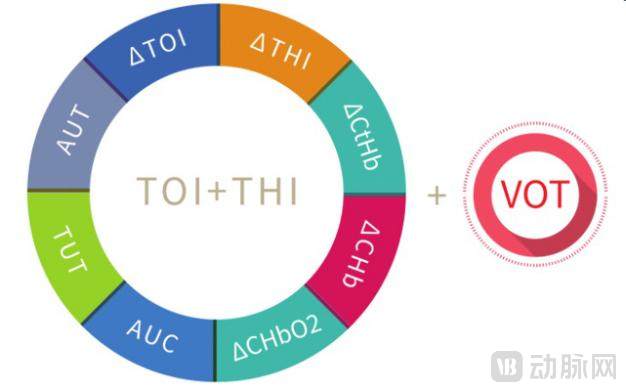
“10+1” Gold Multi-Parameter Combination
Not only that, Aegean Medical has also integrated multimodal vital signs monitoring,Developing a multimodal monitoring approach that integrates cerebral oxygenation, electroencephalography (EEG), and cerebral blood flow, this method focuses on the interrelationships among these three indicators in human brain tissue during dynamic changes, thereby opening up new frontiers in the field of brain science.
Li Yue told VCBeat“Effectively preventing, identifying, and intervening in cerebral hypoxic-ischemic events during surgery remains a long-standing clinical challenge. Numerous domestic and international studies have indicated that patients undergoing procedures such as cardiac surgery, carotid endarterectomy, and shoulder arthroscopy in the beach chair position have a significantly higher incidence of cerebral desaturation events. Near-infrared spectroscopy (NIRS) can detect hypoxic-ischemic events in real time and guide clinicians on whether intervention is necessary. Therefore, the application of cerebral oxygen saturation monitoring in anesthesiology is particularly important.”
Meanwhile, for patients in the intensive care unit (ICU), factors such as hemodynamic instability and prolonged hospital stays not only predispose them to cerebral hypoxic-ischemic events but also lead to varying degrees of microcirculatory impairment in peripheral tissue perfusion. Clinically, information on peripheral tissue perfusion is primarily obtained through traditional methods such as blood lactate levels, skin turgor, changes in skin color, and body temperature. However, these conventional approaches have long posed challenges for clinicians due to issues like discontinuous monitoring or data lag. Therefore, in the field of critical care, we place particular emphasis on recommending simultaneous monitoring of cerebral oxygen saturation and tissue oxygen saturation for patients.
Furthermore, this product holds significant clinical value in pediatrics. This is because the neonatal brain undergoes rapid yet incomplete development, and its cerebral blood flow autoregulation is relatively weak, warranting heightened clinical attention. In addition to monitoring cerebral and muscle oxygenation, the product is frequently used to monitor renal and mesenteric oxygenation in neonates, thereby providing comprehensive protection.
It is reported that,Cerebral oximeters manufactured by Aegean Medical have been successfully applied in multiple clinical fields, accumulating over 30,000 cases and being equipped in more than 300 tertiary hospitals.
In 2019, Aegean Medical’s NIRS tissue oxygen monitor, with the recognition and support of eight renowned hospitals in China, participated in the SafeBooC-III international multicenter clinical study on brain protection for extremely preterm infants. This study was jointly organized by 50 pediatric medical centers across 20 countries, including China, the United States, the Netherlands, and Denmark. According to Li Yue, Aegean Medical was the only Chinese brand selected for this international multicenter study.
Achieving Highly Integrated Healthcare with Technological Innovation as the Underlying Logic
With the rapid development of intelligent monitoring, 5G big data, mobile healthcare, and clinical decision support systems, smart healthcare has emerged. The provision of medical and health services for tissue oxygenation monitoring through ubiquitous, intelligent, and non-invasive monitoring technologies and systems is undoubtedly the prevailing trend in cerebral oximetry. The value generated by Near-Infrared Spectroscopy (NIRS) technology, which enables neurological function assessment and risk prediction for cerebrovascular and cardiovascular diseases, is certainly significant. In the future, NIRS technology will inevitably extend beyond operating rooms and intensive care units to serve the broader landscape of general health and wellness.
At the end of the conversation, Li Yue stated“Professional managers and pioneers in NIRS technology are committed to dedicating themselves to the life and health sector. Driven by the dual engines of industry and capital, leveraging both international resources and local momentum, advancing in both medical and home-use markets, and integrating product and service models, Aegean Medical will continue to solidify its value as a medical device service platform deeply rooted in NIRS technology.”
As previously discussed, every stage in the development of cerebral oximetry monitors—from algorithmic research to clinical studies, and from technological innovation to application-based innovation—is indispensable. In the future, Aegean Medical will continue to leverage information technology to integrate diverse data sources, achieving deep fusion of physiological data such as neuroelectrophysiology and hemodynamics with tissue oxygenation metrics. By employing artificial intelligence methods to extract additional composite indicators from vast datasets, the company aims to contribute its expertise to the smart healthcare industry.