

Scipher Medicine Files for IPO: Pioneering Precision Immunology with Over $227M Raised and Breakthrough Companion Diagnostics for Autoimmune Diseases

Scipher Medicine
Precision Medical Technology Developer
In 2011, the U.S. National Research Council first proposed the concept of “Precision Medicine,” defining it as “a diagnostic and treatment strategy tailored to an individual’s molecular pathological characteristics (such as genomic and proteomic information).”
A decade has passed, and this strategy of “tailoring” diagnosis and treatment to individual differences has been widely applied in cancer therapy; the next field to benefit may well be autoimmune diseases.
Scipher Medicine, founded in Massachusetts, USA, is such a company that provides precision medicine for patients with autoimmune diseases. They identify patients' unique disease characteristics through blood tests, predict patients' responses to medications, and match patients with the most effective drugs.
Recently, Scipher Medicine announced the completion of a $110 million financing round, led by Cowen Healthcare Investments, with participation from Neuberger Berman, Hitachi Ventures, Laurion Capital, and others. To date, Scipher has raised a total of $227 million.
The Birth of Scipher Medicine: Physicists and Cardiologists Join Forces in Cross-Disciplinary Collaboration to Address the Dual Pain Points of Clinical Care and Financial Sustainability in the Healthcare System
Scipher Medicine was originally established as an academic research initiative involving Brigham and Women’s Hospital, Harvard University, the Dana-Farber Cancer Institute, and Northeastern University. Its founders, Drs. Joseph Loscalzo and Laszlo Barabasi, come from distinctly different academic backgrounds: Loscalzo is a cardiologist, while Barabasi is a physicist specializing in computational biology. Their collaboration began when they both worked on the Human Genome Project, where they shared a sense of disappointment regarding the limitations of its outcomes. “We spent billions of dollars mapping the human genome, yet it did not enable us to confront disease with greater ease,” said Loscalzo.
Two years after the completion of the Human Genome Project,Drs. Joseph Loscalzo and Laszlo Barabasi began constructing a biological map of human diseases based on human protein–protein interaction data obtained from Northeastern University, which elucidates how proteins expressed by the human genome interact to cause specific diseases.In 2013, the mapping was completed.
Scipher Medicine transitioned from academia to commerce in 2015, the same year President Obama announced the Precision Medicine Initiative at the White House.
“But the Scipher Medicine team didn’t know how to take the first step. ‘At that time, we only knew that we had such scientific capabilities, but we didn’t understand how to apply them commercially,’ said Alif Saleh, CEO of Research Biomolecules.”
The first thing they did was to visit the leaders of several major U.S. health insurance companies and pose a question to them: “If there were no technological limitations, what is the most urgent goal you would want to achieve?”
“Almost every leader said, ‘I would like a test to predict patient response to Humira.“Alif Saleh said, ‘And this is exactly what we excel at.’”
Humira, known in Chinese as Xiumeile, is an adalimumab injection product manufactured by AbbVie. It binds to tumor necrosis factor (TNF) and belongs to the class of anti-tumor necrosis factor (TNFi) biopharmaceuticals. Clinically, it is used to treat rheumatoid arthritis, Crohn's disease, and other autoimmune diseases. If calculated by sales revenue,Humira is the world's best-selling prescription drug., with sales of $20.696 billion in 2021.
However, this drug is not effective for all patients; approximately 40% of patients show no significant response to Humira. Among those who do not respond to treatment, the highest proportion consists of patients with immune-mediated diseases., as a result, the U.S. healthcare system wastes billions of dollars annually. Not only are health insurance companies burdened by these losses, but patients also struggle to bear the loss of thousands of dollars each year, not to mention the detrimental impact on their conditions due to delayed care.
Saleh stated, “In theory, we could address medication suitability for patients with various diseases based on the Human Disease Biology Atlas; however, given the aforementioned considerations, we have decided to start with autoimmune diseases and anti-TNF drugs.”
Human Disease Biology Atlas + Data Analytics Platform, Answering 90% of Drug Suitability Questions
In 2016, Scipher Medicine began researching how to predict rheumatoid arthritis patients’ responses to TNFi drugs.
After years of research and development,In late 2020, Scipher Medicine commercially launched PrismRA, a product that predicts rheumatoid arthritis patients’ responses to anti-TNF drugs such as Humira, Enbrel, Cimzia, Remicade, Simponi, Simponi Aria, and Inflectra through blood testing.
How Does PrismRA Predict Patient Response to Anti-TNF Drugs Through Blood Testing? This Question Begins with the Pathogenesis of Rheumatoid Arthritis.
Rheumatoid arthritis (RA) is an autoimmune disease characterized by joint erosion. It has a high disability rate, is difficult to cure, has a high recurrence rate, and patients usually need to take medication for life. Approximately 1% of the global population suffers from RA, with an incidence rate of 0.32%–0.36% in China.
The pathogenesis of RA remains unclear; it is currently believed to be associated with genetic factors, environmental influences, immune cells, and inflammatory mediators.
TNF, as an inflammatory mediator, plays a central role in the development of RA.: On one hand, it stimulates the differentiation and proliferation of synovial cells, leading to the formation of rheumatoid pannus and accelerating bone destruction; on the other hand, it activates neutrophils and promotes the generation and release of various inflammatory cytokines, stimulating B cells to produce antibodies, thereby exacerbating vascular inflammation and immune responses in RA.
Therefore, anti-TNF agents are crucial in the clinical management of rheumatoid arthritis., the 2019 European Alliance of Associations for Rheumatology (EULAR) guidelines designate biologic disease-modifying antirheumatic drugs (bDMARDs) as first-line agents for the treatment of rheumatoid arthritis, with anti-TNF agents being the preferred initial biologic therapy.
Currently, there are three main anti-TNF drugs widely used in clinical practice.: etanercept (ETA), infliximab (INF), and adalimumab (ADA). The aforementioned “blockbuster drug” Humira is a type of adalimumab.
All three of the aforementioned agents can bind to tumor necrosis factor (TNF), thereby blocking its interaction with cell surface receptors, which mitigates inflammatory responses and reduces bone erosion. Although they share similar mechanisms of action,However, the efficacy of different anti-TNF agents varies in the same patient, and the therapeutic response to the same agent differs among patients.
What Causes Differential Responses to the Same Class of Drugs in Patients with Rheumatoid Arthritis?
Scipher Medicine attributes the cause to genes and gene-regulated proteins, making them the breakthrough point.
Based on the human biology map developed by co-founders Drs. Joseph Loscalzo and Laszlo Barabasi, Scipher Medicine has separately mapped the protein interactome associated with rheumatoid arthritis, termed a disease module, and then employed computational data modeling techniques to enable computers to learn these disease modules.
Scipher Medicine collects RNA sequencing data for 23 distinct biomarkers (objectively measurable and evaluable characteristics) from patients via blood tests: 19 RNA transcripts and 4 clinical features. The clinical features include body mass index, sex, patient global assessment, and anti-cyclic citrullinated peptide (anti-CCP) status. The collected protein data are used as features to analyze their interaction networks and identify patients’ gene expression signatures in a bottom-up manner.
Overall, PrismRA’s predictions are proteomics-based, classifying RA patients according to their molecular profiles rather than by clinical symptoms.。
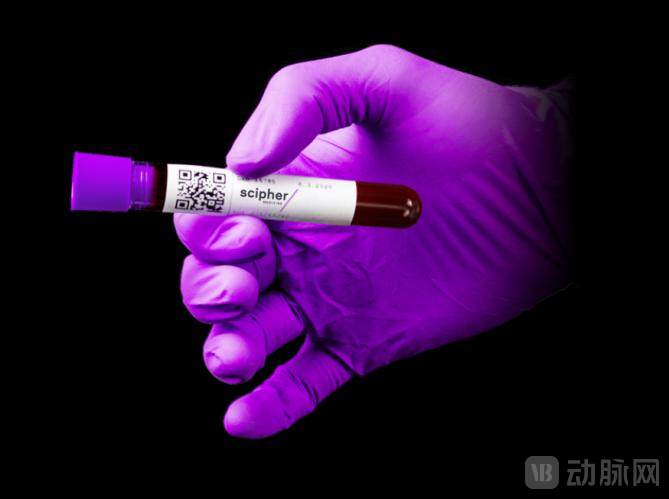
Product Image. Source: Scipher Medicine official website
CEO Saleh stated, “The Spectra™ platform identifies protein-protein interaction networks, encompassing approximately 25,000 gene data points. This extensive coverage enables the maximal identification of biomarkers capable of predicting drug responses. While other AI-driven platforms on the market also analyze genes to predict drug responses, they typically identify only differentially expressed genes associated with drugs, covering a limited number of genetic loci.”To enhance the accuracy of predictions, Scipher Medicine has established an intelligent platform—Spectra™—that conducts comparative analyses of biological maps of human diseases and patient data.
At the end of 2021, Scipher Medicine published the results of a PrismRA study in *Expert Review of Molecular Diagnostics*. In this study, researchers predicted drug responses for 212 patients and provided medication recommendations for 74% of them; these patients achieved a treatment response rate three times higher than that of others.Among patients predicted by PrismRA to be non-responders to anti-TNF therapy, 90% were confirmed to have no therapeutic response in subsequent treatment.
After PrismRA entered the market,Scipher Medicine actively collaborates with Pharmacy Benefits Managers (PBMs), having partnered with companies such as WellDyne, RxSense, Ventegra, Inc., and RxParadigm.PBMs serve as critical gatekeepers in the journey of pharmaceuticals from the laboratory to the patient. They have access to patients’ prescription medication records and are obligated to assist physicians in prescribing the most cost-effective therapies.
Scipher Medicine stated: “In the first year since PrismRA’s market launch, we served over 50,000 physicians, 3,000 healthcare institutions, and 30 million Americans.”
To date, Scipher Medicine has primarily focused on autoimmune diseases, having already launched a drug response prediction solution for rheumatoid arthritis. The company plans to expand its offerings to other conditions with low drug response rates, such as inflammatory bowel disease, psoriatic arthritis, and multiple sclerosis.They are currently collaborating with Beth Israel Deaconess Medical Center to develop a medication prediction protocol for patients with inflammatory bowel disease.。
According to the human disease biology map developed by Scipher Medicine, rheumatoid arthritis shares the most similar disease modules with multiple sclerosis and psoriatic arthritis. Therefore, it is logical to proceed with developing drug prediction strategies for these two conditions.
However, Scipher Medicine stated, “Our commercial path extends beyond diagnostic testing; we aim to become a therapeutics company in the future. PrismRA not only identifies biomarkers but also discovers potential drug targets. As we accumulate sufficient molecular profiling data from patients, we will uncover new drug targets shared by specific patient populations. At that stage, we will collaborate with pharmaceutical companies to develop novel therapies with high response rates for these targeted patient groups.”
Currently,Scipher Medicine is collaborating with publicly listed company Galapagos NV, with Scipher providing new drug targets, to jointly develop novel therapeutics for inflammatory bowel disease.
Domestic Companion Diagnostics Market: Oncology Companion Diagnostics Are the Most Widely Applied
In early 2016, China launched its Precision Medicine Initiative, using genetic screening to guide patient medication. At the outset of this initiative, it was difficult for the general public to understand: What is precision medicine? What is gene sequencing?
The concept of companion diagnostic reagents originated in the United States, where the FDA approved the first companion diagnostic test in 1998.From 2016 to 2019, the global market size for companion diagnostics grew from $1.9 billion to $3.8 billion, with oncology companion diagnostics being the most widely applied and hottest segment.
The continuous evolution of the companion diagnostics market is driven by advances in genetic sequencing technologies, including PCR (polymerase chain reaction), NGS (next-generation sequencing), and FISH (fluorescence in situ hybridization). Among these, PCR technology is currently the most widely used, while companion diagnostic products based on NGS technology have also experienced rapid development.
China's companion diagnostics market size grew from RMB 1.2 billion to RMB 2.7 billion between 2016 and 2019,In China, companion diagnostic testing platforms consist of molecular diagnostics and immunodiagnostics, with molecular diagnostics being the dominant platform., domestically produced alternatives for conventional PCR instruments and molecular hybridization instruments have basically been established in China.
The companion diagnostics industry chain can be divided into three segments: upstream, midstream, and downstream. The upstream segment consists of providers of instruments, reagents, and components. The midstream segment comprises gene sequencing service providers, such as BGI Genomics and AmoyDx, which are responsible for providing Laboratory Developed Tests (LDTs) to downstream healthcare service providers and developing In Vitro Diagnostic (IVD) kits. The downstream segment includes healthcare service providers, primarily public hospitals at various levels and private medical institutions such as Dian Diagnostics and KingMed Diagnostics, which directly deliver companion diagnostic medical services to customers and perform post-test result analysis.
Companion diagnostic products are categorized into LDT and IVD formats.
LDTs refer to in vitro diagnostics that are independently developed, validated, and used by laboratories, intended solely for internal use and not sold as commercial products; IVD products refer to medical devices and test kits approved and registered by drug regulatory authorities, which are supplied to healthcare institutions and used by them to serve end consumers.Domestic companion diagnostics companies generally operate using a combined LDT and IVD product model.
Although multiple “companion diagnostic” products are currently marketed in China, most of them were not clinically tested concurrently with their corresponding drugs, and thus effectively align with the concept of “complementary diagnostics.”
In recent years, domestic supplemental diagnostic IVD products for oncology have transitioned from single-gene to multi-gene panels and from first-generation sequencing to next-generation sequencing (NGS). With the declining cost per unit throughput of NGS, a comprehensive surge in oncology companion diagnostic products is expected in the future.