

ASCT Founder Jiang Ruhong on the Differences in Scientific Translation Between China and the U.S.: Emphasizing That Great Science Originates from Top-Tier Universities

ASC Therapeutics
Gene Therapy Product Developer
Jiang RuhongHe graduated from the Department of Biology at Fudan University in 1986, received his master’s degree from Beijing Agricultural University (now China Agricultural University) in 1991, and earned his Ph.D. from Oklahoma State University in the United States in 1997. After graduation, he pursued further training at Baylor College of Medicine in Texas, where he conducted postdoctoral research in the renowned laboratory of Dr. Douglas Burrin. During this period, he published more than 40 academic papers covering various fields, including human genetics, pharmacogenomics, and animal disease models, and served as Director of Pharmacogenomics at SRI International.
In addition, Dr. Jiang Ruhong has held key technical and managerial positions at multiple U.S. biotechnology and biomedical companies. The research team he led developed Familion, the earliest personalized medicine diagnostic testing technology in the U.S. market.TM, this technologyIn 2007, market profits exceeded $12 million. Prior to founding ASC Therapeutics, Inc., he served as the General Manager for MicuRx Pharmaceuticals, Inc.’s China region, with full responsibility for its operations in China.
On March 7, 2022, during the special overseas coverage of the “Two Sessions,” ASC Therapeutics, as a distinguished enterprise founded by Chinese Americans in Silicon Valley, was recommended by the Consulate General of China in San Francisco for an interview and feature by CCTV-4’s “Silicon Valley Times.” The report focused on the establishment of Silicon Valley pharmaceutical companies in Shanghai and the Chinese founders’ optimistic outlook on China’s future.
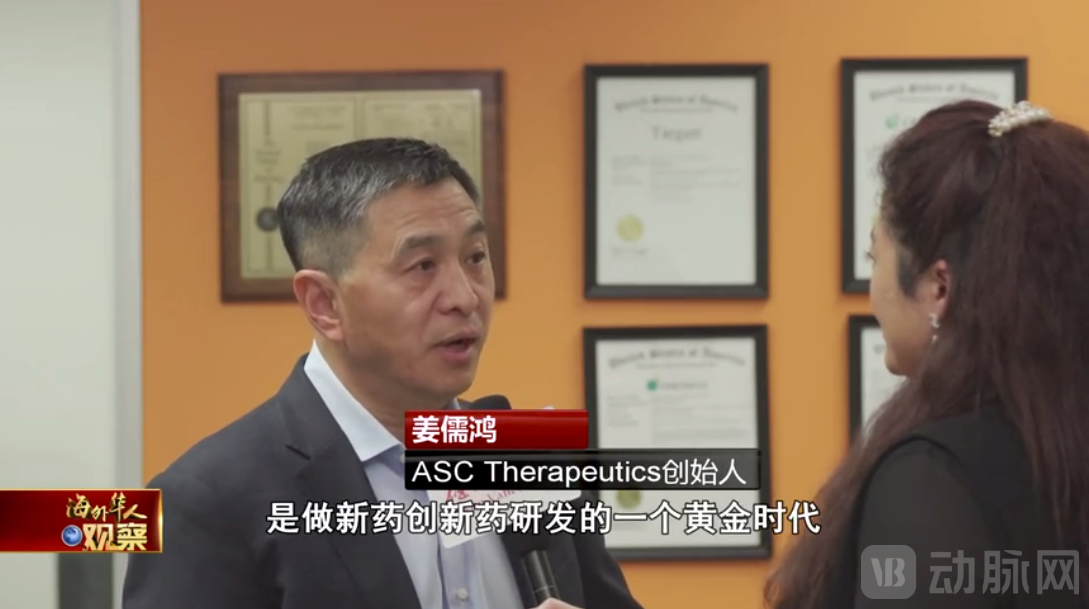
It is reported that ASC Therapeutics established its presence in Shanghai, China, in 2021. The company will implement strategic deployments simultaneously in both China and the United States to advance its clinical pipeline. Founded in 2008 and headquartered in the San Francisco Bay Area of California, ASC Therapeutics possesses unique allogeneic cell therapy and precise gene-editing technologies. It has been twice recognized by Nature Biotechnology as “Top 10 Global Companies Leading the Application of Precision Gene Editing Technologies”。
From Startup in the U.S. to Growth Across China and the U.S.: How Have the Scientific Research Translation Environments in the Two Countries Differed Over the Past Few Decades? What Are the Similarities and Differences in the Development Trends of Innovative Drug R&D at Home and Abroad? VCBeat’s Orange Fruit Bureau contacted Dr. Jiang Ruhong, Founder of ASC Therapeutics, for a one-on-one interview to explore how he transformed from a scientist into an entrepreneur, and how ASC Therapeutics was born in Silicon Valley and gradually expanded onto the global stage.
Differences in Scientific Research Translation between China and the United States: Atmosphere is Crucial, as Innovation Requires Creating Something from Nothing
VCBeat: Dr. Jiang, you have been deeply engaged in the field of biotechnology and pursued advanced studies at Oklahoma State University and Baylor College of Medicine in Texas. What scientific and academic achievements did you attain during this period?
Dr. Jiang Ruhong:I originally earned my Ph.D. in genetics, focusing on genes associated with obesity and diabetes. During my postdoctoral fellowship, I primarily conducted molecular biology research centered on novel drug delivery systems. At Baylor College of Medicine, my research on obesity comprehensively spanned genetic, molecular, and physiological levels. While engaged in genetic research, I both developed algorithms and wrote code. After publishing forty to fifty papers in the fields of pharmacogenomics and bioinformatics, I went on to serve as the Director of Pharmacogenomics at SRI International.
I firmly believe that good science inevitably originates from top-tier universities, superior products must be built on robust technology, and strong technology must be underpinned by solid science. Moreover, the translation of scientific research into applications should never be rushed; we must always adhere to the principle of “Go back to the basics.”
VCBeat: From Obesity Science Research to Gene Therapy Entrepreneurship at ASC Therapeutics, Dr. Jiang, how do you select scientific achievements for translation? What are the key factors in this selection process?
Dr. Jiang Ruhong:As a Ph.D. in genetics, my research at the time was primarily focused on genetic disorders. Among more than 7,000 known genetic diseases, over 5,000 are caused by single-gene mutations; therefore, our early work mainly centered on single-gene mutations. During this period, we expanded our research scope to include metabolic disorders (such as obesity) and hematologic diseases. Obesity is primarily caused by complex polygenic factors.
In 2007, Japanese scientist Shinya Yamanaka published a paper demonstrating the reprogramming of skin cells into stem cells, known as induced pluripotent stem (iPS) cell technology. At the time, I was thrilled in discussions with two Stanford University professors, because if somatic cells could be converted into stem cells and then differentiated into various cell types, this technology would offer immense application potential while circumventing the ethical issues associated with embryonic stem cells. As we had anticipated, Yamanaka was awarded the Nobel Prize just five years later—the fastest turnaround ever for a Nobel award.
From an application perspective, implementing stem cell technology alone is insufficient. To treat diseases, it must be combined with gene-editing technologies, which constitute the foundation of precision medicine. Similar to the Human Genome Project, which first identified genetic similarities among individuals and then pinpointed differences, the concept of pharmacogenomics also highlights that varying patient responses to the same medication may stem from underlying genetic variations. By integrating these approaches with stem cell technology, we can achieve “clinical trials in a dish.”
VCBeat: Dr. Jiang, after you determined the direction for translating your scientific achievements into commercial applications, you established ASCT in Silicon Valley. Are there significant differences between scientific translation or entrepreneurship in China and the United States? Why did ASCT later choose to settle in China?
Dr. Jiang Ruhong:There are indeed differences. Silicon Valley fosters an entrepreneurial spirit that strongly encourages technological innovation and translation. ASC Therapeutics’ iPS technology was licensed from a Japanese professor, and its gene-editing technology was licensed from Stanford University. These early-stage technologies often originate from academic institutions, and the Silicon Valley startup ecosystem offers the convenience of rapidly connecting and collaborating with such top-tier universities and scientists. This has been highly advantageous for building ASC Therapeutics’ technology platform and establishing its competitive moat.
Moreover, Silicon Valley boasts a vibrant entrepreneurial atmosphere, where individuals are surrounded by like-minded peers and similar endeavors, fostering high levels of enthusiasm for startup ventures. When someone steps forward with an entrepreneurial idea, they often receive immediate encouragement and support, enabling them to quickly coalesce into a team. Meanwhile, there is a high tolerance for failure. Not all scientific research translations lead to successful commercialization; entrepreneurship is essentially a process of “creating something from nothing.” Even investors are not afraid of your failures, as failure is the mother of success—a step-by-step journey toward eventual triumph.
Unlike the United States, where technological innovation is the primary driver, China’s rapid advancement lies in technology application. With abundant patient resources and a mature CMC system, clinical trials in China can be conducted with greater efficiency at every stage. On the other hand, gene therapy in China is still in its early stages. Leveraging our advanced ASCT technology, we aim to introduce it to the Chinese market and contribute to the development of the domestic gene therapy sector.
Therefore, we have established our base in Shanghai, China, and plan to conduct clinical trials simultaneously in both China and the United States after completing IND registration for our core pipeline, thereby accelerating corporate development.
VCBeat Orange Bureau: Dr. Jiang, you have completely transformed from a scientist into an entrepreneur. How did you initially achieve this role transition?
Dr. Jiang Ruhong:This is a very interesting question. When I was invited to give a lecture at Stanford University’s Graduate School of Business, I also shared how I transitioned from a scientist to an entrepreneur.Scientific inquiry is a mindset of “creating something from nothing,” akin to retrieving “pearls” from the sea; it requires unconventional thinking, along with focus and perseverance, to make discoveries., in a sense, it is actually more difficult; andRunning a business requires a “market demand” mindset, what do patients need? What improvements have been made to existing drugs? How can treatment regimens be optimized?
I often joke that scientists and entrepreneurs think differently. This difference is evident in the questions from the audience after their speeches: After a professor’s talk, they hope the audience will ask questions if they have any doubts; whereas after an entrepreneur’s presentation, they hope the response from the audience will be entirely, “I want it!”
Regarding ASC Therapeutics’ hemophilia drug, we need to understand the ultimate therapeutic efficacy it can achieve and the corresponding treatment regimen. From an engineering perspective, I consider what technologies can deliver such outcomes. Being able to adapt to this shift in mindset actually aligned me early on with an entrepreneurial way of thinking during my bioinformatics research, when I began adopting a “needs-driven” approach—analyzing which scientific data could yield specific results.
China Enters a Golden Age of New Drug R&D, with Gene and Cell Therapies Becoming the Dominant Trend
VBInsight Orange Bureau: ASCT Focuses on the Gene Therapy Track. What Challenges Does This Field Currently Face, and Where Are the Opportunities for Optimization?
Dr. Jiang Ruhong:We primarily consider two ends: on one hand, which diseases have market demand? On the other hand, can these disease issues be theoretically resolved? We then examine the intermediate technical aspects to assess their feasibility and manufacturability. For instance, CMC processes for gene therapy remain a bottleneck in the field’s development and require further improvement.
Returning to our optimization strategy for ASCT, we observe that many gene therapy companies have attempted to enhance AAV transduction efficiency and achieve high-level expression, yet no company has achieved protein “Hypersecretion”. After all, the therapeutic gene delivered by AAV is an exogenous substance to the body. Its transcription and translation within cells are subject to comprehensive interference from various factors. Key determinants influencing the efficacy of gene therapy include the transduction efficiency of AAV vectors into target cells, the level of therapeutic gene expression within cells, the proper folding of the expressed protein from its secondary to tertiary structure, and its successful secretion outside the cell following post-translational modifications such as methylation to exert its biological function.
ASC Therapeutics has implemented specialized genetic modifications during vector construction and optimized the unfolded protein response (UPR), significantly enhancing the intracellular secretion efficiency of therapeutic proteins in gene therapy.Achieves equivalent therapeutic protein secretion with only 1/10 the dose of traditional AAV vectors, achieving equivalent efficacy while significantly reducing hepatotoxic side effects associated with gene therapy, thereby ensuring both safety and high efficiency.
VCBeat: Dr. Jiang, you have successfully advanced the translation of your scientific research into clinical studies. As someone who has navigated this path, what experience can you share with university researchers who are planning to start their own businesses?
Dr. Jiang Ruhong:Building a Team and Finding Partners. Entrepreneurship is often a headache-inducing endeavor. We need to find partners who share similar values and possess complementary skills. If academic researchers have strong scientific expertise, they should seek partners with robust business acumen; conversely, those with strong business capabilities should partner with individuals who excel in science. Through mutual adaptation and collaboration, the team can leverage each member’s strengths to offset weaknesses, fostering a spirit of teamwork essential for success.
VCBeat Orange Fruit Bureau: With ASCT establishing its presence in Shanghai, what are your expectations for the future of biotech innovation in China?
Dr. Jiang Ruhong:From biologics to protein therapeutics, modern biotechnology has advanced to the most fundamental level of “cellular medicines.” The onset of disease reflects cellular pathology, imbalances in gene expression, and other abnormalities. I believe that gene therapy and cell therapy represent important directions for the development of modern medicine.
China’s pharmaceutical market demand is immense. Although the government strongly supports new drug R&D, there are currently few high-quality drugs developed independently within China. This gap presents a significant opportunity for innovative pharmaceutical companies. We are now in the golden age of innovative drug development in China, and it is crucial to seize this unique convergence of favorable timing, location, and human resources.
In the process of developing innovative drugs, technologies such as gene therapy and cell therapy are still imperfect and have many areas that need improvement. At this time, companies must “endure loneliness” and persist in research and development, while also considering the balance of interests among partners and investors. Mutual support and understanding, along with team collaboration, are essential to rapidly advancing the pipeline.
On January 11, 2022, Professor Steven W. Pipe, known as the father of gene therapy for hemophilia and current Chair of the Medical and Scientific Advisory Council of the National Hemophilia Foundation (NHF), together withASC Therapeutics's R&D team published a commentary article titled “Gene Therapy for Hemophilia A: Concepts of First- and Second-Generation Therapies” in Expert Opinion on Biological Therapy1.

The article updates the current clinical progress of major gene therapy drugs for hemophilia A, comprehensively reviewing the clinical studies of first-generation gene therapies from BioMarin, Pfizer & Sangamo, and Spark & Roche, whose Phase III clinical trial data were recently released. The article compares first- and second-generation gene therapy approaches, highlighting the advantages of second-generation gene therapies represented by ASC-618, a drug developed by ASC Therapeutics:
I.By optimizing at the exocrine level, safe, durable, and stable gene expression is achieved, while avoiding the hepatotoxicity and durability issues associated with high-dose AAV in Factor VIII replacement therapy;
II.Addressing the critical role of viral structure in reducing therapeutic dosage and minimizing cellular stress, inducing the unfolded protein response (UPR), and causing loss of expressed proteins and hepatotoxic liver injury;
III.Second-generation gene therapies that incorporate chimeric optimized DNA sequences into the transgene can enhance the synthesis and secretion of clotting factors, thereby improving the efficacy, safety, and durability of gene replacement therapy for hemophilia A and other coagulation disorders.
Currently, ASC Therapeutics will conduct a Phase 1/2 clinical trial to evaluate the safety, tolerability, and preliminary efficacy of ASC618. ASC618 received FDA IND approval in 2021 and was granted orphan drug designation in 2020.