

Nowyon Medical: Innovating Neurovascular Solutions to Serve Millions of Stroke Patients and Building a Comprehensive Vascular Intervention Platform
Nuanyang Medical’s original aspiration is to develop sufficiently innovative, safe, and effective products, empowering physicians with the confidence to choose our solutions for addressing a broader range of clinical patient conditions.
——Jia Jing, Founder of Nuanyang Medical
It is often said that neurointervention is what cardiac intervention was more than a decade ago.
From 2020 to the first half of 2021, the neurointerventional sector enjoyed a period of remarkable prominence. Listed companies and emerging enterprises flocked to the market, with more than 60 investment institutions placing their bets on this space. However, since the second half of 2021, capital markets have returned to rationality.
“Affected by the broader macroeconomic environment, many investors are beginning to express concerns,” said Jia Jing, when discussing the state of the neurointerventional industry. “Although the neurointerventional sector offers substantial market potential and promising prospects, market penetration has remained sluggish, with slow growth in surgical volumes. On the other hand, the field has become increasingly crowded with numerous players. As a result, investors are no longer as confident as they once were and are likely to adopt a more cautious approach.”
Jia Jing, Founder of Nuanyang Medical. With many years of industry experience, he has worked at renowned domestic interventional companies such as Shanghai MicroPort and Shandong Hua’an. He was fully involved in the design, development, and production management of more than ten products, including bare-metal stents, plain balloon catheters, drug-eluting stents, drug-coated balloons, and bioresorbable stents for the treatment of coronary artery stenosis, accumulating over 10 years of experience in managing cardiovascular and cerebrovascular product portfolios.
Shifting from cardiovascular intervention to neurointervention appears to be a natural progression. After years of dedicated efforts, domestic cardiovascular intervention companies have reached maturity in terms of technology and products, and are now turning their attention to the field of neurointervention.On one hand, the market potential in the field of neurointervention is being recognized, with growing interest day by day; on the other hand, the technical experience and innovation in cardiovascular interventional devices have provided valuable references for neurointervention.Against this backdrop, Jia Jing and several partners quickly reached an agreement and founded Nuanyang Medical, formally entering the neurointerventional sector.
Although coronary intervention and neurointervention share many similarities, there are significant differences in the market landscape beyond their differing technical barriers. Jia Jing explained, “In the early days of the coronary intervention market, numerous foreign companies offered a wide range of products. Starting from scratch, domestic manufacturers gradually built up their capabilities and achieved import substitution over the course of more than a decade. In contrast, the current state of the neurointervention market—both globally and domestically—is such that there is still a long way to go in terms of technology and product offerings to fully meet physicians’ expectations.”
No Me-Too: A 100% Retrievable Dense-Mesh Stent Makes Its Debut
Compared with cardiovascular diseases, the diagnosis and treatment of cerebrovascular diseases impose higher demands on surgical techniques and instrument performance. Currently, the market is dominated by foreign products; however, overall, the pace of product development, variety, and level of innovation have not yet reached maturity, making it difficult to meet the increasingly demanding clinical needs.
Against this backdrop, some companies tend to enter the market with simpler products first, while more complex innovative products remain in subsequent stages of research and development. Progressing from easy to difficult is an understandable development strategy, but it has also led to product homogenization in the market. Moreover, for critical products required in high-risk surgeries, physicians have very limited options. For example, in hemorrhagic aneurysm surgery, it is reported that doctors in China had only one or two product choices available for a long period.
Nuanyang Medical believes that only by achieving breakthroughs in key products can a company secure a competitive advantage in the market. Therefore,ItsSelect flow-diverting stents for the treatment of hemorrhagic aneurysms as the flagship product, initially entering the hemorrhagic market, while sequentially laying out access products and ischemic products.
The therapeutic principle of flow diverter stents is to alter the direction of blood flow into the aneurysm, promoting gradual thrombosis and subsequent regression, thereby achieving durable aneurysm embolization. During the procedure, the flow diverter stent must be precisely positioned to effectively block blood inflow into the aneurysm.
Rapid expansion occurs immediately after stent deployment, rendering it irretrievable into the delivery catheter once deformed. Therefore, precise positioning and placement of flow-diverter stents represent a major technical challenge in surgery, demanding exceptional skill and experience from the operator. Any deviation in placement can significantly increase procedural risks and even lead to surgical failure.
Addressing critical clinical challenges, Nuanyang Medical has conducted in-depth R&D on delivery mechanisms, creating a novel stent delivery system.During the surgical procedure, this delivery system mitigates the risk of inaccurate stent positioning: after the flow-diverter stent is fully deployed from the catheter, the catheter can still be completely withdrawn to allow for repositioning—once or multiple times—until precise placement is confirmed.
In terms of braided structure, early similar products commonly employed a design woven from 48 alloy wires, whereas the international community is increasingly favoring a 72-filament configuration as the preferred option. From the outset of its research and development, Jiangsu Nuanyang Medical Instrument Co., Ltd. adopted the 72-filament braided structure. This design provides a denser pore density, facilitating more rapid endothelialization during postoperative recovery.
Currently, the flow-diverting stents of Jiangsu Nuanyang Medical Instrument Co., Ltd. are undergoing clinical trials. The company has signed cooperation agreements with 18 centers across China to conduct a multicenter clinical trial for the treatment of wide-necked to small aneurysms. Clinical procedures completed to date have shown favorable prognoses. It is expected that all controlled trials will be completed next year, leading to the acquisition of the registration certificate.
During the development of its first batch of products, including flow diverter stents, microcatheters, intermediate catheters, and balloon guide catheters, Nuanyang Medical refined its R&D model.Its R&D principle is: each product must address at least one key need of surgeons and establish its own intellectual property (IP).Before initiating a product project, it is essential to thoroughly understand clinical pain points and technical bottlenecks, followed by a project initiation review; upon approval, technical breakthrough efforts shall commence.
High targets for products also mean stronger competitiveness after entering the market. This model not only keeps the entire team motivated to move forward but also usually maintains a lead in technological innovation and speed.
“Innovation and high standards entail longer R&D cycles, yet we have made rapid progress. This is the result of our project team’s relentless day-and-night efforts. We are an entrepreneurial team; despite the exhaustion, we remain full of vision for the future,” said Jia Jing. “Having the courage to undertake what others dare not attempt is also a lesson learned from the maturation of the coronary intervention field. Starting from clinical needs, we have the boldness to develop truly first-in-class innovative products and the confidence to compete internationally. This reflects the maturity of our industry in terms of its R&D spirit.”
Neurointerventional Therapy as the Lead: Building a Platform Enterprise in the Interventional Field
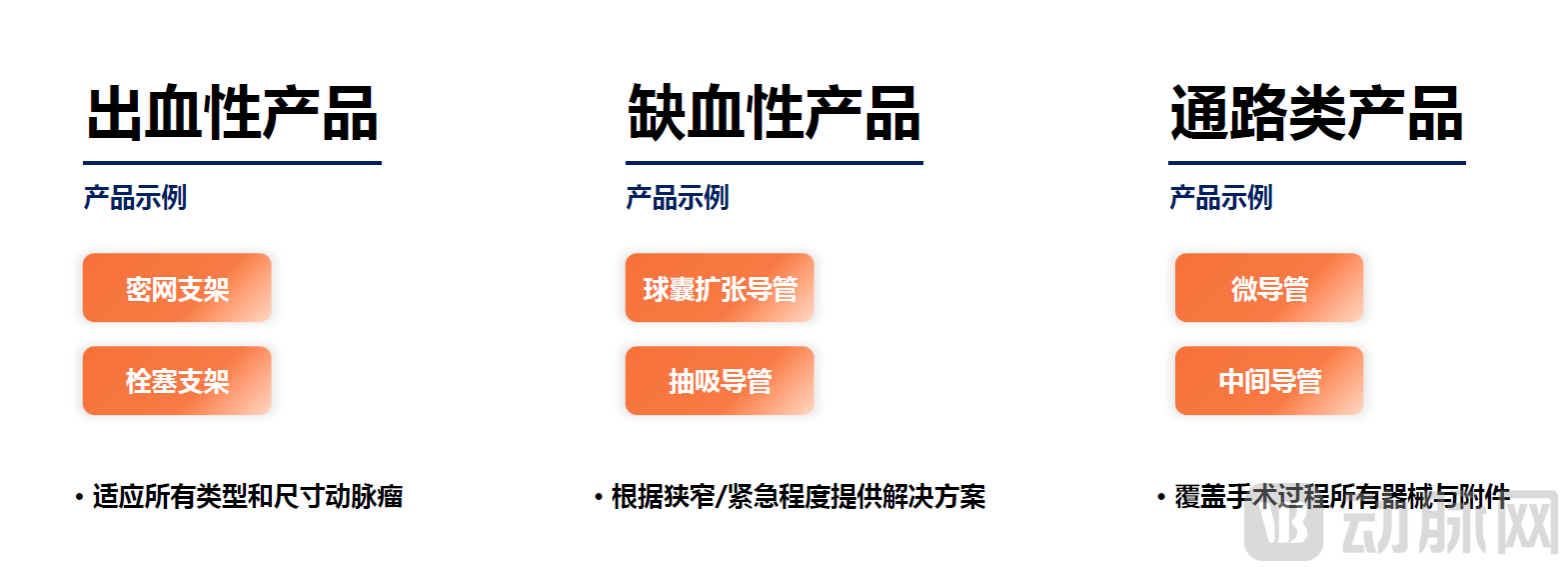
Nuanyang Medical has prioritized neurointervention as its key strategic focus. Among the three major categories of neurointerventional products, Nuanyang Medical initially focused on hemorrhagic products, including flow diverter stents and embolization stents. The company has also initiated the development of ischemic products, such as thrombectomy stents and aspiration catheters, along with multiple access devices.
Source: Nuanyang Medical
In this regard, Jia Jing introduced the company’s product portfolio, stating:“The neurointerventional field features numerous niche segments, making it difficult to establish a foothold with a single product. We believe that a comprehensive product portfolio is more conducive to rapid corporate growth and competitive market participation.”Currently, the first batch of products from Nuanyang Medical, including balloon dilation catheters and aspiration catheters, is undergoing registration and approval, with market launch and certification expected to roll out in 2022.
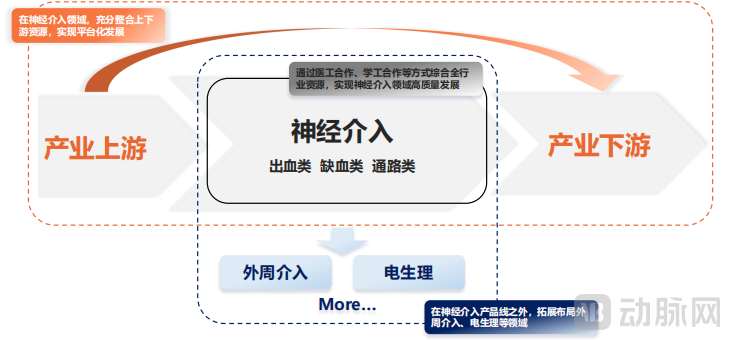
In addition,Jiangsu Nuanyang Medical Instrument Co., Ltd. has long established a strategic presence in the peripheral fields and upstream-downstream segments of neurointervention.Since its establishment, Nuanyang Medical has built a translation platform based on technology routes that are interchangeable across multiple products, enabling the rapid transfer and application of neurointerventional technologies to products in other fields. Currently, it has corresponding products in the stages of R&D and registration preparation in the areas of neurointerventional robotics, peripheral intervention, and electrophysiological intervention.
Source: Nuanyang Medical
Talent reserve is the primary driving force behind corporate development. Currently, the team at Jiangsu Nuanyang Medical Instrument Co., Ltd. has grown to over 100 members, forming a multi-generational workforce that combines seasoned industry veterans with young talent from top universities. The team is characterized by its blend of youth and maturity, as well as its dedication and high efficiency.
In addition to strengthening its own technological and talent capabilities, Nuanyang Medical stated that it should also proactively “seek external support” to break down the barriers between scientific research and the market. Technological exchange and cooperation can lead to complementarity and mutual benefit. Currently, the company has established communication and collaboration platforms with multiple hospitals, universities, and key laboratories in China.
Capital serves as an accelerator for evolving into a platform-based enterprise.Currently, Nuanyang Medical is undergoing its Series B financing round.In the short term,Its primary goal isAccelerate the development of clinical-stage and registration-pending products; upon obtaining domestic marketing authorization, simultaneously initiate overseas market expansion and regulatory access.; meanwhile, the construction of the enterprise platform will also advance steadily, creating more possibilities for its development.
Currently, while certain products in the neurointerventional field have begun to be included in centralized volume-based procurement (VBP), overall, VBP primarily targets industries with mature development and a high abundance of similar products. Moreover, the magnitude of price reductions under VBP is gradually returning to a reasonable range. At present, there are still few truly effective and mature products in the neurointerventional market. In particular, for products such as flow diverter stents and embolization stents, market innovation remains insufficient, leaving considerable room for anticipated growth before these products are subject to VBP.
Product maturity often requires validation by the market. “Faced with the potential of millions of neurointerventional procedures, what we most hope for is to have a sufficient number of skilled physicians and a wide array of high-performance, cost-effective products. With the impetus and support of national policies, we aim to expand and strengthen the market, thereby achieving genuine substitution of imported products with domestically manufactured ones.”