

From Investor Exodus to Reshaping a $100B Cardiovascular Market: China's Meilieweiyeh Secures FDA Breakthrough Designation and Files IPO

Brattea
Developer of Interventional Devices for Hypertension
In 2022, the market for percutaneous transluminal ablation of renal nerves (RDN), which involves hundreds of millions of hypertensive patients, entered the stage of clinical competition.
On March 24, the multicenter, randomized, parallel-controlled registry clinical trial of BRATTEA’s renal denervation (RDN) system completed patient enrollment. The principal investigator was Dr. Zhou Yujie, Deputy President of Beijing Anzhen Hospital. The trial was conducted across 25 hospitals and enrolled a total of 204 patients. The BRATTEA clinical trial adopted a sham-control design, established strict inclusion and exclusion criteria, and standardized medication protocols. Urine mass spectrometry was employed to detect dozens of antihypertensive drugs, ensuring adherence to the protocol-specified antihypertensive medications and the authenticity of the study. Furthermore, blood pressure reduction was designated as the sole primary endpoint, thereby excluding composite endpoints that are prone to significant interference and lack realism.
Vice President Zhou Yujie stated, “Hypertension is an independent risk factor for the world’s leading causes of death. Once diagnosed, it requires lifelong medication, causing immense suffering to patients. Every day, we witness cardiovascular, cerebrovascular, and renal complications caused by hypertension in our emergency centers and wards, posing significant difficulties and challenges for doctors, patients, and their families. Furthermore, combination drug therapies often come with numerous side effects. Therefore, non-pharmacological treatments have long been sought in clinical practice. BRATTEA represents a newly optimized design built upon several generations of previous products. It has achieved international optimal standards both theoretically and practically, yielding highly ideal results and bringing new hope to patients with complex and refractory conditions.”
He stated that this registry study is one of the most rigorous and high-quality studies conducted to date on cardiovascular interventional devices. It represents the culmination of years of joint efforts by clinical experts and R&D technical teams, serving as gradual validation that domestic technologies and products in the field of cardiovascular interventional devices are surpassing their international counterparts.
Hypertension is a major contributor to mortality and morbidity worldwide, significantly increasing the risk of heart, brain, and kidney diseases.The hypertension market, with a global patient base exceeding 1 billion, has historically lacked comprehensive treatment options.Since many patients with hypertension require lifelong antihypertensive medication, and the discomfort caused by these drugs may be more severe than hypertension itself.[1], therefore, medication adherence among patients with hypertension has consistently been poor, with the global control rate reported by the WHO at only 14%.
RDN, a breakthrough therapy, is the only minimally invasive interventional treatment in the field of hypertension management. A 10 mmHg reduction in blood pressure among hypertensive patients is associated with a 55% decrease in cerebrovascular events and a 33% decrease in cardiovascular events.RDN holds promise for normalizing blood pressure in hypertensive patients, enabling them to discontinue or reduce medication use; a reduction of 20 mmHg can significantly lower the incidence of cardiovascular and cerebrovascular diseases.
Once the product hits the market, it is expected to unlock a multi-billion-dollar market. Medtronic views renal denervation (RDN) as one of its key future revenue growth engines. According to U.S. Bank of America’s market analysis, based on Medtronic’s average selling price of $14,000–$15,000, the potential RDN market in the United States alone is estimated at $68 billion. In China, this sector has also attracted nearly RMB 2 billion in financing, with multiple companies actively positioning themselves in this space.
In this high-potential market, domestic and imported companies are advancing side by side. Among the products undergoing clinical trials in China, in addition to Medtronic, the next-generation renal denervation (RDN) technology pioneered by the domestic company BRATTEA has also received the FDA Breakthrough Device Designation and has entered the Special Examination and Approval Channel for Innovative Medical Devices in China.
The completion of enrollment in domestic clinical trials for the new generation of renal denervation (RDN) products signifies that over 200 million hypertensive patients in China now have a new therapeutic option for blood pressure reduction. This development brings new hope for long-term, stable blood pressure control to hundreds of millions of patients, thereby mitigating the impact of hypertension on target organs such as the heart, kidneys, brain, and vasculature.
The development of the renal denervation (RDN) industry has been fraught with twists and turns. How did BRATTEA weather the industry’s downturn and bring new breakthroughs to the RDN sector? As BRATTEA completed patient enrollment for its RDN clinical trial, VCBeat (WeChat ID: vcbeat) conducted an exclusive interview with BRATTEA’s executive team.
Many studies have shown that inhibiting excessive sympathetic activation is considered an important target for treating resistant hypertension and its complications. Catheter-based renal denervation (RDN) can block efferent sympathetic and afferent sensory nerve pathways, thereby achieving clinically significant reductions in systolic and diastolic blood pressure in patients with resistant hypertension.
Why BRATTEA Is Bullish on the RDN Hypertension Treatment SectorThis question has been posed repeatedly to Cao Hongguang, founder of BRATTEA. He has consistently stated that the rationale for entering this field is straightforward. Prior to establishing BRATTEA, he engaged in discussions with numerous experts, including Professor Teng Gaojun, an interventional medicine specialist, Academician of the Chinese Academy of Sciences, and President of Zhongda Hospital Affiliated to Southeast University, as well as Professor Zhou Yujie, Vice President of Beijing Anzhen Hospital Affiliated to Capital Medical University. These interactions revealed strong clinical endorsement for renal denervation (RDN) therapy. Furthermore, these experts have provided long-term guidance and support for BRATTEA’s establishment and the improvement of its product design based on clinical needs.
“But he rarely mentions to others that he has been dedicated to neuromodulation technologies for a long time; he began developing neuromodulation technologies as early as the late 1980s, and even worked on products such as those for Parkinson’s disease and cochlear implants,” added Chen Haidong, CEO of BRATTEA.
Support from clinical experts and technology-driven innovation prompted Cao Hongguang to commit to this field.
Prior to 2014, renal denervation (RDN) attracted significant attention and strategic investment from major global corporations, with Medtronic and Boston Scientific sequentially entering this market through mergers and acquisitions. Internationally, M&A transactions driven by the strategic deployment of RDN technology exceeded $5 billion.
However, RDN development suffered a major setback in 2014. The SYMPLICITY HTN-3 pivotal clinical trial, led by Medtronic, failed to meet its primary efficacy endpoint for blood pressure reduction, causing the industry to lose confidence in RDN. Clinical results showed that systolic blood pressure decreased by 14.1 mmHg in the treatment group and by 11.7 mmHg in the sham-control group, delivering a heavy blow to this emerging therapy.
Although it was unclear at the time whether this represented a failure of renal denervation (RDN) as a procedure or a failure of Medtronic’s specific device, there was considerable debate over whether RDN could truly treat hypertension.
For a time, many companies also chose to abandon the research and development of renal denervation (RDN). Due to shifts in investor sentiment, BRATTEA once faced a break in its capital chain. At that time, iRay Technology, founded by Cao Hongguang, had already developed and commercialized domestically produced amorphous silicon flat-panel detectors, making it easier for him than others to exit the industry. However, changes in industry trends did not shake BRATTEA’s confidence in its product, as early animal trial data had shown promising results. Consequently, BRATTEA remained committed to focusing on its R&D efforts.
Building on the failure of Medtronic’s SYMPLICITY HTN-3 trial, the industry has gained a deeper understanding of renal denervation (RDN). Subsequent analyses and discussions of the HTN-3 results highlighted several limitations of the study, including the use of unstable antihypertensive medication regimens, lack of monitoring for medication adherence, insufficient and incomplete ablation points, racial disparities in the enrolled population, operators’ lack of experience with catheter manipulation, and the use of a single, non-optimized ablation device [2].
The developmental trough did not kill the RDN industry; after adjustment, the RDN industry saw a glimmer of hope again in 2017 and made a comeback in 2020.
In 2015, Medtronic adjusted its trial design on a new four-electrode ablation technology platform and subsequently launched the SPYRAL HTN-ON MED and SPYRAL HTN-OFF MED trials. Early clinical trial results announced in 2017 were positive, bringing renewed hope to the industry. Data presented at the PCR e-Course (European Association of Percutaneous Cardiovascular Interventions Electronic Course) on June 19, 2020, showed that renal denervation (RDN) using the Symplicity system maintained blood pressure reduction over three years in patients with difficult-to-control hypertension, and the antihypertensive effect was not influenced by antihypertensive medications. This confirmed the long-term safety and efficacy of Medtronic’s RDN system for blood pressure control in real-world settings among patients with poorly controlled hypertension.
Amid the ups and downs in the development of the renal denervation (RDN) industry, a consensus has gradually emerged regarding which RDN products can achieve effective ablation and blood pressure reduction.
1. Good and stable contact between the ablation electrode and tissue, i.e., good wall apposition, is key to improving ablation efficacy;
2. Appropriate energy and stable energy field delivery are essential to ensure the efficacy of ablation;
3. Precise control of temperature, power, and impedance ensures safe ablation;
4. An intelligent, easy-to-learn RDN system is key to ensuring procedural standardization and efficacy;
Differing depths of understanding regarding the core competencies of renal denervation (RDN) have led to product differentiation, with existing RDN products categorized into three generations.
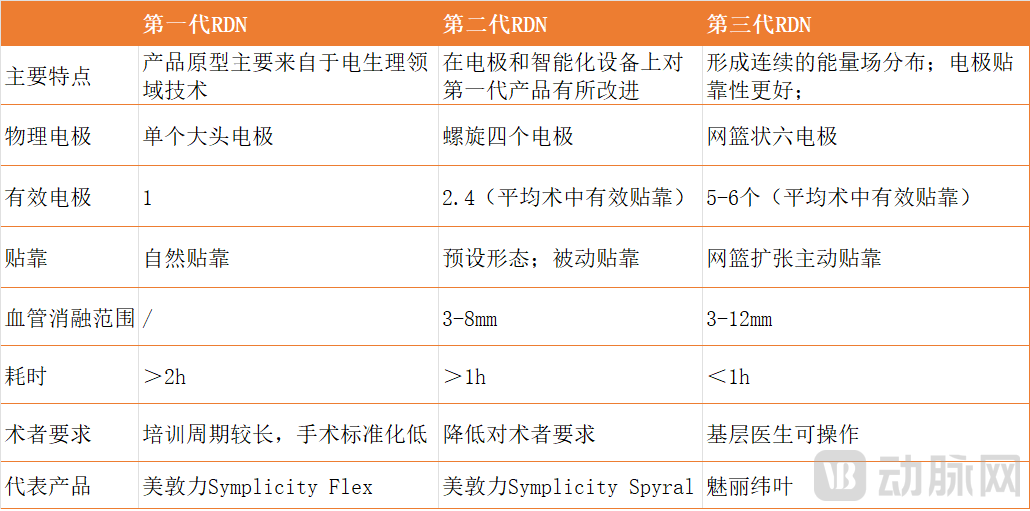
The representative product of the first-generation RDN technology is Medtronic's Symplicity Flex,The catheter design adopts the configuration of ablation electrodes used in the electrophysiology field, specifically employing a single-point, large-tip ablation electrode. However, the large-tip electrode exhibits unstable contact with the vessel wall, and the single-point ablation design may lead to incomplete ablation. Regarding device design, parameter settings for the first-generation single-channel product required manual input by physicians, and decisions on whether to terminate or complete the procedure relied primarily on the physician’s judgment during operation.
Clinical trial data have demonstrated that first-generation renal denervation (RDN) technology is associated with lower ablation efficiency and a higher risk of incomplete ablation, imposes stringent requirements on operator proficiency, and presents challenges for procedural standardization.
The representative product of second-generation RDN technology is Medtronic’s optimized Symplicity Spyral., with the main features being an increased number of electrodes and partial smart design. Medtronic improved and optimized the first-generation technology to launch the second-generation product. To address the issues of too few electrodes on the catheter and low ablation efficiency in the first generation, three additional electrodes were added to the catheter, and a spiral electrode design was adopted to enhance ablation efficiency and vessel wall contact force. However, the pre-set spiral structure lacks sufficient conformability in tortuous main or branch vessels, and the effectiveness of passive contact needs further improvement. In terms of device design, although the second-generation four-channel product incorporates physician judgment and operation based on temperature and impedance monitoring, it lacks real-time power monitoring, resulting in incomplete dose-effect feedback and intelligent logic.
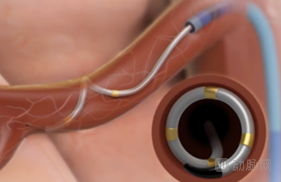
Medtronic Symplicity Spyral Electrode
BRATTEA considers its product to be a representative of the new generation of RDN technology, characterized by active apposition via basket expansion and an intelligent ablation design with real-time dose-response monitoring.In terms of catheter design, BRATTEA employs a basket-shaped six-electrode configuration that achieves excellent conformability in complex three-dimensional spaces. By transmitting expansion force through the metal wires constituting the basket to each “contact point,” it ensures uniform and tight apposition. This design mitigates interference from vasoconstriction, visceral peristalsis, and respiration, thereby establishing an efficient energy conduction pathway and ensuring optimal contact between the electrodes and tissue.
In terms of device design, the most significant feature of the new-generation technology is intelligent ablation. The product is equipped with an energy core featuring six independent channels, each capable of individually measuring and controlling time, power, temperature, and impedance. Compared to the conventional model where “a single energy core controls multiple electrodes,” BRATTEA’s control mode can intelligently deliver radiofrequency energy based on precise temperature and impedance measurements according to varying electrode-tissue contact conditions, thereby achieving effective lesion formation and superior ablation outcomes.

BRATTEA Basket-Type Six-Electrode
Fundamentally, the greatest distinction between next-generation renal denervation (RDN) technology and its first- and second-generation predecessors lies in their underlying research and development philosophies.
Cao Hongguang stated, “The first-generation RDN products basically followed the design of cardiac electrophysiology ablation devices, while the second-generation products featured slight catheter modifications with additional electrodes, which is a typical engineer-driven development approach.
In contrast, the new generation of technology is developed based on clinical needs through medical-engineering collaboration. Cao Hongguang stated, “Guided by the concept of medical-engineering integration, and considering the dose-response relationship, an RDN system must achieve efficient ablation outcomes. This requires a sufficient number of ablation points and good electrode-tissue contact. Therefore, we abandoned the approach of simply adding more electrodes. Secondly, since hypertensive patients are predominantly managed at primary care levels, we aimed to develop a therapy that can be easily mastered by primary care physicians. Hence, we developed intelligent equipment.”
The ability to introduce a new generation of RDN technology is also attributable to BRATTEA’s steadfast commitment to independent research and development. During the initial prototype design phase, BRATTEA did not take the shortcut of repurposing catheters from the cardiac electrophysiology field or imitating designs from foreign companies. Instead, adhering to a med-tech integration approach, the company conducted rigorous validation for every shape and parameter specification of the product.
The final basket-shaped six-electrode design was the structure selected by BRATTEA’s R&D team after a year of iterative validation across multiple designs, including petal-shaped and balloon-shaped configurations.
Initially, the BRATTEA team drew on experience from the vascular intervention field to choose between petal-shaped and balloon-shaped designs, which offer the best vessel wall apposition. The petal shape was ruled out first due to its “rigid” structural characteristics. Meanwhile, although balloons provide good vessel wall apposition, they cause blood flow occlusion. Unilateral renal artery ablation requires 20–30 minutes; prolonged blood flow occlusion is highly detrimental to protecting renal function in hypertensive patients. No clinician would wish to alter a patient’s normal physiological parameters during a procedure. Furthermore, since balloon expansion dimensions are fixed, they lack sufficient compliance for vessels of varying sizes. It is also impractical to manufacture dozens of balloon specifications to accommodate and match the highly variable renal branch arteries, which differ in length and diameter among patients. Therefore, the balloon-based approach was also rejected.
Ji Liang, Executive Deputy General Manager of BRATTEA, stated, “At that time, we aimed to combine the superior vessel wall apposition performance of balloons with reduced blood flow obstruction. Therefore, we opted for a basket-type design, whose hollow structure allows blood to pass through. The basket is designed with a significant deformation range, accommodating diameters from 3 mm to 12 mm, and physicians can control the degree of basket expansion via the handle. In terms of apposition, the basket design provides three-dimensional support, enabling active contact with the vessel wall for superior apposition performance. This ensures a stable and continuous energy field, resulting in more effective ablation.”
This design has also been validated in clinical trials. The BRATTEA team found that some hypertensive patients have higher body weight and larger vessel diameters, necessitating the use of large-bore catheters. BRATTEA’s basket-shaped adaptive design effectively addresses this challenge.
The basket-like design exhibits superior vascular compliance, enabling navigation through tortuous vessels to reach branch vessels, thereby achieving a larger ablation area.
In the early stages, BRATTEA dedicated itself to meticulous and focused R&D, refining its products over several years before introducing them to clinical practice. During clinical trials and applications, BRATTEA’s products have also gained recognition from multiple experts.
Zhai Guangyao, Associate Chief Physician at Beijing Anzhen Hospital, Capital Medical University, stated: “The basket-shaped six-electrode design enables multi-channel simultaneous ablation, allowing a procedure to be completed in 40 minutes, with the capability to ablate both the main trunk and branches. We have observed excellent procedural outcomes, with an intraoperative blood pressure reduction of 10–20 mmHg or even greater, which continues to decline further.”
Hao Liuyi, Director of the First Department of Cardiology at Yuncheng Central Hospital in Shanxi Province, stated: “The basket-shaped design of the ablation catheter allows for manipulation within blood vessels of varying sizes, including branch vessels. Furthermore, it achieves excellent wall apposition. During the procedure, temperature and impedance feedback provide real-time assessment of wall contact and ablation efficacy, eliminating the need for physicians to rely solely on empirical judgment and offering a convenient, intelligent solution. Generally, cardiologists can master the technique after performing three to five procedures. Intraoperatively, we observed a decrease in the patient’s blood pressure, with a continued downward trend.”
BRATTEA’s clinical enrollment progress is also ahead of schedule.
Zhu Chunni, Deputy General Manager of BRATTEA, stated that the enrollment for clinical trials is progressing rapidly, largely due to the recognition of BRATTEA’s products by experts at clinical centers.
On the other hand, it also benefits from BRATTEA’s unique advancement in clinical trial enrollment. BRATTEA’s innovativeApply academic promotion strategies, tailored to the developmental characteristics of clinical center disciplines in each province, while integrating market conditions and professional operational concepts and methodologies.Participated in the construction of hypertension prevention and control systems across multiple provinces and municipalities, leveraging the strength of academic frameworks and medical consortium-based referral networks.Accelerate Patient Enrollment at Clinical Centers。
Zhu Chunni stated, “We leverage the strength of the medical consortium to implement a top-down approachEmpowerment Training, promote the prevention and control of hypertension at the primary care level and strengthen target attainment; training content includes: guidelines for hypertension prevention and treatment, pharmacological therapy, achievement of blood pressure targets, differential diagnosis of secondary hypertension, hypertensive emergencies, diagnostic and therapeutic strategies for resistant hypertension, prevention, control, and screening of special types of hypertension, and new advances in clinical management of hypertension. It also informs them which hypertensive patients are more suitable for minimally invasive interventional therapy, thereby identifying candidates for clinical trials from the bottom up. These approaches have significantly accelerated the patient enrollment process for BRATTEA’s clinical trials.”
Participation in the hypertension prevention and control system has also laid a solid foundation for future product sales. BRATTEA’s clinical trials cover not only the clinical centers but also the primary care hospitals within the catchment area of each center. The early initiation of market education will facilitate post-launch clinical promotion.
In terms of future commercialization, BRATTEA has also embarked on long-term strategic planning. BRATTEA aims not only to be a provider of innovative technologies but also to establish a closed-loop system for achieving hypertension control targets.
There are 1.28 billion hypertensive patients worldwide, including 270 million in China. In stark contrast to this large population of individuals with hypertension are the low rates of awareness and control.
Only when the treatment rate and control rate of hypertension reach a certain level can the goal of overall reduction in functional impairment of target organs, such as the heart, brain, and kidneys, be achieved.The 2018 European Society of Hypertension Guidelines point out that the fact that the vast majority of patients with hypertension fail to achieve target blood pressure control indicates insufficient efficacy of current treatment regimens, necessitating the exploration of new therapeutic approaches. According to the WHO guidelines on pharmacological treatment of hypertension in adults, the global rate of controlled hypertension is less than 14%. China has a large population of individuals with hypertension; currently, there are approximately 245 million adult patients with hypertension in the country, yet the control rate stands at only 16.8%.
Improving the hypertension control rate in China requires a multi-faceted approach. BRATTEA aims to serve not only as a technology provider but also as a connector within China’s hypertension prevention and control system, addressing pain points across all segments of the industry chain.
First, historical hypertension management relied on monotherapy with insufficient comprehensive treatment strategies, resulting in poor patient adherence.Most patients are reluctant to commit to lifelong pharmacological therapy. Data from the Medtronic website indicate that the estimated annual direct cost of hypertension worldwide is approximately $400 billion. Nearly 20% of hypertensive patients are completely non-adherent to oral medication, while nearly half exhibit partial non-adherence, underscoring the need for alternative therapies. The emergence of minimally invasive interventional treatments offers a new therapeutic option for hypertensive patients, bringing new hope for long-term and stable blood pressure control to hundreds of millions of individuals worldwide.
Secondly, the "National Guidelines for the Prevention and Management of Hypertension at the Primary Care Level (2020 Edition)" clearly states90.0% of hypertensive patients are distributed in primary care settings, 58.2% choose primary care facilities for their initial diagnosis, and 68.1% opt for continuous treatment at the primary care level. The quality of hypertension management in these settings will directly impact blood pressure control rates nationwide. The intelligent design of third-generation renal denervation (RDN) technology is well-suited for physicians in primary care hospitals.
In the past, hypertension management in China had not yet formed a closed loop. The process of consultation and management for hypertensive patients was fragmented, lacking a cohesive system or framework. Furthermore, there was limited awareness among physicians regarding comprehensive blood pressure management, as well as weak patient engagement in self-management and self-monitoring. This has been one of the significant reasons contributing to the currently low rate of blood pressure control.
BRATTEA has also identified this gap. Chen Haidong, CEO of BRATTEA, revealed, “We will leverage digital tools to establish a closed-loop system for hypertension disease management, going beyond mere technology promotion.”
In the future, BRATTEA’s goal is not merely to be an RDN technology company. Cao Hongguang has a grander vision: he hopes to build BRATTEA into an enterprise akin to Medtronic. To this end, BRATTEA has already developed and accumulated multiple technology platforms. Beyond interventional diagnosis and treatment for hypertension, the company has also established strategic presences in areas such as tumor-related pain management, diabetes, vasculitis, and heart failure.
Upon the conclusion of the 204th procedure, Vice President Zhou Yujie remarked with emotion, “The darkness of hypertension ends with our success in RDN!”
[1] Expert Consensus on the Pathway for Medication Therapy Management in Patients with Hypertension
[2] Renal Artery Denervation: Advancing Through Exploration—Wang Zhonggan